
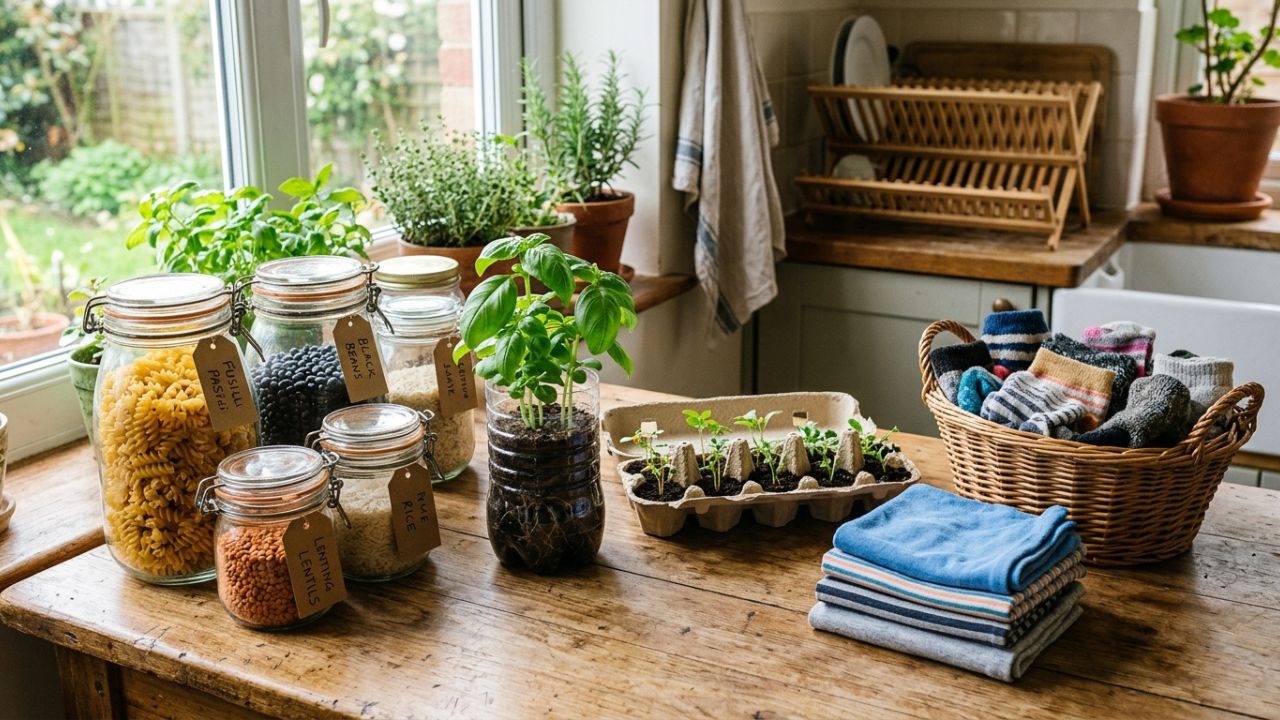
Living a more sustainable life does not require a total overhaul of daily habits. Often, the simplest way to reduce waste is to look at the items already sitting in the kitchen, bathroom, or garage and ask a single question: does this really need to go in the trash?
Many everyday objects that seem disposable actually have a second, third, or even fourth life waiting for them. This article walks through practical, low effort ways to reuse common household items, saving money while cutting down on landfill waste.
Why Reusing Matters More Than Recycling
Recycling gets most of the attention when people talk about eco-friendly habits, but reusing is actually a step higher on the waste reduction ladder. The classic “reduce, reuse, recycle” order exists for a reason. Reusing an item means it never has to be broken down, reprocessed, or transported to a recycling facility, which saves energy and resources compared to recycling alone.
There are a few reasons reusing deserves more attention:
- It skips the energy-intensive recycling process entirely
- It keeps usable materials in circulation longer
- It often saves money by delaying or avoiding new purchases
- It reduces the demand for single-use plastics and packaging
- It can spark creativity and a more mindful relationship with belongings
With that in mind, here is a room-by-room and category-by-category look at everyday items that deserve a second chance before hitting the bin.
Kitchen Items Worth a Second Life
The kitchen is often the biggest source of household waste, but it is also full of opportunities for reuse.
Glass Jars and Bottles
Glass jars from pasta sauce, jam, or pickles are sturdy, easy to clean, and surprisingly versatile. Once washed and the label soaked off, they can become:
- Storage containers for dry goods like rice, beans, or spices
- Drinking glasses or travel cups
- Small vases for fresh flowers or herbs
- Containers for homemade candles or bath salts
- Organizers for nails, screws, or craft supplies
Plastic Takeout Containers
Rather than tossing plastic containers from takeout meals, they can be repurposed as:
- Leftover storage in the fridge or freezer
- Small planters for seed starting or herb cuttings
- Organizers for small items in drawers or toolboxes
- Paint or glue containers for craft projects
Coffee Grounds and Eggshells
These are technically food scraps, but they deserve a mention because they are so often thrown away without a second thought. Used coffee grounds can be added directly to garden soil or a compost pile, where they add nitrogen and help improve soil texture. Crushed eggshells work in a similar way, adding calcium to soil and can even be used as a natural deterrent for slugs and snails around garden plants.
Bread Bags and Produce Bags
Plastic bread bags and the thin plastic bags produce sometimes comes in can be rinsed and reused for packing lunches, storing leftovers, or lining small trash bins. Cloth produce bags, if used, can go straight into the wash and be used again and again for years.
Bathroom Items That Do Not Belong in the Trash
The bathroom might seem like a place where everything is disposable, but there are more reuse opportunities here than most people realize.
Empty Bottles and Tubs
Shampoo bottles, lotion tubs, and soap dispensers can be refilled at bulk stores that sell shampoo, conditioner, and hand soap by weight. This single habit can dramatically cut down on plastic waste over a year. Even without access to a refill store, empty bottles work well for:
- Travel-sized versions of other products
- DIY cleaning solutions
- Storing homemade beauty products
Old Towels and Washcloths
Once towels become too worn or frayed for regular use, they still have plenty of life left. Cut them into smaller squares and they become:
- Cleaning rags for spills and dusting
- Car washing cloths
- Padding for shipping fragile items
- Pet bedding or drying towels
Toothbrushes
An old toothbrush is one of the most useful small tools around the house. The stiff bristles make it perfect for scrubbing grout, cleaning jewelry, detailing shoe soles, or getting into tight corners that a sponge cannot reach.
Clothing and Textiles
Textile waste is one of the fastest growing categories of landfill waste worldwide, which makes reusing clothing and fabric especially important.
Worn-Out Clothing
Clothes that are too damaged or stained to donate can still be useful. Cotton t-shirts, for example, can be transformed into cleaning rags, produce bags, or even braided into reusable rope. Old jeans are durable enough to be turned into tote bags, aprons, or patches for other clothing repairs.
Mismatched Socks
Nearly everyone ends up with a pile of socks missing their pair. Instead of throwing them out, they can become dusting mitts, small storage pouches, or stuffing for homemade pillows and pet toys.
Fabric Scraps
Leftover fabric from sewing projects or worn clothing can be saved in a scrap bin for future patchwork projects, quilts, or reusable gift wrap. Fabric gift wrap, tied with ribbon or twine, is a charming and completely reusable alternative to paper wrapping.
Paper and Cardboard
Paper products are often assumed to be single-use, but many can be reused before they are recycled or composted.
- Cardboard boxes can be flattened and stored for future moves, shipping, or storage needs
- Cereal boxes and other lightweight cardboard can be cut into drawer organizers or craft material
- Newspaper works well as packing material, weed barrier in gardens, or a natural fire starter
- Envelopes with usable blank space inside can be repurposed as scrap paper or note holders
- Wrapping paper that is not torn can be carefully folded and saved for the next gift
Garden and Outdoor Reuses
The backyard is an especially good place to put reused materials to work, since many garden tasks do not require anything fancy.
Plastic Bottles
Large plastic bottles can be cut and turned into:
- Mini greenhouses for young seedlings
- Watering cans with holes poked in the cap
- Bird feeders
- Self-watering planters using the bottle’s natural shape
Egg Cartons
Cardboard egg cartons are ideal for starting seeds indoors before the growing season begins. Each individual cup holds enough soil for a seedling, and the whole carton can eventually be planted directly into the ground since cardboard breaks down naturally.
Wooden Pallets
Wooden pallets, often available for free from local businesses, can be transformed into raised garden beds, compost bins, outdoor furniture, or vertical planters for small spaces.
A Quick Reference Table
For a fast overview, here is a simple table summarizing some of the easiest household items to reuse and their most popular second uses.
| Item | Common Reuse |
|---|---|
| Glass jars | Storage, drinking glasses, vases |
| Plastic takeout containers | Leftovers, planters, organizers |
| Coffee grounds | Compost, garden fertilizer |
| Shampoo bottles | Refill station containers, DIY solutions |
| Old towels | Cleaning rags, pet bedding |
| Worn t-shirts | Rags, produce bags, patchwork |
| Cardboard boxes | Storage, shipping, moving |
| Plastic bottles | Planters, bird feeders, watering cans |
| Egg cartons | Seed starters |
| Wooden pallets | Garden beds, furniture |
Tips for Building a Reuse Habit
Reusing items consistently is less about willpower and more about setting up small systems that make it easy. A few practical tips can help this become second nature.
Create a Designated Reuse Bin
Instead of tossing something the moment it seems finished with its original purpose, keep a small bin or drawer specifically for items that might be reused later. This prevents useful materials from ending up in the trash out of convenience.
Think Before Buying Replacements
Before purchasing a new container, organizer, or tool, take a moment to consider whether something already at home could serve the same purpose. This simple pause can prevent unnecessary purchases and reduce clutter at the same time.
Get the Whole Household Involved
Reuse habits stick best when everyone in the home is on board. Labeling bins, explaining the reasoning behind reuse projects, and involving children in creative reuse crafts can turn sustainability into a shared value rather than a solo effort.
Know When to Let Go
Reusing is valuable, but it is also important to avoid turning it into hoarding. If an item has been sitting unused for months with no clear purpose, it may be better to donate, recycle, or responsibly dispose of it rather than keeping it indefinitely.
The Bigger Picture
Every jar saved from the recycling bin, every t-shirt turned into a cleaning rag, and every plastic bottle repurposed into a planter adds up.
These small actions may seem minor on their own, but when practiced consistently across a household, and especially across many households, they meaningfully reduce the amount of waste sent to landfills each year.
Choosing to reuse everyday items is one of the most accessible ways to live more sustainably. It does not require special equipment, a big budget, or a complete lifestyle change. It simply asks for a shift in perspective, seeing potential in items that might otherwise be discarded without a second thought.
Over time, this mindset can lead to less waste, more savings, and a genuine sense of satisfaction in making the most of what is already on hand.