Rainwater harvesting becomes more practical and efficient with the right accessories. A few targeted add-ons can improve water quality, increase supply, simplify distribution and protect systems from damage. The following list covers five essential rain barrel accessories chosen to make the most of collected rainwater, followed by a buyer’s guide, FAQ and conclusion.
Quick summary — Top 5 picks
- Downspout diverter — directs runoff into a barrel while allowing overflow back to the downspout.
- First-flush diverter and leaf filter — removes debris and initial, dirtier runoff for cleaner water.
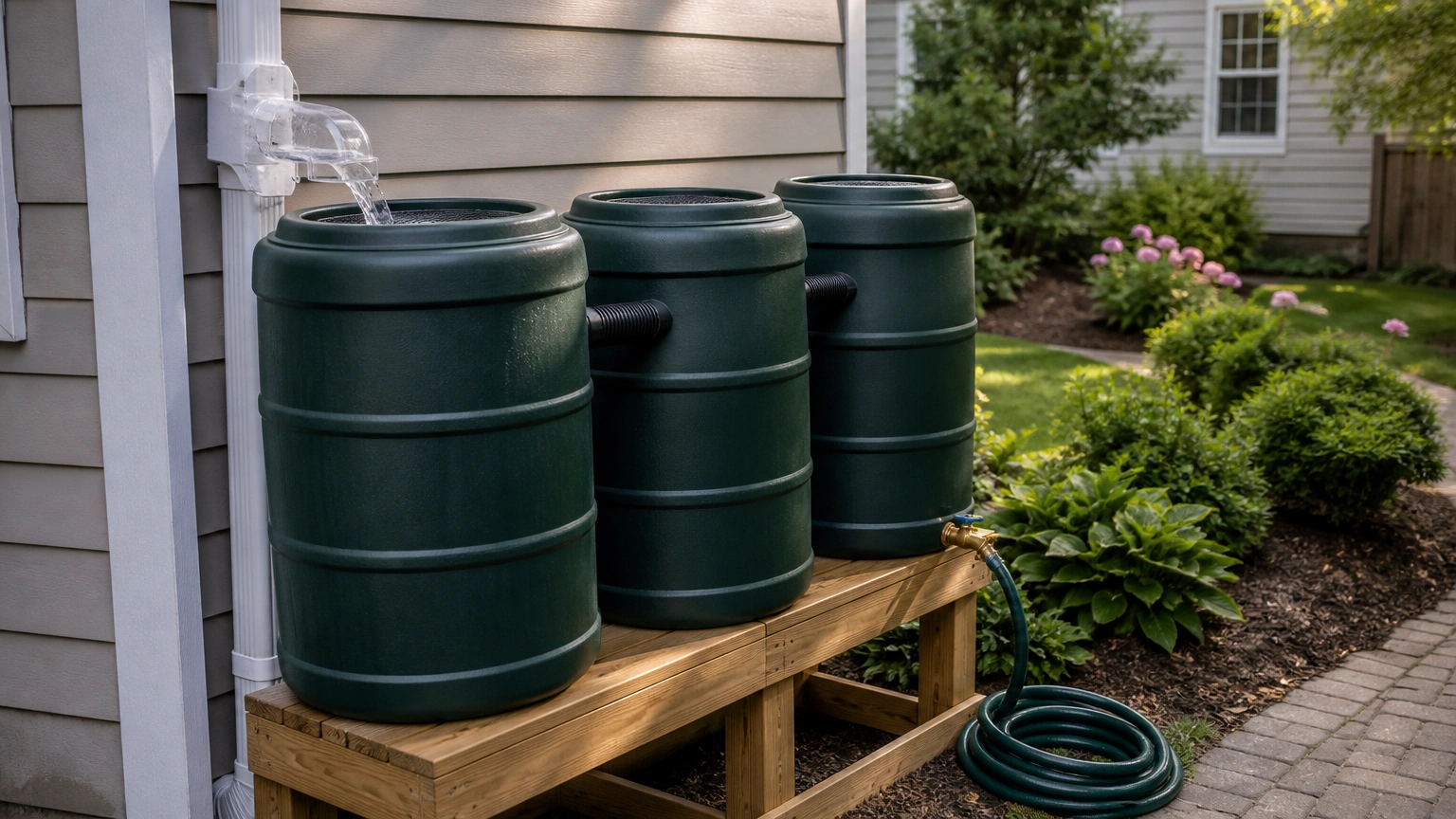
- Connecting kit (barrel-to-barrel connector) — links multiple barrels for greater capacity and balance.
- Elevated stand — raises a barrel for better gravity pressure and easier access.
- Durable spigot and hose connector — upgrades outlet control for hoses, irrigation or filling containers.
1. Downspout diverter
A downspout diverter is a device installed into an existing downspout to channel rainwater into a barrel while allowing excess water to continue down the original drainage path. It provides a simple, non‑permanent way to capture runoff without major roof or gutter modifications.
Key features
- Easy installation into standard rectangular or round downspouts.
- Automatic or manual switching between barrel filling and bypass mode.
- Often includes a removable hose or spout to direct water into the barrel.
- Corrosion-resistant materials such as plastic, stainless steel or powder-coated metal.
Pros
- Quick, tool-light installation; often reversible.
- Prevents the need to reroute downspouts or trench to the barrel.
- Helps prevent overfilling by allowing overflow to bypass the barrel.
Cons
- Compatibility with unusual downspout shapes may require adapters or cutting.
- Some designs can clog without occasional cleaning.
- Manual diverters require attention during large storms to avoid overflow.
Best for
Homeowners and gardeners seeking an easy, reversible way to connect a barrel to existing gutters, particularly where trenching or permanent gutter modification is undesirable.
2. First-flush diverter and leaf filter
Combining a first-flush diverter with a leaf filter dramatically improves water quality by diverting the initial, more contaminated runoff away from storage and excluding leaves and debris at the point of entry. The first flush device captures the early run of water that contains dust, bird droppings and roof residues; the leaf filter acts as a sieve to keep larger material out.
Key features
- First-flush chamber that traps the first portion of runoff; then seals until emptied manually or via drain.
- Mesh screens, cone filters or gutter-mounted leaf guards to block leaves and twigs.
- Materials rated for UV exposure and outdoor conditions.
- Optional access ports for cleaning and maintenance.
Pros
- Produces substantially cleaner water for watering sensitive plants or for non-potable household uses.
- Reduces clogging of barrels and pumps by removing debris before it enters the tank.
- Extends the useful life of downstream components (valves, pumps, filters).
Cons
- Requires occasional emptying and cleaning of the first-flush chamber and leaf screens.
- Some systems add upfront cost and take up additional space on the downspout.
- Improper sizing can reduce effectiveness (capturing too much or too little of the first run).
Best for
Those focused on water quality and system longevity: gardeners with edible beds, users running pumps for irrigation systems, or anyone aiming to minimize maintenance and sediment in stored water.
3. Connecting kit (barrel-to-barrel connector)
Connecting kits allow multiple barrels to be linked so that they fill and draw down as a single system. This increases storage capacity while maintaining balance among tanks and can simplify plumbing and overflow management.
Key features
- Hoses, rigid PVC piping or connectors sized to match common barrel fittings.
- Clamps, gaskets and bulkhead fittings to create watertight joins between tanks.
- Valves to isolate individual barrels when servicing or winterizing.
Pros
- Scales storage capacity without needing a single very large container.
- Permits staged installation — barrels can be added over time.
- Maintains equal water level and pressure across multiple barrels when installed correctly.
Cons
- Improper connections can cause leaks or airlocks that prevent even filling.
- More components increase the number of joints that require maintenance.
- Rigid piping needs careful alignment; flexible hoses may kink or degrade under UV if not UV-rated.
Best for
Users who need more storage than a single barrel can offer, have limited space for one large tank, or prefer modular expansion. Also suitable where leveling and distribution must be balanced across a system.
4. Elevated stand
An elevated stand lifts a filled rain barrel to create gravity-fed pressure, easing access to the spigot, increasing flow for hoses, and facilitating filling of watering cans or connecting simple gravity-fed irrigation lines. Stands can be metal, treated wood or concrete blocks sized to safely support the full weight of a filled barrel.
Key features
- Load-rated construction to hold the weight of water-filled barrels (water is heavy; full barrels require sturdy support).
- Height options to suit desired water pressure or access needs.
- Stability features such as wide bases, anchor points, or levelers for uneven ground.
Pros
- Increases usable water pressure without a pump, simplifying irrigation tasks.
- Makes spigots and hose connections more accessible for filling and draining.
- Elevated barrels are less prone to freezing at the outlet in some climates.
Cons
- Improperly built or placed stands can be a safety hazard if they fail under load.
- May require leveling and a firm base to prevent settling or tipping.
- Added height can make maintenance tasks like cleaning tops or screens harder without a step.
Best for
Anyone needing improved gravity flow for hoses or irrigation and those who prefer not to use electric pumps. Best suited where a safe, level base can be prepared and where elevation is permitted by local codes.
5. Durable spigot and hose connector
Most stock barrel outlets are basic and may leak or lack compatibility with standard garden hoses. Upgrading to a durable spigot and a proper hose connector provides better flow control, reduces leaks and connects directly to irrigation systems or hoses without adapters.
Key features
- Heavy‑duty brass or reinforced plastic ball valves for reliable shutoff.
- Quick‑connect hose fittings or male/female threaded adapters to match common hose sizes.
- Rubber seals and backflow-prevention options to reduce contamination risk.
Pros
- Stronger, longer-lasting operation than some cheap molded spigots.
- Better seal reduces water loss and prevents leaks at the barrel outlet.
- Quick-connect fittings speed attachment of hoses and irrigation lines.
Cons
- Higher-quality valves cost more than basic outlets included with many barrels.
- Some metal fittings can corrode if not appropriate for outdoor use or salty environments.
- Installation may require a hole saw, bulkhead fitting and sealant for a watertight join.
Best for
Users who rely on rainwater for regular irrigation, who want to connect hoses or drip systems directly, and those aiming to reduce leaks and maintenance associated with inferior stock fittings.
Buying guide — What to look for in rain barrel accessories
Choosing the right accessories depends on goals—maximizing water quantity, improving quality, or simplifying distribution. Important factors to consider include:
Compatibility
Accessories should match downspout dimensions, barrel inlet/outlet sizes and the material of existing gutters and tanks. Universal kits exist, but measurements and adapter availability should be confirmed before purchase.
Materials and durability
Look for UV‑stabilized plastics, stainless steel fasteners and brass or high‑grade plastic valves. Outdoor exposure and water chemistry can accelerate deterioration of inferior parts.
Ease of maintenance
Filters, diverters and connectors require periodic cleaning. Designs that allow easy access, removal or backflushing reduce long-term effort and prolong component life.
Safety and load rating
Elevated stands and stacked barrels must support substantial weight. Check load ratings and prepare a level, compacted base or concrete pad. When in doubt, choose a sturdier option that exceeds the calculated load.
Flow and pressure needs
Gravity alone produces modest pressure; elevation and valve size determine usable flow. For irrigation systems requiring higher pressure or remote distribution, plan for a pump compatible with the barrel setup.
Water quality considerations
First-flush diverters and fine mesh filters reduce contaminants and sediments. If water will be used on edible plants or indoors, additional filtration and disinfection steps are advisable beyond typical barrel accessories.
Installation complexity
Some accessories are plug-and-play; others require cutting gutters, drilling barrel walls and sealing bulkhead fittings. Match product selection to the installer’s skill level or budget for professional installation.
FAQ
Can rainwater in barrels be used for drinking?
Rainwater collected from roofs and stored in barrels is generally recommended for non-potable uses such as irrigation, toilet flushing or car washing. Drinking water requires rigorous treatment, testing and local regulatory compliance; additional filtration, disinfection and storage protocols are necessary before considering potable uses.
How often should first-flush diverters and leaf filters be cleaned?
Cleaning frequency depends on roof and tree coverage, but a routine inspection every few months is typical. After storms with heavy debris or in autumn when leaves fall, more frequent cleaning helps maintain performance.
Is it necessary to elevate a rain barrel?
Elevation increases gravity pressure and makes access easier, but it is not strictly necessary for storage. Elevated installation is recommended when regular hose use or gravity-fed irrigation is anticipated. Properly rated stands and secure foundations are essential for safety.
Can barrels be connected to create a single larger tank?
Yes. Connecting multiple barrels with proper fittings and balancing valves allows multiple units to behave as a single storage system. Proper installation prevents leaks and ensures even filling; installing isolation valves aids maintenance.
What should be done to winterize a barrel and its accessories?
In colder climates, draining lines, removing or insulating hoses and shutting off inlets can prevent freezing damage. Some accessories are recommended to be removed, emptied and stored if freezing would cause cracking or rupture. Local practices vary, so planning should consider typical winter severity.
Conclusion
Adding a small set of well-chosen accessories can transform a basic rain barrel into a more reliable, cleaner and more functional water source. Downspout diverters simplify capture, first-flush diverters and leaf filters protect water quality, connecting kits expand capacity, stands provide usable pressure and robust spigots enable efficient distribution. Selection should be guided by compatibility, durability, maintenance requirements and intended uses. With appropriate choices and periodic upkeep, a rain barrel system can deliver practical water savings and support sustainable gardening and outdoor tasks.