Plastic-free swaps for everyday food prep make kitchens healthier, less wasteful, and often more durable. This guide lists 13 practical alternatives to single-use and plastic-forward items used in daily cooking, from storage and prep to cleaning. Each swap includes key features, benefits and drawbacks, and suggestions for who will benefit most.
Quick summary — Top picks
- Stainless steel mixing bowls — Durable, non-reactive, and recyclable.
- Wooden cutting board — Gentle on knives and naturally antimicrobial.
- Bamboo utensils — Lightweight, renewable, and compostable at end of life.
- Beeswax or plant-based wraps — Reusable alternative to cling film.
- Glass storage jars — Airtight and versatile for pantry and fridge.
- Silicone food bags — Reusable and heat-safe for cooking and freezing.
- Cotton produce bags — Replace plastic produce bags at the market.
- Ceramic or cast-iron cookware — Long-lasting and plastic-free surfaces.
- Compost pail with lid — For collecting food scraps without plastic liners.
- Bar soap or solid dish soap — Eliminates plastic bottles for cleaning.
- Stainless steel water bottle — For hydration and boiling tasks in a pinch.
- Unbleached cotton towels — Replace disposable paper towels.
- Metal or wooden storage racks — Avoid plastic shelving and organizers.
1. Stainless steel mixing bowls
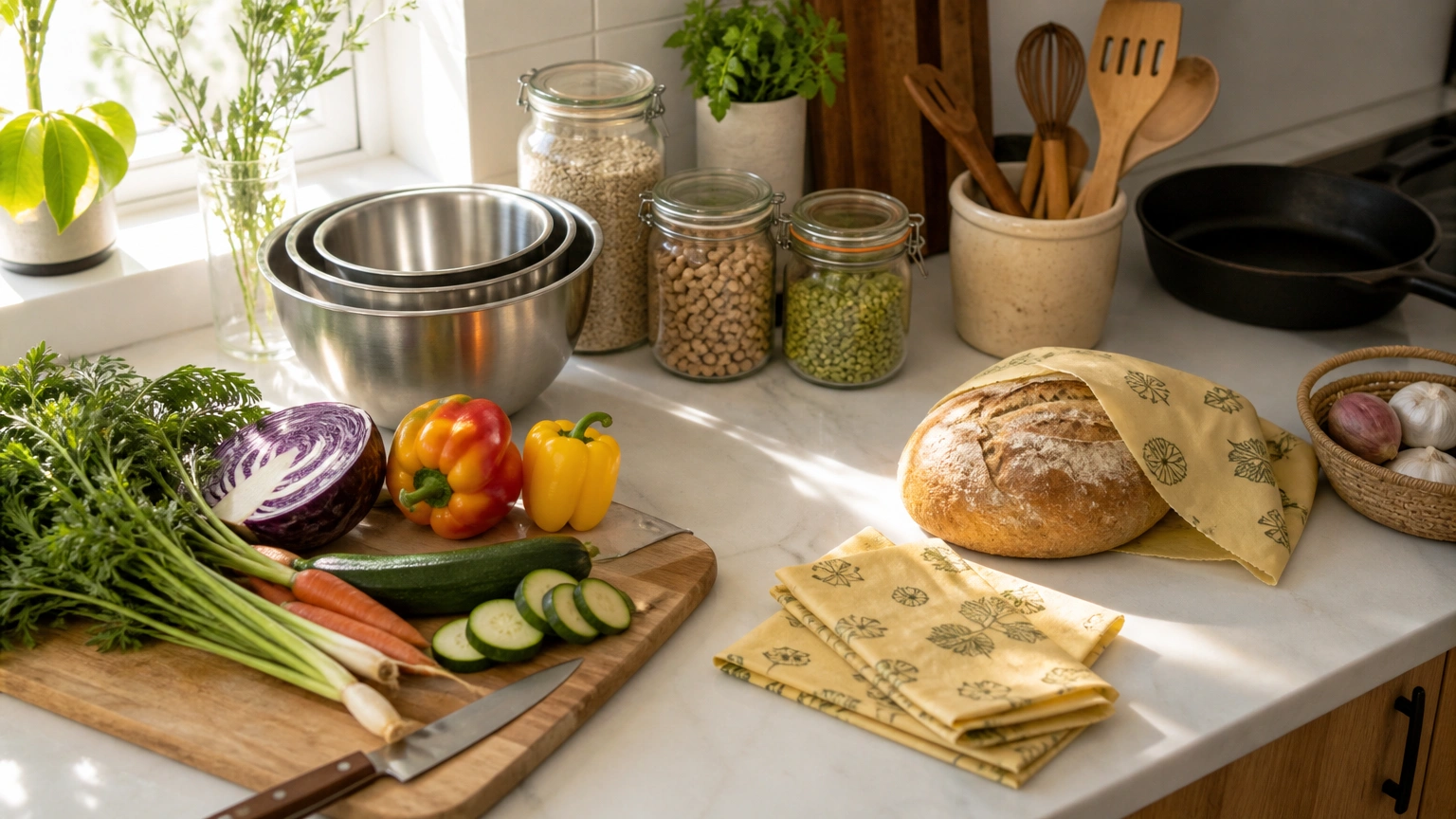
Description: A set of stainless steel mixing bowls replaces plastic bowls and takeout containers for mixing, marinating and serving. They are lightweight, dishwasher-safe, and fully recyclable at end of life.
Key features
- Food-grade stainless steel (18/8 or 18/10).
- Nested sets for space-saving storage.
- Non-porous and stain-resistant surface.
Pros
- Durable and long-lasting.
- Won’t retain odors or stains.
- Suitable for cold and hot prep.
Cons
- Can dent if dropped.
- Metal noise when whisking.
Best for
Home cooks who want robust, multi-use prepware that avoids plastic and lasts for years.
2. Wooden cutting board
Description: A solid wood cutting board reduces exposure to plastic surfaces and is gentle on knife edges. Properly maintained, wooden boards can be long-lived and naturally resist bacteria.
Key features
- End-grain or edge-grain construction.
- Made from sustainably sourced hardwoods.
- Requires periodic oiling.
Pros
- Self-healing surface hides cuts.
- Attractive natural aesthetic.
Cons
- Needs maintenance to avoid cracking.
- Not dishwasher-safe.
Best for
Cooks prioritizing knife care and a natural, plastic-free prep surface.
3. Bamboo utensils
Description: Spoons, spatulas and turners made from bamboo offer a renewable, compostable alternative to plastic utensils. Bamboo is lightweight and resists warping when used with hot pans.
Key features
- Fast-growing, renewable material.
- Typically unfinished or lightly finished with food-safe oil.
- Available in sets including spoons, spatulas and tongs.
Pros
- Biodegradable at end of life (if untreated).
- Does not scratch cookware like metal can.
Cons
- Can split or wear faster than metal tools.
- Requires handwashing and drying.
Best for
Those seeking lightweight, renewable utensils compatible with non-stick and ceramic pans.
4. Beeswax and plant-based wraps
Description: Reusable wraps made from cotton infused with beeswax or plant-based waxes replace cling film and single-use plastic wrap for covering bowls and wrapping snacks. These wraps are pliable and can be molded with warmth from the hands.
Key features
- Made with cotton fabric and wax coatings.
- Available in sheets and various sizes.
- Washable by hand with cool water and mild soap.
Pros
- Reduces single-use plastic film waste.
- Lightweight and packable for lunchboxes.
Cons
- Not suitable for raw meat unless washed thoroughly.
- Have a limited lifespan and eventual composting requirements.
Best for
Households replacing disposable cling film for cheese, fruit, sandwiches and bowl covers. For more on washable wrap options, see the guide to beeswax and plant-based wraps.
5. Glass storage jars
Description: Glass jars with airtight lids function as storage for dry goods, leftovers and pantry organization. They avoid plastic leaching and are fully recyclable.
Key features
- Clear glass for easy contents visibility.
- Various capacity options from small to large.
- Screw-top or clamp lids for secure seals.
Pros
- Does not absorb smells or stains.
- Microwave and oven-safe without lids in many cases.
Cons
- Can chip or break if dropped.
- Heavier than plastic alternatives.
Best for
Pantry organizers and home cooks who prefer clear, long-term storage solutions for bulk buys and leftovers.
6. Silicone food bags
Description: Reusable silicone bags take the place of disposable zipper bags for freezing, sous-vide cooking and storing wet or dry foods. Food-grade silicone withstands high and low temperatures.
Key features
- Food-grade, BPA-free silicone construction.
- Heat- and freezer-safe.
- Often dishwasher-safe for easy cleaning.
Pros
- Versatile for cooking and storage.
- Durable and long-lived with proper care.
Cons
- Silicone is not biodegradable and requires recycling pathways.
- Some items retain strong food odors unless cleaned promptly.
Best for
Users needing versatile, heat-tolerant storage for meal prep and freezing. For more silicon options for replacing disposable bags, consult the silicone food storage solutions guide.
7. Cotton produce bags
Description: Lightweight cotton or mesh produce bags replace thin plastic produce bags at grocery stores and farmers markets. They can be washed and reused many times.
Key features
- Drawstring closures for secure carrying.
- Transparent mesh options for easy weighing.
- Machine-washable cotton alternatives.
Pros
- Reduces single-use plastic at checkout.
- Breathable for fresh produce storage.
Cons
- Requires periodic washing to stay clean.
- Less rigid than plastic for small items.
Best for
Shoppers who want a simple substitute for disposable produce bags and prefer lightweight, washable options.
8. Ceramic or cast-iron cookware
Description: Ceramic-coated and cast-iron pans replace non-stick pans with plastic-derived coatings. Both offer long lifespans and avoid synthetic plastic surfaces when chosen carefully.
Key features
- Cast iron provides natural seasoning for non-stick properties.
- Ceramic coatings are often marketed as PTFE/PFOA-free.
- Suitable for a range of stovetop and oven uses.
Pros
- Extremely durable when maintained.
- Cast iron can be refurbished and reseasoned indefinitely.
Cons
- Ceramic coatings can wear over time and need replacement.
- Cast iron is heavy and requires seasoning and dry storage.
Best for
Home cooks who want long-lasting, plastic-free cookware and are comfortable with the care required for cast iron or ceramic pieces. See recommendations for sustainable cookware when choosing pieces.
9. Compost pail with lid
Description: A small, lidded compost pail for countertop food-scrap collection makes composting easier without relying on plastic liners. Many models use stainless steel or ceramic construction.
Key features
- Airtight or charcoal-filtered lids reduce odors.
- Removable inner buckets for easy emptying.
- Sturdy materials like metal or glazed ceramic.
Pros
- Keeps food scraps contained and tidy.
- Supports home composting and waste reduction.
Cons
- Needs regular cleaning to avoid odors.
- Some models can be bulky on small counters.
Best for
Households committed to composting or minimizing food waste. For food scrap storage ideas, review the food scrap storage products guide.
10. Bar soap or solid dish soap
Description: Solid dish soap bars and concentrated solid cleaners minimize reliance on plastic bottles for dishwashing and surface cleaning. Many formulations focus on plant-based, biodegradable ingredients.
Key features
- Minimal or plastic-free packaging options.
- Concentrated cleansers that last longer by weight.
- Often compatible with refill and zero-waste stores.
Pros
- Significantly reduces single-use plastic packaging.
- Compact and travel-friendly.
Cons
- Requires a holder to dry between uses.
- Some formulations can be harsher on hands than liquid options.
Best for
People aiming to cut plastic cleaning bottles and purchase concentrated, low-packaging cleaning products. For more refillable cleaning ideas, see refillable cleaning solutions.
11. Stainless steel water bottle
Description: Stainless steel bottles serve not only for drinking but also for transport and storing liquids during food prep tasks when durable, neutral containers are needed.
Key features
- Double-walled insulation options for temperature control.
- Wide-mouth variants for easy filling and cleaning.
- Durable, recyclable construction.
Pros
- Eliminates single-use plastic bottles.
- Versatile for hot and cold liquids.
Cons
- Can dent if dropped.
- Heavier than plastic bottles.
Best for
Anyone looking to reduce bottled water waste and use a versatile, durable container in the kitchen and on the go.
12. Unbleached cotton towels
Description: Reusable, unbleached cotton towels replace disposable paper towels for cleaning spills, drying dishes and general kitchen tasks. They are machine-washable and compostable when worn out.
Key features
- Highly absorbent natural fibers.
- Compostable at end of life if unbleached and undyed.
- Available in various sizes and weights.
Pros
- Reduces ongoing purchase of paper disposables.
- Durable and cost-effective over time.
Cons
- Requires laundering and occasional replacement.
- May retain stains over time.
Best for
Households seeking to cut single-use paper waste and replace it with washable, compostable fabric options.
13. Metal or wooden storage racks
Description: Metal or wooden shelving and organizers reduce the use of plastic baskets and racks for pantry and countertop organization. They often last longer and can be repaired or refinished.
Key features
- Sturdy construction with natural or metal finishes.
- Modular options to fit specific pantries.
- Often recyclable or refurbishable materials.
Pros
- More durable than many plastic organizers.
- Better long-term sustainability profile.
Cons
- Generally higher upfront cost than plastic alternatives.
- Wood may require maintenance in humid environments.
Best for
Those outfitting a pantry or kitchen space with durable, repairable organization systems. For additional durable everyday products, explore durable everyday products.
Buying guide: What to look for in plastic-free kitchen swaps
- Material safety: Prioritize food-grade metals, glass, certified ceramic and responsibly sourced wood. Research coatings and finishes to avoid unwanted chemicals.
- Durability: Longer-lived items usually have lower lifetime environmental impact even if the initial cost is higher.
- Repairability and end-of-life: Prefer items that can be repaired, refinished or recycled locally rather than single-use disposables.
- Maintenance requirements: Consider dishwasher compatibility and seasonality (e.g., cast iron needs occasional seasoning).
- Packaging: Choose items sold with minimal or plastic-free packaging where possible.
- Function over trend: Select swaps that will actually be used and suit cooking habits rather than accumulating items that sit unused.
FAQ
Are plastic-free kitchen swaps more expensive? Initial costs can be higher for durable, non-plastic items, but long-term savings often result from fewer replacements and less single-use purchasing.
How to clean wooden and bamboo items? Handwashing and prompt drying are recommended; occasional food-safe oiling preserves the surface. Avoid soaking or dishwashers for most wood products.
Are silicone bags truly eco-friendly? Silicone is durable and reduces single-use waste, but it is not biodegradable. Choosing long-lasting silicone products and exploring recycling options helps reduce its impact.
Conclusion
Adopting plastic-free kitchen swaps can reduce household waste, lower exposure to synthetic materials and create a more resilient kitchen. Small, practical changes—like replacing disposable bags and cling film, choosing long-lasting cookware, and switching to solid cleaning products—compound over time. The best swaps are those that fit existing routines, minimize upkeep, and replace single-use items with durable, repairable alternatives. For further steps on reducing plastic use and building a greener kitchen, the site features practical guides such as easy ways to reduce plastic waste and lists of reusable products that cut waste.