
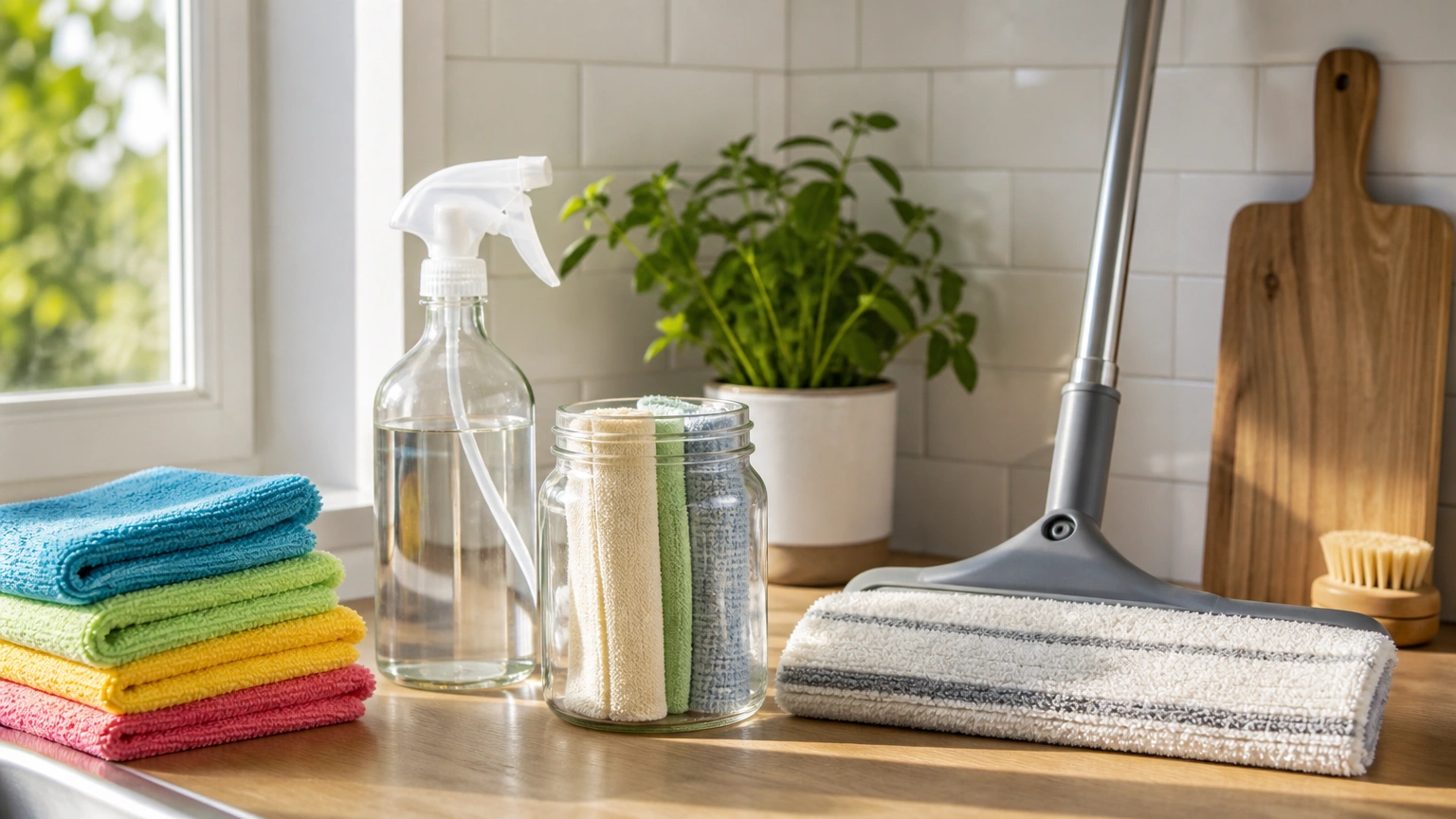
Disposable cleaning wipes are convenient but often contribute to plastic waste, clogged drains and frequent packaging disposal. Practical, local alternatives include reusable cloths and microfiber, washable mop pads, concentrated cleaning solutions in refillable bottles, and DIY wipes made from fabric and store-bought cleaners; each option balances effectiveness, cost and environmental impact. The sections below expand on those choices, explain how to use and care for reusable options, compare performance and maintenance, and offer troubleshooting and local considerations for different climates and housing types.
Reusable Cloths and Microfiber: a Reliable First Choice
Reusable cloths and microfiber towels replace single-use wipes for general cleaning, glass, and dusting. Microfiber is a synthetic fabric with very fine fibres that trap dirt and oils through electrostatic attraction and capillary action; it often cleans surfaces with only water. Cotton or terry cloth works well for heavier messes and surfaces that need scrubbing.
For households in humid climates, quick drying is important to prevent mildew. Hang cloths to dry between uses and launder frequently. In colder, dry climates, microfiber remains effective but may generate static; occasional dampening with water or a spray bottle reduces dust attraction and improves pickup.
Microfiber care: wash separately from lint-producing fabrics, avoid fabric softeners (they clog the fibres), and tumble dry on low or air dry. Replace microfiber after it starts to smell or loses absorbency.
- Best uses: countertops, appliances, glass, dusting.
- Pros: low waste, effective with water, long-lasting.
- Cons: requires laundering, some brands are synthetic (consider end-of-life disposal).
Washable Mop Pads and Reusable Floor Cloths
Replace disposable floor wipes and pretreated pads with machine-washable mop pads or reusable flat mop cloths. Many systems attach to a mop head with Velcro or pockets and can be rinsed and laundered after use. For larger families or pet owners, having multiple pads in rotation reduces downtime between cleans.
In apartments or homes with wood floors, choose microfiber pads designed for hard surfaces; they clean without excess water. For tiled or heavily soiled floors, use a reusable pad plus a separate, stronger cleaning solution.
Wash pads according to manufacturer instructions. For heavily soiled pads, pre-soak in warm water with a little soap before machine washing to extend lifespan.
Concentrated Cleaning Solutions and Refillable Bottles
Concentrated cleaning solutions reduce packaging and shipping weight by allowing dilution at home. Refillable spray bottles or trigger sprayers can be reused hundreds of times. This approach mirrors the convenience of wipes—spray and wipe—while cutting single-use plastic packaging.
When choosing concentrates, look for appropriate dilution instructions and compatibility with surfaces. Some concentrates are formulated for glass, others for multi-surface cleaning. For households with sensitive occupants, select fragrance-free or plant-based options and always test a small area first.
Local considerations: in areas with hard water, diluted solutions may leave residue; using filtered water for dilution or choosing hard-water tolerant formulas helps maintain streak-free finishes.
Related reading on concentrates and refillable solutions is available in the site’s guide to concentrated cleaning products and refillable products.
DIY Reusable Wipes: Fabric Squares and Jars
DIY reusable wipes use cut cotton or flannel squares stored in a jar or container and topped with a small amount of cleaning solution. The fabric squares are washed after multiple uses, offering a middle ground between single-use convenience and reusable savings.
Common recipes combine water with a mild surfactant (like diluted castile soap) and a little white vinegar for deodorizing. Vinegar is not suitable for natural stone surfaces. Always label containers and keep solutions out of reach of children and pets.
For apartment dwellers or those with limited storage, stackable containers or a small pump bottle plus a bundle of cloth squares keeps the system compact and accessible.
Steam Cleaning and Heat-Based Options
Steam cleaners use hot water vapor to loosen grease, kill germs and lift grime without chemicals. They work well on sealed hard floors, grout, some upholstery and bathroom tiles. Steam is particularly useful where chemical use is discouraged, such as near infants or pets.
GEO note: higher-altitude locations change boiling point slightly, but modern steam cleaners compensate and still produce effective vapor. For older floors or sealed wood surfaces, check manufacturer guidance; excessive heat or moisture can damage finishes.
Antibacterial Needs: When Disposables Are Commonly Chosen
Disposable wipes are often selected for perceived disinfecting convenience. Reusable alternatives can meet hygiene needs when paired with the right disinfectant and laundering routine. For surfaces that require disinfection, use a disinfectant spray applied to a reusable cloth, allow recommended contact time, then launder the cloth at high temperature if safe for the fabric.
For medical or high-risk environments, single-use materials may remain necessary. For homes, effective cleaning followed by targeted disinfection is usually sufficient.
Comparing Alternatives: performance, cost and environmental impact
The table below summarizes common disposable-wipe alternatives across key factors: ease-of-use, performance, maintenance and relative environmental impact.
| Alternative | Ease of Use | Cleaning Performance | Maintenance | Environmental Impact |
|---|---|---|---|---|
| Microfiber cloths | High (requires dampening) | Very good for dust and glass | Launder regularly; avoid softeners | Low waste, synthetic end-of-life |
| Washable mop pads | High for floors | Good for large areas | Machine wash; pre-soak heavy soils | Low waste, durable |
| Concentrates + refillable bottles | Medium (mixing required) | Depends on formula | Refill and clean bottles | Lower packaging impact |
| DIY fabric wipes | High (same routine as disposables) | Good with proper solution | Wash fabric squares | Low waste if fabric sourced sustainably |
| Steam cleaners | Medium (equipment handling) | Excellent on many surfaces | Empty and dry reservoir; store | Low chemical use; energy consumption applies |
How to Transition from Disposable Wipes
Transition plans reduce friction. Start by replacing the most common wipe use—such as countertop cleanup—with microfiber cloths and a refillable spray. Keep a small stack of reusable cloths near high-use areas so switching becomes automatic.
Maintain a rotation system: designate cloths for kitchen, bathroom and general cleaning to prevent cross-contamination. For households that value convenience, pre-moistening a small batch of DIY wipes and storing them in a sealed container can mimic disposable wipe usage while remaining washable.
Care, Laundering and Hygiene Best Practices
Label cloths by use to avoid cross-contamination. Use the warmest acceptable wash temperature for the fabric and consider adding a sun-drying step in sunny climates to harness UV for natural disinfection. Avoid bleach on microfiber as it can degrade fibres.
For cloths used with disinfectants, follow product laundering guidance; some disinfectants recommend washing cloths separately. Ensure storage containers for DIY wipes are cleaned periodically to prevent bacterial growth.
Cost Comparison and Longevity
While reusable products require upfront investment, many last for hundreds of washes, lowering long-term costs. Concentrates often reduce per-use cost compared to pre-moistened wipes. Consider tracking current wipe spending for a month to estimate payback time when switching to reusables.
Where to Buy and Local Considerations
Local availability varies. Many grocery stores, zero-waste shops and online retailers stock microfiber cloths, refillable bottles and concentrates. In regions with water restrictions, choose cleaning options that minimize water use—microfiber with a spray bottle is an efficient choice. For renters, confirm that steam cleaning or specific cleaning chemicals are compatible with lease terms and floor finishes.
AEO FAQ
Q: Do reusable cloths clean as well as disposable cleaning wipes?
A: Reusable cloths, especially microfiber, often outperform disposable wipes for dust and glass because of their fibre structure and ability to trap particles. For disinfecting tasks, a reusable cloth plus an appropriate disinfectant equals or surpasses disposable wipes when used correctly.
Q: How often should reusable cleaning cloths be washed?
A: Frequency depends on use. For daily kitchen use, laundering every 2–3 days is common; cloths used for disinfecting or raw food spills should be washed after each use. Maintain a rotation to ensure access to clean cloths.
Q: Are DIY wipes safe to store in a container?
A: DIY wipes stored damp for extended periods can foster microbial growth if the solution lacks preservative properties. Use the wipes within a few days and refrigerate if storage longer than 48–72 hours is needed, or opt for a rinse-and-dry routine between uses.
Q: Can steam replace chemical disinfectants?
A: Steam can reduce bacteria and kill many pathogens on suitable surfaces, but it may not meet all disinfection standards for healthcare settings. For routine home use, steam is an effective low-chemical alternative on appropriate materials.
Q: What about compostable or biodegradable disposable wipes?
A: Some wipes claim compostability, but many require industrial composting conditions and should not be flushed. Reusable options typically have lower lifecycle impacts than disposables that need specialized disposal.
Conclusion
Multiple practical alternatives exist for disposable cleaning wipes, including microfiber cloths, washable mop pads, concentrates with refillable bottles, DIY fabric wipes and steam cleaning. Each option balances convenience, performance and environmental impact. By choosing a mix of these approaches—tailored to local conditions, household needs and surface types—households can reduce waste and often lower long-term costs without sacrificing cleanliness. For further ideas on replacing other single-use products, see suggestions for washable cleaning alternatives and eco-conscious cleaning cloths.