
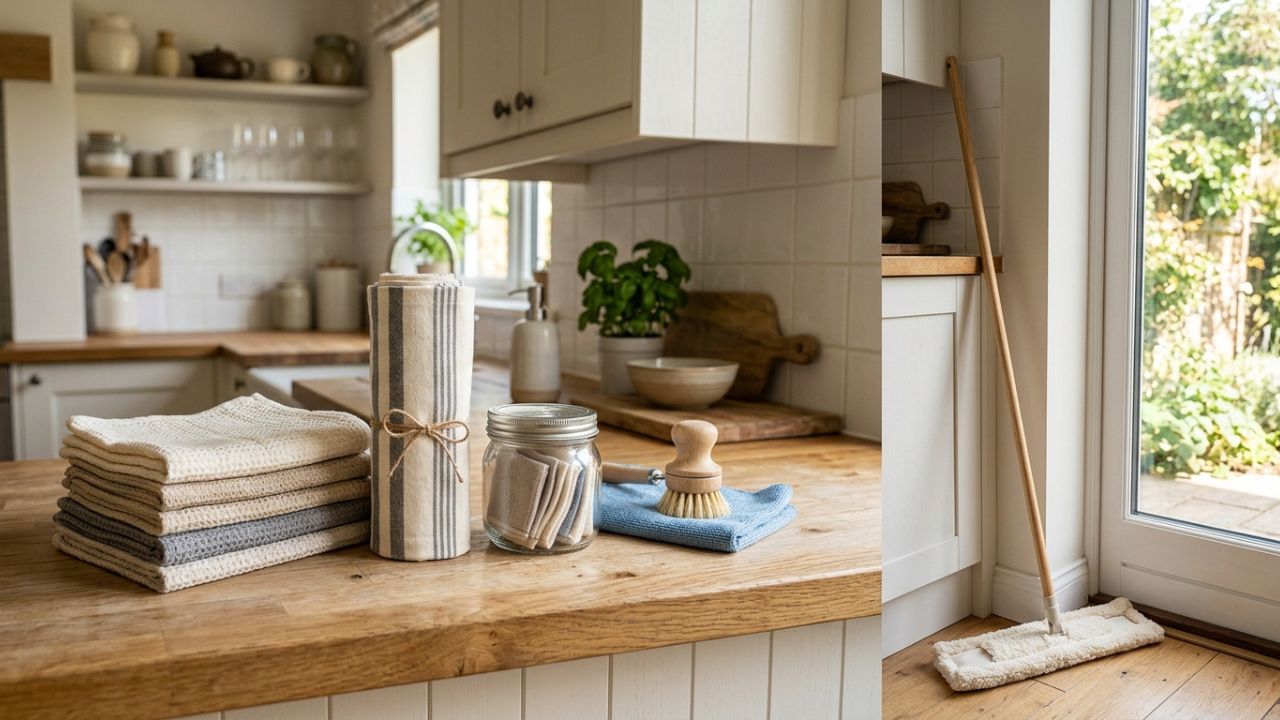
Anyone trying to live a greener life eventually looks at their cleaning cupboard and pauses. Paper towels, disposable wipes, and single use dusters pile up fast, and they all end up in the same place: the trash. For someone who cares about reducing waste, this is one of the easiest habits to change.
Swapping paper based cleaning products for washable, reusable versions is a small shift that adds up to a big difference over time, both for the planet and for the wallet.
This article looks at five washable alternatives that can replace most of the disposable paper products found in a typical home. It also explains why these swaps matter, how to care for reusable cleaning tools, and how to make the transition without feeling overwhelmed.
Why Ditch Disposable Paper Cleaning Products
Paper towels and other single use cleaning products feel convenient, but that convenience comes at a cost. Trees are cut down to make paper pulp, water and energy are used in processing, and the finished product is often used for a few seconds before being thrown away. Multiply that by millions of households doing the same thing every day, and the environmental toll becomes significant.
There is also the matter of ongoing expense. Paper towels, disposable dusters, and wet wipes need to be repurchased again and again. Washable alternatives cost more upfront but pay for themselves quickly since they can be used hundreds of times before wearing out.
Some of the main reasons people choose to switch include:
- Reducing the amount of household waste sent to landfill
- Cutting down on paper and plastic packaging waste
- Saving money over the long run by buying less
- Avoiding chemicals found in some pre-moistened disposable wipes
- Building cleaning habits that feel more intentional and less wasteful
1. Cotton or Bamboo Cleaning Cloths
The most obvious and versatile swap for paper towels is a set of reusable cleaning cloths. These can be made from cotton, bamboo fiber, or a blend of natural fibers, and they can handle almost everything a paper towel can, from wiping counters to mopping up spills.
Why They Work So Well
Cleaning cloths are absorbent, durable, and machine washable, which means one cloth can replace dozens of paper towel sheets over its lifetime. Bamboo based cloths tend to dry quickly and resist odor better than plain cotton, which makes them a popular choice for kitchens.
How to Use Them Effectively
A simple system helps keep things organized and hygienic:
- Keep a stack of clean cloths in a drawer near the sink
- Use a different cloth or color for kitchen counters versus bathroom surfaces
- Toss used cloths into a small bin or basket for laundering
- Wash on a hot cycle every few days to keep them sanitary
Many households find that having ten to fifteen cloths in rotation is enough to avoid ever running out, even with daily use.
2. Reusable Unpaper Towels
Reusable unpaper towels are designed to look and function like a roll of paper towels, except each sheet is made of absorbent fabric and can be washed and reused. Some versions snap together so they can be rolled up and stored on a regular paper towel holder, which makes the transition feel familiar.
What Makes Them Different from Regular Cloths
Unlike a basic stack of rags, unpaper towels are usually made with a layered fabric, often combining a soft top layer with a more absorbent inner layer. This gives them extra soaking power for spills, similar to what a paper towel offers, but without the waste.
Care Tips
- Rinse heavily soiled sheets before washing to avoid staining
- Wash in a mesh laundry bag to keep them from tangling
- Air dry or tumble dry on low to preserve the fabric layers
- Rotate through a set of twelve to twenty sheets for a full household
For anyone who relies heavily on paper towels for everything from grease spills to wiping down appliances, this is often the single most impactful swap to make first.
3. Washable Dusting Cloths
Disposable dusting sheets are marketed as a quick way to trap dust and pet hair, but they are typically used once and thrown out. A washable dusting cloth, often made from microfiber or a similar electrostatic fabric, can do the same job repeatedly.
How Washable Dusters Compare
Microfiber cloths attract dust through static and fine fibers rather than through added chemicals, which means they work well on furniture, blinds, electronics, and baseboards without needing spray on solutions. Many people find that a slightly damp microfiber cloth actually traps more dust than a dry paper sheet.
Caring for Microfiber Dusters
- Wash separately from other laundry to avoid lint transfer
- Skip fabric softener, since it can clog the fibers and reduce effectiveness
- Air dry when possible to extend the life of the fibers
- Replace every year or two once the fibers start to flatten
A dusting cloth that lasts for months of regular use, compared to a box of sheets that lasts a few weeks, is one of the clearer wins in terms of both waste and cost.
4. Reusable Cleaning Wipes
Pre-moistened disposable wipes are convenient for quick cleanups, but they are one of the more wasteful products on this list since they combine paper waste with plastic packaging and, in some cases, chemicals that are not great for skin or surfaces. A reusable cleaning wipe system replaces this convenience without the waste.
Building a DIY Reusable Wipe System
Many eco-conscious households make their own version using small fabric squares stored in an airtight container, pre-moistened with a simple solution of water, vinegar, and a few drops of essential oil, or a mild soap based cleaner. This creates a grab-and-go option that still avoids single use products.
Table: Disposable Wipes vs Reusable Wipes
| Feature | Disposable Wipes | Reusable Cleaning Wipes |
|---|---|---|
| Waste produced | High, thrown out after one use | Low, washed and reused |
| Cost over one year | Ongoing repurchase required | One-time cloth purchase |
| Chemical exposure | Often contains added preservatives | Customizable, can be chemical free |
| Packaging | Plastic tub or pouch | Reusable container |
| Convenience | Very high | High once system is set up |
Setting up a small container of reusable wipes near common mess areas, such as the kitchen counter or a pet’s feeding station, keeps the same grab-and-go convenience while cutting out the waste.
5. Washable Mop Pads
Traditional disposable mop pads are another paper based product that gets used once and discarded. Many mop systems now offer washable, reusable pad attachments made from microfiber that fit onto the same mop handle.
Why Washable Mop Pads Are Worth It
A washable mop pad can be used hundreds of times before it needs replacing, compared to a box of disposable pads that might last a few weeks depending on how often floors are cleaned. Microfiber mop pads are also often more effective at picking up dust and grime because of their fine fibers.
Keeping Mop Pads in Good Condition
- Rinse pads under warm water immediately after mopping
- Wash with a mild detergent, avoiding bleach which can damage the fibers
- Let pads fully dry before storing to prevent mildew
- Keep two or three pads in rotation so one is always ready to use
For households with hard floors that need regular cleaning, switching to washable mop pads can eliminate a surprising amount of packaging and paper waste over a year.
Making the Switch Without the Overwhelm
Transitioning away from disposable paper cleaning products does not need to happen overnight. Many people start with just one swap, such as replacing paper towels with cloth, and expand from there once the new habit feels natural.
A few tips that make the switch easier:
- Start with the product used most often in the home, usually paper towels
- Keep a designated laundry basket just for cleaning cloths so they do not mix with regular laundry
- Buy a variety of textures, since a plush cloth for dusting feels different from a rougher one for scrubbing
- Involve the whole household so everyone knows where clean and dirty cloths belong
- Give it a few weeks before judging whether the new system works, since habits take time to settle in
The Bigger Picture
Switching five simple products from disposable to washable will not solve every environmental problem, but it does represent a meaningful shift in daily habits. Less paper waste means fewer trees harvested, less water used in manufacturing, and less trash sent to landfill.
It also tends to spark a broader interest in sustainable living, since once someone sees how easy it is to swap paper towels for cloth, they often start looking at other areas of the home where similar changes could make a difference.
Living sustainably is rarely about one dramatic change. It is usually a series of small, manageable swaps that fit into everyday routines. Washable cleaning cloths, reusable unpaper towels, microfiber dusters, DIY reusable wipes, and washable mop pads are five practical starting points that make disposable paper products feel unnecessary in a well-stocked, eco-friendly home.



