
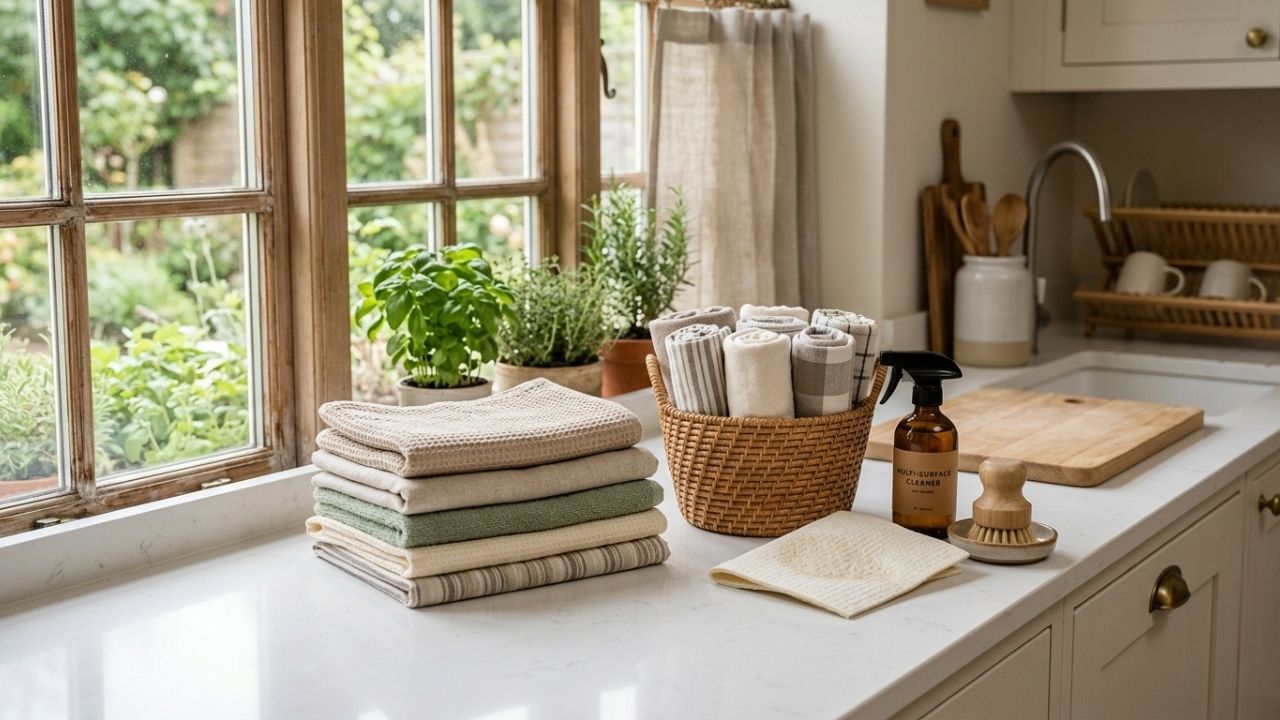
Anyone trying to live a greener life eventually looks at their cleaning cupboard and feels a small twinge of guilt. Paper towels, disposable wipes, and single use dusting cloths pile up in landfills week after week, yet most households keep buying them out of habit rather than necessity.
The good news is that switching away from disposable cleaning products is one of the easiest sustainability wins a person can make at home. It saves money over time, cuts down on plastic and paper waste, and often works just as well, if not better, than the throwaway versions.
This article walks through nine practical, eco-conscious alternatives to disposable cleaning cloths. Each option is affordable, easy to find or make, and suited to different cleaning needs around the house.
Why Ditching Disposable Cleaning Cloths Matters
Before getting into the alternatives, it helps to understand why this small swap has a real impact. Disposable wipes and paper towels are used once and thrown away, which means constant manufacturing, packaging, and shipping just to keep up with demand. Many wipes also contain synthetic fibers that do not break down easily, so they linger in landfills and sometimes end up in waterways.
Reusable cleaning cloths, on the other hand, can be washed and used hundreds of times before they wear out. That single change reduces the amount of household waste sent to landfill, lowers demand for raw materials, and often saves a noticeable amount of money each year since there is no need to keep repurchasing rolls of paper towels or packs of wipes.
1. Cotton Rags Made From Old Clothing
One of the simplest and most budget-friendly options is repurposing old t-shirts, towels, and bedsheets into cleaning rags. Cotton fabric is soft, absorbent, and gentle on most surfaces, making it ideal for dusting, wiping counters, or mopping up spills.
- Cut worn out clothing into squares of a manageable size, usually around 12 by 12 inches
- Keep a designated bin or drawer for these rags so they are easy to grab
- Wash and reuse them dozens of times before they are truly worn out
This option costs nothing beyond a pair of scissors and gives old clothing a second life instead of sending it to the donation pile or the trash.
2. Unpaper Towels
Unpaper towels are reusable cloths designed to mimic the size and function of a paper towel roll, often sold with snap buttons so they can be rolled up and stored on a regular paper towel holder. They are typically made from absorbent cotton, flannel, or bamboo fabric.
Many people sew their own using leftover fabric scraps, while others prefer to buy a ready made set. Either way, unpaper towels can be tossed in the wash and used again and again, which means one set can realistically replace hundreds of rolls of disposable paper towels over its lifetime.
How to Use Them Effectively
- Keep a stack near the kitchen sink for quick spills
- Use a mesh laundry bag to wash them without losing snap pieces
- Rotate through a few sets so there is always a clean batch ready
3. Bamboo Cleaning Cloths
Bamboo is one of the fastest growing plants on earth and requires very little water or pesticide to cultivate, which makes it a popular material for eco-friendly products. Bamboo cleaning cloths are soft, naturally somewhat antibacterial, and highly absorbent.
These cloths tend to hold up well to repeated washing and are a strong choice for people who want a plant-based alternative to cotton. They work well on kitchen counters, bathroom sinks, and glass surfaces.
4. Microfiber Cloths
Microfiber cloths are a favorite among cleaning enthusiasts because of how effectively they trap dust, dirt, and grime without needing harsh chemicals. A slightly damp microfiber cloth can pick up dust that a dry cotton rag might just push around.
- Great for wiping down electronics, mirrors, and stainless steel
- Can be washed hundreds of times before losing effectiveness
- Reduces the need for chemical cleaning sprays since the fabric does much of the work on its own
It is worth noting that microfiber is a synthetic material made from plastic fibers, so it sheds tiny microplastics during washing. Using a washing bag designed to catch these fibers can help reduce that impact.
5. Beeswax or Plant Wax Wraps for Surface Wiping
While beeswax wraps are best known as a substitute for plastic wrap on food, many people also use scraps of leftover wax cloth for quick wipe downs of counters or spot cleaning. They are washable with cool water and mild soap, reusable for about a year, and compostable at the end of their life if made with natural fibers.
This is a smaller scale solution but a clever way to get extra use out of a product many eco-conscious households already own.
6. Wool Dryer Balls Repurposed as Dusters
This is a lesser known trick, but old or worn out wool dryer balls can be cut open and the wool felt inside used as a dusting cloth. Wool naturally attracts dust through static, similar to how disposable dusting sheets work, but without the packaging waste.
- Works especially well on blinds, baseboards, and light fixtures
- Can be rinsed and air dried for repeated use
- A creative way to extend the life of a product that would otherwise be discarded
7. Linen Cloths
Linen is another natural fiber that holds up remarkably well over time. It is more durable than cotton in many cases and becomes softer with each wash, making it a long-lasting choice for kitchen and household cleaning.
Linen cloths are particularly good for polishing glass and mirrors since they tend to leave less lint behind compared to cotton. They are also biodegradable at the end of their life, since linen comes from the flax plant.
8. Crocheted or Knitted Cotton Dishcloths
For those who enjoy a hands-on project, crocheted or knitted cotton dishcloths are a charming and highly functional option. Cotton yarn dishcloths are thick, textured, and excellent for scrubbing dishes, counters, and stovetops.
- A single cotton dishcloth can last for months of regular use
- They dry quickly, which helps prevent mildew and odor
- Handmade versions make thoughtful, low-waste gifts for friends and family
Even for people who do not know how to crochet or knit, these cloths are widely available from small makers and craft markets, often at a similar price point to a pack of disposable wipes.
9. Compostable Cellulose Sponge Cloths
Cellulose sponge cloths, sometimes called Swedish dishcloths, are made from a blend of cellulose (wood pulp) and cotton. They look like a thin sponge and can absorb an impressive amount of liquid, often replacing a dozen or more paper towels before needing to be replaced.
These cloths can be tossed in the dishwasher or washing machine for a deep clean and, once they finally wear out, they are fully compostable since they are made from natural materials. This makes them one of the few cleaning products that leaves behind no lasting waste at all.
Comparing the Nine Alternatives
| Alternative | Best Used For | Reusable Lifespan | End of Life |
|---|---|---|---|
| Cotton rags from old clothing | Dusting, spills, general wiping | Several months to a year | Compostable if untreated |
| Unpaper towels | Kitchen spills, quick cleanups | 1 to 2 years | Compostable or recyclable fabric |
| Bamboo cleaning cloths | Counters, sinks, glass | 1 to 2 years | Biodegradable |
| Microfiber cloths | Dusting, electronics, mirrors | Several years | Not biodegradable, recycle where possible |
| Wax wraps for wiping | Spot cleaning counters | Around 1 year | Compostable |
| Repurposed wool dryer balls | Dusting blinds and fixtures | Several months | Biodegradable |
| Linen cloths | Glass, mirrors, polishing | Several years | Biodegradable |
| Crocheted cotton dishcloths | Scrubbing dishes and stovetops | Several months | Compostable if untreated |
| Cellulose sponge cloths | Absorbing spills, general cleaning | 6 months to a year | Compostable |
Tips for Making the Switch Stick
Swapping disposable cloths for reusable ones is simple, but building the habit takes a bit of planning. A few small adjustments can make the transition much smoother.
- Keep a designated hamper or bin just for used cleaning cloths so they do not get mixed with regular laundry
- Wash cleaning cloths in hot water with a bit of vinegar occasionally to keep them fresh and free of odor
- Store a variety of cloths near each cleaning zone, such as the kitchen, bathroom, and living room, so it is always convenient to grab one instead of reaching for a disposable option
- Let go of the idea that reusable cloths need to look perfect. Mismatched fabric scraps work just as well as a matching set
Common Concerns Addressed
Some people worry that reusable cloths are less hygienic than disposable ones. In reality, washing cloths regularly in hot water, and occasionally with a splash of vinegar or a hot dryer cycle, keeps them just as clean and safe to use. Others worry about the upfront cost, but most of these alternatives are either free, made from items already in the home, or inexpensive enough to pay for themselves within a few months.
Final Thoughts
Switching from disposable cleaning cloths to reusable alternatives is one of the most approachable steps toward a lower waste household. It does not require a complete lifestyle overhaul, expensive gear, or a steep learning curve. Whether someone chooses to sew their own unpaper towels, pick up a set of cellulose sponge cloths, or simply start cutting up old t-shirts, every reusable cloth means one less disposable item heading to the landfill.
Small changes like this add up over time, both for the household budget and for the planet. Anyone looking to build a more sustainable home can start with this one simple swap and likely find it easier to stick with than expected.



