
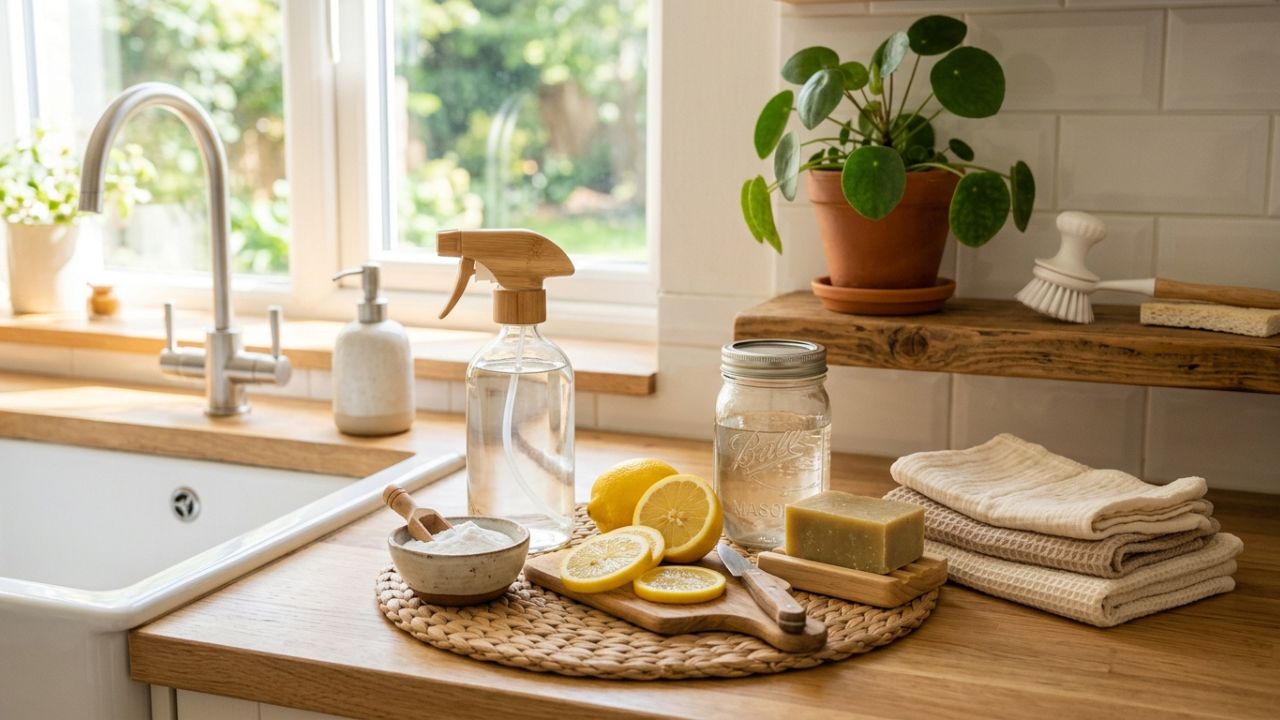
Keeping a home clean shouldn’t come at the cost of the planet’s health. Many conventional cleaning products contain harsh chemicals that pollute waterways, release volatile organic compounds into the air, and come packaged in plastic that often ends up in landfills.
For anyone trying to live a greener, more mindful life, switching to eco-friendly cleaning alternatives is one of the simplest and most rewarding changes to make.
The good news is that going green with cleaning doesn’t require a complete lifestyle overhaul. It often means returning to simple, time-tested ingredients that our grandparents relied on long before store shelves were filled with synthetic sprays and single-use plastic bottles. This article explores ten practical, effective, and budget-friendly alternatives to everyday cleaning products that anyone can start using today.
Why Switch to Eco-Friendly Cleaning Products
Before diving into the alternatives, it helps to understand why this shift matters. Conventional cleaning products can affect both personal health and the environment in several ways.
- They often contain chemicals like ammonia, chlorine bleach, and synthetic fragrances that can irritate the skin, eyes, and lungs.
- Many formulas are not biodegradable, meaning they linger in waterways and harm aquatic life long after they go down the drain.
- Plastic packaging from cleaning products contributes significantly to household plastic waste.
- Some ingredients are tested on animals, which conflicts with the values of many eco-conscious consumers.
Choosing natural alternatives helps reduce exposure to harsh chemicals, cuts down on plastic waste, and supports a lifestyle rooted in sustainability. It also tends to save money, since many eco-friendly solutions use ingredients already sitting in the kitchen pantry.
1. White Vinegar Instead of Multi-Surface Cleaner
White vinegar is one of the most versatile natural cleaning agents available. Its acidity helps break down grease, mineral deposits, and grime on countertops, glass, and bathroom fixtures.
To use it, a simple mixture of equal parts white vinegar and water in a spray bottle works well for most surfaces. Adding a few drops of essential oil, such as lemon or lavender, helps mask the vinegar smell once it dries.
Vinegar should be avoided on natural stone surfaces like marble or granite, as the acidity can etch the stone over time.
2. Baking Soda Instead of Abrasive Scouring Powder
Baking soda is a gentle yet effective abrasive that can replace harsh scouring powders used on sinks, tubs, and ovens. It lifts stuck-on grime without scratching most surfaces and neutralizes odors at the same time.
A paste made from baking soda and water can be applied directly to stubborn stains and left to sit for a few minutes before scrubbing. This makes it especially useful for cleaning kitchen appliances or refreshing a musty refrigerator.
3. Castile Soap Instead of Dish Soap
Castile soap, made from plant oils rather than synthetic detergents, is a biodegradable option that works beautifully as a dish soap substitute. It cuts through grease effectively and rinses clean without leaving a chemical residue.
Because castile soap is concentrated, only a small amount is needed per use, which makes a single bottle last a long time. It also doubles as a general household cleaner when diluted with water.
4. Lemon Juice Instead of Chemical Deodorizers
Lemon juice is a natural deodorizer and mild disinfectant thanks to its citric acid content. It works especially well in the kitchen, where it can neutralize odors in garbage disposals, cutting boards, and microwaves.
Placing lemon slices in a bowl of water and microwaving it for a few minutes loosens baked-on food residue and leaves the appliance smelling fresh, all without synthetic air freshener sprays.
5. Reusable Cloths Instead of Paper Towels and Disposable Wipes
Disposable wipes and paper towels generate a significant amount of household waste. Reusable cotton or microfiber cloths can handle the same cleaning tasks and simply get tossed in the laundry after use.
Keeping a small stack of designated cleaning cloths, separate from kitchen towels, makes this switch easy to maintain. Some households even repurpose old t-shirts or towels into cleaning rags instead of buying new ones.
6. Essential Oils Instead of Synthetic Air Fresheners
Store-bought air fresheners often rely on synthetic fragrances and aerosol propellants that release chemicals into indoor air. Essential oils offer a more natural way to freshen a home.
- A few drops of tea tree oil in a spray bottle with water creates a light, antibacterial mist for fabrics and soft surfaces.
- Diffusing essential oils like eucalyptus or citrus can naturally scent a room without synthetic additives.
- Cotton balls soaked in essential oil and tucked into drawers or closets provide a subtle, long-lasting fragrance.
7. Cornstarch Instead of Commercial Glass Cleaner
Cornstarch might not be the first ingredient that comes to mind for cleaning windows, but it works surprisingly well when mixed with vinegar and water. The starch helps lift dust and grime while reducing streaking, leaving glass surfaces clear and shiny.
This mixture is a great alternative for anyone who wants a streak-free finish without relying on ammonia-based glass cleaners.
8. Olive Oil Instead of Furniture Polish
A small amount of olive oil combined with a few drops of lemon juice can restore shine to wood furniture without the synthetic chemicals found in many commercial polishes. The oil conditions the wood while the lemon juice helps cut through dust and light grime.
This method works particularly well on wooden tables, cabinets, and cutting boards that could use a natural refresh.
9. Hydrogen Peroxide Instead of Chlorine Bleach
Hydrogen peroxide is a gentler alternative to chlorine bleach that still offers effective disinfecting and stain removal properties. It breaks down into water and oxygen, making it far less harmful to the environment than traditional bleach.
It can be used to brighten laundry, remove stains from fabric, and disinfect kitchen and bathroom surfaces. As with any cleaning product, it is best to test it on a small hidden area of fabric first to check for colorfastness.
10. Wool Dryer Balls Instead of Dryer Sheets
Dryer sheets are typically single-use and coated with synthetic fragrances and softening agents. Wool dryer balls are a reusable alternative that helps reduce static and soften fabrics naturally, without leaving any chemical residue on clothing.
They can be reused for hundreds of loads, and adding a drop of essential oil to the wool balls provides a light, natural scent to laundry.
Comparing Conventional Products to Eco-Friendly Alternatives
The table below offers a quick side-by-side look at how these swaps stack up against their conventional counterparts.
| Conventional Product | Eco-Friendly Alternative | Key Benefit |
|---|---|---|
| Multi-surface cleaner | White vinegar and water | Cuts grease and grime without harsh chemicals |
| Scouring powder | Baking soda | Gentle abrasive that also neutralizes odors |
| Dish soap | Castile soap | Biodegradable and highly concentrated |
| Chemical deodorizer | Lemon juice | Natural odor neutralizer and mild disinfectant |
| Paper towels | Reusable cloths | Reduces disposable waste significantly |
| Synthetic air freshener | Essential oils | Freshens air without aerosol chemicals |
| Glass cleaner | Cornstarch, vinegar, and water | Streak-free shine without ammonia |
| Furniture polish | Olive oil and lemon juice | Conditions wood naturally |
| Chlorine bleach | Hydrogen peroxide | Effective disinfecting with less environmental harm |
| Dryer sheets | Wool dryer balls | Reusable for hundreds of loads |
Tips for Making the Switch Successfully
Transitioning to eco-friendly cleaning products works best when approached gradually rather than all at once. Here are a few tips to help make the switch feel manageable.
- Start by replacing one product at a time as current supplies run out, rather than discarding unused items.
- Keep a small set of reusable spray bottles on hand for mixing homemade cleaning solutions.
- Label homemade cleaners clearly, including the ingredients and date they were made, since some natural mixtures have a shorter shelf life than commercial products.
- Store ingredients like vinegar, baking soda, and castile soap in bulk to save money and reduce packaging waste over time.
- Test new cleaning mixtures on a small, inconspicuous area first, especially when working with natural stone, hardwood, or delicate fabrics.
A Small Shift With a Big Impact
Switching to eco-friendly cleaning alternatives is one of those small, everyday choices that adds up to a meaningful impact over time. Each swap, whether it’s trading paper towels for reusable cloths or replacing bleach with hydrogen peroxide, reduces the amount of plastic waste and chemical runoff entering the environment.
Beyond the environmental benefits, many of these alternatives are gentler on skin, safer for households with children and pets, and often more affordable than their commercial counterparts. Building a cleaning routine around simple, natural ingredients is a practical step toward a more sustainable lifestyle, one that doesn’t require sacrificing cleanliness or convenience along the way.
For anyone just starting their eco-friendly journey, there’s no need to replace every product overnight. Trying just one or two of these alternatives is a great starting point, and as those habits become second nature, the rest of the switch tends to follow naturally.



