Every kitchen tells a story about the choices behind it. For anyone trying to live a more sustainable life, the kitchen is often the first room where change begins.
It is the place where food is prepared, packaging gets tossed, and single use items pile up faster than most people realize. Choosing long-lasting kitchen tools is one of the simplest and most effective ways to cut down on waste while saving money over time.
This article explores ten kitchen tools built to last, along with why they matter for a greener home. Each item was chosen because it replaces something disposable, reduces reliance on plastic, or simply outlives cheaper alternatives that end up in landfills.
Why Long-Lasting Kitchen Tools Matter
Before diving into the list, it helps to understand why durability is such a big deal for sustainability. Kitchens generate an enormous amount of waste, from plastic wrap and paper towels to flimsy gadgets that break within months. When tools are built to last for years or even decades, they reduce the constant cycle of buying, using, and throwing away.
Durable kitchen tools also tend to be made from natural or recyclable materials like wood, stainless steel, cast iron, and glass. These materials age well, are easier to repair, and do not release microplastics the way many synthetic products do over time.
There is also a financial upside. While long-lasting tools may cost more upfront, they often save money in the long run because they do not need constant replacing. This makes sustainable choices in the kitchen a practical decision, not just an environmental one.
The Top 10 Long-Lasting Kitchen Tools
1. Cast Iron Skillet
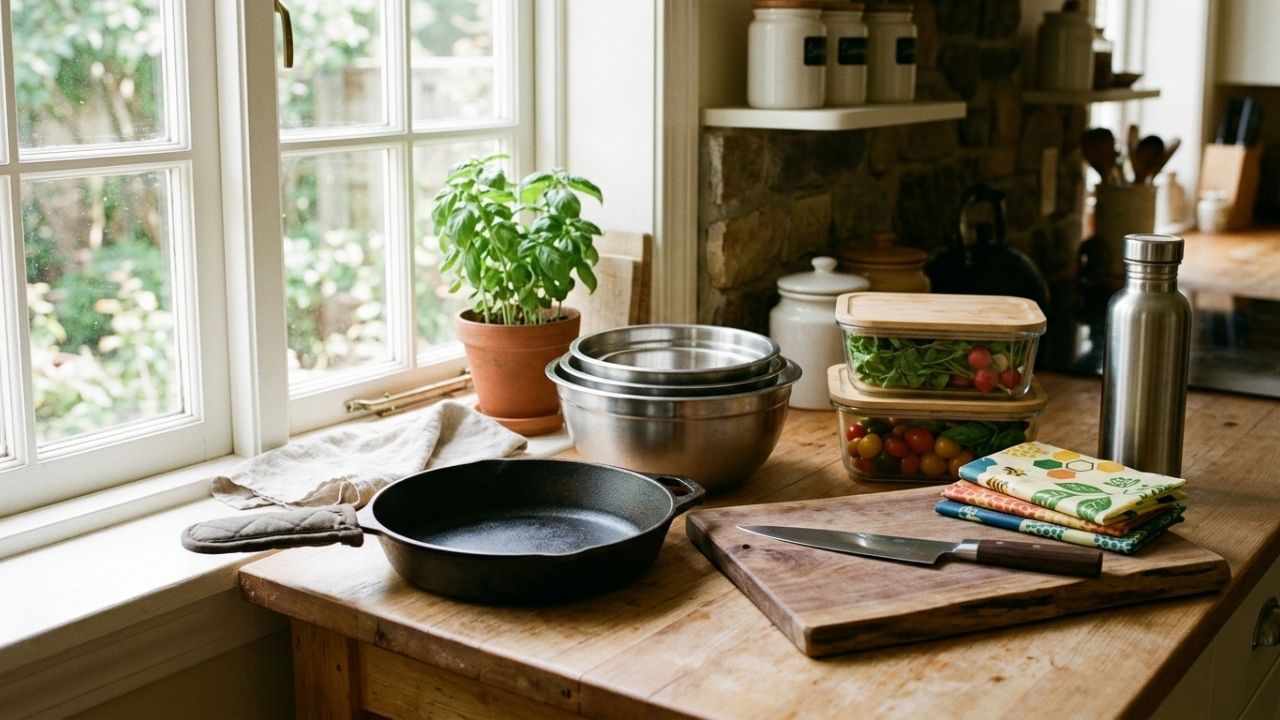
A well-seasoned cast iron skillet can last a lifetime and even be passed down through generations. Unlike nonstick pans coated in synthetic materials that wear off after a few years, cast iron only gets better with age and use. It heats evenly, works on the stovetop or in the oven, and requires nothing more than a bit of oil and care to maintain.
- Naturally nonstick when seasoned properly
- Free from synthetic coatings that can degrade over time
- Can be restored even after years of neglect
2. Stainless Steel Mixing Bowls
Plastic mixing bowls tend to crack, stain, and absorb odors after repeated use. Stainless steel bowls, on the other hand, resist rust, do not hold onto smells, and can handle drops without shattering. They are also fully recyclable at the end of their very long life.
3. Glass Storage Containers
Replacing plastic containers with glass ones is one of the most popular swaps for people trying to reduce kitchen waste. Glass does not stain, does not absorb flavors, and can go from the fridge to the oven without warping or leaching chemicals into food.
- Easy to clean without holding onto smells
- Safe for reheating food
- Long lifespan compared to plastic alternatives
4. Wooden Cutting Boards
A solid wooden cutting board can last for many years with basic maintenance like oiling and proper drying. Wood is naturally antimicrobial in ways plastic is not, and unlike plastic boards, it does not shed microplastic particles into food over time. When a wooden board finally reaches the end of its life, it can be composted or repurposed instead of sitting in a landfill for centuries.
5. Stainless Steel Utensils
Wooden and metal utensils tend to outlast their plastic counterparts by years. Stainless steel spatulas, whisks, and tongs resist melting near heat, do not crack under pressure, and can be sanitized easily. Investing in a solid set means fewer trips to replace broken or warped tools.
6. Manual Coffee Grinder
For those who love their morning coffee, a manual grinder is a small change with a big impact. These grinders skip the plastic housing and electronic parts found in many electric models, relying instead on simple mechanical parts that are easy to repair. They also tend to produce a more consistent grind, which can improve the flavor of the coffee itself.
7. Reusable Beeswax Wraps
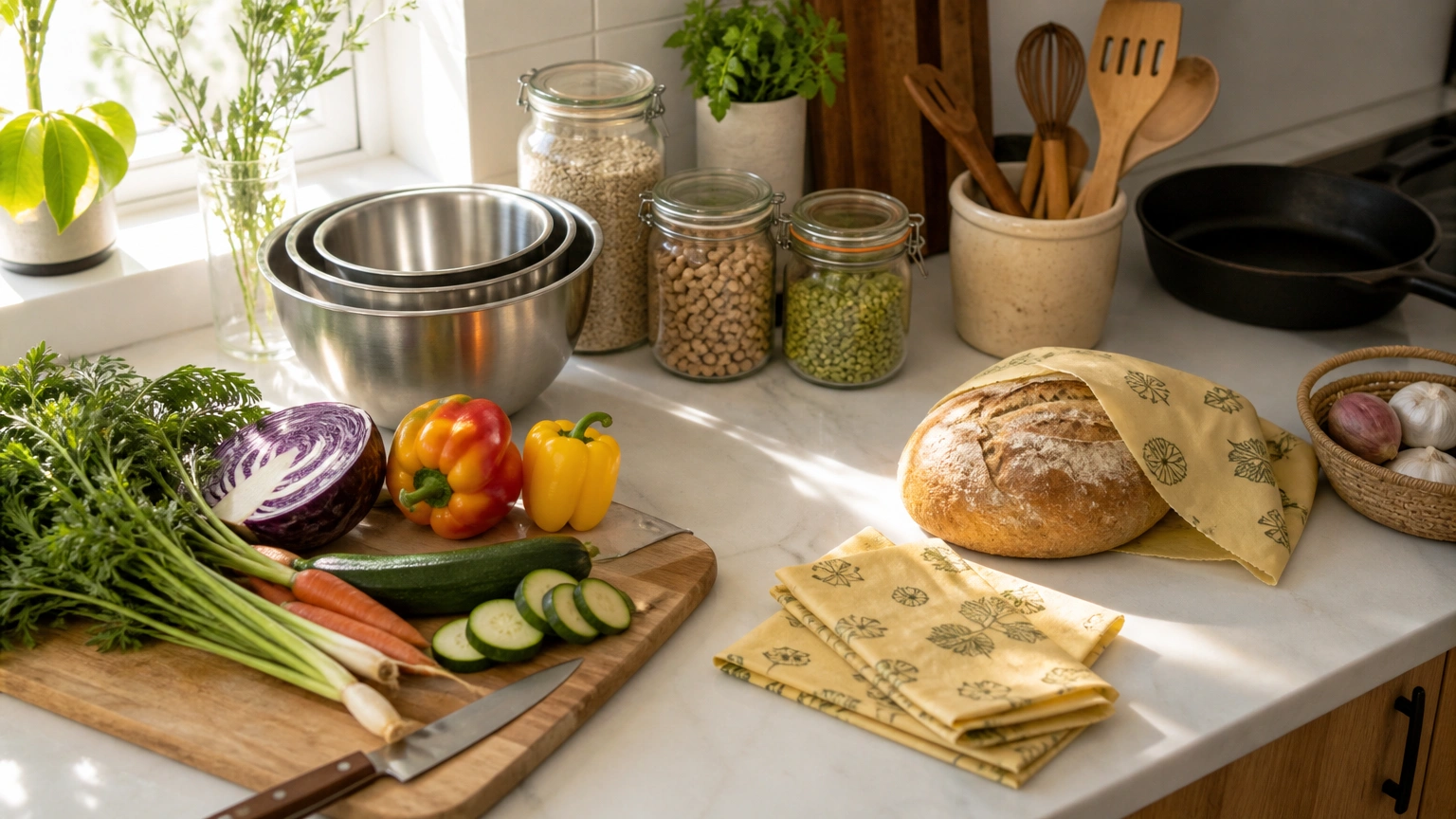
Beeswax wraps are a natural alternative to plastic wrap and can be used repeatedly for up to a year or longer before needing to be refreshed with a bit more wax. Made from cotton fabric coated in beeswax, tree resin, and oil, they are compostable at the end of their life and mold easily around bowls, fruit, and sandwiches.
- Reusable for many months with proper care
- Fully compostable when worn out
- Free from plastic and synthetic coatings
8. Cast Iron or Carbon Steel Wok
Much like a cast iron skillet, a carbon steel wok develops a natural seasoning layer that improves with use. These pans are known for lasting decades in home kitchens across the world, proving that quality cookware does not need to be replaced every few years the way many nonstick pans do.
9. Stainless Steel Water Bottle
While not strictly a kitchen tool in the traditional sense, a sturdy stainless steel water bottle belongs in this list because it directly cuts down on single use plastic bottles. A well-made bottle can last for many years, keeps drinks at the right temperature, and does not degrade the way plastic does with repeated washing.
10. Manual Can Opener
A well-built manual can opener made from stainless steel can last a lifetime with almost no maintenance. Unlike electric openers that rely on motors and plastic housings prone to breaking, a simple manual design has fewer parts that can fail, making it a reliable and long-lasting choice for any kitchen.
Comparing Traditional vs Long-Lasting Alternatives
The table below highlights how common disposable or short-lived kitchen items compare to their long-lasting counterparts.
| Common Item | Typical Lifespan | Long-Lasting Alternative | Typical Lifespan |
|---|---|---|---|
| Plastic wrap | Single use | Beeswax wraps | 1 year or more per wrap |
| Nonstick coated pan | 1 to 3 years | Cast iron skillet | Decades |
| Plastic mixing bowls | 2 to 4 years | Stainless steel bowls | Decades |
| Plastic storage containers | 1 to 3 years | Glass storage containers | Many years |
| Plastic cutting board | 1 to 2 years | Wooden cutting board | Many years |
| Plastic water bottles | Single use | Stainless steel bottle | Many years |
This comparison shows a clear pattern. Items made from natural or metal materials tend to last significantly longer than their plastic counterparts, which translates into less waste and fewer replacement purchases over time.
How to Choose Long-Lasting Kitchen Tools
Not every product marketed as sustainable actually holds up over time. Knowing what to look for can help avoid greenwashed products that claim to be eco-friendly but do not last.
Look at the Materials
Materials like cast iron, stainless steel, glass, and untreated wood tend to be more durable than plastic or items coated in synthetic nonstick layers. These materials are also easier to recycle or compost once they truly reach the end of their usable life.
Check for Repairability
Tools that can be repaired rather than replaced are always a better long-term investment. A cast iron pan can be re-seasoned, a wooden handle can be sanded down, and a stainless steel tool can often be sharpened or polished back to life.
Read Reviews for Longevity
Before buying, it helps to look for reviews that specifically mention how a product holds up after months or years of use rather than focusing only on first impressions. Products with a strong reputation for durability are usually worth the higher upfront cost.
Avoid Unnecessary Extras
Simple designs with fewer moving parts, batteries, or electronic components tend to last longer and are easier to maintain. A manual tool with no motor has far fewer things that can break compared to an electric version doing the same job.
Caring for Long-Lasting Kitchen Tools
Buying durable tools is only part of the equation. Proper care extends their life even further and keeps them performing well for years.
- Dry cast iron and carbon steel thoroughly after washing to prevent rust
- Oil wooden cutting boards and utensils regularly to keep the wood from drying out or cracking
- Hand wash stainless steel items when possible to preserve their finish
- Store glass containers without stacking heavy items on top to avoid chips or cracks
- Refresh beeswax wraps with a light coating of wax once they start to feel stiff or worn
Small Changes That Add Up
Switching to long-lasting kitchen tools does not need to happen all at once. Many people start by replacing one item at a time, such as swapping plastic wrap for beeswax wraps or upgrading a cracked mixing bowl to a stainless steel one. Over time, these small changes add up to a kitchen filled with tools that are built to last rather than items destined for the landfill within a year or two.
Living sustainably is often less about dramatic overhauls and more about consistent, thoughtful choices. A kitchen stocked with durable, well-made tools reflects that mindset perfectly. It reduces daily waste, saves money over time, and often results in a more enjoyable cooking experience since quality tools simply perform better.
Final Thoughts
Reducing waste in the kitchen starts with rethinking the everyday tools relied on for cooking and food storage. Cast iron skillets, stainless steel utensils, glass containers, and wooden cutting boards are just a few examples of items that can last for years, sometimes even generations, when cared for properly.
By choosing quality over convenience and durability over disposability, anyone can build a kitchen that supports both a healthier planet and a more mindful way of living.
Small swaps, made consistently, are what turn an ordinary kitchen into a sustainable one.