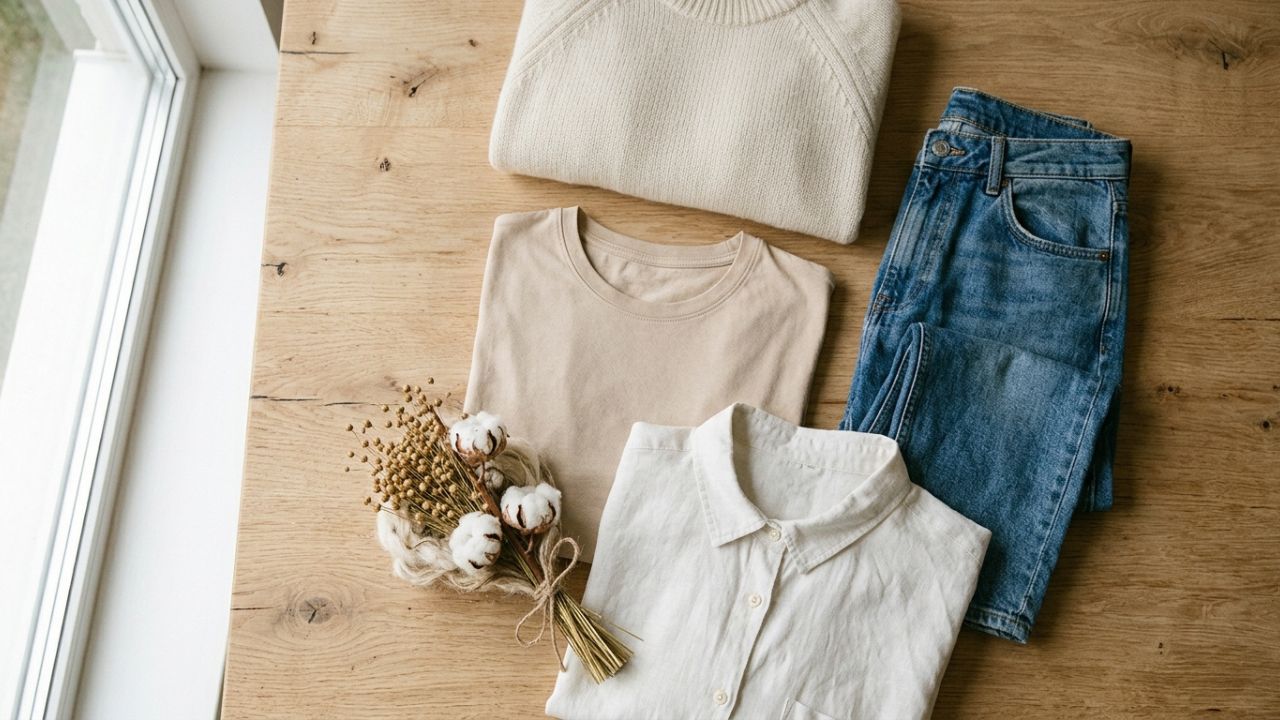
Anyone trying to build a more sustainable wardrobe eventually runs into the same question: what is this shirt actually made of? So much of what fills store racks today is built from synthetic materials like polyester, nylon, and acrylic.
These fabrics are cheap to produce, but they shed microplastics with every wash and can take hundreds of years to break down in a landfill. Natural fibers offer a different path. They come from plants and animals, they tend to biodegrade far more easily, and many of them are simply more comfortable to wear day after day.
This guide walks through ten natural-fiber clothing finds that are easy to work into an everyday rotation. It also covers why natural fibers matter, what to look for on a clothing label, and how to care for these pieces so they last as long as possible.
Why Choose Natural Fibers in the First Place
Before getting into specific pieces, it helps to understand what makes natural fibers a smarter choice for both people and the planet.
- They come from renewable sources like cotton plants, flax, hemp, sheep’s wool, and silkworms rather than petroleum.
- They tend to be more breathable, which means less sweating and odor buildup during the day.
- Many natural fibers biodegrade within months or a few years, compared to synthetics that can linger for centuries.
- They generally shed far fewer microplastics into waterways during washing.
- Natural fibers often age gracefully, developing a softer hand feel over time instead of pilling and breaking down.
None of this means natural fibers are automatically perfect. Farming practices, dyeing processes, and water use still matter. But choosing natural over synthetic is usually a meaningful first step toward a lower-impact closet.
1. Organic Cotton T-Shirts
A well-made organic cotton t-shirt is the backbone of a sustainable everyday wardrobe. Organic cotton is grown without synthetic pesticides or fertilizers, which reduces the strain on soil and local water systems. It also tends to use less water overall compared to conventional cotton farming, since organic growers often rely on rain-fed methods and healthier soil that retains moisture better.
Look for a heavier weight cotton, somewhere around 180 to 220 grams per square meter, for a shirt that holds its shape wash after wash. A slightly boxy or relaxed cut also tends to outlast tighter, trend-driven fits.
What to Check on the Label
- Certification marks such as organic or fair trade labels
- A high percentage of cotton content, ideally 95 percent or more
- Reinforced seams at the shoulders and collar
2. Linen Button-Up Shirts
Linen comes from the flax plant, one of the oldest cultivated fibers in human history. Flax requires very little irrigation and can grow in poor soil conditions where other crops struggle, which makes it a relatively low-impact crop to farm. Linen fabric is also naturally moisture-wicking and cools the body quickly, making it a strong choice for warm climates or layering during transitional seasons.
A linen button-up works for both casual and slightly dressed-up occasions. The characteristic wrinkles are part of the fabric’s charm rather than a flaw, so there is no need to iron out every crease.
3. Wool Sweaters
Wool is a renewable fiber that regrows naturally on sheep every year, and it is biodegradable at the end of its life. It also happens to be one of the best insulators available, trapping warmth even when slightly damp. A quality wool sweater can last for many winters if it is stored properly during the off season.
- Merino wool is soft against the skin and works well for lighter layers
- Shetland or heavier wool holds up better for outerwear-style sweaters
- Look for wool sourced through programs that verify humane treatment of the animals
4. Hemp Denim
Hemp is having a quiet resurgence in the fashion world, and hemp denim is one of the more exciting places to see it. Hemp plants grow quickly, need little water, and naturally resist pests, which means fewer chemical inputs during farming. Hemp fibers are also incredibly strong, which is why blended hemp denim often outlasts pure cotton denim in terms of durability.
Many brands now blend hemp with a small percentage of organic cotton to soften the fabric’s texture while keeping the strength benefits intact.
5. Silk Blouses
Silk is produced by silkworms and has been prized for thousands of years for its smooth texture and natural sheen. It is fully biodegradable and, when produced through responsible methods, can be a lower-impact alternative to synthetic satin or polyester blouses that mimic the same look.
For those concerned about the treatment of silkworms in traditional silk production, peace silk (sometimes called Ahimsa silk) is worth researching, since it allows the moth to emerge from its cocoon before the fiber is harvested.
6. Cotton Denim Jeans
Denim remains one of the most worn garments on the planet, so choosing a natural-fiber version matters. Traditional cotton denim, especially organic cotton denim, avoids the plastic content found in stretch jeans made with elastane or polyester blends.
Table: Comparing Denim Fiber Options
| Fiber Type | Water Use | Durability | Biodegradable |
|---|---|---|---|
| Organic cotton denim | Lower than conventional cotton | High | Yes |
| Conventional cotton denim | Higher | High | Yes |
| Hemp-cotton blend denim | Low | Very high | Mostly |
| Synthetic-blend stretch denim | Varies | Moderate | No |
A pair of straight or slightly relaxed cut jeans in 100 percent cotton denim tends to be the easiest to find and the simplest to recycle or compost at the end of its life.
7. Linen-Cotton Blend Dresses
For those who want the breathability of linen with a bit more structure, a linen-cotton blend dress is a practical everyday option. The blend softens linen’s natural stiffness while keeping the fabric light and airy. These dresses work well across seasons, layered with tights and a sweater in cooler months or worn alone in the summer heat.
8. Wool-Blend Coats
A winter coat is a major investment piece, and choosing wool over a synthetic-filled alternative pays off over time. Wool naturally repels light moisture, resists odor, and holds warmth even in damp weather. A wool-blend coat with a small percentage of recycled fiber mixed in can offer a good balance of structure, warmth, and reduced environmental footprint.
- Choose a classic silhouette that will not feel dated in a few years
- Check the lining, since a natural fiber lining like cupro or organic cotton is preferable to a fully synthetic one
- Have the coat professionally cleaned only when truly necessary to reduce chemical exposure
9. Cotton or Linen Loungewear
Loungewear made from synthetic fleece or polyester blends can trap heat and moisture in ways that natural fibers avoid. A soft brushed organic cotton or lightweight linen loungewear set breathes better against the skin and tends to hold up to frequent washing, which matters for pieces worn almost daily around the house.
10. Silk or Wool Undergarments
Base layers and undergarments sit closest to the skin, so fiber choice matters even more here. Silk and merino wool are both naturally antimicrobial to a degree, which helps reduce odor between washes. They also regulate temperature more effectively than synthetic base layers, staying warm in cold weather and cool in warmer conditions.
How to Care for Natural-Fiber Clothing
Natural fibers generally reward gentler care, which also happens to extend the life of each piece.
- Wash in cold water whenever possible to save energy and protect fiber integrity
- Air dry flat or on a line instead of using a high-heat dryer setting
- Store wool items folded rather than hung, to avoid stretching the shoulders
- Use a mesh laundry bag for delicate silk or linen pieces
- Spot clean minor stains before tossing a garment in with a full wash load
Simple Signs a Garment Is Truly Natural Fiber
- The fabric feels breathable and slightly textured rather than slick
- It wrinkles easily, especially with linen and cotton
- It burns to ash rather than melting when a small thread is tested with a flame, a method some thrifters use to verify fiber content on secondhand pieces
- The care label lists a percentage breakdown rather than vague terms like “performance fabric”
Building a Wardrobe Around These Finds
A sustainable wardrobe does not need to be built overnight. Many people start by replacing one category at a time, perhaps swapping out synthetic t-shirts first, then moving on to denim, sweaters, and outerwear as those pieces naturally wear out.
Buying secondhand is another way to access natural-fiber clothing without the cost or environmental footprint of new production, since thrift stores and resale platforms are full of well-made vintage cotton, wool, and linen pieces.
It also helps to think in terms of cost per wear rather than upfront price. A wool sweater or a pair of well-made cotton jeans may cost more initially, but if it lasts for years instead of a single season, the value adds up quickly.
Final Thoughts
Choosing natural-fiber clothing is one of the more approachable ways to shift toward a lower-impact lifestyle. These ten finds, from organic cotton t-shirts to wool-blend coats, cover nearly every category of everyday wear.
None of them require a complete wardrobe overhaul. Instead, they offer a practical starting point for anyone who wants their closet to reflect the same values they bring to the rest of their sustainable lifestyle choices.