
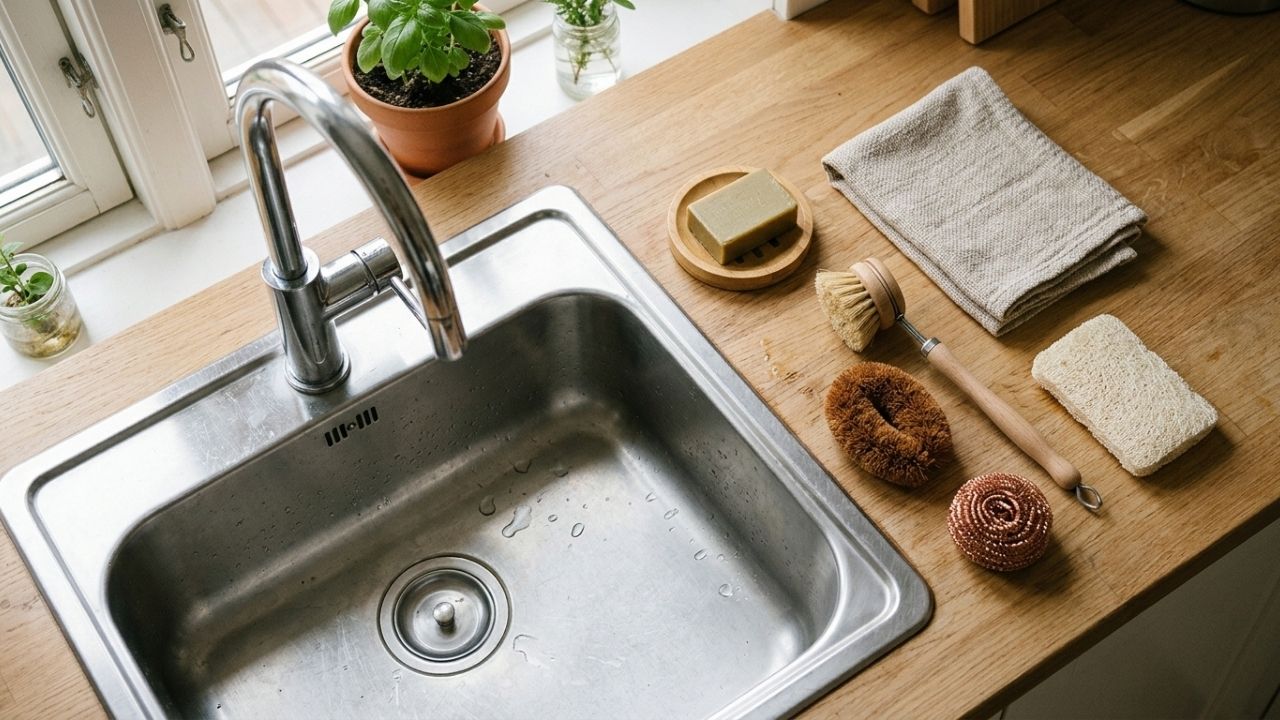
The kitchen sink sees more daily activity than almost any other spot in the home. Dishes pile up, sponges wear out, and plastic bottles of dish soap get tossed in the recycling bin week after week.
For anyone trying to live a greener lifestyle, this small corner of the kitchen offers a surprisingly big opportunity to cut waste and reduce environmental impact.
Sustainable dishwashing products have come a long way from the days when the only options were harsh, chemical-laden soaps in plastic packaging. Today, eco-conscious brands and traditional craftspeople alike are creating dish soaps, scrubbers, and drying tools made from renewable materials, biodegradable ingredients, and reusable designs. Switching to these alternatives is one of the simplest ways to reduce single-use plastic and household chemical waste without changing daily routines in any dramatic way.
This article walks through ten sustainable dishwashing products worth considering, along with tips on how to choose the right ones and make them last as long as possible.
Why Sustainable Dishwashing Products Matter
Every year, households throw away millions of plastic sponges, scrub brushes, and soap bottles. Most conventional sponges are made from polyurethane foam, a petroleum-based material that does not biodegrade. Once tossed, they sit in landfills for decades, slowly breaking into microplastics that can end up in waterways and soil.
Dish soap itself can also carry a heavy environmental footprint. Many mainstream formulas contain synthetic fragrances, dyes, and preservatives that are not always biodegradable and can be harmful to aquatic life once they wash down the drain. Choosing sustainable alternatives helps reduce this chemical runoff while supporting a lifestyle built around reusability and natural ingredients.
Beyond the environmental benefits, many sustainable dishwashing products are simply well made. Natural fiber brushes often clean more effectively than synthetic sponges, and concentrated soap bars or bricks tend to last far longer than liquid soap in a plastic bottle.
What to Look for When Choosing Sustainable Dishwashing Products
Before diving into specific products, it helps to know what makes a dishwashing item genuinely sustainable. A few key factors separate a truly eco-friendly product from one that simply markets itself that way.
- Material source: Look for renewable materials like coconut fiber, sisal, bamboo, or wood instead of plastic and synthetic foam.
- Biodegradability: Natural fiber brushes and compostable sponges break down at the end of their life instead of sitting in a landfill.
- Packaging: Bar soaps and refillable containers usually beat plastic bottles, even ones labeled recyclable, since recycling rates for plastic remain low.
- Durability: A well-made wooden brush or coconut scrubber often outlasts several plastic sponges, reducing overall waste.
- Ingredient transparency: Brands that clearly list plant-based, biodegradable ingredients tend to be more trustworthy than those using vague terms like “natural” without details.
With these principles in mind, here are ten sustainable dishwashing products that can make a real difference at the kitchen sink.
1. Coconut Fiber Scrub Brushes
Coconut fiber, sometimes called coir, is a byproduct of coconut harvesting that would otherwise go to waste. When woven into a scrub brush, it becomes a naturally tough, slightly abrasive tool that works well on pots, pans, and baked-on food. These brushes typically pair a coconut fiber head with a wooden handle, making the entire product compostable once it wears out.
Why It Works
Coconut fiber brushes hold up well to daily scrubbing and resist mold better than sponges because they dry out quickly between uses. They also tend to have replaceable heads, so the wooden handle can be reused indefinitely.
2. Bar Dish Soap
Bar dish soap has quietly become one of the most popular swaps for eco-conscious households. Instead of a plastic bottle filled with mostly water, a solid bar concentrates the active cleaning ingredients into a compact block that lasts for months.
- Comes in cardboard or paper packaging instead of plastic
- Lasts significantly longer than liquid soap per ounce
- Often made with plant-based oils like coconut or olive oil
- Works well with a wooden brush or reusable pump when lathered in a bit of water
3. Loofah Sponges
Loofah is a plant, not a sea creature, despite the common misconception. The fibrous interior of a mature loofah gourd creates a naturally textured sponge that is fully biodegradable. Loofah sponges provide gentle scrubbing power that works well on dishes without scratching most surfaces.
Once a loofah sponge wears out, it can be tossed into a home compost bin instead of the trash, closing the loop entirely.
4. Wooden Dish Brushes with Replaceable Heads
Wooden dish brushes have become a staple in many eco-friendly kitchens. The handle, usually made from beechwood or bamboo, is designed to last for years, while only the bristle head needs replacing over time. This design drastically cuts down on waste compared to throwing away an entire plastic brush.
A Closer Look at the Design
| Feature | Traditional Plastic Brush | Wooden Brush with Replaceable Head |
|---|---|---|
| Handle lifespan | Discarded with bristles | Reused for years |
| Material | Plastic | Sustainably sourced wood |
| Waste per replacement | Entire brush | Small bristle head only |
| End of life | Landfill | Handle is compostable or recyclable |
5. Compostable Cellulose Sponges
Cellulose sponges made from wood pulp and cotton offer a familiar sponge shape and feel while remaining fully compostable. Unlike traditional foam sponges, these break down naturally once they are worn out, making them a simple swap for anyone not ready to give up the classic sponge design entirely.
They tend to hold water well and can be tossed in the dishwasher or boiled briefly to sanitize between uses, extending their lifespan.
6. Dish Soap Refill Systems
Refill stations and refill-by-mail programs have grown in popularity for households trying to cut down on plastic bottle waste. Instead of buying a new plastic bottle every time soap runs out, a reusable bottle can be refilled from a bulk container, either at a local shop or through a mail-in pouch system.
- Reduces the number of plastic bottles purchased over time
- Often uses concentrated formulas that require less packaging overall
- Encourages a habit of reuse rather than single-use consumption
- Can be paired with glass or metal bottles for a fully plastic-free setup
7. Copper Scrubbers
For tough, stuck-on messes, a copper scrubber offers serious scrubbing power without scratching most cookware. Unlike steel wool, which can rust and shed tiny metal fibers, copper scrubbers are more durable and often designed to be reused for extended periods before recycling.
Copper is also naturally antimicrobial, which helps the scrubber stay fresher between uses compared to a sponge that can harbor bacteria in its pores.
8. Beeswax or Plant Wax Dish Soap Bars
Some dish soap bars incorporate beeswax or plant-based waxes to create a firmer bar that lasts even longer. These bars often produce a rich lather and can double as an all-purpose cleaner for countertops and stovetops, reducing the need for multiple separate cleaning products.
Vegan households may prefer plant wax versions made from candelilla or carnauba wax instead of beeswax, and both options remain biodegradable.
9. Natural Bristle Pot Scrapers
Small pot scrapers made from natural bristles or wood are handy for getting into corners and scraping off dried food without scratching nonstick surfaces. These compact tools are often overlooked but make a noticeable difference for anyone trying to avoid plastic scrapers that crack and wear out quickly.
They pair especially well with cast iron cookware, which requires gentle cleaning to preserve its seasoning.
10. Reusable Dish Towels Made from Natural Fibers
While not a scrubber or soap, drying dishes is part of the dishwashing process, and disposable paper towels add up quickly in terms of both cost and waste. Dish towels made from organic cotton, linen, or bamboo fiber offer an absorbent, washable alternative that can be used for years.
- Linen towels are naturally quick drying and resist odor buildup
- Organic cotton towels are soft and highly absorbent
- Bamboo fiber towels combine softness with strong moisture absorption
- All three options are machine washable and long lasting
How to Care for Sustainable Dishwashing Tools
Switching to eco-friendly dishwashing products works best when paired with proper care, since these items are often designed to last far longer than their disposable counterparts.
Keep Tools Dry Between Uses
Natural fiber brushes, loofahs, and cellulose sponges all last longer when they are allowed to fully dry between uses. Storing them upright in a small holder near the sink, rather than leaving them in a wet pile, helps prevent mold and extends their usable life.
Sanitize Regularly
Cellulose sponges and cloth towels can often be sanitized by boiling them briefly in water or running them through a hot dishwasher cycle. This keeps bacteria at bay without needing to replace the item as frequently.
Replace Only What’s Necessary
One of the biggest advantages of tools like wooden brushes with replaceable heads is that only the worn part needs to be swapped out. Keeping an eye on which part of a tool is actually wearing down helps avoid unnecessary waste.
Making the Switch Gradually
There is no need to replace every dishwashing product overnight. A simple approach is to swap one item at a time as current products run out or wear down.
Starting with the plastic sponge, since it wears out the fastest, is often the easiest first step. From there, moving to bar soap or a refill system, and eventually adding a wooden brush or copper scrubber, allows the transition to feel manageable rather than overwhelming.
Small changes at the kitchen sink add up over time. A single household switching from disposable sponges to a compostable or reusable alternative can prevent dozens of plastic sponges from entering landfills every year. Multiply that across a neighborhood, city, or community, and the impact becomes significant.
Final Thoughts
The kitchen sink might seem like a small part of the sustainability puzzle, but the products used there every single day add up to a meaningful environmental footprint over time. From coconut fiber brushes to bar soap and reusable towels, sustainable dishwashing products offer an easy, low effort way to reduce plastic waste and chemical runoff without sacrificing cleaning power.
Anyone looking to build a more eco-friendly kitchen does not need to overhaul everything at once. Choosing even two or three of these swaps is a solid step toward a more sustainable daily routine, one dish at a time.



