Anyone trying to live a greener life eventually runs into the same kitchen drawer full of single use plastic bags, cracked containers, and rolls of cling wrap that never seem to run out. Food storage is one of those everyday habits that quietly generates a lot of waste, yet it is also one of the easiest areas to improve.
Swapping out disposable products for reusable, sustainable alternatives is a small change that adds up fast, both for the planet and for the wallet.
This article looks at ten sustainable food storage products that are genuinely worth checking out. Each one solves a different kitchen problem, from keeping produce fresh longer to replacing plastic wrap entirely. The goal is to help anyone interested in reducing their household waste find practical, long lasting options that fit into real life, not just an idealized zero waste pantry.
Why Sustainable Food Storage Matters
Before diving into the products, it helps to understand why this switch is worth the effort. Plastic wrap, sandwich bags, and disposable containers are used for a few minutes and then discarded, but they can take hundreds of years to break down in a landfill.
Along the way, they shed microplastics into soil and water, and many of them are made from petroleum based materials that contribute to greenhouse gas emissions during production.
Switching to reusable food storage does more than cut down on plastic waste. It often improves food preservation, since many sustainable materials like beeswax, silicone, and glass are naturally better at maintaining humidity and temperature than thin plastic film. Over time, a household that invests in quality reusable products also tends to spend less money, since they are not constantly repurchasing disposable items.
What to Look for in Sustainable Food Storage Products
Not every product labeled eco-friendly is created equal. When evaluating options, it helps to consider a few key factors.
- Material origin: Look for natural, renewable, or recycled materials rather than virgin plastic.
- Durability: A product that lasts for years offsets its environmental footprint far better than one that wears out quickly.
- End of life: Consider whether the product is compostable, recyclable, or built to be repaired rather than tossed.
- Functionality: Sustainability only matters if the product actually gets used, so it should fit real kitchen habits.
With those criteria in mind, here are ten products that stand out.
1. Beeswax Food Wraps
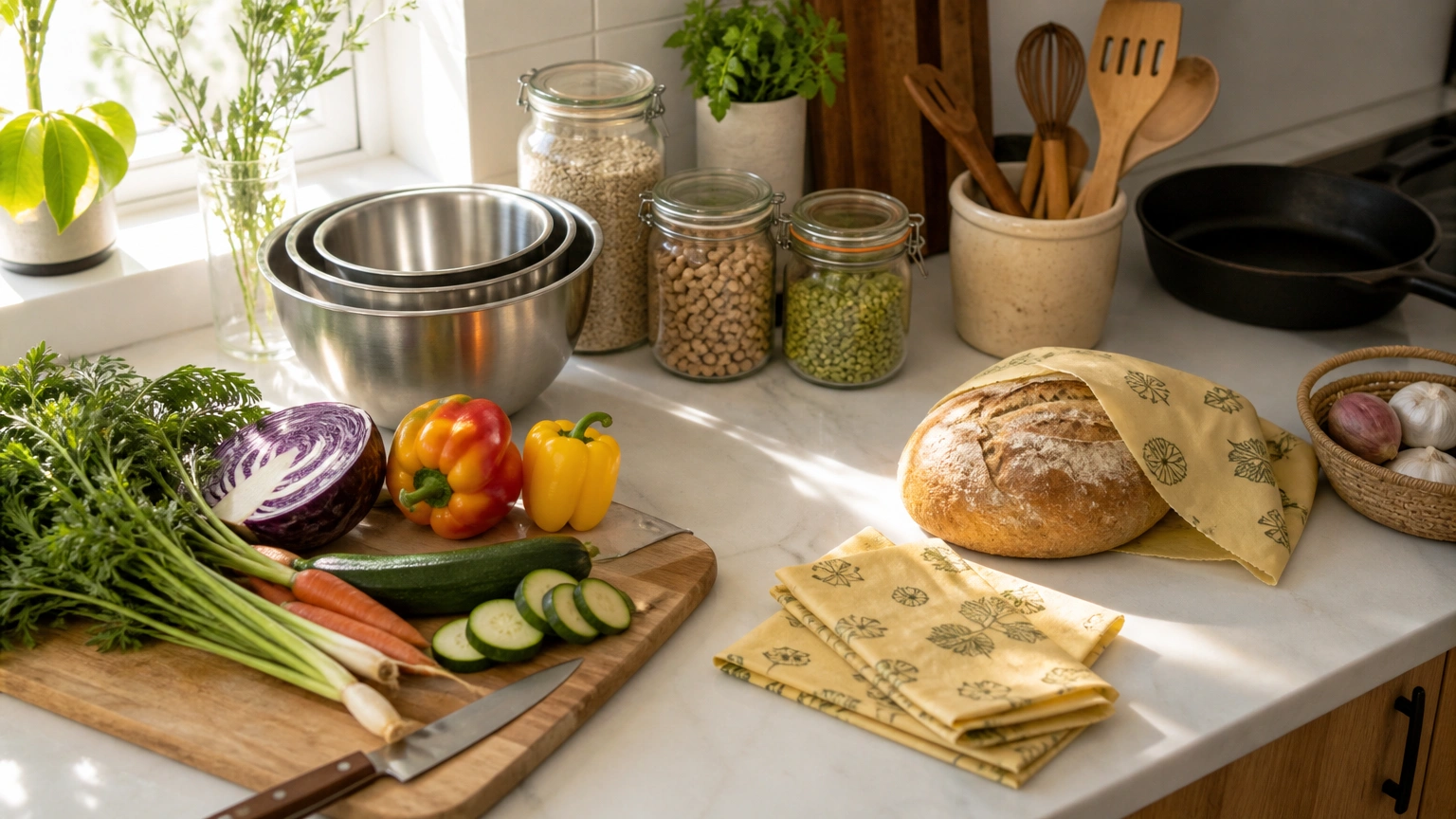
Beeswax wraps have become one of the most popular alternatives to plastic cling film. Made from cotton fabric infused with beeswax, tree resin, and jojoba oil, these wraps become moldable with the warmth of the hands and can be shaped around bowls, cut fruit, or sandwiches.
They typically last around a year with proper care and can be refreshed by warming them slightly to redistribute the wax coating. Once they are truly worn out, they can be composted, since the base materials are natural. For anyone missing the convenience of cling wrap, this is often the easiest first swap to make.
Care Tips
- Wash with cool water and mild soap, never hot water.
- Avoid using them to wrap raw meat.
- Store flat or loosely folded to maintain shape.
2. Glass Storage Containers with Locking Lids
Glass containers are a staple in many sustainable kitchens because they are non-toxic, do not absorb odors or stains, and can go from the fridge to the oven to the dishwasher without any issue. Unlike plastic, glass will not leach chemicals into food, even when reheated.
Look for sets that include locking lids made from silicone or BPA free plastic, since these create an airtight seal that keeps food fresher for longer. Glass containers also tend to outlast their plastic counterparts by many years, which makes the higher upfront cost worth it over time.
3. Silicone Stretch Lids
Silicone stretch lids are a clever replacement for plastic wrap when it comes to covering bowls, cut fruit, or open cans. They stretch to fit a variety of shapes and sizes, form a solid seal, and can be washed and reused thousands of times.
Because silicone is heat resistant and generally considered food safe, these lids can even go in the microwave or freezer, something that is not always true for other reusable covers. A set of assorted sizes usually covers most kitchen needs.
4. Reusable Silicone Food Storage Bags
Anyone who relies on plastic sandwich or freezer bags will appreciate reusable silicone versions. These bags are typically dishwasher safe, freezer safe, and even safe for boiling or sous vide cooking, which makes them far more versatile than their disposable counterparts.
They usually feature a sealing strip similar to a zip lock bag, and many are designed to stand upright when open, making them easier to fill. A well made silicone bag can replace hundreds of single use plastic bags over its lifetime.
5. Stainless Steel Containers
Stainless steel containers are especially popular for packing lunches or storing leftovers that will be transported. They are lightweight, shatterproof, and naturally resistant to rust and staining. Unlike plastic, stainless steel will not hold onto smells from previous meals.
These containers are a good choice for families with kids, since they can survive drops and rough handling far better than glass or plastic. Many styles come with compartments, making them handy for meal prepping or packing balanced lunches without extra plastic containers for each food group.
6. Compostable Parchment or Unbleached Baking Paper
While not a long term reusable product, switching from bleached, chemically treated parchment paper to an unbleached, compostable version is a simple upgrade for anyone who bakes or roasts often. These papers break down naturally and avoid the chlorine bleaching process used in many conventional brands.
For an even more sustainable option, silicone baking mats can replace parchment paper entirely, since they can be washed and reused for years.
7. Cotton or Linen Bread Bags
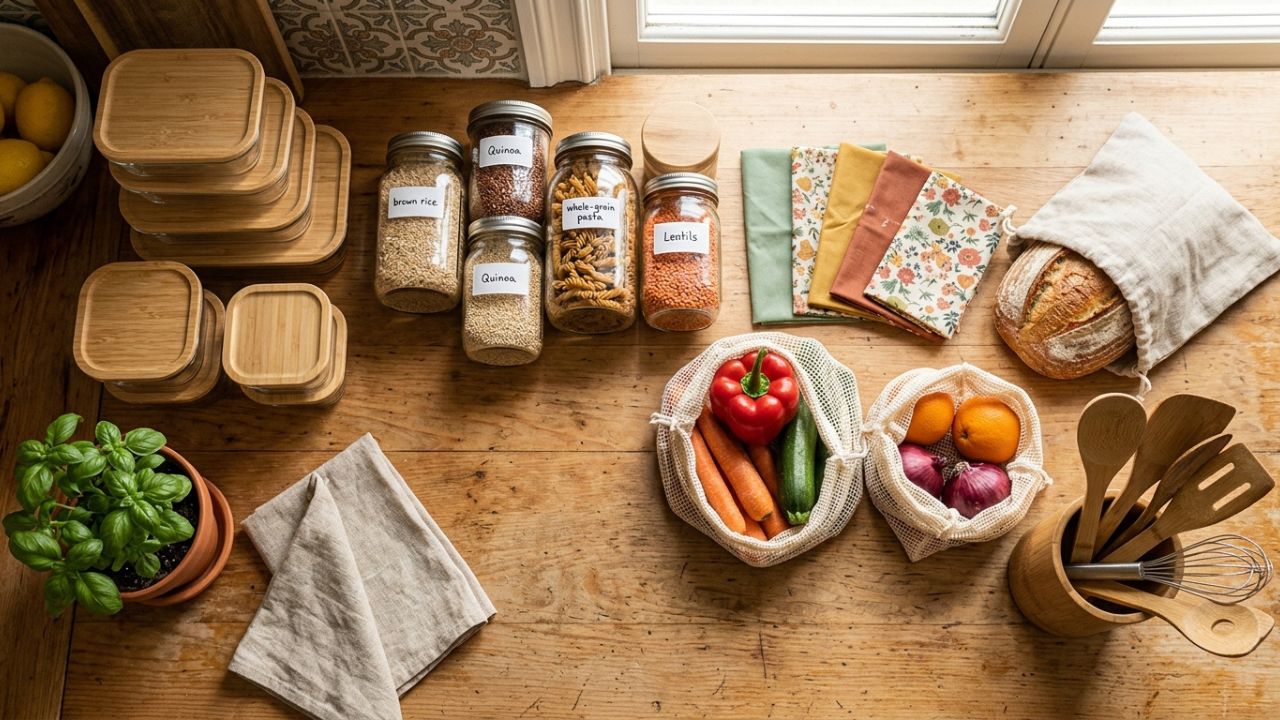
Bread often gets wrapped in a plastic bag that is used once and thrown away. Cotton or linen bread bags offer a breathable alternative that actually helps bread stay fresh longer by allowing excess moisture to escape, which reduces mold growth compared to sealed plastic.
These bags are usually machine washable and can last for years with basic care. Many are also lined with a food safe coating to help maintain a bit of moisture for softer bread varieties.
8. Mason Jars for Bulk and Pantry Storage
Mason jars are an old fashioned solution that has stood the test of time for good reason. They are widely available, inexpensive, and perfect for storing bulk pantry items like grains, beans, pasta, nuts, and spices. Because the jars are airtight and made of glass, they help keep pantry staples fresher for longer while also making it easy to see what is inside and how much is left.
Mason jars are also incredibly versatile outside the pantry. They work well for meal prepping salads, storing homemade sauces, or even repurposing as drinking glasses once their original contents are gone.
9. Produce Storage Bags Made from Mesh or Cotton
Reusable produce bags are designed to replace the thin plastic bags found in the produce section of grocery stores. Made from breathable mesh or cotton, these bags allow fruits and vegetables to be transported and stored while still letting air circulate, which can help prevent premature spoilage.
Many are machine washable and come in sets of varying sizes to accommodate everything from leafy greens to root vegetables. Some people also use these bags for bulk bin shopping, cutting out plastic at multiple points in a single grocery trip.
10. Bamboo or Wooden Utensil and Storage Sets
While not strictly a storage container, bamboo and wooden utensils and storage boxes deserve a mention because they often accompany a sustainable food storage setup. Bamboo is a fast growing, renewable resource that requires far less water and fewer pesticides than cotton or other crops, making it a genuinely sustainable material choice.
Wooden or bamboo bread boxes, utensil holders, and cutting boards pair naturally with the other products on this list and help create a kitchen that relies less on plastic overall.
Comparing the Options
The table below offers a quick side by side look at how these products compare in terms of typical lifespan, best use, and care requirements.
| Product | Typical Lifespan | Best Used For | Care Notes |
|---|---|---|---|
| Beeswax wraps | About 1 year | Covering bowls, wrapping produce | Hand wash, avoid raw meat |
| Glass containers | Many years | Leftovers, meal prep, reheating | Dishwasher safe, check lid seals |
| Silicone stretch lids | Several years | Covering bowls and cans | Hand wash or dishwasher safe |
| Silicone storage bags | Several years | Snacks, freezer storage, sous vide | Dishwasher safe |
| Stainless steel containers | Many years | Lunches, on the go meals | Hand wash recommended |
| Unbleached parchment | Single use, compostable | Baking, roasting | Compost after use |
| Cotton bread bags | 1 to 2 years | Storing bread | Machine washable |
| Mason jars | Many years | Pantry staples, bulk items | Dishwasher safe |
| Produce bags | 1 to 3 years | Fruits, vegetables, bulk bins | Machine washable |
| Bamboo storage items | Several years | General kitchen storage | Wipe clean, avoid soaking |
Making the Switch Without Overwhelm
Replacing an entire kitchen full of plastic overnight is not realistic for most people, and it is not necessary either. A more sustainable approach is to phase things in gradually as old plastic items wear out or as budget allows.
- Start with one or two products, such as a set of glass containers or a few beeswax wraps.
- Replace items as they break rather than throwing out usable plastic prematurely.
- Prioritize the products used most often, since those will have the biggest impact.
- Look for secondhand glass jars and containers before buying new ones.
This gradual approach keeps the transition affordable and manageable, while still making a meaningful dent in household plastic waste over time.
Final Thoughts
Sustainable food storage is one of the more approachable ways to reduce everyday waste without dramatically changing daily habits. Whether it is a beeswax wrap replacing plastic cling film or a set of glass containers replacing disposable takeout boxes, each swap chips away at the amount of plastic that ends up in landfills and oceans.
The ten products covered here represent a well rounded starting point for anyone looking to build a more eco-friendly kitchen. None of them require a complete lifestyle overhaul, and most of them pay for themselves over time through reduced spending on disposable products.
Small, consistent choices like these are often what sustainable living looks like in practice, not perfection, just steady progress toward less waste and more mindful habits.