The kitchen is often the heart of the home, but it is also one of the biggest sources of plastic waste.
From cling film to plastic cutting boards, plastic storage containers to synthetic sponges, most kitchens are quietly filled with items that will outlive their usefulness by hundreds of years once they are thrown away.
For anyone trying to live a more sustainable life, the kitchen is a natural place to start making changes.
The good news is that swapping out plastic kitchen items does not require an expensive overhaul. Many plastic-free alternatives are affordable, long-lasting, and often work better than their plastic counterparts.
This article looks at eleven practical plastic-free kitchen finds that can help eco-conscious cooks reduce waste, avoid microplastics in their food, and create a healthier, more mindful cooking space.
Why Go Plastic-Free in the Kitchen
Before diving into the list, it helps to understand why this shift matters. Plastic in the kitchen is not just an environmental issue, it is also a health concern. Many plastics contain chemicals that can leach into food, especially when heated or exposed to acidic ingredients. Reducing plastic use in the kitchen can help lower exposure to these substances while also cutting down on the waste that ends up in landfills and oceans.
A few reasons people choose to make this switch include:
- Reducing single-use plastic waste that cannot be recycled
- Avoiding microplastic contamination in food and drinks
- Supporting a lower-waste, more intentional way of cooking
- Investing in durable tools that often last far longer than plastic versions
- Creating a kitchen that feels calmer and less cluttered with disposable items
With that context in mind, here are eleven plastic-free kitchen finds worth considering.
1. Glass Food Storage Containers
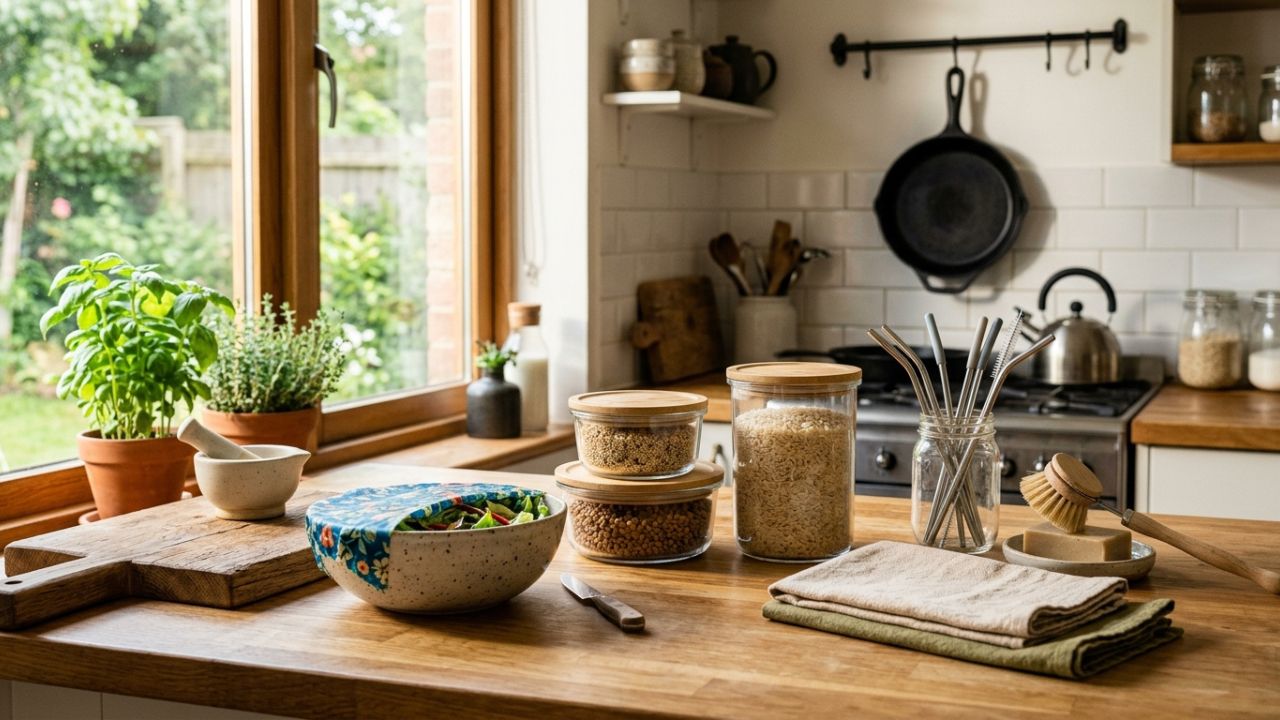
Glass containers are one of the easiest and most impactful swaps for anyone moving away from plastic. Unlike plastic containers, glass does not absorb odors or stains, and it will not leach chemicals into food, even when reheated. Most glass storage sets come with either bamboo, silicone, or stainless-steel lids, making them fully plastic-free options.
Glass containers are also incredibly versatile. They can go from the fridge to the oven to the dishwasher without warping or cracking, which makes meal prepping and leftovers management much simpler.
What to Look For
- Tempered glass that can handle temperature changes
- Lids made from bamboo, stainless steel, or natural rubber
- Stackable designs to save storage space
2. Beeswax Food Wraps
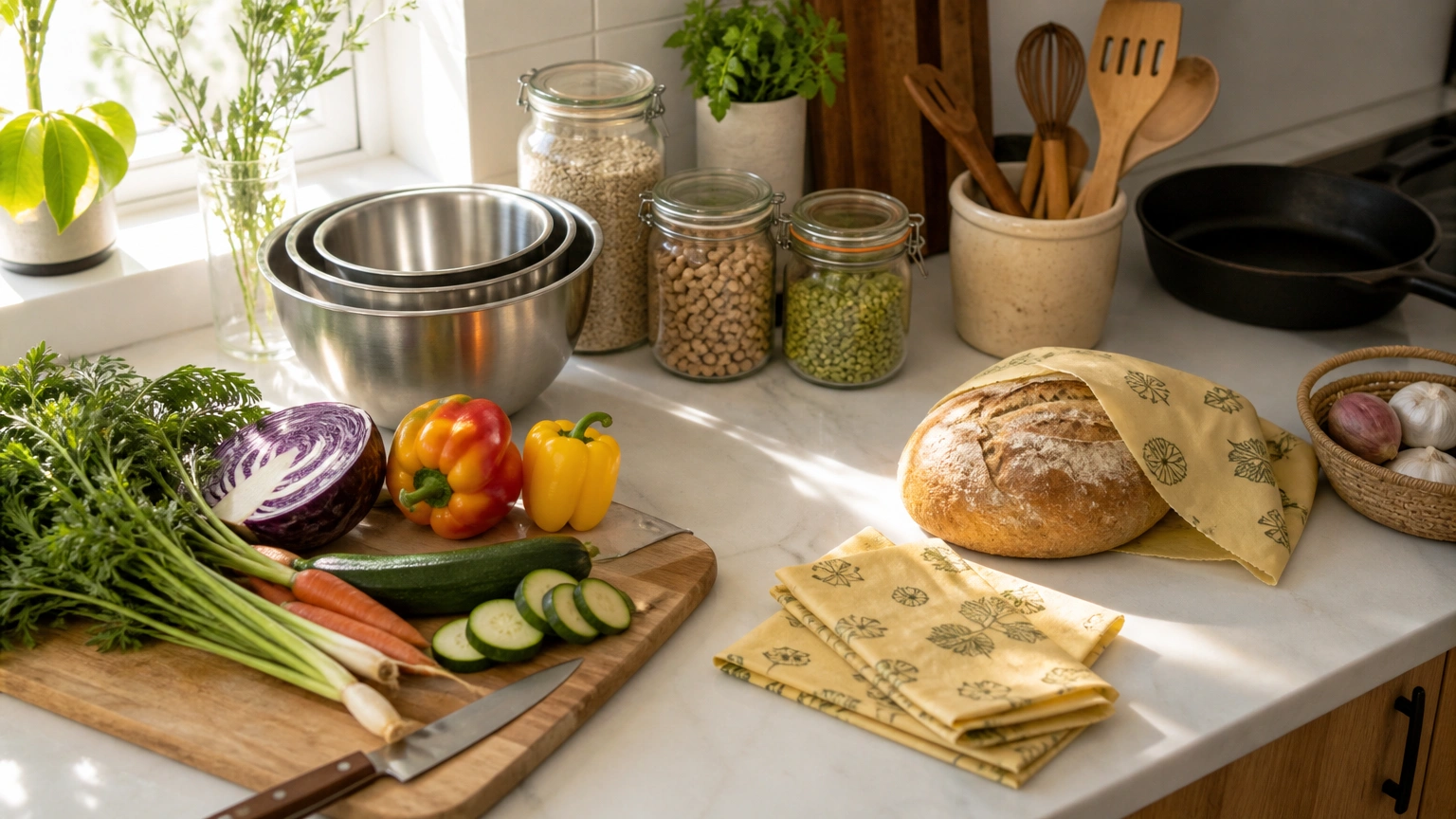
Beeswax wraps are a natural alternative to plastic cling film. Made from cotton fabric coated in beeswax, tree resin, and jojoba oil, these wraps become slightly tacky when warmed with hand heat, allowing them to mold around bowls, fruit, or sandwiches.
They can be washed with cool water and mild soap, and with proper care, a single wrap can last up to a year before it needs to be composted or re-waxed.
3. Stainless Steel Straws and Reusable Drinkware
Plastic straws are a small item that add up to a significant amount of waste over time. Stainless steel straws are dishwasher safe, do not retain flavors, and typically come with a small cleaning brush. Paired with a reusable glass or steel cup, this swap eliminates a steady stream of disposable plastic from daily drinks and smoothies.
4. Wooden or Bamboo Cutting Boards
Plastic cutting boards develop deep knife grooves over time, which can trap bacteria and are difficult to fully clean. Wooden and bamboo boards are naturally antimicrobial to a degree, biodegradable at the end of their life, and tend to be gentler on knife blades.
Bamboo is a particularly popular choice because it grows quickly and requires fewer resources than hardwood trees, making it a more renewable option.
Caring for a Wooden Board
- Wash by hand and dry immediately
- Avoid soaking in water for long periods
- Treat occasionally with food-safe mineral oil to prevent cracking
5. Compostable or Natural Fiber Dish Brushes
Traditional dish sponges are often made from synthetic materials that shed microplastics with every wash and eventually end up in landfill. Natural alternatives made from wood, coconut fiber, or plant-based bristles offer the same scrubbing power without the plastic footprint. Many of these brushes have replaceable heads, so only the worn part needs to be swapped out rather than the entire tool.
6. Stainless Steel or Cast Iron Cookware
Nonstick pans coated with synthetic materials can degrade over time and release particles into food, especially once scratched. Stainless steel and cast iron cookware are durable, plastic-free options that can last for decades with proper care. Cast iron in particular can be passed down through generations, making it one of the most sustainable choices a kitchen can have.
| Cookware Type | Durability | Maintenance Level | Best For |
|---|---|---|---|
| Cast Iron | Decades to lifetime | Requires seasoning | Searing, baking, slow cooking |
| Stainless Steel | Long lasting | Low maintenance | Everyday cooking, sauces |
| Carbon Steel | Long lasting | Requires seasoning | High heat cooking, stir fry |
7. Glass or Metal Reusable Bottles
Reusable bottles made from glass or stainless steel are a simple way to cut down on single-use plastic water bottles. They are easy to clean, do not retain odors, and many insulated versions can keep drinks hot or cold for hours. Keeping one on the counter or in a bag makes it easy to skip buying bottled water on the go.
8. Silicone or Fabric Reusable Food Bags
For those who rely on plastic sandwich or freezer bags, silicone and fabric alternatives offer a reusable replacement. Silicone bags are dishwasher safe, freezer safe, and can often be used in the microwave, while fabric bags with waterproof linings work well for dry snacks and produce storage. Both options can be washed and reused hundreds of times.
9. Loose Leaf Tea and Metal Infusers
Many tea bags contain a small amount of plastic in their sealing material, which can release microplastics when steeped in hot water. Switching to loose leaf tea paired with a stainless steel infuser avoids this issue entirely and often results in a fresher, more flavorful cup of tea. Loose leaf tea also tends to produce less packaging waste overall.
10. Natural Fiber Kitchen Towels
Paper towels and synthetic microfiber cloths both come with environmental downsides, one from constant disposal and the other from shedding microplastics in the wash. Cotton, linen, or hemp kitchen towels are absorbent, washable, and long-lasting. Keeping a stack of these on hand can significantly reduce the need for paper towels in everyday cooking and cleanup.
Benefits of Natural Fiber Towels
- Machine washable and reusable hundreds of times
- Biodegradable at the end of their life
- Often more absorbent than paper towels
- Available in various weights for different tasks
11. Ceramic or Glass Baking Dishes
Many baking trays and dishes come lined with nonstick plastic coatings that can wear down over time. Ceramic and glass baking dishes are naturally nonstick when properly greased, do not degrade with high oven heat, and often double as serving dishes straight from the oven to the table. They are also easier to clean without the risk of scratching off a coating.
How to Start Transitioning a Kitchen
Replacing every plastic item in a kitchen all at once can feel overwhelming and is not necessary to make a meaningful difference. A more sustainable approach is to phase out plastic items gradually as they wear out, rather than throwing away perfectly usable plastic tools just to replace them immediately.
A few tips for an easier transition include:
- Start with the items used most often, such as storage containers or cutting boards
- Replace plastic tools as they wear out rather than all at once
- Look for secondhand glass and metal kitchen items at thrift stores
- Choose multipurpose tools to avoid clutter and unnecessary purchases
- Compost or properly recycle old plastic items instead of simply discarding them
The Bigger Picture
A plastic-free kitchen is not about achieving perfection overnight. It is about making thoughtful choices that add up over time. Each swap, whether it is a glass container replacing a plastic one or a beeswax wrap replacing cling film, reduces the amount of plastic waste generated at home and lowers exposure to potentially harmful chemicals.
For those interested in a more sustainable and eco-friendly lifestyle, the kitchen offers one of the most practical and rewarding places to begin. Small, consistent changes in this space often lead to a greater sense of mindfulness in cooking, shopping, and daily living overall. Over time, these choices can also inspire similar shifts in other parts of the home, from the bathroom to the laundry room, creating a ripple effect that supports a lower-waste lifestyle as a whole.
Ultimately, building a plastic-free kitchen is a personal journey. It does not require buying every item on this list at once, nor does it demand giving up convenience entirely. Instead, it is about making informed choices, one swap at a time, that align with a deeper commitment to sustainability and a healthier way of living.