Anyone trying to cut down on kitchen waste eventually runs into the same problem: plastic bags. They are cheap, convenient, and everywhere, but they also pile up in landfills and take centuries to break down. The good news is that switching away from single-use plastic bags does not mean giving up convenience.
Silicone food storage products have become one of the most practical and popular swaps for people who want a kitchen that produces less trash without adding extra hassle to their day.
This article walks through eleven silicone storage solutions worth considering, why silicone works so well as a plastic alternative, and how to use these products in a way that actually sticks as a habit.
Why Silicone Is a Smart Swap for Disposable Bags
Silicone is a synthetic material made primarily from silica, which comes from sand. Unlike plastic, it does not release the same chemicals of concern when heated, and it holds up to years of repeated use rather than being tossed after a single trip through the fridge. It is flexible, heat resistant, and dishwasher safe in most cases, which makes it genuinely easier to live with than many people expect.
A few reasons silicone has become the go-to plastic replacement in eco-conscious kitchens:
- It can be washed and reused thousands of times before it needs replacing.
- It tolerates a wide temperature range, so it moves from freezer to microwave to dishwasher without cracking or warping.
- It does not absorb odors or stains the way some plastics do over time.
- It is generally free of BPA, phthalates, and PVC, which are common concerns with certain plastics.
- It reduces the steady stream of single-use bags heading to landfills and waterways.
None of this means silicone is perfect. It still has an environmental footprint to manufacture, and it should be cared for properly to last as long as possible. But compared to a box of plastic bags used once and thrown away, it is a clear step in a more sustainable direction.
1. Reusable Silicone Sandwich and Snack Bags
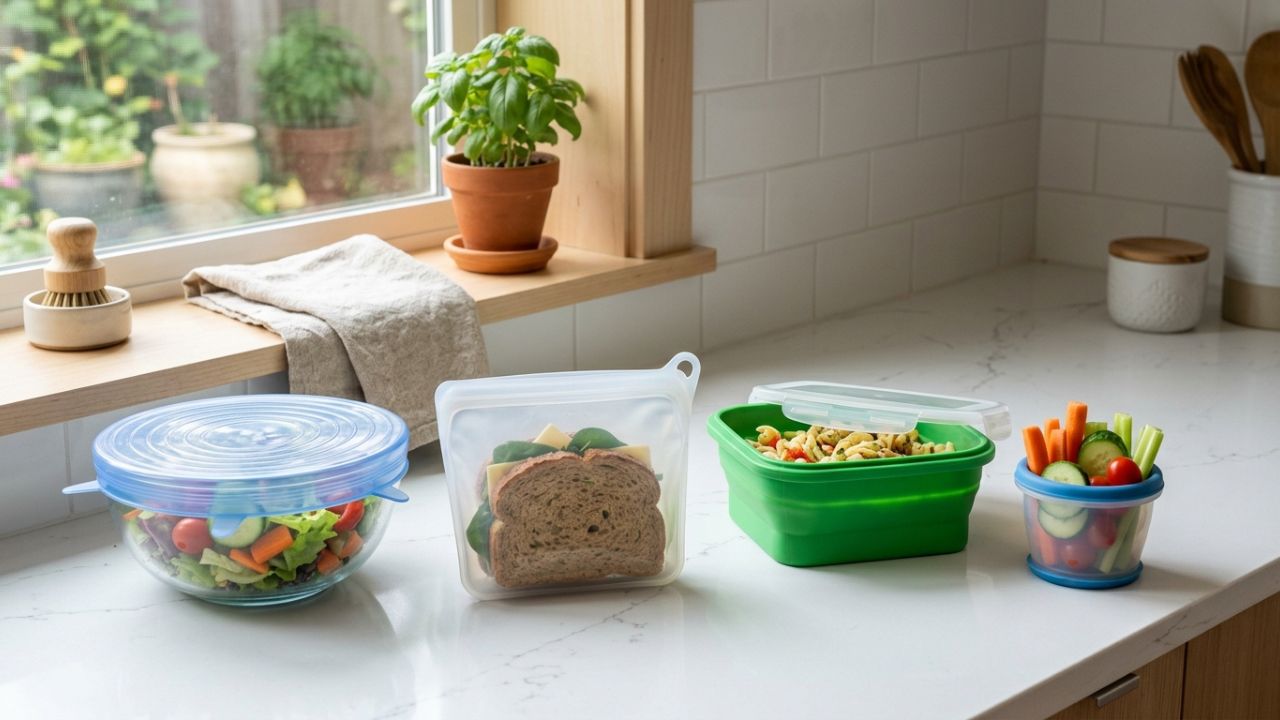
These are usually the first product people buy when they start moving away from disposable bags. They function almost exactly like a zip-top plastic bag, sealing along the top, but they are made from food-grade silicone that can be rinsed out and used again the next day. Most fold flat for storage and many are dishwasher safe, which removes the excuse of hand washing being too much effort.
2. Silicone Stretch Lids
Stretch lids are flexible silicone covers that stretch over bowls, cups, cans, and cut fruit to create an airtight seal. They replace plastic wrap almost entirely and come in sets of different sizes so there is one for a coffee mug and one for a mixing bowl. Because they stretch to fit, they work on odd-shaped containers that a regular lid never could.
3. Silicone Freezer Bags
Standard silicone sandwich bags can technically go in the freezer, but dedicated silicone freezer bags are built with a slightly sturdier profile to hold up to the cold better and resist tearing when frozen solid. They are especially useful for people who batch cook or freeze fruit, soups, or meat portions regularly.
4. Collapsible Silicone Food Containers
These containers expand for use and collapse flat for storage, which solves the classic problem of plastic containers taking up an entire cabinet. They usually come with a locking lid and are useful for packed lunches, leftovers, or meal prepping. Because they collapse, they also take up far less space in a bag or backpack than a rigid container would.
5. Silicone Produce Bags
Produce bags made from silicone mesh or solid silicone replace the thin plastic bags found on a roll in the grocery store produce section. They can be tossed in a tote bag and brought along on shopping trips, then rinsed out and reused for the next visit. Some are breathable mesh designed specifically to help fruits and vegetables stay fresher longer.
6. Silicone Bread Bags
Bread does not always store well in silicone, but purpose built silicone bread bags with a bit of ventilation or a drawstring closure are designed to keep loaves fresh while cutting out the plastic sleeve most bread comes wrapped in. They are a smaller niche product but a favorite among home bakers.
7. Silicone Baking and Storage Mats
While not technically a bag, silicone baking mats reduce the need for parchment paper and aluminum foil, both of which are usually used once and discarded. These mats can line baking sheets for years, and many people also use flat silicone mats to wrap and store items like cheese or dough.
8. Silicone Ice Cube Trays with Lids
These might seem unrelated to food storage bags at first, but silicone trays with locking lids let people freeze soups, sauces, herbs, or baby food in individual portions without a plastic bag in sight. Once frozen, the portions pop out easily and can be stored in a reusable silicone bag or container.
9. Silicone Vacuum Sealer Bags
For people who already use a vacuum sealer for meal prepping or bulk buying, silicone vacuum bags are a reusable alternative to the plastic rolls that typically get used once and thrown away. They can be sealed, frozen, thawed, and reused many times over.
10. Silicone Squeeze Pouches
Popular for baby food, smoothies, or sauces, reusable silicone squeeze pouches replace the disposable pouches found in stores. They usually have a wide opening for filling and cleaning, and a secure cap that prevents leaks in a bag or lunch box.
11. Silicone Snack Cups and Dividers
These small silicone cups fit inside larger containers or lunch boxes to keep snacks separated without needing individual plastic baggies for crackers, nuts, or cut vegetables. They are especially popular with parents packing lunches for kids.
Comparing the Options
Choosing the right silicone product often comes down to how it will actually be used day to day. The table below offers a quick side by side comparison to help match the product to the task.
| Product | Best For | Freezer Safe | Dishwasher Safe |
|---|---|---|---|
| Sandwich and snack bags | Lunches, snacks, leftovers | Yes | Usually |
| Stretch lids | Covering bowls and cut produce | Yes | Usually |
| Freezer bags | Batch cooking, bulk freezing | Yes | Usually |
| Collapsible containers | Meal prep, packed lunches | Yes | Usually |
| Produce bags | Grocery shopping | No | Yes |
| Bread bags | Storing loaves of bread | No | Hand wash recommended |
| Baking mats | Baking, wrapping food | No | Yes |
| Ice cube trays with lids | Freezing sauces, herbs, baby food | Yes | Usually |
| Vacuum sealer bags | Meal prepping, bulk storage | Yes | Usually |
| Squeeze pouches | Smoothies, purees, sauces | Yes | Usually |
| Snack cups and dividers | Portioning snacks | No | Yes |
Always double check the care instructions for a specific brand, since some silicone products have plastic zippers or fasteners that are not dishwasher safe even if the silicone body is.
How to Care for Silicone Storage Products
A little bit of care goes a long way toward getting the most life out of these items, which is where the real environmental benefit comes from.
- Wash items promptly after use to prevent food residue from staining or lingering odors from setting in.
- Turn bags inside out occasionally for a deeper clean, especially after storing something oily or strongly scented like garlic or curry.
- Avoid using abrasive scrubbers that could damage the surface over time.
- Let items air dry fully before sealing them away, since trapped moisture can lead to mildew.
- Store flat items like bags and mats in a drawer rather than crumpled in a drawer or bin to help them keep their shape.
Making the Switch Without Overwhelm
One of the easiest ways people burn out on sustainable swaps is trying to replace everything in the kitchen at once. A more realistic approach is to pick one or two categories that get used the most, such as sandwich bags or stretch lids, and fully replace those first. Once that habit feels natural, it becomes much easier to add a collapsible container or a set of produce bags into the routine.
It also helps to keep a small stash of the replaced disposable bags on hand just in case, at least at first. This removes the pressure of an all or nothing switch and makes the transition feel more like an upgrade than a sacrifice.
The Bigger Picture
Swapping disposable bags for silicone will not single handedly solve the plastic waste problem, but small consistent choices add up. A household that replaces even a portion of its disposable bag use with reusable silicone alternatives can prevent hundreds of plastic bags from being used and discarded each year. Combined with other habits like bringing reusable shopping totes or choosing products with less packaging, it becomes part of a broader lifestyle that puts less strain on the planet.
For anyone building a more sustainable kitchen, silicone storage solutions offer a rare combination of convenience and impact. They fit into existing routines with very little adjustment, they last for years rather than minutes, and they quietly reduce the amount of plastic waste a household sends out into the world.