
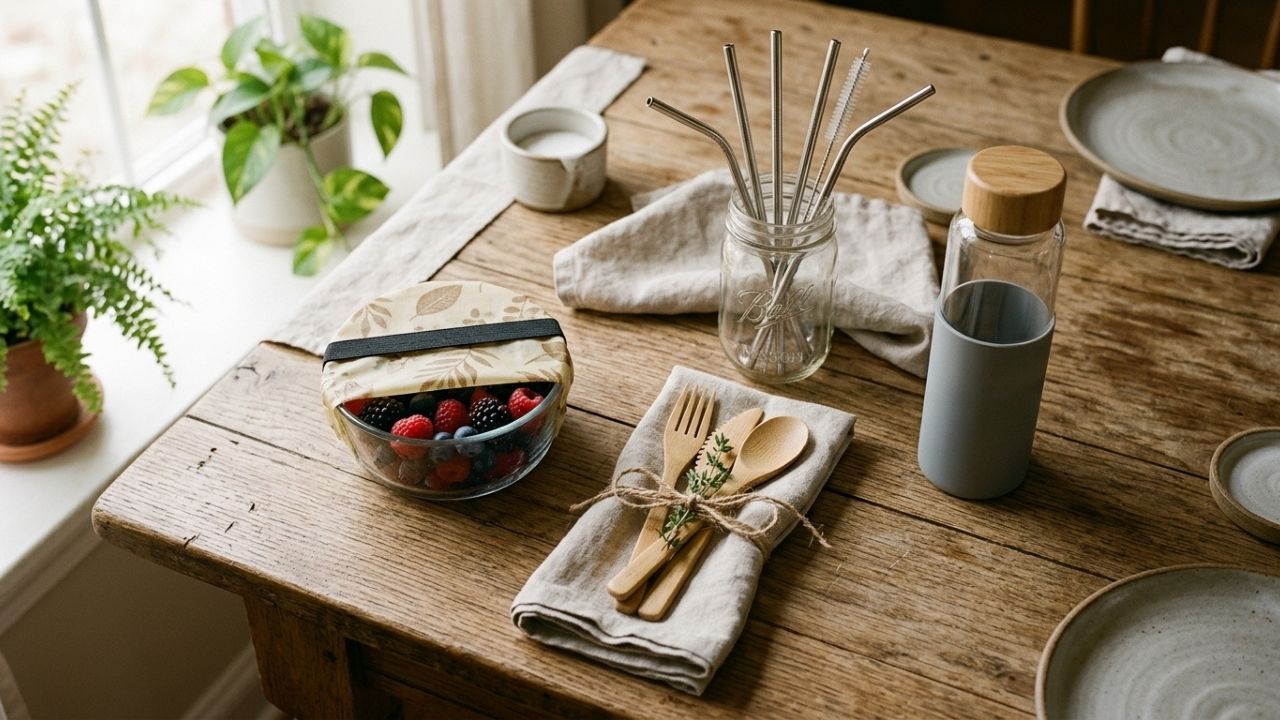
Every meal is a chance to make a small choice that adds up to something bigger. For anyone trying to live a more sustainable lifestyle, the kitchen and dining table are often the easiest places to start.
Swapping out disposable, plastic-heavy items for reusable, thoughtfully made alternatives can cut waste dramatically without requiring a total lifestyle overhaul.
This article explores twelve eco-conscious dining products that make everyday meals gentler on the planet. From reusable straws to compostable food wraps, these items are practical, affordable, and easy to fit into daily routines.
Why Eco-Friendly Dining Products Matter
Single-use plastics are one of the biggest contributors to landfill waste and ocean pollution. Plates, cups, straws, and cutlery that get used once and thrown away seem convenient in the moment, but they linger in the environment for hundreds of years. Choosing reusable or biodegradable dining products helps reduce this burden in several ways.
- Less plastic waste ending up in landfills and waterways
- Lower demand for petroleum-based manufacturing
- Reduced household spending over time since reusable items replace repeat purchases
- A smaller carbon footprint tied to production and shipping of disposable goods
Making the switch does not have to feel like a sacrifice. Many sustainable dining products are just as convenient, and often more durable, than their disposable counterparts.
1. Reusable Beeswax Food Wraps
Plastic cling film is one of the most common kitchen items, yet it is rarely recycled. Beeswax wraps offer a natural alternative made from cotton cloth coated in beeswax, tree resin, and jojoba oil.
They mold to bowls, wrap around sandwiches, and cover leftover produce, all while being washable and reusable for up to a year. Once they wear out, they can be composted instead of sitting in a landfill.
How to Use Them
- Warm the wrap slightly with hands to soften it before shaping
- Wash with cool water and mild soap, never hot water
- Avoid using them to wrap raw meat, since the wax cannot be sanitized at high heat
2. Stainless Steel Straws
Plastic straws are small, but they are notoriously difficult to recycle and frequently end up in oceans and waterways. Stainless steel straws are a durable, dishwasher-safe swap that can last for years. Many sets come with a cleaning brush and a small travel pouch, making them easy to bring along to restaurants or coffee shops.
3. Bamboo Cutlery Sets
Bamboo is a fast-growing, renewable resource that requires no pesticides and regenerates quickly after harvesting. Bamboo cutlery sets, often including a fork, knife, spoon, and chopsticks in a compact carrying case, are ideal for people who eat on the go, travel often, or simply want to avoid single-use plastic utensils at takeout counters.
4. Compostable Plates and Bowls
For gatherings, picnics, or busy weeknights when washing dishes feels like too much, compostable plates made from sugarcane fiber, bamboo, or palm leaves offer a sturdy alternative to plastic or styrofoam. These plates break down naturally in a composting environment, unlike plastic versions that persist indefinitely.
5. Glass Meal Prep Containers
Plastic storage containers can leach chemicals over time, especially when heated. Glass containers with secure lids are a longer-lasting, non-toxic option for meal prepping, storing leftovers, or packing lunches. They are microwave safe, easy to clean, and do not absorb odors or stains the way plastic often does.
| Product | Best Use | Typical Lifespan |
|---|---|---|
| Beeswax food wraps | Covering bowls, wrapping sandwiches | 6 to 12 months |
| Stainless steel straws | Drinks at home or on the go | 5+ years |
| Bamboo cutlery | Travel, takeout, lunches | 2 to 5 years |
| Compostable plates | Parties, picnics, gatherings | Single use, compostable |
| Glass meal prep containers | Storing leftovers, meal prepping | 10+ years |
6. Reusable Produce Bags
Grocery shopping often means grabbing a handful of thin plastic bags for fruits and vegetables. Mesh or cotton produce bags are a simple swap that can be washed and reused hundreds of times. They are lightweight, see-through enough for checkout scanning, and often come in sets that fit neatly into a reusable tote.
7. Cloth Napkins
Paper napkins get used once and tossed, but cloth napkins can be washed and reused for years. They come in a variety of fabrics and patterns, so they can double as a small design touch on the dining table while cutting down on daily waste. Linen and cotton versions are especially absorbent and soften with each wash.
8. Wooden or Cork Trivets and Coasters
Many households rely on plastic or synthetic trivets and coasters that eventually crack or wear out. Wooden and cork versions are biodegradable, heat resistant, and tend to develop a nice patina over time. They also avoid the chemical coatings sometimes found in plastic alternatives.
9. Silicone Food Storage Bags
For people who rely heavily on single-use plastic sandwich or freezer bags, reusable silicone bags are a practical replacement. They can be washed, are freezer and microwave safe, and typically last for years with proper care. Many are designed to stand upright for easy filling and to lay flat for compact storage.
Tips for Extending Their Life
- Avoid using sharp utensils inside the bags, which can cause tears
- Turn them inside out to dry fully between uses
- Store away from direct heat sources when not in use
10. Reusable Coffee Filters
Paper coffee filters are used once and discarded every single day in many households. A reusable stainless steel or cloth filter fits most standard coffee makers and can be rinsed and used again immediately. Over the course of a year, this small swap can prevent hundreds of paper filters from ending up in the trash.
11. Bamboo or Cork Dish Brushes
Plastic dish brushes and sponges shed microplastics over time and are rarely recyclable. Bamboo-handled dish brushes with plant-based bristles offer a compostable alternative. When the bristles wear down, replacement heads can often be swapped in, extending the life of the handle.
12. Reusable Water Bottles with Filtration
Bottled water remains one of the most common sources of single-use plastic waste. A durable, reusable water bottle, especially one with a built-in filter, reduces reliance on bottled water while also improving tap water taste in areas where that is a concern. Stainless steel and glass options tend to be the most durable and free of plastic-related leaching concerns.
Building a Sustainable Dining Routine
Switching to eco-conscious dining products does not need to happen all at once. A gradual approach tends to be more sustainable in the long run, both financially and in terms of habit formation.
- Start with one or two items that fit into daily routines most naturally, such as a reusable water bottle or coffee filter
- Replace disposable items as they run out rather than discarding usable plastic prematurely
- Keep reusable items visible and accessible, since out of sight often means out of mind
- Involve the whole household so habits stick across everyone using the kitchen
Caring for Eco-Friendly Products
Many sustainable dining products last longer with a bit of simple care.
- Hand wash beeswax wraps and air dry them flat
- Avoid high heat with silicone and bamboo items, since it can shorten their lifespan
- Store cloth items like napkins and produce bags somewhere dry to prevent mildew
- Check manufacturer guidance before putting new items in the dishwasher, since not all are rated for it
The Bigger Picture
Individually, each of these products makes a small difference. Together, they can meaningfully reduce a household’s waste output over months and years. A family that swaps disposable straws, bags, wraps, and filters for reusable versions can prevent thousands of single-use items from reaching a landfill over the course of a few years.
Beyond the environmental benefits, many people find that these swaps also save money over time. While the upfront cost of a glass container set or a stainless steel straw pack might be higher than a box of disposable equivalents, the long lifespan of these products means fewer repeat purchases down the line.
Choosing eco-conscious dining products is one of the more approachable ways to build sustainable habits into everyday life. Meals happen multiple times a day, every day, which makes the dining table a natural place to practice small, consistent choices that support a healthier planet.
Frequently Asked Questions
Are eco-friendly dining products more expensive than disposable ones? The upfront cost can be higher, but because reusable products last for months or years, the long-term cost is often lower than continually buying disposable versions.
Do compostable plates work in a regular trash bin? They break down best in a composting environment, whether that is a home compost pile or a municipal composting program. In a regular landfill, they may not decompose as quickly due to lack of oxygen and moisture.
How should beeswax wraps be cleaned? Rinse with cool or lukewarm water and a mild soap, then let them air dry. Hot water and dishwashers can melt the wax coating.
Is bamboo actually sustainable? Bamboo grows quickly, often reaching maturity in a few years, and requires minimal water or pesticides compared to many other materials, which makes it a widely favored renewable resource.



