
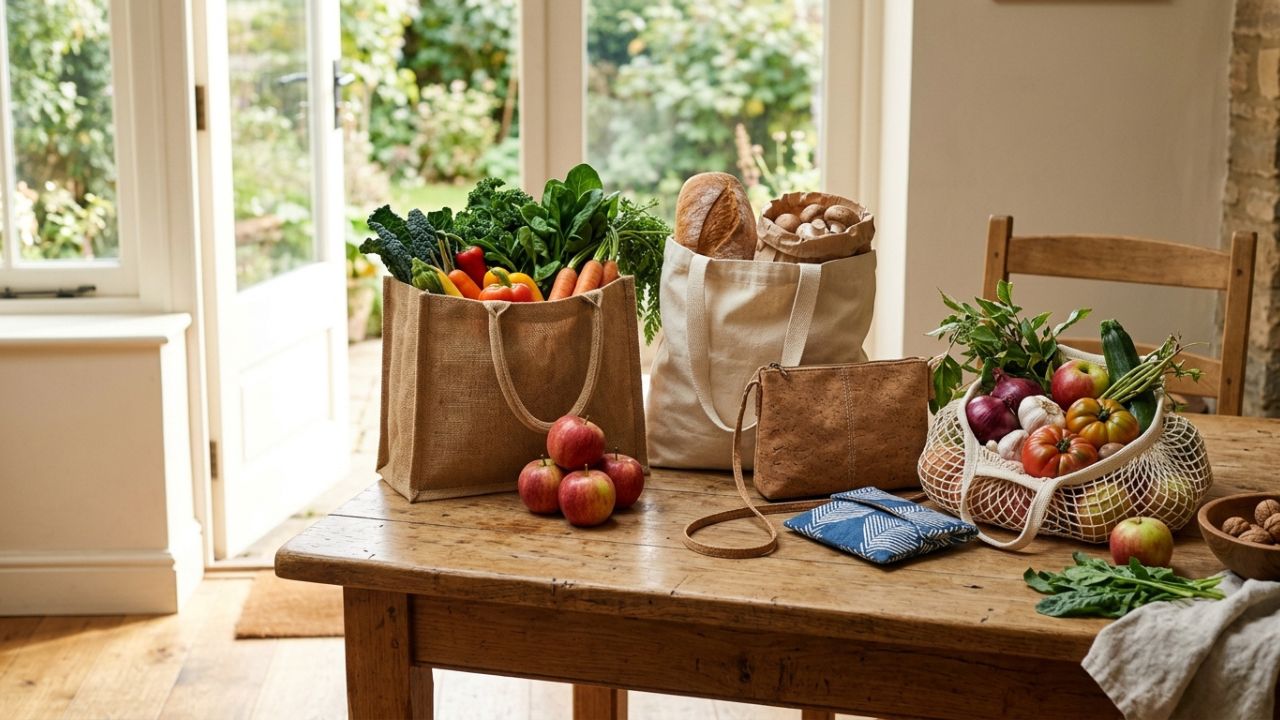
Running errands is one of those small daily rituals that quietly adds up. A trip to the grocery store, a stop at the farmers market, a quick dash to pick up dry cleaning or produce from the corner shop. Every one of these trips is an opportunity to either lean on single use plastic or to reach for something that lasts.
For anyone trying to live a little lighter on the planet, swapping out disposable bags for sustainable carrying products is one of the easiest and most visible changes to make.
The good news is that sustainable bags have come a long way. They are no longer just plain canvas totes. Today there are options made from recycled plastic bottles, organic cotton, cork, hemp, and even mushroom based materials. Some fold into tiny pouches that fit in a coat pocket, while others are built tough enough to carry a week’s worth of groceries without a single strap giving out.
This article walks through twelve practical, everyday sustainable bags and carrying products that can help reduce reliance on single use plastic, cut down on waste, and make errand running a bit more mindful.
Why Sustainable Bags Matter for Everyday Errands
Plastic bags are one of the most common forms of litter found in oceans, rivers, and landfills. They take hundreds of years to break down, and even when they do, they often turn into microplastics that pollute soil and water. Many cities and countries have already introduced bans or fees on single use plastic bags, which has pushed more people to look for reusable alternatives.
Choosing sustainable bags for errands is not just about avoiding plastic. It is also about:
- Reducing the overall demand for new raw materials
- Supporting brands that use recycled or renewable fibers
- Cutting down on household clutter caused by disposable packaging
- Saving money over time, since a durable bag can last for years
- Making an everyday habit feel a little more intentional
Small, repeated choices like this tend to build momentum. Once someone gets used to grabbing a reusable bag before heading out the door, it becomes second nature rather than an extra chore.
What Makes a Bag Truly Sustainable
Not every bag labeled “eco-friendly” is created equal. Before diving into the list, it helps to understand what actually makes a carrying product a good choice for the planet.
Material Matters
Look for bags made from organic cotton, recycled polyester, jute, hemp, cork, or recycled ocean plastic. These materials generally require fewer pesticides, less water, or less new petroleum to produce compared to conventional plastic or virgin synthetic fabrics.
Durability Over Trendiness
A bag that falls apart after a few months is not sustainable, no matter what it is made from. The most eco-friendly option is often the one that lasts the longest, because it delays the need to manufacture a replacement.
End of Life Consideration
Some bags can be composted, recycled, or repaired, while others cannot. A truly sustainable product considers what happens to it once it is worn out, not just how it is made.
Multi-Purpose Design
Bags that can serve more than one function, such as a tote that doubles as a beach bag or a produce bag that also works for bulk bin shopping, reduce the total number of items a household needs to own.
12 Sustainable Bags and Carrying Products Worth Adding to an Errand Routine
1. Organic Cotton Tote Bags
The classic reusable tote remains a household favorite for good reason. Organic cotton totes are sturdy, machine washable, and versatile enough to carry groceries, library books, or gym clothes. Because they are made without synthetic pesticides or fertilizers, organic cotton has a lighter environmental footprint than conventional cotton.
2. Recycled Polyester Foldable Bags
For anyone who forgets a bag more often than they would like to admit, a foldable bag made from recycled polyester is a smart backup. These bags scrunch down into a pouch small enough to clip onto a keychain or toss into a purse, so there is no excuse to end up empty handed at the checkout counter.
3. Jute Market Bags
Jute is a natural, biodegradable fiber that grows quickly and requires very little water compared to cotton. Jute market bags have a rustic, woven look and are especially popular for farmers market trips, thanks to their sturdy structure and wide opening.
4. Mesh Produce Bags
Loose fruits and vegetables often end up in thin plastic bags that get used once and thrown away. Reusable mesh produce bags made from cotton or recycled nylon solve this problem. They are lightweight, see through so cashiers can easily check contents, and washable between uses.
5. Insulated Cooler Totes
Grocery runs that include frozen or refrigerated items usually mean extra plastic bags to keep things cold. An insulated cooler tote made from recycled materials keeps perishables fresh without the need for disposable ice packs or extra bagging.
6. Hemp Backpacks
For errands that involve walking, biking, or public transit, a hands free option makes life easier. Hemp backpacks are naturally resistant to mold and wear, and hemp as a crop requires significantly less water than cotton, making it a strong choice for a long lasting daily bag.
7. Cork Handbags
Cork is harvested from the bark of cork oak trees without harming the tree itself, since the bark regenerates over time. Cork handbags are naturally water resistant, lightweight, and have a distinct texture that sets them apart from typical fabric bags.
8. Recycled Ocean Plastic Totes
Some companies now collect plastic waste from oceans and coastlines and transform it into durable woven totes. Choosing one of these bags supports cleanup efforts while giving discarded plastic a second life as a functional, long lasting product.
9. Canvas Bread and Bulk Bags
Bulk bin shopping is a great way to cut down on packaging waste, but it works best with the right bags. Canvas bulk bags with drawstring closures are ideal for grains, nuts, pasta, and even fresh bread, keeping items fresh without single use plastic or paper bags.
10. Wine and Bottle Carriers
For errands that involve picking up a bottle of wine or a growler of something else, a padded bottle carrier made from recycled fabric prevents the need for paper bags or bubble wrap. Many designs include a handle and secure closure to prevent spills or breakage.
11. Egg and Fragile Item Carriers
Reusable egg cartons or padded fragile item carriers are a small but clever addition to a sustainable errand kit. These are especially useful for farmers market visits where eggs, glass jars, or delicate produce are common purchases.
12. Convertible Backpack Totes
For those who want flexibility, a convertible backpack tote made from recycled materials offers the best of both worlds. It can be carried by the handles for a quick trip or worn on the back for longer walks, bike rides, or public transportation.
Comparing the Materials
The table below offers a quick side by side look at common sustainable bag materials, helping to match the right option to the right errand.
| Material | Durability | Water Resistance | Best For | End of Life |
|---|---|---|---|---|
| Organic Cotton | High | Low | Groceries, general use | Compostable, recyclable |
| Recycled Polyester | High | Moderate | Foldable everyday bags | Recyclable |
| Jute | Moderate | Low | Market trips, produce | Biodegradable |
| Hemp | Very High | Moderate | Backpacks, heavy loads | Biodegradable |
| Cork | High | High | Handbags, fashion use | Biodegradable |
| Recycled Ocean Plastic | High | High | Totes, outdoor errands | Recyclable |
| Mesh Cotton or Nylon | Moderate | Low | Loose produce | Washable, long lasting |
Tips for Building a Practical Sustainable Bag Kit
Switching to reusable bags works best when it becomes effortless rather than something that requires extra planning every single time. A few habits can help make the transition smoother.
- Keep a foldable bag in every coat pocket, car door, and work bag
- Store a stack of mesh produce bags near the front door as a visual reminder
- Wash cotton and hemp bags regularly to keep them fresh and hygienic
- Choose one sturdy, multi-purpose bag for heavier grocery loads instead of several small ones
- Repair small tears or loose stitching instead of replacing a bag at the first sign of wear
- Donate or repurpose old bags rather than throwing them away
Making the Switch Feel Natural
The biggest hurdle for most people is not finding sustainable bags, since there are more options available now than ever before. The real challenge is remembering to bring them along. Building small habits, like leaving bags by the front door or in the car, can make the switch feel automatic rather than forced.
Over time, these small shifts add up to a meaningful reduction in single use plastic. A household that replaces disposable bags with a rotation of durable, well made alternatives can avoid using hundreds of plastic bags every year. Multiply that across neighborhoods, cities, and countries, and the impact becomes significant.
Final Thoughts
Sustainable bags and carrying products are one of the simplest ways to bring eco-conscious habits into daily life. From organic cotton totes to cork handbags and recycled ocean plastic carriers, there is a sustainable option suited to nearly every kind of errand.
The key is choosing durable, multi-purpose products that fit naturally into an existing routine, so the switch away from single use plastic feels effortless rather than like an extra task on an already busy day.
Small changes like these are rarely dramatic on their own, but together they represent a steady, practical way to reduce waste and live a little more gently on the planet, one errand at a time.



