
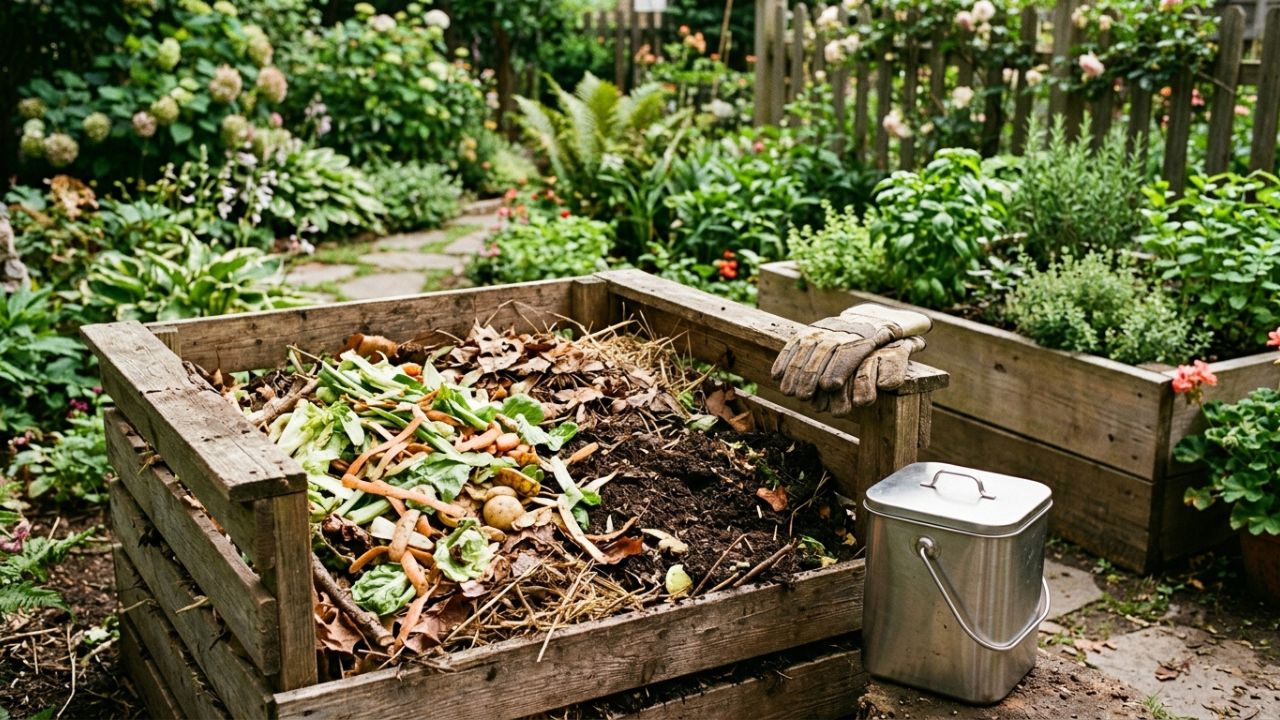
Composting is one of the simplest ways for anyone to reduce food waste, cut down on landfill contributions, and give back to the soil. Whether someone lives in a spacious house with a big backyard or a small apartment with barely enough counter space for a coffee maker, there is a compost setup that can work for them.
The key is finding the right bin and accessories that match the size of the home, the amount of waste produced, and the amount of time available to manage the process.
This guide walks through thirteen compost bins and accessories suited to different home setups, along with practical tips on how to choose the right one and how to keep the whole system running smoothly.
Why Composting Matters for an Eco-Friendly Home
Food scraps and yard waste make up a large portion of household trash. When these materials end up in a landfill, they break down without enough oxygen and release methane, a greenhouse gas that is far more potent than carbon dioxide. Composting at home keeps that organic material out of the waste stream and turns it into something useful instead.
A well-managed compost pile or bin produces nutrient-rich material that can be added to garden beds, potted plants, or lawns. It reduces the need for synthetic fertilizers, improves soil structure, and helps soil retain moisture. For anyone trying to live a more sustainable lifestyle, composting is one of the most rewarding habits to build because the results are visible, useful, and satisfying.
Choosing the Right Compost System for a Home
Before picking a bin, it helps to think through a few basic questions:
- How much outdoor space is available, if any?
- How much food waste does the household generate each week?
- Is there a garden or yard that could use the finished compost?
- How much time can be spent turning, monitoring, or maintaining the pile?
- Is odor control a top priority, especially in an apartment setting?
Once these questions are answered, it becomes much easier to match a compost bin to a specific living situation.
Compost Bins for Small Apartments and Limited Space
Not everyone has a backyard, but that does not mean composting is off the table. Countertop and indoor systems make it possible to collect scraps even in the smallest kitchens.
1. Countertop Compost Bin
A countertop compost bin is a small, often stainless steel or ceramic container that sits near the kitchen sink. It is designed to hold a few days’ worth of food scraps before they are transferred to a larger outdoor bin, a community compost drop-off, or a worm bin. Many models include a charcoal filter in the lid to reduce odors, making them a practical first step for anyone new to composting.
2. Bokashi Bin
Bokashi composting uses a fermentation process rather than traditional decomposition. A bokashi bin is a sealed bucket with a spigot at the bottom to drain excess liquid, which can be diluted and used as a plant fertilizer. Food scraps are layered with a bran inoculated with beneficial microbes, and the sealed environment means there is little to no odor. This method works well for apartments because it can handle meat, dairy, and cooked foods that are usually discouraged in traditional compost piles.
3. Indoor Worm Bin (Vermicomposting Bin)
A worm bin uses red wiggler worms to break down food scraps into rich worm castings. These bins are typically stackable trays that fit under a sink, in a closet, or on a balcony. Vermicomposting is popular among apartment dwellers because it produces very little smell when managed properly and creates one of the most nutrient-dense forms of compost available.
4. Electric Kitchen Composter
Electric composters use heat, grinding, and aeration to break down food scraps in a matter of hours rather than weeks. These countertop appliances are compact and require minimal effort, making them appealing to people who want the benefits of composting without the wait time or the need for outdoor space. The output is a dry, soil-like material that can be mixed into potting soil or used directly in small planters.
Compost Bins for Backyards and Suburban Homes
For those with a yard, there are more options that can handle larger volumes of waste and produce compost more efficiently over time.
5. Tumbling Compost Bin
A tumbling composter is a drum-shaped bin mounted on a frame that allows it to be rotated by hand. Turning the drum mixes the compost, which speeds up decomposition and helps aerate the material without the need for a pitchfork or shovel. This style is a favorite for backyard composting because it is tidy, keeps pests out, and produces finished compost faster than a stationary pile.
6. Stationary Plastic Compost Bin
A stationary bin is one of the most common and affordable options for backyard composting. It usually has an open bottom that sits directly on the soil, allowing worms and other organisms to enter naturally, along with a lid to keep out excess rain and animals. These bins work well for households that generate a steady amount of kitchen and yard waste.
7. Wooden Compost Bin or Pallet Bin
A wooden compost bin can be built from untreated lumber or repurposed pallets, making it a budget-friendly and sustainable choice. These bins are often open on top and sometimes have removable front slats for easy access when turning the pile or harvesting finished compost. They tend to suit larger yards where a bigger volume of material needs to be processed.
8. Three-Bin Composting System
A three-bin system uses separate compartments for different stages of decomposition, fresh scraps in one, partially broken down material in the middle, and finished compost ready for use in the third. This setup is ideal for households that produce a large amount of yard waste, such as fallen leaves or grass clippings, and want an organized way to manage compost at different stages without mixing everything together.
9. Compost Sifter
A compost sifter is a simple screen or mesh tray used to separate finished compost from larger chunks that need more time to break down. This accessory is especially useful for backyard setups with a lot of volume, since sifting ensures that only fully decomposed material goes onto garden beds while unfinished scraps go back into the bin.
Compost Accessories That Make the Process Easier
Regardless of the type of bin someone chooses, a few accessories can make composting more convenient and less messy.
10. Compost Aerator Tool
A compost aerator, sometimes shaped like a corkscrew or a twisting rod, is used to mix and aerate the pile without fully turning it over with a shovel. Regular aeration introduces oxygen, which helps the beneficial bacteria in the pile work more efficiently and reduces unpleasant odors caused by anaerobic decomposition.
11. Kitchen Compost Caddy with Compostable Bags
A kitchen compost caddy is a small bucket, often with a handle, that sits on the counter or under the sink to collect scraps throughout the day. Pairing it with compostable liner bags makes cleanup faster and helps prevent residue from building up inside the caddy.
12. Compost Thermometer
A compost thermometer is a long-stemmed thermometer designed to measure the internal temperature of a compost pile. Since decomposition generates heat, monitoring the temperature helps determine whether the pile is active and breaking down properly or whether it needs more moisture, air, or nitrogen-rich material to get back on track.
13. Outdoor Compost Bin Cover or Pest-Proof Lid
For anyone dealing with curious animals or pests, a secure, pest-proof lid or cover can make a significant difference. These accessories are usually made of heavy-duty plastic or metal mesh and clip securely onto existing bins, keeping raccoons, rodents, and insects from getting into the pile while still allowing airflow.
Comparing Compost Bins by Home Setup
| Bin or Accessory | Best For | Space Needed | Maintenance Level |
|---|---|---|---|
| Countertop Compost Bin | Apartments, small kitchens | Minimal | Low |
| Bokashi Bin | Apartments, all food types | Minimal | Low to moderate |
| Indoor Worm Bin | Apartments, balconies | Small | Moderate |
| Electric Kitchen Composter | Apartments, busy households | Minimal | Low |
| Tumbling Compost Bin | Backyards, suburban homes | Moderate | Moderate |
| Stationary Plastic Bin | Backyards, steady waste output | Moderate | Low to moderate |
| Wooden or Pallet Bin | Large yards, DIY households | Large | Moderate |
| Three-Bin System | Large yards, heavy yard waste | Large | Moderate to high |
| Compost Sifter | Any backyard setup | Minimal | Low |
Tips for Successful Composting in Any Setup
- Balance green materials, such as fruit and vegetable scraps, with brown materials, such as dried leaves or shredded paper, to keep the pile healthy.
- Avoid adding meat, dairy, or oily foods to traditional compost piles unless using a bokashi system designed to handle them.
- Keep the compost moist but not soggy, similar to the texture of a wrung-out sponge.
- Turn or aerate the pile regularly to speed up decomposition and prevent odors.
- Chop larger scraps into smaller pieces to help them break down faster.
- Keep a compost caddy in the kitchen to make daily collection more convenient.
Making Composting a Long-Term Habit
The best compost bin is the one that actually gets used consistently. Someone living in a studio apartment might find that a small worm bin or bokashi system fits seamlessly into their routine, while a family with a large backyard might benefit more from a three-bin system that can handle both kitchen scraps and yard debris. Starting small and adjusting as habits develop is often more sustainable than trying to build the perfect setup right away.
Composting is not just about reducing waste, it is about creating a small, ongoing connection to the natural cycle of growth and decay. With the right bin and a few helpful accessories, almost any home can take part in turning everyday scraps into something valuable for the earth.



