Anyone who has thrown away a bag of wilted spinach or a soft, brown avocado knows the quiet frustration of wasted food. It is not just an inconvenience. It is money down the drain and a small but real contribution to the growing problem of household food waste.
For people who care about living a more sustainable life, keeping fruits and vegetables fresh for as long as possible is one of the easiest ways to shrink a household’s environmental footprint without making any major lifestyle changes.
The good news is that a few smart, reusable products can make a noticeable difference. Instead of relying on single use plastic wrap or bags that end up in landfill, there are now dozens of thoughtful tools designed specifically to slow down spoilage. This article walks through fourteen practical products that can help extend the life of produce, along with the reasons they work and how to use them well.
Why Keeping Produce Fresh Matters
Food waste is a bigger issue than most people realize. Fruits and vegetables are among the most commonly wasted food items in homes because they spoil quickly and are often bought in larger quantities than needed. When produce rots before it gets eaten, the resources used to grow it, including water, soil nutrients, packaging, and transportation, are wasted along with it.
For someone trying to live more sustainably, reducing food waste is one of the most effective everyday actions they can take. It also happens to save money, which makes it a rare case where doing the environmentally responsible thing and the financially responsible thing line up perfectly.
The Science Behind Spoilage
Understanding why produce spoils helps explain why certain products work so well.
- Many fruits release ethylene gas as they ripen, which speeds up the ripening and eventual decay of nearby produce.
- Moisture loss causes vegetables like carrots and celery to go limp and rubbery.
- Excess moisture, on the other hand, encourages mold growth in leafy greens and berries.
- Oxygen exposure accelerates browning and nutrient breakdown in cut produce.
- Temperature fluctuations can shock delicate fruits and vegetables, shortening their shelf life.
Once these causes are understood, it becomes much easier to see why certain storage tools are effective. The right product either controls humidity, blocks ethylene, limits oxygen exposure, or protects produce from temperature swings.
14 Practical Products for Fresher Produce
Storage Containers and Bags
Reusable produce storage containers with built in vents are one of the simplest upgrades a kitchen can make. These containers are designed to regulate humidity, which helps leafy greens, berries, and herbs stay crisp instead of turning slimy. Many have a small tray or insert at the bottom that separates produce from any pooled moisture.
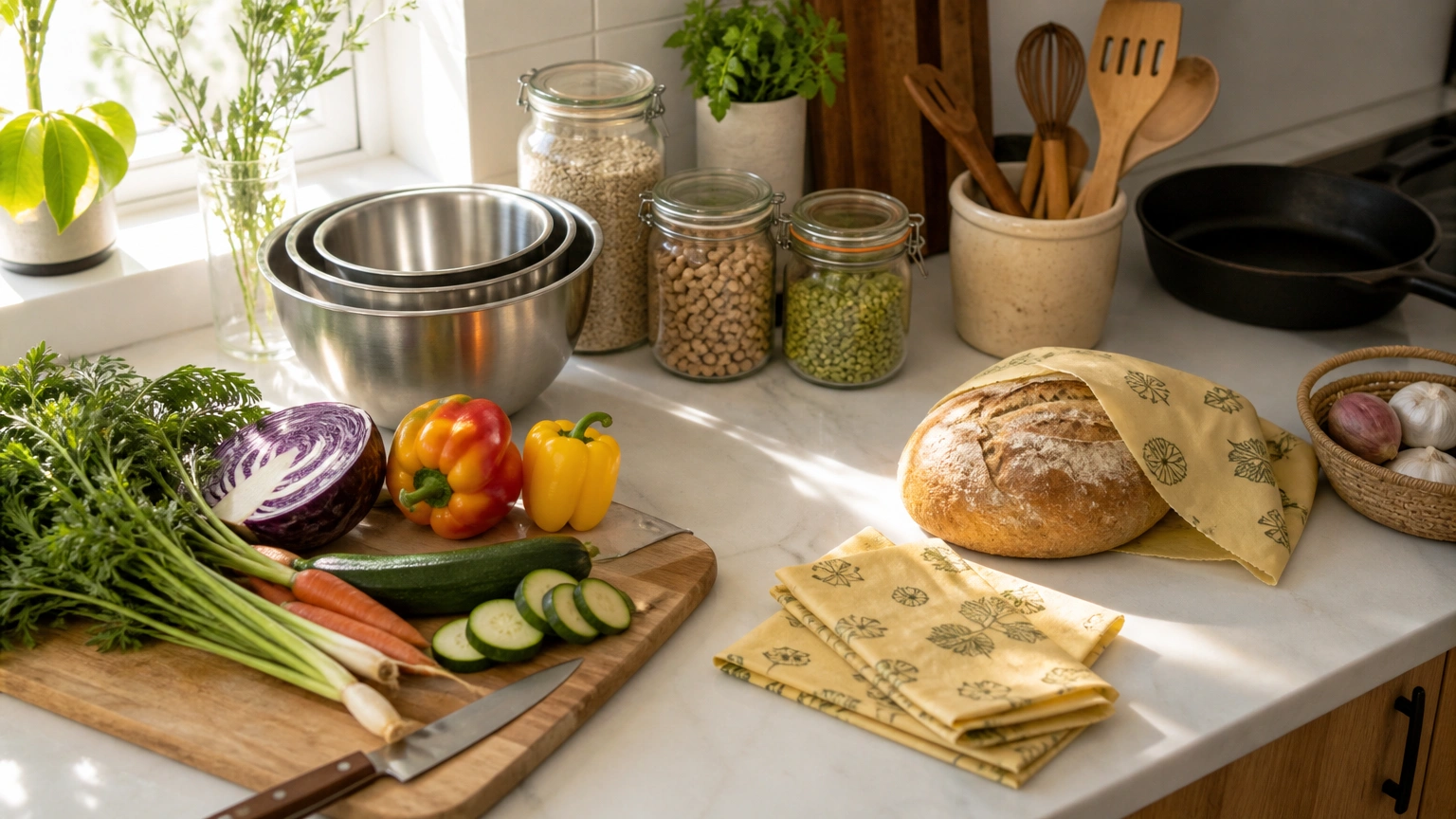
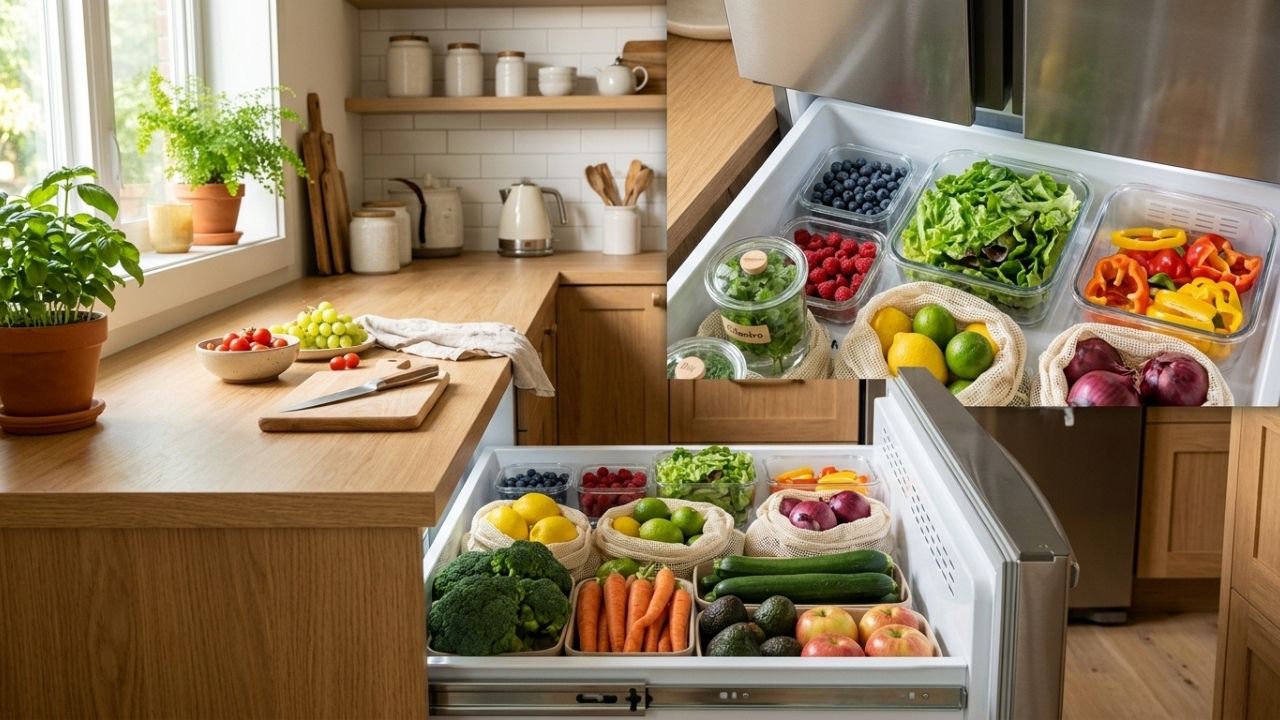
Breathable mesh or cotton produce bags are a reusable alternative to the thin plastic bags found at grocery stores. They allow air to circulate around fruits and vegetables, which reduces the buildup of condensation that often leads to early spoilage. They are also machine washable, making them a long lasting swap for disposable bags.
Silicone food storage bags offer a reusable substitute for single use plastic freezer bags. They work well for storing chopped vegetables or fruit that has already been prepped, and they can be washed and reused hundreds of times, which cuts down significantly on plastic waste.
Humidity and Airflow Tools
Produce savers with adjustable vents allow for fine tuning airflow depending on what is being stored. Leafy greens generally need higher humidity, while items like mushrooms do better with a bit more airflow. Containers that let the user control this balance tend to outperform basic containers.
Moisture absorbing pads placed at the bottom of a produce drawer or storage container soak up excess condensation. This is especially useful for berries, which are notorious for developing mold within just a day or two of purchase.
Cloth vegetable wraps, often made from linen or cotton, can be dampened slightly and used to wrap root vegetables or leafy greens. This mimics the way farmers markets sometimes store produce and helps maintain the right level of moisture without sealing food away from air completely.
Ethylene Absorbing Solutions
Ethylene absorbing packets or balls placed inside produce drawers or storage bags help neutralize the gas that speeds up ripening. These are particularly helpful in a shared refrigerator drawer where ethylene sensitive vegetables like leafy greens sit next to ethylene producing fruits like apples or bananas.
Ceramic or charcoal based ethylene filters work similarly but can be reused for extended periods, unlike disposable sachets. They are placed in the crisper drawer and help absorb gas before it accelerates spoilage in nearby produce.
Countertop and Ripening Tools
Adjustable ripening bowls allow certain fruits to ripen at room temperature while limiting excess ethylene buildup. These are useful for items like avocados, tomatoes, and stone fruits that need to be watched closely so they do not go from underripe to overripe overnight.
Banana and stem hangers keep bananas away from other produce and prevent them from bruising where they touch a countertop. Since bananas are one of the biggest ethylene producers, keeping them elevated and separated can protect the rest of the kitchen’s fruit bowl.
Refrigerator Organization Tools
Stackable clear bins designed for refrigerator drawers help keep produce organized and visible. When fruits and vegetables are easy to see, they are far less likely to be forgotten and left to spoil in the back of a drawer.
Herb keeper containers, which typically hold a small amount of water at the base like a vase, can dramatically extend the life of fresh herbs such as parsley, cilantro, and basil. Some versions include a loose fitting lid that acts like a mini greenhouse.
Preservation Tools for Cut Produce
Reusable silicone stretch lids replace plastic wrap for covering cut fruits, half onions, or bowls of chopped vegetables. They create a tight seal that helps slow down oxidation and moisture loss.
Citrus and vegetable savers, small containers shaped to snugly fit half a lemon, onion, or tomato, help the cut side stay protected from air. This reduces browning and helps the remaining half stay usable for several more days.
Comparison of Products by Purpose
| Product | Best For | Main Benefit |
|---|---|---|
| Vented storage containers | Leafy greens, berries | Regulates humidity |
| Breathable produce bags | Most fruits and vegetables | Improves airflow |
| Silicone storage bags | Prepped produce | Reusable, reduces plastic waste |
| Adjustable vent savers | Mixed produce drawers | Custom humidity control |
| Moisture absorbing pads | Berries, leafy greens | Prevents mold from condensation |
| Cloth vegetable wraps | Root vegetables, greens | Maintains gentle moisture |
| Ethylene absorbing packets | Mixed produce drawers | Slows ripening gas buildup |
| Ceramic ethylene filters | Long term storage | Reusable ethylene control |
| Ripening bowls | Avocados, tomatoes | Controlled ripening |
| Banana hangers | Bananas | Prevents bruising, limits ethylene contact |
| Stackable clear bins | General organization | Increases visibility, reduces forgotten food |
| Herb keeper containers | Fresh herbs | Keeps herbs hydrated |
| Silicone stretch lids | Cut produce, leftovers | Reduces oxidation |
| Citrus and vegetable savers | Half fruits and vegetables | Protects cut surfaces |
Tips for Getting the Most Out of These Products
Even the best tools work better when paired with a few smart habits.
- Store ethylene producing fruits like apples, bananas, and pears away from ethylene sensitive vegetables such as leafy greens, broccoli, and carrots.
- Wash berries only right before eating them, since early washing introduces moisture that speeds up mold growth.
- Keep the refrigerator temperature consistent, ideally between 34 and 40 degrees Fahrenheit for most produce drawers.
- Trim the ends of herbs and leafy greens before storing them, similar to how fresh cut flowers are prepared.
- Rotate older produce to the front of the fridge so it gets used before newer purchases.
- Avoid overcrowding produce drawers, since poor airflow can trap moisture and encourage spoilage.
Building a Low Waste Kitchen Habit
Buying a few of these products is a great start, but the real value comes from building consistent habits around them. Someone who wants to reduce food waste might begin by identifying which fruits and vegetables they throw away most often, then choosing one or two products that directly address that problem.
For instance, someone who frequently loses fresh herbs to wilting might start with an herb keeper, while someone who struggles with soggy lettuce might benefit most from a vented storage container.
Over time, these small investments add up. Reusable containers, bags, and wraps reduce the need for single use plastics, while better storage habits mean fewer trips to the grocery store to replace food that spoiled too soon. This is sustainability in its most practical form, not a dramatic lifestyle overhaul, but a series of small, thoughtful choices that reduce waste and save money.
Final Thoughts
Reducing food waste does not require a complete kitchen makeover. It simply requires understanding what causes produce to spoil and choosing the right tools to slow that process down. Whether it is a vented container for leafy greens, an ethylene absorbing packet for a crowded produce drawer, or a simple herb keeper on the counter, each product plays a small but meaningful role in helping fruits and vegetables last longer.
For anyone working toward a more sustainable and eco-friendly lifestyle, these fourteen products offer an easy, practical starting point. They reduce reliance on disposable plastics, cut down on grocery waste, and help make the most of every fruit and vegetable that comes into the kitchen.