Mornings set the tone for the rest of the day. The way someone wakes up, gets ready, and fuels their body can either add to their sense of purpose or quietly chip away at it. For anyone trying to live a more sustainable life, the morning routine is one of the easiest places to start making a real difference. Small, consistent choices repeated every single day add up to a much bigger impact than most people realize.
The good news is that building a greener morning doesn’t require an expensive overhaul or a complete lifestyle transformation. It simply means noticing the habits that already exist and swapping out a few of them for options that are kinder to the planet. Below are four simple, practical swaps that anyone can make part of their morning without adding stress or extra time to an already busy schedule.
Why Morning Habits Matter for Sustainability
Before diving into the swaps themselves, it helps to understand why mornings carry so much weight when it comes to sustainability. Most people follow a fairly consistent morning routine, which means whatever habits are formed there tend to repeat daily, weekly, and eventually for years. A single disposable coffee cup might not seem like much, but multiplied by 365 mornings a year, it becomes a significant amount of waste.
Mornings are also often rushed, which means people tend to reach for convenience over intention. That rush is exactly why single-use plastics, paper products, and energy-heavy habits sneak into daily life so easily. By identifying a few key areas to improve, it becomes much easier to build routines that are both convenient and environmentally friendly.
Swap 1: Trade Disposable Coffee Cups and Filters for Reusable Options
For many people, the morning simply does not start without a cup of coffee or tea. Unfortunately, this beloved ritual is also one of the biggest sources of everyday waste. Paper cups lined with plastic, single-use coffee pods, and disposable filters all pile up quickly and often cannot be recycled through standard municipal programs.
Why This Swap Matters
Disposable cups and pods are typically made from a mix of materials that are difficult to separate and recycle. Even when they are labeled as recyclable, many recycling facilities are not equipped to process them properly, so they often end up in landfills anyway. Coffee pods in particular combine plastic, foil, and organic coffee grounds, making them especially tricky to break down.
Simple Alternatives to Try
- Use a reusable travel mug for coffee or tea instead of a disposable cup, especially when grabbing a drink on the way out
- Switch from single-use pods to a reusable pod or a traditional coffee maker with a metal or cloth filter
- Choose a French press or pour-over method, both of which cut out paper filters entirely
- Store coffee beans or grounds in a reusable container instead of buying products packaged in layers of plastic
A reusable mug or filter might seem like a small change, but it eliminates hundreds of disposable items from a household’s trash every single year. Many coffee shops even offer a small discount for bringing a personal cup, which makes this swap easy on both the planet and the wallet.
Swap 2: Replace Single-Use Bathroom Products with Reusable or Refillable Versions
The bathroom is often overlooked when people think about sustainability, yet it is one of the biggest contributors to household plastic waste. From cotton pads to plastic razors, many bathroom staples are designed to be used once and thrown away.
Common Culprits in the Bathroom
- Disposable cotton rounds and makeup wipes
- Plastic disposable razors
- Single-use plastic toothbrushes
- Travel-size toiletries with excessive packaging
Reusable Swaps That Make a Difference
- Trade disposable cotton pads for washable, reusable cotton rounds that can be tossed in the laundry
- Choose a razor with a replaceable blade instead of a fully disposable one
- Switch to a toothbrush made from bamboo or another biodegradable material
- Look for refillable shampoo, conditioner, and soap options at local shops that offer bulk refills
- Choose bar soap and solid shampoo bars over bottled liquid versions to cut down on plastic packaging
These swaps do not require sacrificing quality or comfort. In fact, many people find that reusable and refillable products work just as well, if not better, than their disposable counterparts, while also saving money over time since they do not need to be repurchased as often.
Swap 3: Rethink Breakfast Packaging and Food Choices
Breakfast is another area where small changes can have a noticeable impact. From cereal boxes lined with plastic bags to individually wrapped snack bars, packaging waste tends to pile up quickly at the start of the day.
Packaging Problems at Breakfast
Many popular breakfast foods come wrapped in layers of plastic, foil, or non-recyclable materials. Even when boxes themselves are recyclable, the inner liners often are not, which means a portion of the packaging still ends up in a landfill.
Easy Breakfast Swaps
- Buy oats, granola, and cereal in bulk using reusable containers or bags when a bulk bin option is available
- Choose whole fruits over pre-packaged fruit cups or squeeze pouches
- Make homemade granola bars or overnight oats instead of buying individually wrapped snacks
- Store leftovers or prepped breakfast items in reusable glass or silicone containers instead of plastic wrap or bags
- Choose plant-based milk options in cartons that are widely recyclable, or make homemade versions to avoid packaging altogether
A Quick Comparison of Common Breakfast Choices
| Conventional Choice | Eco-Friendly Swap | Why It Helps |
|---|---|---|
| Single-serve cereal cups | Bulk oats or cereal in reusable containers | Cuts down on individual plastic packaging |
| Plastic wrap for leftovers | Reusable silicone or glass containers | Reduces single-use plastic waste |
| Pre-packaged fruit pouches | Fresh whole fruit | Eliminates packaging entirely |
| Bottled fruit juice | Homemade juice or whole fruit | Reduces plastic bottle waste |
| Paper napkins | Cloth napkins | Cuts down on daily paper waste |
Choosing whole, minimally packaged foods for breakfast is not only better for the planet, it often means fresher, healthier meals to start the day.
Swap 4: Lower Energy and Water Use During Morning Prep
The final swap focuses on the resources used behind the scenes during a typical morning routine. Hot showers, running water while brushing teeth, and appliances left plugged in all draw more energy and water than most people realize.
Where Energy and Water Tend to Get Wasted
- Letting the shower run while waiting for it to heat up
- Leaving the water running while brushing teeth or shaving
- Using a hair dryer or styling tools on high heat for longer than necessary
- Leaving small appliances plugged in even when not in use
Practical Ways to Cut Back
- Turn off the tap while brushing teeth and only turn it back on to rinse
- Take slightly shorter showers, or install a low-flow showerhead to reduce water use without sacrificing comfort
- Unplug small appliances like hair dryers, straighteners, or electric toothbrush chargers when they are not actively being used
- Use natural light in the morning instead of turning on multiple lights when possible
- Air dry hair a few days a week instead of relying on heat styling tools every single day
These changes are easy to build into an existing routine and often lead to lower utility bills as an added bonus. Reducing water and energy use in the morning is one of those swaps that quietly saves resources without requiring much thought once it becomes a habit.
Making These Swaps Stick
Building new habits, even small ones, takes a bit of patience. It helps to start with just one swap at a time rather than trying to change an entire routine overnight. Once one habit feels natural, it becomes much easier to add the next one.
Tips for Long-Term Success
- Keep reusable items like a travel mug or cotton rounds somewhere visible and easy to grab
- Set a reminder on a phone or sticky note near the bathroom mirror as a gentle nudge during the first few weeks
- Involve the whole household so the new habits become shared routines rather than individual efforts
- Celebrate small wins, like noticing less trash at the end of the week, to stay motivated
- Be patient with slip-ups, since sustainability is about consistency over time, not perfection
The Bigger Picture
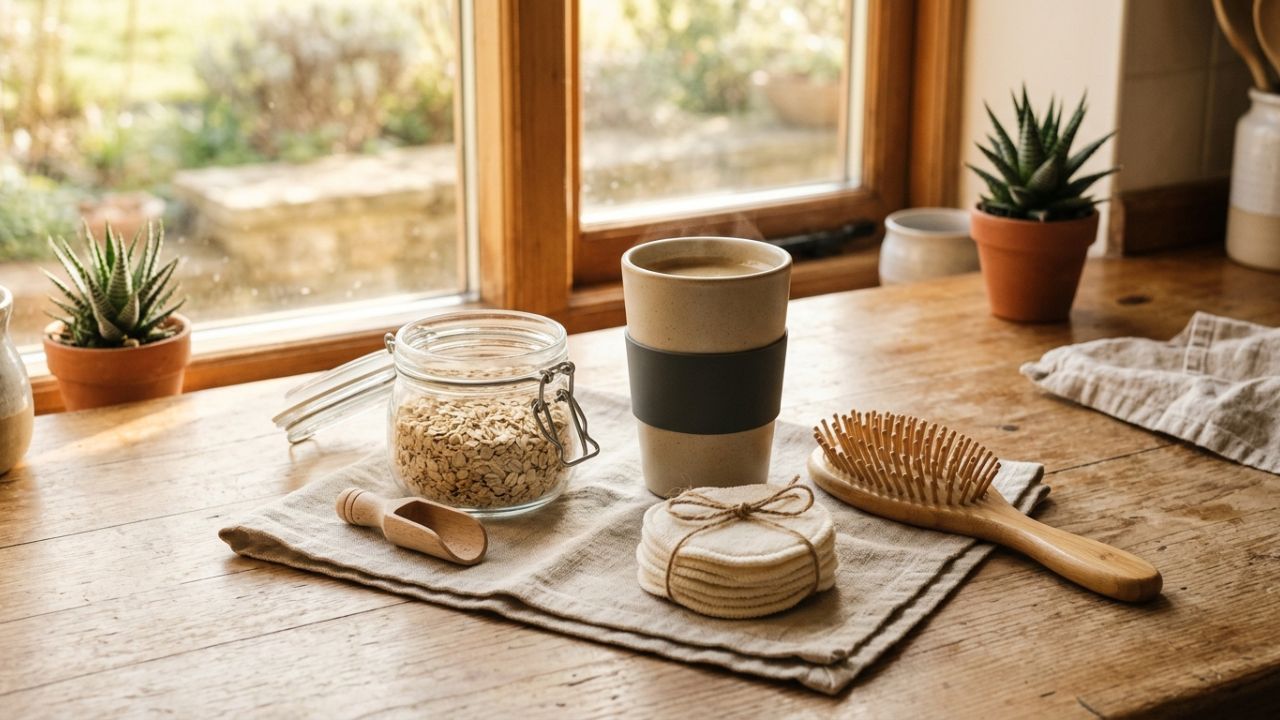
None of these four swaps require a dramatic lifestyle change, yet together they can meaningfully reduce daily waste, water use, and energy consumption. A reusable coffee cup, a washable cotton pad, a container of bulk oats, and a shorter shower might each seem minor on their own, but repeated every morning, they add up to a much lighter footprint over the course of a year.
Living sustainably does not mean doing everything perfectly. It means making thoughtful choices where possible and building habits that feel manageable long term. A greener morning routine is simply proof that eco-friendly living can fit naturally into everyday life, one small swap at a time.