For anyone trying to live a little lighter on the planet, the bathroom is often the last room to get the eco-friendly treatment. The kitchen gets reusable bags and glass jars. The living room gets secondhand furniture.
But the shower, where so much single-use plastic quietly piles up week after week, tends to get overlooked. Shampoo bottles, plastic loofahs, disposable razors, and squeezable body wash tubes all add up to a surprising amount of waste over a year.
The good news is that switching to a plastic-free shower routine does not require a total life overhaul. It is one of the simplest, most satisfying swaps a person can make on their sustainability journey. Small changes in a small space can lead to a noticeably lighter footprint, and most of these swaps last far longer than their plastic counterparts, which means less shopping and less waste overall.
This article walks through five plastic-free shower accessories worth adding to a daily routine, why they matter, and how to choose the right ones.
Why the Shower Deserves an Eco-Friendly Makeover
Bathrooms are one of the biggest hidden sources of household plastic. Shampoo bottles, conditioner bottles, razor cartridges, and even the humble sponge are almost always made from petroleum-based plastic that is either thrown away or, at best, inconsistently recycled.
Many plastic bathroom products are simply too small or too contaminated with product residue to make it through a standard recycling facility, so they end up in landfills or waterways.
Beyond the environmental impact, there is also a practical upside. Plastic-free alternatives are often more durable, made from natural materials that feel better on the skin, and can save money over time since they are not repurchased as frequently. A person who switches to plastic-free shower accessories is not just reducing waste. They are often investing in higher quality tools that last for years instead of weeks.
The Hidden Cost of Everyday Plastic
Most people do not realize how many plastic items pass through the shower in a single year. A rough estimate might include:
- A new plastic shampoo bottle every one to two months
- A new plastic conditioner bottle on a similar schedule
- Disposable razors replaced every few weeks
- Plastic mesh loofahs replaced every one to two months
- Plastic-wrapped soap bars
Multiply that across a household of two or three people, and the number of plastic items discarded from the bathroom alone can climb into the dozens each year. Choosing plastic-free alternatives is a straightforward way to cut that number down significantly.
1. Shampoo and Conditioner Bars
Shampoo and conditioner bars are often the first swap people make, and for good reason. These solid bars work just like liquid shampoo and conditioner but skip the plastic bottle entirely. Most are wrapped in paper or sold completely package-free, and a single bar can often replace two or three plastic bottles worth of product.
Shampoo bars are typically made with plant-based oils, butters, and gentle cleansing agents. Conditioner bars usually rely on natural emollients like cocoa butter or shea butter to soften hair. Because they are concentrated, a bar tends to last much longer than a bottle of liquid product, which also means fewer purchases and less packaging waste over time.
Tips for Switching to Bars
- Look for a bar formulated for the specific hair type, since curly, fine, and color-treated hair all benefit from different ingredients
- Allow a short adjustment period, as hair may need a few washes to adapt to a new formula
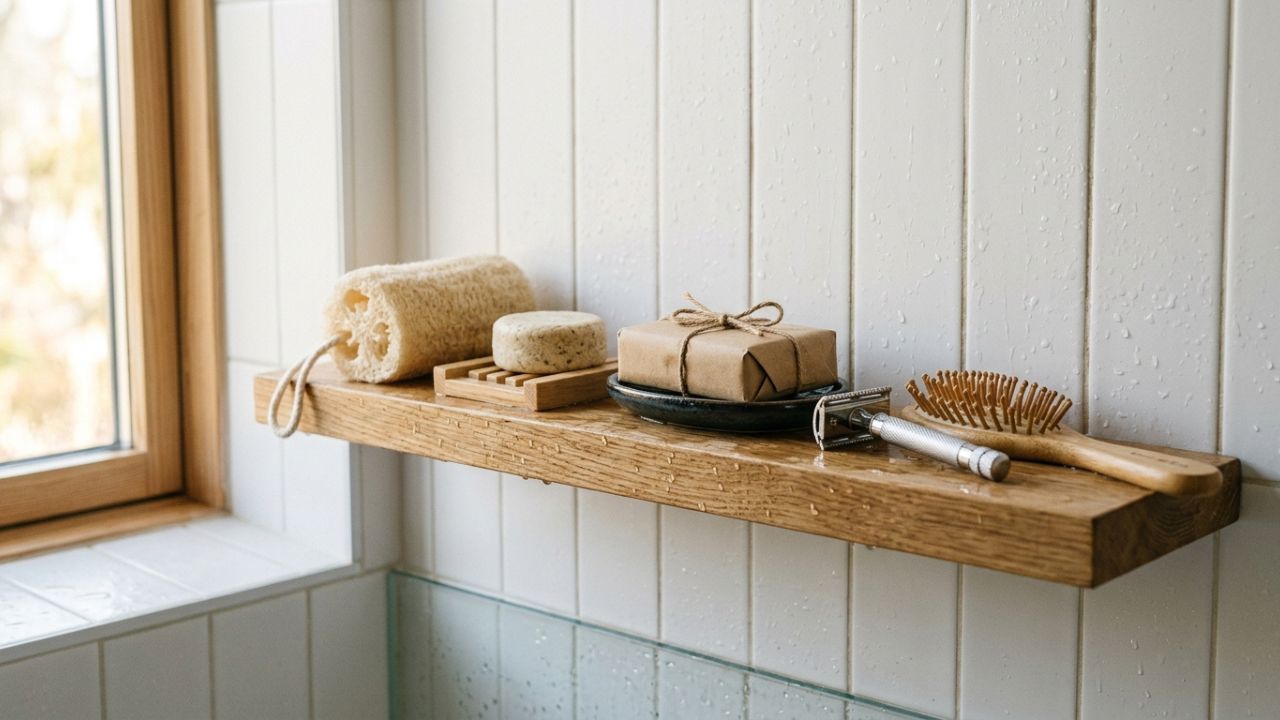
- Store the bar on a draining soap dish between uses so it lasts longer
- Rub the bar directly onto wet hair or lather it in the hands first, whichever feels easier
2. Natural Loofahs and Body Scrubbers
Traditional loofahs and mesh puffs sold in most stores are made from plastic netting that sheds tiny fibers every time they are used. Those fibers eventually wash down the drain and contribute to the microplastic pollution found in oceans and rivers.
A natural loofah, grown from the fibrous interior of a loofah gourd, offers the same exfoliating texture without any plastic. Other plastic-free options include konjac sponges, made from the root of the konjac plant, and washcloths made from organic cotton or hemp.
| Accessory | Material | Best For |
|---|---|---|
| Natural loofah | Dried loofah gourd fiber | Exfoliating rough skin, elbows, and feet |
| Konjac sponge | Konjac root fiber | Gentle daily cleansing, sensitive skin |
| Hemp washcloth | Woven hemp fiber | Everyday body washing, quick-dry use |
| Sisal body brush | Sisal plant fiber | Dry brushing and circulation |
These natural alternatives are also biodegradable, so once they wear out they can be composted instead of tossed in the trash where they would sit for decades.
Caring for Natural Scrubbers
- Rinse thoroughly after each use and hang to dry in a well-ventilated spot
- Avoid leaving them in a damp, closed shower where mold can develop
- Replace every few weeks depending on how often they are used
- Compost the old scrubber once it starts to break down
3. Bar Soap Without Plastic Packaging
Liquid body wash almost always comes in a plastic bottle, and refill options are not yet available everywhere. A simple, often overlooked swap is going back to bar soap, ideally one wrapped in paper, cardboard, or nothing at all.
Bar soap has come a long way from the drying, chalky bars of the past. Many modern bar soaps are made with nourishing oils like olive, coconut, or avocado, along with natural exfoliants such as oatmeal or coffee grounds. Because bar soap does not require a bottle, pump, or cap, it eliminates an entire category of plastic waste in one simple switch.
What to Look for in Plastic-Free Bar Soap
- Paper or fully compostable packaging
- Plant-based oils rather than synthetic detergents
- A soap dish with drainage to help the bar last longer
- Fragrance from essential oils rather than synthetic fragrance blends, for those with sensitive skin
4. Safety Razors
Disposable razors and plastic cartridge razors are one of the most wasteful items in a typical bathroom. Most cartridge razors are designed to be tossed after just a handful of uses, and the plastic handles cannot be recycled through standard municipal programs.
A safety razor offers a plastic-free alternative that can last a lifetime with proper care. These razors are usually made from metal, most often stainless steel, brass, or a durable alloy, and use a single replaceable blade instead of a multi-blade plastic cartridge. The blades themselves are typically made of steel and can often be recycled through metal recycling programs, unlike plastic cartridges.
Getting Comfortable With a Safety Razor
Switching to a safety razor does come with a small learning curve. A few tips can make the transition smoother:
- Let the razor do the work rather than pressing down, since the weight of the metal handle provides enough pressure on its own
- Use short, gentle strokes and rinse the blade frequently
- Keep the skin well lathered with a natural shaving soap or bar for a closer, more comfortable shave
- Replace the blade regularly, since a dull blade is more likely to cause nicks than a sharp one
Once the technique clicks, many people find they actually get a closer, smoother shave than they did with disposable plastic razors, along with far less waste.
5. Compostable or Bamboo Bath Accessories
Beyond the core essentials, there is a whole category of smaller bathroom items that can be swapped for compostable or bamboo alternatives. This includes items like:
- Bamboo hairbrushes with natural bristles
- Bamboo toothbrushes for the sink area near the shower
- Compostable cotton bath sponges
- Bamboo bath caddies or shower shelves in place of plastic organizers
- Natural loofah back scrubbers with wooden handles
Bamboo is a particularly popular material for these swaps because it grows quickly, requires little water, and is naturally biodegradable at the end of its life. Unlike plastic, which can take hundreds of years to break down, bamboo items can be composted or will decompose naturally over time.
Small Swaps That Add Up
It is easy to underestimate how much these smaller accessories matter, but a fully plastic-free shower shelf sends a clear signal that sustainability is not just a one-time purchase but an ongoing habit. Every bamboo hairbrush or compostable sponge added to the routine is one less piece of plastic that will eventually end up in a landfill.
Building a Full Plastic-Free Shower Routine
Switching everything at once is not necessary, and in fact, a gradual approach tends to stick better. A helpful strategy is to replace items as they run out rather than throwing away perfectly good plastic products early. This reduces unnecessary waste while still moving toward a more sustainable routine.
A simple approach might look like this:
- Finish the current bottle of shampoo, then switch to a shampoo bar
- Replace a worn-out plastic loofah with a natural loofah or konjac sponge
- Swap disposable razors for a safety razor at the next replacement
- Choose paper-wrapped bar soap the next time body wash runs low
- Slowly replace smaller accessories like hairbrushes and bath caddies with bamboo versions
Questions to Ask Before Buying
Before adding a new plastic-free accessory to the shower, it can help to ask a few quick questions:
- Is the packaging actually plastic-free, or just labeled as eco-friendly?
- Will this product last longer than the plastic version it is replacing?
- Can it be composted, recycled, or reused at the end of its life?
- Does it fit the household’s actual needs, rather than being bought just because it looks appealing?
Taking a moment to consider these questions helps avoid the trap of buying trendy eco-products that end up unused, which defeats the purpose of a more sustainable routine.
Final Thoughts
A plastic-free shower routine is one of the most approachable ways to start living more sustainably. None of these swaps require special skills or a big upfront investment, and most of them, from shampoo bars to safety razors, end up saving money in the long run because they are built to last. Over time, these small daily choices add up to a meaningful reduction in household plastic waste.
Anyone looking to build a more eco-friendly bathroom does not need to change everything overnight. Starting with just one or two of these five accessories, a shampoo bar here, a natural loofah there, is enough to begin building a routine that is gentler on both the skin and the planet.