Coffee is one of the most beloved rituals in the world, but the way most people brew it comes with a hidden environmental cost. Paper filters, plastic pods, and disposable cups pile up in landfills every single day, and many coffee drinkers never stop to think about what happens after that last sip.
For anyone interested in living a more sustainable and eco-friendly lifestyle, switching to reusable coffee makers and brewing accessories is one of the easiest and most rewarding changes to make. It saves money over time, reduces daily waste, and often results in a richer, more flavorful cup of coffee.
This article explores five reusable coffee makers and accessories worth considering, along with practical tips on how to choose the right one and care for it properly.
Why Switching to Reusable Coffee Gear Matters
Before diving into specific products, it helps to understand why this small change makes such a big difference. Coffee culture has become deeply tied to convenience, and convenience often means single use. Pod machines, paper filters, and takeaway cups are designed to be used once and thrown away.
- Paper filters are typically bleached and used only a single time before being tossed
- Plastic coffee pods are difficult to recycle and often end up in landfills
- Disposable cups are lined with plastic or wax, making them hard to compost or recycle
- Millions of pounds of coffee related waste are generated globally every year
Choosing reusable alternatives interrupts this cycle. A well made reusable coffee maker or filter can last for years, sometimes decades, with proper care. Over time, this reduces the amount of trash sent to landfills and cuts down on the resources needed to manufacture replacement products again and again.
The Financial Side of Going Reusable
Sustainability and savings often go hand in hand. Someone who buys a box of paper filters every month or relies on single serve pods is spending money repeatedly on something that gets thrown away almost immediately. A reusable filter or brewing accessory requires a slightly higher upfront cost, but it pays for itself surprisingly fast.
| Brewing Method | Approximate Yearly Waste | Reusable Alternative | Estimated Payback Time |
|---|---|---|---|
| Paper filter drip coffee | Hundreds of paper filters | Reusable metal or cloth filter | A few months |
| Single serve pods | Hundreds of plastic pods | Reusable refillable pod | Under a year |
| Disposable cups | Dozens to hundreds of cups | Insulated reusable mug | A few weeks |
| Bottled cold brew | Multiple plastic bottles | Reusable cold brew maker | A few months |
This kind of shift is a simple example of how sustainable choices can also be practical, budget friendly decisions.
1. French Press
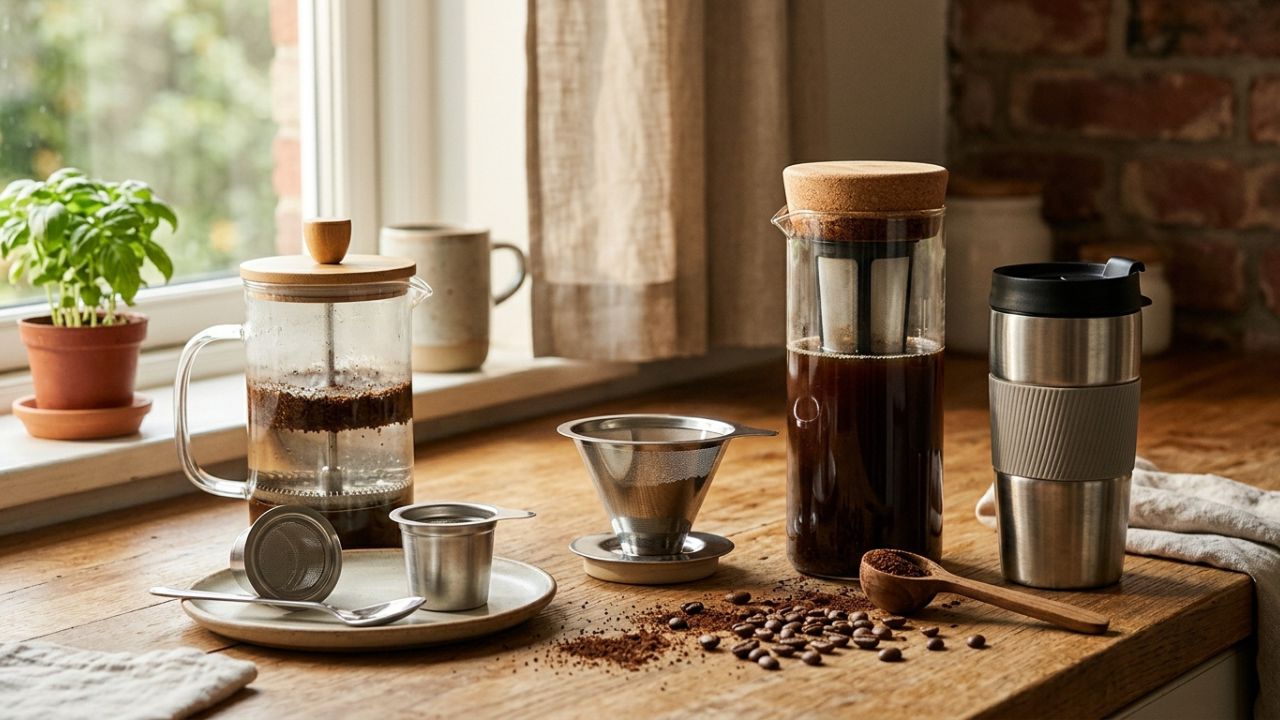
The French press is a classic brewing method that has remained popular for good reason. It requires no paper filters, no electricity, and no disposable parts. Coffee grounds steep directly in hot water, and a metal mesh plunger separates the grounds from the finished brew.
Why It Works Well for Sustainable Living
- Made primarily from glass, stainless steel, or a combination of both
- No filters needed at all, which eliminates a recurring source of waste
- Simple design means fewer parts that can break down or need replacing
- Can be used for both hot coffee and cold brew with a little patience
Coffee made in a French press also tends to have a fuller body and richer flavor since the natural oils in the coffee are not absorbed by a paper filter. For someone new to sustainable brewing, this is often the easiest and most affordable place to start.
Tips for Getting the Best Results
- Use a coarser coffee grind to prevent grounds from slipping through the mesh
- Steep for about four minutes before pressing down slowly
- Clean the mesh filter thoroughly after each use to avoid buildup
2. Reusable Metal Coffee Filters
For those who love the convenience of a traditional drip coffee maker but want to cut down on paper waste, a reusable metal filter is a practical solution. These filters are typically made from stainless steel mesh and fit directly into most standard drip machines.
Benefits of Metal Filters
- Eliminates the need to purchase paper filters ever again
- Allows more of the coffee’s natural oils and flavor compounds to pass through
- Durable and long lasting, often coming with a lifetime guarantee
- Easy to rinse and reuse immediately after brewing
Some people notice that coffee brewed with a metal filter has slightly more sediment compared to paper filtered coffee. This is simply part of the trade off, and many coffee lovers actually prefer the bolder, heartier flavor that results.
How to Care for a Metal Filter
- Rinse with warm water immediately after each use
- Occasionally soak in a mixture of warm water and a small amount of vinegar to remove oil buildup
- Avoid using abrasive scrubbers that could damage the fine mesh
3. Refillable Coffee Pods
Single serve coffee machines are incredibly popular because of their speed and convenience, but the environmental impact of disposable pods is significant. Fortunately, refillable pods offer a way to enjoy the same convenience without the constant waste.
How Refillable Pods Work
Refillable pods are typically made from durable plastic or stainless steel and are designed to be filled with fresh coffee grounds before each brew. Once the coffee is finished, the used grounds can be composted and the pod rinsed out and refilled.
- Compatible with many popular single serve machines
- Allows full control over the type and quality of coffee used
- Reduces the need to constantly repurchase individual disposable pods
- Some versions include a small mesh filter for easier cleanup
A Few Things to Keep in Mind
- Refillable pods may require slightly more effort than grabbing a disposable one
- Water flow and pressure can vary slightly depending on how tightly the pod is packed
- It may take a little trial and error to find the ideal grind size and fill level
Despite the small learning curve, many people find that refillable pods quickly become second nature and offer a noticeably fresher cup of coffee.
4. Reusable Cold Brew Makers
Cold brew coffee has grown enormously in popularity, and for good reason. It has a smooth, naturally sweet flavor and lower acidity compared to hot brewed coffee. Many cold brew enthusiasts rely on store bought bottles or disposable filter bags, both of which generate unnecessary waste.
What a Reusable Cold Brew Maker Offers
- Usually made from glass or durable plastic with a built in mesh or metal filter
- Designed to steep coarsely ground coffee in cold or room temperature water for several hours
- Filters out grounds without the need for paper or disposable straining bags
- Can be used repeatedly for months or years with basic cleaning
Simple Steps for Brewing Cold Brew at Home
- Combine coarsely ground coffee with cold water in the designated container
- Let the mixture steep in the refrigerator for twelve to twenty four hours
- Press or pour through the built in filter to separate the grounds
- Store the finished concentrate in the refrigerator for up to two weeks
This method is especially appealing during warmer months and offers a satisfying way to reduce waste while enjoying a refreshing drink.
5. Reusable Coffee Cups and Travel Mugs
While not a brewing device itself, a reusable coffee cup or travel mug is an essential accessory for anyone serious about reducing coffee related waste. Disposable cups, even when they appear to be paper, are often lined with a thin layer of plastic that makes them difficult to recycle.
Why a Reusable Cup Matters
- Prevents the need for single use cups when buying coffee on the go
- Many coffee shops offer small discounts to customers who bring their own cup
- Insulated versions keep coffee hot or cold for hours, reducing the temptation to buy another drink
- Comes in a wide range of materials including stainless steel, glass, and bamboo fiber
Choosing the Right Reusable Cup
- Look for a design with a secure, leak proof lid for commuting or travel
- Consider insulation quality if the cup will be used for both hot and cold drinks
- Choose a size that matches typical daily coffee consumption to avoid unnecessary bulk
Making the Transition to Reusable Coffee Gear
Switching to reusable coffee makers and accessories does not need to happen all at once. It can be a gradual process that fits naturally into an existing routine.
A Simple Starting Point
- Begin with one small change, such as a reusable filter or travel mug
- Gradually replace disposable items as they wear out or run low
- Keep reusable accessories visible and accessible to build a consistent habit
- Share the change with friends or family who might also enjoy the benefits
Long Term Environmental Impact
Small daily choices add up over time. A single reusable filter can prevent hundreds of paper filters from being thrown away each year. A reusable cup can eliminate dozens or even hundreds of disposable cups from landfills. When multiplied across households and communities, these seemingly small choices contribute to a meaningful reduction in waste.
Final Thoughts
Coffee brings comfort, energy, and connection to millions of people every day, and there is no reason that enjoying it needs to come at the expense of the environment. From the simplicity of a French press to the convenience of a refillable pod, there are reusable options suited to nearly every coffee habit and lifestyle.
Making the switch is not about achieving perfection overnight, but about making thoughtful, sustainable choices one cup at a time. Anyone looking to reduce their environmental footprint will find that reusable coffee makers and brewing accessories offer an easy, satisfying, and flavorful place to start.