Traveling has a way of quietly piling up waste. A short weekend trip can involve disposable water bottles, single-use toiletry packets, plastic cutlery from airport food courts, and paper bags that get tossed within minutes of use. For anyone trying to live a more sustainable lifestyle at home, it can feel discouraging to watch those habits slip the moment a suitcase comes out.
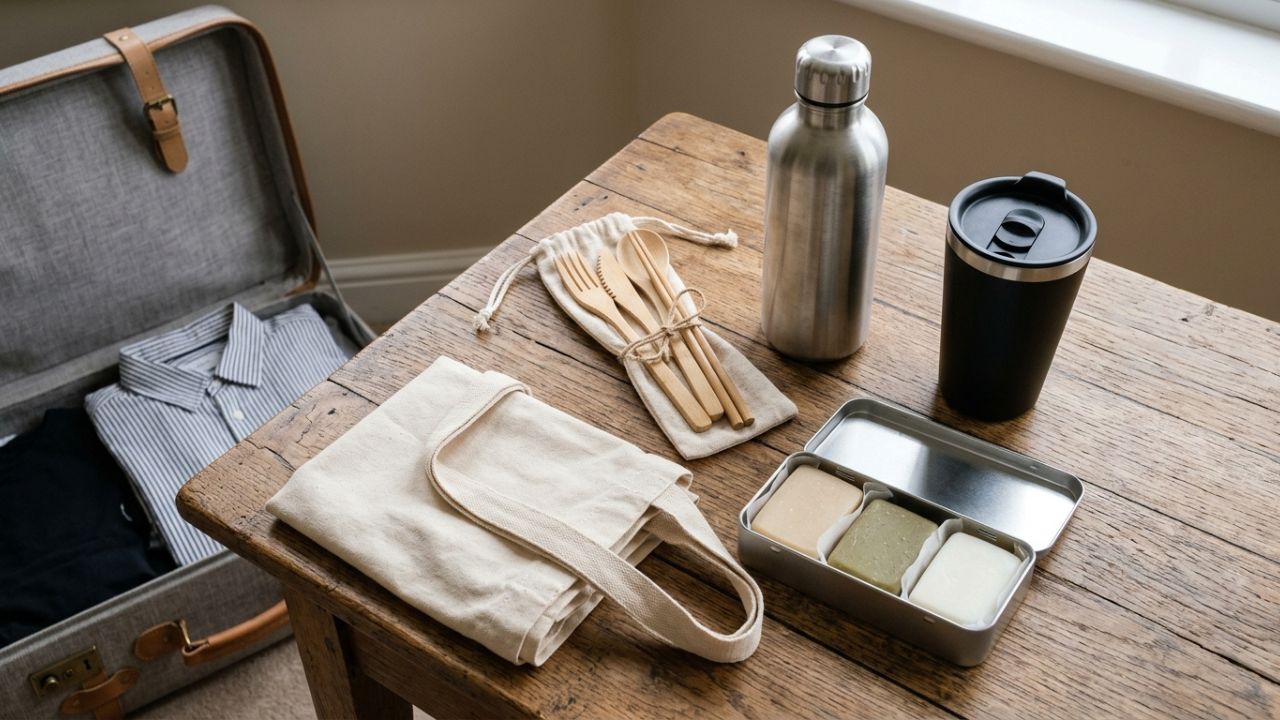
The good news is that lower-waste travel does not require a complete lifestyle overhaul or an expensive gear closet. It mostly comes down to packing a handful of reusable items that replace the most common disposable products travelers reach for.
This article walks through five reusable travel essentials that make a real difference, why they matter, and how to use them effectively so that sustainable habits do not have to pause just because someone is on the road.
Why Lower-Waste Travel Matters
Tourism and travel generate a significant amount of waste every year, from plastic water bottles at airports to disposable amenities in hotel rooms. Much of this waste is avoidable. Travelers often default to single-use items simply because they are convenient, not because there is no alternative. Packing a few reusable essentials shifts that default without requiring extra effort once the habit is built.
Lower-waste travel also tends to save money over time. A refillable water bottle pays for itself after a few airport purchases, and a reusable coffee cup can mean the difference between paying full price and getting a discount at cafes that reward customers for skipping disposable cups.
There is also a personal benefit that often gets overlooked. Packing intentionally tends to make trips feel calmer and more organized. Instead of scrambling for plastic bags or wondering where to store damp swimwear, travelers who bring the right reusable tools already have a system in place.
The 5 Reusable Travel Essentials
1. A Durable Reusable Water Bottle
A reusable water bottle is often the first item people think of when it comes to sustainable travel, and for good reason. Single-use plastic bottles are one of the most common forms of travel waste, especially in airports, train stations, and tourist areas where bottled water is sold everywhere.
A good travel water bottle should be:
- Leak-proof, so it can be tossed into a bag without worry
- Insulated, to keep drinks cold or hot depending on the climate
- Collapsible or lightweight, if packing space is limited
- Compatible with airport refill stations, which are becoming increasingly common
Many airports now include water bottle refill stations near security checkpoints, which makes it easy to fill up before a flight and avoid buying bottled water altogether. For destinations where tap water is not safe to drink, a bottle with a built-in filter can be a smart addition, allowing travelers to filter water from taps or other sources rather than purchasing bottled water at every stop.
2. Reusable Utensils and a Collapsible Container
Airport food courts, train station cafes, and street food stalls often serve meals with plastic forks, knives, and disposable containers. A compact set of reusable utensils, ideally stored in a small pouch or case, solves this problem without adding bulk to a bag.
Pairing utensils with a collapsible food container is especially useful for:
- Packing leftovers from a restaurant meal
- Buying snacks in bulk instead of individually wrapped portions
- Storing fresh fruit or homemade snacks for long travel days
- Avoiding styrofoam or plastic clamshell containers at takeout counters
Collapsible silicone containers are particularly travel-friendly because they fold flat when empty, taking up very little space in a suitcase or daypack until they are needed.
3. A Reusable Coffee Cup or Insulated Tumbler
Coffee culture and travel go hand in hand, but disposable coffee cups, lids, and sleeves add up quickly, especially on multi-day trips. A reusable coffee cup or insulated tumbler is a simple swap that many cafes around the world now actively encourage, sometimes with a small discount for customers who bring their own cup.
When choosing a travel coffee cup, it helps to look for:
- A secure, spill-proof lid for use in cars, trains, or planes
- Insulation that keeps drinks at temperature for several hours
- A compact size that fits in a bag’s side pocket or cup holder
- Materials that are easy to hand-wash without access to a dishwasher
This item is especially useful for road trips and long flights, where access to reusable cups may otherwise be limited.
4. Reusable Toiletry Bottles and Solid Toiletries
Travel-sized toiletries are one of the most wasteful parts of any trip. Tiny plastic bottles of shampoo, conditioner, and lotion are often used once or twice and then discarded, either because they run out or because they get left behind at the end of a trip.
There are two main approaches to reducing this waste:
- Refillable travel bottles that can be filled with a traveler’s usual products from home, avoiding the need to buy new travel-sized versions for every trip
- Solid toiletries, such as shampoo bars, conditioner bars, and solid soap, which are often packaged with minimal or no plastic at all
Solid toiletries have become especially popular among sustainability-minded travelers because they are lightweight, mess-free in a suitcase, and typically last longer than their liquid counterparts. They also tend to comply easily with airline carry-on liquid restrictions, since solids are not subject to the same rules as liquids and gels.
5. A Reusable Tote Bag or Packable Shopping Bag
A foldable tote bag might seem like a small addition, but it solves a surprisingly common travel problem. Whether it is picking up souvenirs, grabbing groceries for a vacation rental, or carrying items from a local market, a reusable tote eliminates the need for plastic shopping bags that often end up thrown away within a day.
A packable tote bag is ideal because it:
- Folds down small enough to fit in a pocket or the bottom of a daypack
- Can double as an extra carry-on bag for the flight home
- Handles wet or sandy items like swimwear and beach gear
- Reduces reliance on plastic bags in destinations where they may not be recyclable
Some travelers keep a tote bag permanently packed in their luggage so it is always available without needing to remember it each time.
Quick Comparison of the Five Essentials
| Item | Main Waste It Replaces | Best For |
|---|---|---|
| Reusable water bottle | Single-use plastic water bottles | Airports, hiking, everyday hydration |
| Reusable utensils and container | Plastic cutlery and takeout containers | Food courts, leftovers, street food |
| Reusable coffee cup | Disposable coffee cups and lids | Cafes, road trips, morning routines |
| Refillable or solid toiletries | Mini plastic toiletry bottles | Carry-on travel, hotel stays |
| Packable tote bag | Plastic shopping bags | Markets, souvenirs, grocery runs |
Tips for Making These Essentials Part of a Travel Routine
Owning reusable items is only half the equation. The other half is building a routine so they actually get used instead of sitting forgotten in a suitcase pocket.
Keep a Dedicated Travel Pouch
Storing all five items together in one labeled pouch or packing cube makes it easy to grab everything at once, rather than searching through drawers before a trip. This also makes unpacking simpler, since everything goes back into the same spot when the trip is over.
Clean Items Between Uses
Reusable containers, bottles, and utensils should be rinsed or washed as soon as possible after use, especially in warm climates where food residue can spoil quickly. A small squeeze of travel-sized dish soap or reusable cleaning wipes can help with this on the go.
Set Reminders for Refill Stations
Before a trip, it can help to look up whether the destination or airport has water refill stations, since this makes it much easier to commit to using a reusable bottle instead of buying bottled water out of convenience.
Choose Multi-Purpose Items When Possible
Some products serve more than one function, such as a container that works for both snacks and leftovers, or a tote bag sturdy enough to double as a beach bag. Choosing multi-purpose items keeps luggage lighter and reduces the number of things to pack.
Common Questions About Lower-Waste Travel
Does packing reusable items really make a difference?
Yes. While one traveler’s reusable bottle will not solve global plastic waste on its own, the cumulative effect of many travelers making the same choice is significant, especially in high-traffic tourist areas where disposable packaging is everywhere. It also normalizes lower-waste habits for others who see them in action.
Are reusable items allowed through airport security?
Most reusable items, including empty water bottles, utensils, and containers, are allowed through airport security without issue. Liquid toiletries in refillable bottles still need to follow standard liquid limits, but solid toiletries typically bypass these restrictions entirely.
What if there is no way to wash items while traveling?
A small pack of biodegradable wipes or a travel-sized bar of soap can serve as a backup cleaning method when a sink is not immediately available. Many travelers find that a quick rinse with bottled or filtered water is enough to keep items usable until proper washing is possible.
Final Thoughts
Lower-waste travel does not require perfection, and no traveler needs to eliminate every disposable item from a trip to make a meaningful impact. Packing a reusable water bottle, a set of utensils with a collapsible container, a coffee cup, refillable or solid toiletries, and a packable tote bag covers most of the common waste points that come up during travel.
These items are practical, affordable, and easy to build into a packing routine, which makes them a natural next step for anyone who already values sustainability at home and wants that same mindset to carry through their travels.