Anyone who loves spending time outdoors knows that a garden can quietly produce a surprising amount of waste. Between plastic plant pots, leftover food scraps, worn out tools, and single use packaging from fertilizers, it is easy for a hobby that feels so connected to nature to leave a heavier footprint than expected.
The good news is that a growing number of smart products are helping gardeners rethink how they grow, feed, and maintain their outdoor spaces while producing far less trash.
For those who care about living a more sustainable lifestyle, the garden is often the perfect place to start making meaningful changes. Small swaps in tools and habits can add up to a noticeable reduction in waste over time, without sacrificing the joy of watching plants thrive. This article explores five smart products that make it easier to garden responsibly, along with practical tips on how to use them effectively.
Why Garden Waste Deserves More Attention
Most people think about recycling bins and grocery bags when they think about reducing waste, but gardens generate their own unique category of trash. Plastic seedling trays crack after a season or two. Bags of soil and mulch are often wrapped in non recyclable plastic. Chemical fertilizers come in containers that end up in landfills. Even organic waste like fallen leaves, grass clippings, and vegetable scraps often gets bagged up and sent away instead of being put to good use right at home.
Reducing this waste is not just about being tidy. It has real environmental benefits, including:
- Less plastic ending up in landfills and waterways
- Reduced demand for new raw materials to manufacture garden products
- Healthier soil through composting and natural amendments
- Lower carbon footprint from manufacturing and transporting garden goods
- Less reliance on synthetic chemicals that can harm local ecosystems
With that context in mind, here are five smart products that can help any gardener, from beginner to expert, cut down on waste while still growing a beautiful and productive garden.
1. Compost Tumblers
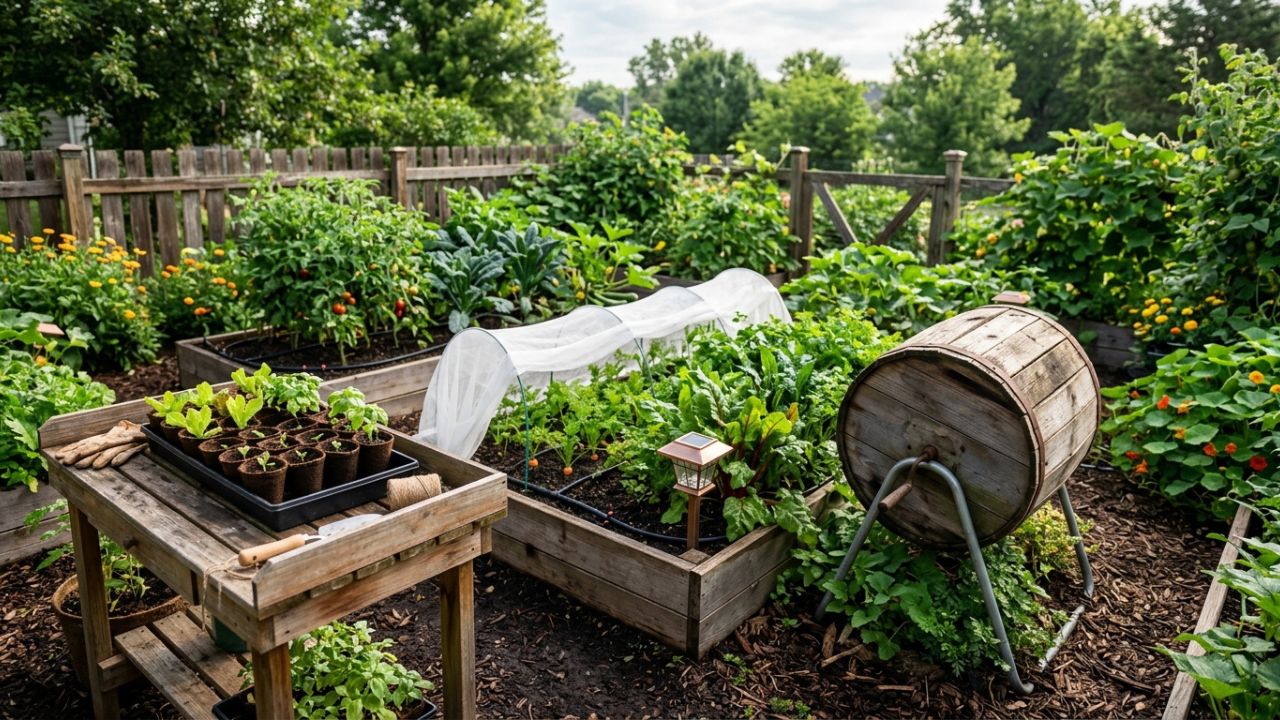
A compost tumbler is one of the most effective tools for turning kitchen scraps and yard waste into nutrient rich soil instead of sending it to a landfill. Unlike traditional compost piles, tumblers are enclosed, which speeds up decomposition, keeps pests away, and makes the process far less messy.
How It Reduces Waste
Food scraps and yard trimmings make up a significant portion of household waste. When they end up in a landfill, they break down without oxygen and release methane, a potent greenhouse gas. A compost tumbler allows these same materials to decompose aerobically, meaning with oxygen, which produces far less methane and creates rich compost that can be used to nourish garden beds.
Tips for Getting Started
- Add a mix of green materials like vegetable scraps and brown materials like dried leaves or cardboard
- Turn the tumbler every few days to speed up decomposition and prevent odors
- Keep the mixture moist but not soggy, similar to a wrung out sponge
- Avoid adding meat, dairy, or oily foods, which can attract pests and slow the process
Over time, a compost tumbler can significantly reduce the need for store bought soil amendments and fertilizers, closing the loop between kitchen waste and garden growth.
2. Biodegradable Plant Pots
Traditional plastic nursery pots are cheap and widely available, but they are also a major contributor to garden related plastic waste. Many are not accepted by curbside recycling programs because of the type of plastic used, so they often end up in the trash after just one or two uses.
Biodegradable plant pots, made from materials like coconut coir, rice husks, bamboo fiber, or recycled paper pulp, offer a practical alternative. These pots break down naturally over time and can often be planted directly into the ground, roots and all, which reduces transplant shock for seedlings.
Benefits at a Glance
| Feature | Traditional Plastic Pots | Biodegradable Pots |
|---|---|---|
| Material | Petroleum based plastic | Coir, bamboo, paper pulp, or rice husk |
| End of Life | Often ends up in landfill | Breaks down naturally in soil |
| Plant Transfer | Requires removing plant, risk of root damage | Can be planted directly, roots undisturbed |
| Reusability | Reusable but degrades with UV exposure | Single season use, fully compostable |
| Environmental Impact | High, due to plastic production | Low, made from renewable materials |
Switching to biodegradable pots is a simple change that makes a real difference, especially for gardeners who start a lot of seedlings each season.
A Few Practical Notes
- Store biodegradable pots in a dry place before use, since some materials can degrade if exposed to moisture too early
- Check the pot type before choosing one, since coir and bamboo tend to hold their shape longer than paper pulp
- Water gently at first, as some biodegradable pots absorb moisture and can affect watering frequency
3. Smart Irrigation Controllers
Water waste is another overlooked issue in home gardening. Many people either overwater their plants out of habit or underwater them because they forget to check the soil. Smart irrigation controllers solve this problem by using weather data, soil moisture sensors, and programmable schedules to deliver exactly the right amount of water at the right time.
Why This Matters for Waste Reduction
While water is not always thought of as waste in the traditional sense, overwatering leads to nutrient runoff, soil erosion, and wasted resources. Excess fertilizer and soil can wash away with unnecessary watering, which means gardeners end up buying and using more products than they actually need. A smart irrigation system helps prevent this cycle by matching water use to actual plant needs.
Features to Look For
- Weather based scheduling that adjusts automatically for rain or high heat
- Soil moisture sensors that prevent watering when the ground is already damp
- Zone based control for gardens with different plant types and water needs
- Mobile app integration so watering can be monitored and adjusted remotely
Gardeners who switch to a smart irrigation controller often notice healthier plants and lower water bills, all while reducing the runoff that can carry pollutants into local waterways.
4. Solar Powered Garden Tools
From solar powered LED garden lights to solar charged trimmers and pest deterrent devices, this category of smart products helps gardeners cut down on battery waste and reduce reliance on grid electricity. Traditional garden tools often rely on disposable batteries or need to be plugged in, both of which come with hidden environmental costs.
The Waste Problem With Batteries
Disposable batteries are a significant source of household hazardous waste. They contain heavy metals and chemicals that can leach into soil and water if not disposed of properly, and most people do not recycle them correctly. Solar powered garden tools eliminate this issue entirely by harnessing renewable energy instead.
Popular Solar Garden Products
- Solar path lights that illuminate walkways without wiring or batteries
- Solar powered ultrasonic pest repellers that keep animals away from vegetable beds
- Solar fountain pumps for garden ponds or bird baths
- Solar powered soil aerators that gently till compacted soil
Things to Consider Before Buying
- Placement matters, since solar panels need direct sunlight for several hours a day to charge properly
- Battery backup quality varies, so it helps to check reviews for how well a product performs on cloudy days
- Cleaning the solar panel regularly ensures it continues to charge efficiently over time
By switching to solar powered options, gardeners can enjoy the same functionality as electric or battery powered tools without the ongoing waste.
5. Reusable Garden Netting and Row Covers
Protecting plants from pests, frost, and harsh sun is a normal part of gardening, but many people rely on single use plastic sheeting or netting that tears easily and ends up in the trash after one season. Reusable garden netting and row covers, often made from durable woven polypropylene or natural fiber blends, offer a longer lasting alternative.
How This Reduces Waste
Because these covers are designed to be used season after season, they significantly cut down on the amount of plastic sheeting that gets thrown away. Many are also breathable and UV stabilized, which means they hold up better against sun exposure without breaking down into microplastics the way cheaper materials might.
Best Practices for Longevity
- Rinse and dry netting thoroughly before folding it away for storage
- Store covers away from direct sunlight when not in use to prevent premature wear
- Repair small tears with fabric tape instead of replacing the entire cover
- Choose covers sized appropriately for garden beds to avoid unnecessary cutting or waste
Reusable netting is a small investment that pays off over several growing seasons, both financially and environmentally.
Bringing It All Together
Reducing waste in the garden does not require a complete overhaul of how someone gardens. It is more about making thoughtful swaps over time, starting with the products that are easiest to change. A compost tumbler turns kitchen scraps into valuable soil. Biodegradable pots eliminate plastic waste at the seedling stage. Smart irrigation controllers prevent water and nutrient waste. Solar powered tools cut down on battery pollution. Reusable netting reduces the need for disposable plastic sheeting season after season.
Each of these products addresses a different part of the gardening process, which means gardeners do not need to adopt all five at once. Starting with one or two changes, such as switching to biodegradable pots or setting up a compost tumbler, can make a noticeable difference within a single growing season.
A Few Additional Habits That Support a Waste Free Garden
Beyond investing in smart products, a few simple habits can further reduce garden waste:
- Save seeds from healthy plants at the end of the season instead of buying new seed packets every year
- Repurpose household items like egg cartons or yogurt containers as seed starters before switching to biodegradable pots
- Share extra seedlings, cuttings, or produce with neighbors instead of letting them go to waste
- Mulch with fallen leaves or grass clippings instead of buying bagged mulch
- Repair tools when possible rather than replacing them at the first sign of wear
Gardening has always been about working with nature rather than against it. Choosing smart, waste reducing products is simply an extension of that philosophy, allowing gardeners to grow beautiful, productive spaces while treating the planet with the same care they give their plants. Over time, these small changes add up, creating a garden that is not only more sustainable but often healthier and more resilient as well.