Traveling with intention has become more than a passing trend. More people are thinking carefully about how their choices, even the small ones like how they pack a suitcase, affect the planet.
For anyone who cares about living a greener lifestyle, packing sustainably is a natural extension of everyday eco-friendly habits.
It is not just about reducing plastic waste or choosing recycled materials. It is also about traveling smarter, lighter, and with less clutter, so that every trip feels calmer and more organized.
The good news is that sustainable packing accessories are no longer hard to find or expensive niche products. They have become mainstream, well designed, and genuinely useful. This article explores five of the most helpful sustainable packing accessories that can transform how someone travels, while also supporting a lower environmental footprint.
Why Sustainable Packing Matters
Before diving into the accessories themselves, it helps to understand why sustainable packing is worth thinking about in the first place.
Traditional travel gear is often made from virgin plastics, synthetic materials that shed microplastics, or low quality fabrics that wear out quickly and end up in landfills. Every time a product breaks down after a few trips, it needs to be replaced, which adds to the cycle of waste.
Sustainable packing accessories are typically made with the following in mind:
- Durability, so items last for years instead of months
- Materials that are recycled, organic, or biodegradable
- Manufacturing processes that reduce water use and carbon emissions
- Designs that reduce the need for single use plastics like bags and wraps
Choosing accessories built around these principles is a simple way to align travel habits with a broader eco-conscious lifestyle. It also tends to make packing more efficient, since sustainable design often goes hand in hand with smart, functional design.
1. Reusable Packing Cubes Made from Recycled Fabric
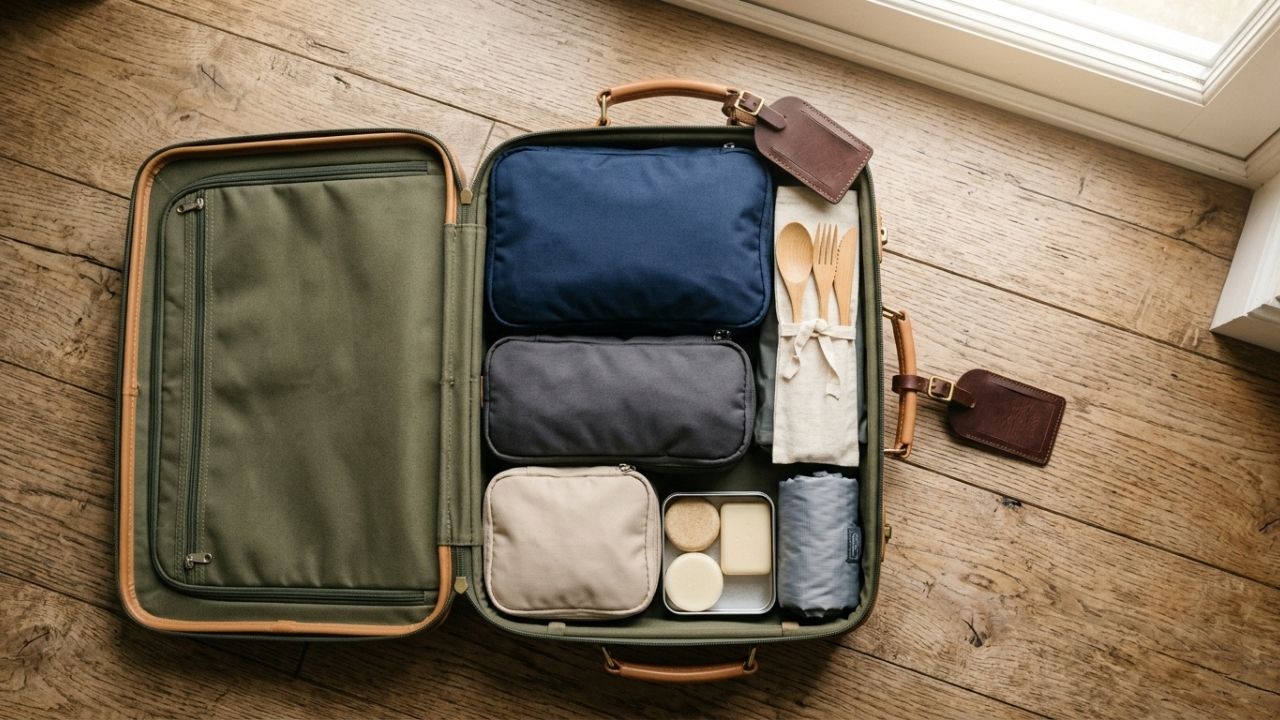
Packing cubes have become a staple for organized travelers, and the sustainable versions are just as functional as their conventional counterparts. These cubes are typically made from recycled polyester, often derived from plastic bottles that would otherwise end up in oceans or landfills.
Why They Help with Organization
Packing cubes allow travelers to separate clothing by category, such as tops, bottoms, undergarments, and accessories. This means less digging through a suitcase and more time actually enjoying a trip. Because everything has its own designated space, unpacking and repacking becomes much faster too.
Why They Are Sustainable
Recycled fabric packing cubes reduce the demand for new synthetic materials. Many brands also use dyes and finishing processes that require less water. Since these cubes are built to withstand years of use, they help travelers avoid the common cycle of buying cheap organizers that fall apart after a couple of trips.
Tips for Choosing the Right Ones
- Look for cubes made from at least 70 percent recycled materials
- Choose mesh panels for breathability and easy visibility
- Pick a size set that matches typical trip lengths, such as small, medium, and large
2. Solid Toiletries and Reusable Containers
Liquid toiletries are one of the biggest sources of plastic waste in travel. Miniature shampoo bottles, lotion tubes, and toothpaste containers often get tossed after just one or two uses. Switching to solid toiletries paired with reusable containers is one of the most impactful changes a traveler can make.
Solid Toiletries
Solid shampoo bars, conditioner bars, and soap bars have grown significantly in popularity. They are compact, lightweight, and often last longer than their liquid counterparts. Because they do not require plastic bottles, they eliminate a major source of single use packaging.
Reusable Silicone Containers
For toiletries that still need to be in liquid or cream form, reusable silicone travel containers are a great alternative to disposable plastic bottles. These containers can be refilled trip after trip, which significantly cuts down on plastic waste over time.
A Quick Comparison
| Toiletry Type | Typical Lifespan | Waste Produced | Airport Security Friendly |
|---|---|---|---|
| Disposable travel size bottles | 1 to 2 trips | High | Yes |
| Solid bars | Several months | Minimal | Yes |
| Reusable silicone containers | Years | None after purchase | Yes |
This comparison shows why solid toiletries and reusable containers are worth the small upfront investment. Over time, they save money as well as reduce environmental impact.
3. Compression Bags Made from Sustainable Materials
Compression bags help travelers save space by removing excess air from clothing and soft items. While many older versions relied on non recyclable plastics, newer sustainable compression bags are made from recyclable materials or durable fabrics that can be reused for years.
How They Support Organized Packing
Compression bags are especially useful for bulky items like sweaters, jackets, or towels. By reducing the volume of these items, travelers can fit more into a single suitcase without needing to check additional luggage. This is particularly helpful for anyone trying to avoid the environmental cost associated with extra checked bags, since heavier planes require more fuel.
Sustainable Options to Look For
- Reusable roll top compression bags made from recycled nylon
- Compression cubes with sturdy zippers designed to last multiple years
- Products free from PVC, which is difficult to recycle and can release harmful chemicals during production
Choosing compression bags that are built to be reused, rather than one time use vacuum bags, keeps unnecessary plastic out of landfills.
4. Bamboo or Recycled Aluminum Travel Utensil Sets
Eating on the go often leads to a reliance on plastic cutlery, especially at airports, train stations, or quick food stops during a trip. A reusable travel utensil set can eliminate this need almost entirely.
Bamboo Utensils
Bamboo is a fast growing, renewable resource that requires little water and no pesticides to cultivate. Bamboo utensil sets are lightweight, naturally antibacterial, and biodegrade far faster than plastic at the end of their life cycle.
Recycled Aluminum Utensils
For travelers who prefer something more durable, recycled aluminum utensils are another excellent option. They are sturdy, dishwasher safe in most cases, and made from material that has already been through a recycling process, reducing the need for new metal extraction.
Why This Matters for Organized Travel
Beyond the environmental benefits, a compact utensil set usually comes with its own carrying case or pouch. This keeps items from rattling around in a bag and makes it easy to grab a fork or spoon without searching through a backpack. It is a small addition that supports both organization and sustainability at the same time.
5. Reusable Luggage Tags and Digital Tracking Tags
Luggage tags might seem like a minor detail, but they play a bigger role in organized and sustainable travel than most people realize. Paper tags from airlines are often discarded after a single trip, and cheap plastic tags tend to crack or fade quickly.
Durable Reusable Tags
Sustainable luggage tags are often crafted from materials such as recycled leather, cork, or repurposed canvas. These materials are sturdy enough to last for years of travel and can be personalized to make luggage easier to spot on a crowded carousel.
Digital Tracking Tags
Many travelers have also started using digital tracking tags that attach to luggage and connect to a smartphone app. While these are a bit more of an investment, they reduce the anxiety of lost luggage and, in turn, reduce the environmental cost associated with replacing lost items or purchasing entirely new luggage after a mishap.
Simple Ways These Tags Help
- Reduce paper waste from disposable airline tags
- Make luggage instantly recognizable, saving time at baggage claim
- Provide peace of mind, which supports a calmer, more organized travel experience
Bringing It All Together
Sustainable packing accessories are a practical way to merge two goals that many travelers care about deeply: staying organized and reducing environmental impact. None of these five accessories require a complete lifestyle overhaul. Instead, they offer simple swaps that make a noticeable difference over time.
A quick recap of the five accessories covered:
- Reusable packing cubes made from recycled fabric
- Solid toiletries paired with reusable silicone containers
- Compression bags made from sustainable, reusable materials
- Bamboo or recycled aluminum travel utensil sets
- Durable reusable or digital luggage tags
Building a Long Term Sustainable Packing Habit
For those looking to go even further, it helps to think about sustainable packing as an ongoing habit rather than a one time purchase. Every time an item wears out, it becomes an opportunity to choose a more eco-friendly replacement. Over several trips, this approach naturally leads to a travel kit that is both efficient and kind to the planet.
Final Thoughts
Travel has a real environmental footprint, from transportation to accommodation to the products packed inside a suitcase. While no single traveler can eliminate that footprint entirely, small and consistent choices add up. Choosing sustainable packing accessories is one of the easiest ways to travel more responsibly without sacrificing comfort, style, or organization.
Whether it is switching to a solid shampoo bar or investing in a set of recycled packing cubes, these changes reflect a growing awareness that even the smallest habits can support a healthier planet.