Anyone who has tried composting at home knows the biggest challenge usually isn’t the compost pile itself. It’s what happens in the kitchen before the scraps ever make it outside. Vegetable peels sitting in an open bowl attract fruit flies. A plastic bag under the sink starts to smell within a day.
Without the right system, composting can feel messy and inconvenient, which is often why people give up on it before they even get started.
The good news is that food scrap storage has come a long way. There are now countless products designed specifically to make the collection process cleaner, easier, and far less smelly. Whether someone lives in a small apartment or a house with a backyard compost bin, having the right container can be the difference between composting becoming a lasting habit or a forgotten experiment.
This article looks at six food scrap storage products that can make home composting simpler, along with tips on choosing the right one and using it effectively.
Why Proper Food Scrap Storage Matters
Before diving into specific products, it helps to understand why storage matters so much in the composting process.
Food scraps are organic material, which means they naturally begin to break down as soon as they are separated from the rest of the food. That breakdown process is exactly what makes compost useful, but when it happens in the wrong place, like an uncovered bowl in a warm kitchen, it can lead to unpleasant odors, fruit flies, and mold growth.
A good storage container helps by:
- Controlling airflow so the scraps don’t dry out too quickly or become overly wet
- Containing odors so the kitchen stays fresh
- Keeping pests like fruit flies and gnats away from the food waste
- Making it easier to transport scraps to an outdoor bin, tumbler, or drop-off location
- Encouraging consistency, since a convenient system is more likely to be used every day
With that in mind, here are six types of products worth considering.
1. Countertop Compost Bins with Charcoal Filters
Countertop compost bins are one of the most popular starting points for home composters. These small bins usually sit on the kitchen counter or under the sink and are designed to hold a day or two worth of scraps before being emptied.
What sets the better models apart is the use of a charcoal filter built into the lid. Activated charcoal absorbs odor-causing gases, which means the bin can sit out in the open without making the kitchen smell like a garbage can. Many of these bins also come with a comfortable handle for easy transport and a removable inner bucket for simple cleaning.
What to Look For
- A tight-fitting lid to keep fruit flies out
- Replaceable charcoal filters, since they lose effectiveness over time
- A capacity that matches household cooking habits, typically one to two gallons for smaller households
- Dishwasher-safe materials for easy cleaning
2. Compostable Liner Bags
Liner bags aren’t a container on their own, but they pair with almost every other product on this list and deserve a spot here because of how much easier they make cleanup.
These bags are made from materials like cornstarch or other plant-based compounds that break down naturally, unlike regular plastic bags. They can typically go straight into a compost bin along with the scraps inside them, which means no scraping or rinsing required.
It’s worth noting that not all compostable bags are created equal. Some are only suitable for industrial composting facilities that reach higher temperatures, while others are designed to break down in a home compost pile. Reading the packaging carefully helps avoid confusion later.
Things to Check Before Buying
- Whether the bag is certified for home composting or industrial composting only
- The bag’s thickness, since thin bags can tear during transport
- Size compatibility with the countertop bin being used
3. Freezer Storage Containers for Scraps
For people who don’t compost daily or who drop scraps off at a community composting site rather than maintaining a home pile, freezer storage is a practical alternative to a countertop bin.
These are typically stackable, airtight containers that keep food scraps frozen until it’s time to compost them. Freezing halts the decomposition process almost entirely, which means there’s no odor and no risk of pests, even if the scraps sit for a week or two before being used.
This method works especially well for households that compost only once a week or that need to transport scraps to a drop-off point rather than a backyard bin.
Benefits of Freezer Storage
- Completely eliminates odor while scraps are stored
- Prevents fruit flies and other pests
- Allows for less frequent trips to the compost pile or drop-off site
- Keeps the kitchen counter clear of a visible bin
4. Hanging Compost Caddies
Hanging caddies attach to a cabinet door, usually under the sink, and are a great option for kitchens with limited counter space. Instead of taking up valuable surface area, the caddy stays out of sight until it’s needed.
Most hanging caddies are small to medium in size and are best suited for households that compost frequently, since they typically hold less volume than a standalone countertop bin. They often come with a simple bracket system that makes installation straightforward without any tools.
Ideal For
- Small kitchens or apartments with limited counter space
- Households that empty their compost scraps daily
- People who prefer their compost bin to be out of sight
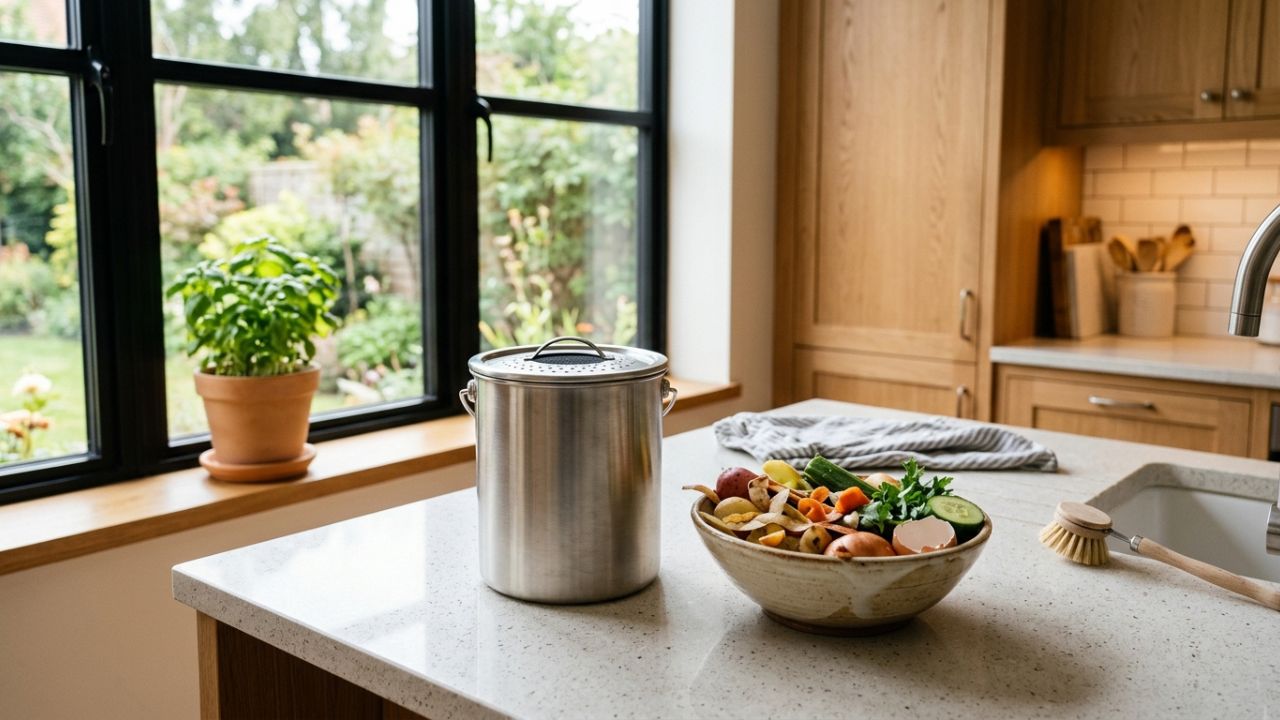
5. Stainless Steel Compost Pails
Stainless steel compost pails are a step up in durability and design from basic plastic bins. Since steel doesn’t absorb odors or stains the way plastic can over time, these containers tend to stay fresher and look better even after months of daily use.
Many stainless steel pails also feature a sleek design that fits well on a kitchen counter without looking out of place, which matters for anyone who wants their composting system to blend into their kitchen’s overall look. Some higher end versions include built in odor filters similar to countertop bins, combining durability with functionality.
Comparing Common Food Scrap Storage Materials
| Material | Odor Control | Durability | Ease of Cleaning | Typical Lifespan |
|---|---|---|---|---|
| Stainless Steel | High with filter | Very High | Easy | 5+ years |
| Ceramic | Moderate | High but can chip | Easy | 3 to 5 years |
| Plastic | Low to Moderate | Moderate | Easy but can stain | 1 to 3 years |
| Silicone | Moderate | High and flexible | Very Easy | 3 to 5 years |
This kind of comparison can help someone decide which material fits their budget, kitchen style, and how often they plan to use the container.
6. Collapsible Silicone Compost Bins
For those who value flexibility and storage efficiency, collapsible silicone bins are a newer option worth considering. These bins expand when in use and fold down flat when empty, making them a smart choice for smaller kitchens or for anyone who wants to store the bin away when not composting.
Silicone is naturally resistant to staining and odor absorption, and most collapsible designs are dishwasher safe. Because they fold flat, they’re also easy to pack for camping trips or to keep in a car for composting on the go.
Why People Like Collapsible Options
- Saves storage space when not in use
- Lightweight and portable
- Easy to rinse clean
- Works well for occasional or travel composting
Choosing the Right Product for a Household
Since every household composts differently, there isn’t a single best product that works for everyone. Someone composting daily in a large kitchen will have different needs than someone dropping scraps off weekly at a community garden.
A few questions can help narrow down the right choice:
- How often will the scraps be emptied? Daily composters may prefer smaller, open-air bins, while less frequent composters may benefit from freezer storage.
- Is counter space limited? A hanging caddy or collapsible bin might be a better fit than a standalone container.
- Is odor control a top priority? Charcoal filtered bins or stainless steel options tend to perform best.
- Will the container travel? Collapsible or lightweight designs make transport easier.
Tips for Getting the Most Out of Any Storage System
Regardless of which product someone chooses, a few simple habits can make the entire composting process smoother.
- Empty the bin every two to three days to prevent buildup, even with odor control features in place
- Avoid adding meat, dairy, or oily foods to countertop bins, since these tend to break down poorly and attract pests
- Line the bin with a compostable bag or a layer of newspaper to make cleanup faster
- Rinse the container with warm water and a bit of vinegar occasionally to keep it fresh
- Keep the bin in a cool part of the kitchen, away from direct sunlight, to slow down decomposition until it’s ready to be emptied
Final Thoughts
Home composting is one of the simplest ways to reduce household waste and give back to the soil, but it only works long term if the process feels manageable. The right food scrap storage product can turn composting from a chore into a quick, almost automatic part of daily kitchen cleanup.
From charcoal filtered countertop bins to freezer storage and collapsible silicone options, there’s a solution for nearly every kitchen size, budget, and composting routine. Taking the time to choose a product that actually fits daily habits makes it far more likely that composting will stick around as a long term, eco-friendly practice rather than something abandoned after a few weeks.