Brushing teeth is one of those small daily habits that most people never think twice about. Yet every time someone reaches for a plastic toothbrush or a squeeze tube of toothpaste, they are contributing to a mountain of waste that will likely outlive them by hundreds of years.
For anyone trying to live a more sustainable and eco-friendly life, the bathroom is often one of the last places they think to look. That is a mistake, because dental care is packed with single-use plastic that can easily be swapped for better alternatives.
This article explores six plastic-free dental care essentials that can help reduce waste without sacrificing a healthy smile. Each item is practical, widely available, and easy to fold into an existing routine.
Why Plastic-Free Dental Care Matters
Traditional dental care products are some of the most overlooked contributors to plastic pollution. Toothbrushes, floss containers, mouthwash bottles, and toothpaste tubes are almost always made from petroleum-based plastic that is rarely recycled properly. Most curbside recycling programs cannot process these items because they are too small, made of mixed materials, or contaminated with product residue.
Consider the lifespan of a single plastic toothbrush. It gets used for about three months before being tossed, yet it will sit in a landfill or drift in the ocean for centuries. Multiply that by the billions of people who brush their teeth daily, and the scale of the problem becomes clear.
Switching to plastic-free dental care is not about being perfect. It is about making thoughtful swaps that reduce the amount of waste sent to landfills while still keeping teeth and gums healthy. The good news is that sustainable dental care has come a long way, and there are now reliable options for nearly every part of an oral care routine.
1. Bamboo Toothbrushes
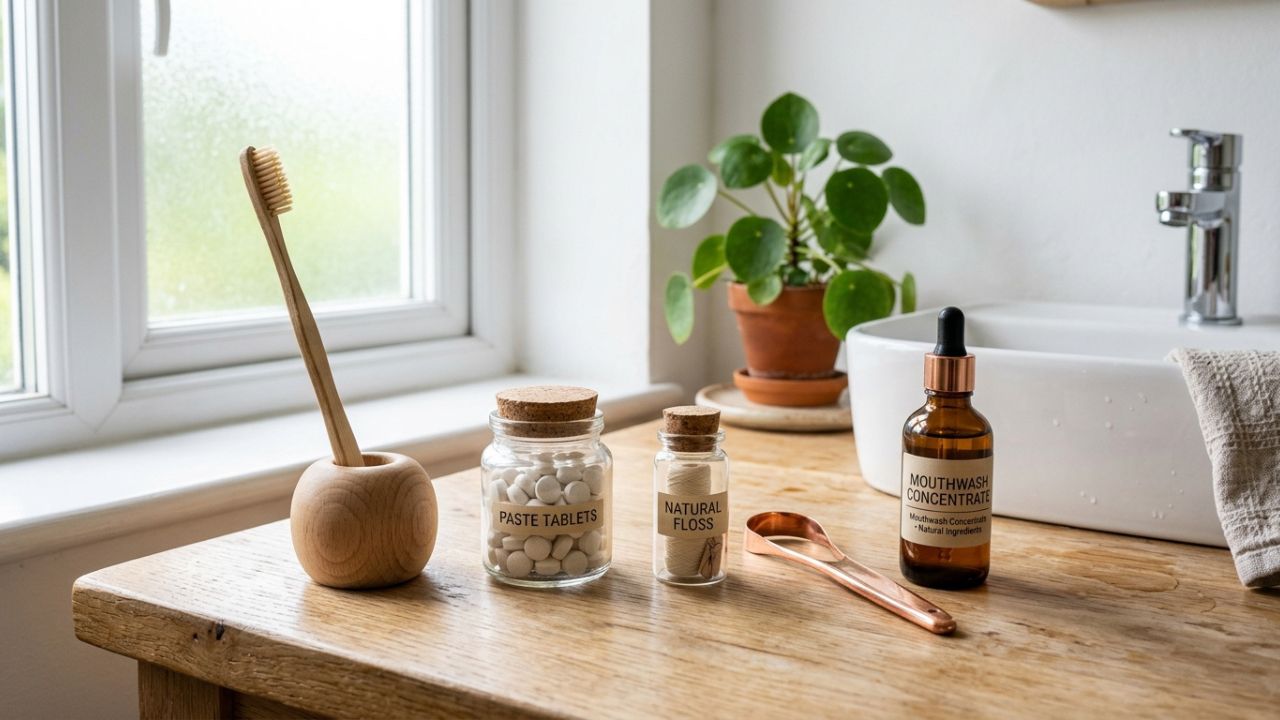
Bamboo toothbrushes are often the first swap people make when moving toward a plastic-free bathroom, and for good reason. Bamboo is a fast-growing, renewable resource that requires no pesticides or fertilizers to thrive, making it one of the most sustainable materials available.
A bamboo toothbrush typically features a biodegradable handle paired with bristles that may be made from nylon, boar hair, or plant-based materials. While the bristles themselves are not always fully compostable, the handle breaks down naturally, which drastically reduces the overall plastic footprint compared to a conventional toothbrush.
What to Look For
When shopping for a bamboo toothbrush, it helps to keep a few things in mind:
- Look for brushes with charcoal-infused or castor oil bristles, which are more biodegradable than standard nylon
- Choose a brush with a comfortable grip and appropriate bristle firmness for gum sensitivity
- Check whether the packaging is also plastic-free, since some bamboo brushes still come wrapped in plastic film
- Store the brush upright in a dry holder to prevent mold growth on the untreated wood
2. Refillable or Plastic-Free Floss
Dental floss is another item that quietly generates a lot of waste. Most conventional floss is made from nylon and packaged in a small plastic container that is difficult to recycle. Fortunately, several alternatives now exist that make flossing far more sustainable.
Silk floss is biodegradable and often comes coated in candelilla wax or beeswax for smooth gliding between teeth. For those who prefer a vegan option, corn-based or bamboo fiber floss offers similar benefits without animal products. Many brands now also sell floss in refillable glass containers, so the same container can be used for years while only the floss spool needs replacing.
Comparing Floss Options
| Floss Type | Material | Biodegradable | Best For |
|---|---|---|---|
| Silk floss | Natural silk with wax coating | Yes | Smooth gliding, traditional feel |
| Corn fiber floss | Plant-based fiber | Yes | Vegan households |
| Bamboo fiber floss | Bamboo cellulose | Yes | Sensitive gums |
| Refillable glass container floss | Varies, reusable container | Depends on refill | Long-term waste reduction |
Choosing any of these options over conventional plastic floss containers can meaningfully cut down on bathroom waste over time.
3. Toothpaste Tablets or Powder
Toothpaste tubes are notoriously hard to recycle because they combine plastic, aluminum, and sometimes cardboard into a single unit that recycling facilities struggle to separate. This is where toothpaste tablets and powders come in as a genuinely useful alternative.
Toothpaste tablets are small, pre-measured tablets that are chewed and then brushed like regular toothpaste. They usually come in glass jars or compostable pouches, eliminating the plastic tube entirely. Tooth powder works similarly, offering a fine mineral or herbal blend that can be dipped into with a damp toothbrush.
Benefits of Switching
- Reduces reliance on plastic tubes that cannot be recycled through standard programs
- Tablets and powders are often more concentrated, meaning less product is needed per use
- Many formulas avoid harsh preservatives and artificial dyes found in conventional toothpaste
- Lightweight packaging makes them easier to travel with and less likely to spill
Some people find the switch to tablets takes a short adjustment period, since the texture is different from a traditional paste, but most adapt within a week or two.
4. Reusable Tongue Scrapers
Tongue scrapers are a simple tool that many people overlook, yet they play an important role in oral hygiene by removing bacteria and debris from the surface of the tongue. This can help reduce bad breath and support overall mouth health.
While plastic tongue scrapers are common, copper and stainless steel versions are widely available and last far longer. Copper in particular has natural antimicrobial properties, which makes it a popular choice among those focused on both sustainability and hygiene.
A metal tongue scraper can last for years with proper care, compared to plastic versions that tend to crack or wear out and get thrown away. Cleaning one is simple: a quick rinse with warm water after each use and an occasional wash with mild soap keeps it in good condition.
5. Plastic-Free Mouthwash Alternatives
Mouthwash bottles are yet another source of plastic waste that often goes unnoticed. The average plastic mouthwash bottle is used up and discarded every few weeks, adding up to a significant amount of waste over a year.
Plastic-free alternatives have become more accessible in recent years. Mouthwash tablets that dissolve in water are one popular option, as they come in compostable packaging or refillable jars. Concentrated mouthwash drops that get mixed with water at home are another option, since a small glass bottle of concentrate can replace many plastic bottles of pre-mixed liquid.
Simple DIY Option
For those who enjoy a hands-on approach, a basic homemade rinse can also reduce waste:
- Mix warm water with a small amount of baking soda for a gentle, mineralizing rinse
- Add a drop of food-grade peppermint extract for freshness
- Store the mixture in a reusable glass bottle for repeated use
- Shake well before each use since natural ingredients can settle
This approach eliminates packaging waste almost entirely while still supporting fresh breath and a clean mouth.
6. Compostable Interdental Brushes
Interdental brushes are small, flexible brushes designed to clean between teeth, especially useful for people with braces, bridges, or wider gaps between teeth. Traditional versions are made entirely of plastic and wire, but compostable versions have started to appear on the market.
These newer designs often use biodegradable handles paired with a thin wire core, since a fully plastic-free wire alternative is still uncommon. Even with a small wire component, the overall plastic content is significantly reduced compared to conventional interdental brushes.
Why They Are Worth Considering
- They reach areas that regular floss and brushes may miss
- Compostable handles reduce landfill waste over time
- They are gentle on gums and can be reused for several days before replacement
- They pair well with a bamboo toothbrush for a more complete plastic-free routine
Building a Complete Plastic-Free Routine
Switching every dental care product at once can feel overwhelming, so it often works better to make changes gradually. Someone might start with a bamboo toothbrush, then move on to floss, and eventually replace toothpaste and mouthwash as current products run out. This staged approach prevents waste from switching too early and throwing away half-used plastic products.
It also helps to think about the full lifecycle of each item. A product that is marketed as eco-friendly but ships in excessive plastic packaging may not offer much of an improvement. Reading ingredient lists and packaging details before purchasing can make a real difference in how sustainable a product truly is.
Tips for Staying Consistent
- Replace one product at a time rather than overhauling the whole routine at once
- Store new plastic-free items somewhere visible so they become part of the daily habit
- Buy in bulk when possible to cut down on repeated packaging waste
- Share the switch with family members so the whole household reduces its footprint together
Final Thoughts
Plastic-free dental care is a small but meaningful part of a broader sustainable lifestyle. None of these six essentials require a complicated overhaul of an existing routine, and most people find the transition easier than expected.
A bamboo toothbrush, biodegradable floss, toothpaste tablets, a metal tongue scraper, plastic-free mouthwash, and compostable interdental brushes together form a simple, effective way to care for a smile while reducing the amount of waste sent to landfills each year.
Every small swap adds up. Choosing even one or two of these alternatives is a meaningful step toward a healthier bathroom routine and a healthier planet.