Laundry is one of those household chores that happens so often it barely gets a second thought. Yet every wash cycle uses water, energy, and often a good amount of plastic packaging and harsh chemicals.
For anyone trying to live a greener lifestyle, the laundry room is actually one of the easiest places to start making meaningful changes.
Small swaps in products and habits can lower water usage, cut down on microplastic pollution, and reduce the amount of waste sent to landfills, all without sacrificing clean, fresh smelling clothes.
This article looks at six smart products that can transform an ordinary laundry routine into one that is kinder to the planet. It also explains why these changes matter and offers a few extra tips for keeping laundry day as sustainable as possible.
Why Sustainable Laundry Matters
Before diving into the products, it helps to understand why laundry deserves attention in the first place. The average household does several loads of laundry each week, and over the course of a year that adds up to a significant amount of water, electricity, and detergent.
Here are a few reasons laundry has such a large environmental footprint:
- Washing machines use large amounts of water per cycle, especially older models
- Heating water for warm or hot washes consumes a lot of energy
- Synthetic fabrics shed microplastics that end up in rivers and oceans
- Traditional detergents often come in single use plastic bottles
- Dryers are among the most energy hungry appliances in the home
Once these factors are understood, it becomes clear why choosing the right products can make a real difference. The good news is that sustainable laundry products have become much easier to find and use, and many of them actually make laundry day simpler.
1. Microfiber Filtering Laundry Bags
One of the biggest hidden problems with modern laundry is microplastic pollution. Synthetic fabrics like polyester, nylon, and acrylic shed tiny plastic fibers every time they are washed. These fibers are too small for most wastewater treatment plants to filter out, so they end up in oceans, rivers, and even in the food chain.
A microfiber filtering laundry bag is designed to catch these fibers before they escape into the water system. Clothes are placed inside the mesh bag, which is then washed as usual. The bag traps loose fibers, which can be removed and disposed of properly after each wash.
Why It Helps
- Reduces the amount of microplastic pollution entering waterways
- Works with any standard washing machine
- Extends the life of clothing by reducing friction and pilling
- Reusable for years with proper care
This is a particularly smart investment for households with a lot of synthetic clothing, activewear, or fleece items, since these fabrics tend to shed the most fibers.
2. Cold Water Detergent
Heating water accounts for a large portion of the energy used during a laundry cycle. Switching to a detergent formulated specifically for cold water washing allows clothes to get just as clean without the need for hot or even warm water.
Cold water detergents are made with enzymes and cleaning agents that activate at lower temperatures, breaking down stains and odors effectively even in cool water. This small switch can lead to noticeable energy savings over time, especially for households doing multiple loads per week.
Why It Helps
- Cuts down on the energy needed to heat water
- Helps fabrics last longer since hot water can weaken fibers over time
- Works well for most everyday laundry, including lightly soiled clothes
- Often available in concentrated or refillable formulas, reducing plastic waste
Many cold water detergents are now sold in plastic free packaging, such as powder in cardboard boxes or detergent sheets, which pairs nicely with the energy savings for an even lower overall footprint.
3. Detergent Sheets or Strips
Traditional liquid detergent usually comes in bulky plastic jugs that are heavy to ship and often end up in landfills, even when they are technically recyclable. Detergent sheets or strips offer a lightweight, low waste alternative.
These thin sheets dissolve completely in water and contain a concentrated dose of cleaning ingredients. Because they are so lightweight, they also reduce the carbon footprint associated with shipping compared to heavy liquid jugs full of water.
Why It Helps
- Comes in compact, often plastic free packaging
- Lightweight design reduces shipping emissions
- Pre-measured sheets prevent overuse of detergent
- Easy to store and travel with
For anyone trying to reduce plastic waste in the home, this is one of the simplest swaps to make. A single box of detergent sheets can replace several plastic jugs of liquid detergent over time.
4. Wool Dryer Balls
Dryer sheets are a common laundry staple, but most are single use and coated with synthetic fragrances and chemicals that are not great for the environment or for skin sensitivity. Wool dryer balls offer a reusable, natural alternative that can last for hundreds of loads.
These small wool balls are tossed into the dryer along with wet laundry. As the dryer tumbles, the balls help separate clothing, allowing hot air to circulate more efficiently. This can shorten drying time and reduce static without the need for any disposable products.
Why It Helps
- Reusable for up to a thousand loads, drastically cutting down on waste
- Naturally reduces static without added chemicals
- Can shorten drying time, which saves energy
- Free of synthetic fragrances that can irritate sensitive skin
Some people also add a few drops of essential oil to the dryer balls for a light, natural scent, giving them a customizable alternative to store bought fabric softener.
5. A Refillable Stain Remover
Stain removers are a laundry room essential, but they often come in small plastic bottles that get tossed after just a few uses. A refillable stain remover system allows households to reuse the same bottle over and over, simply topping it up with concentrate or refill pouches.
This approach significantly cuts down on the amount of single use plastic generated by stain treatment products, while still providing effective spot cleaning for everyday messes like food stains, grass, or ink.
Why It Helps
- Reduces single use plastic bottle waste
- Refill pouches typically use less packaging material than full bottles
- Just as effective as traditional stain removers
- Encourages a refill habit that can extend to other cleaning products
Choosing a refillable option is a great reminder that sustainability is not just about buying new eco products, but about rethinking how products are packaged and consumed over time.
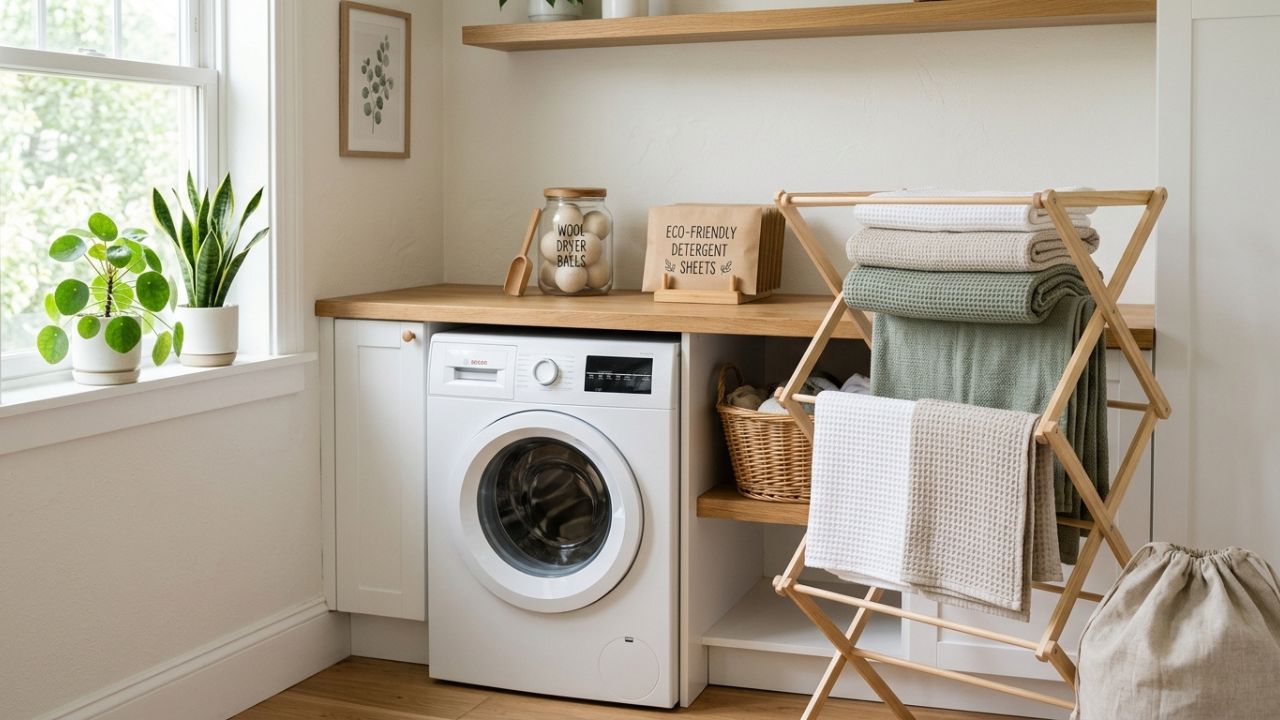
6. An Energy Efficient Drying Rack
While not a traditional product swap, an indoor or outdoor drying rack deserves a spot on this list because it addresses one of the most energy intensive parts of laundry: the dryer. Air drying clothes, even partially, can significantly cut down on electricity use.
A well designed drying rack makes air drying practical even in smaller homes or apartments. Foldable, wall mounted, or expandable racks allow clothes to dry efficiently without taking up a permanent footprint in the home.
Why It Helps
- Eliminates or reduces dryer energy use entirely
- Extends the life of clothing, since heat from dryers can wear down fabric fibers
- Reduces shrinkage and fading caused by high heat
- Works well for delicate items that should not go in the dryer anyway
Air drying does take longer than machine drying, but pairing it with a few fast drying habits, like shaking out clothes before hanging them, can help speed up the process.
Comparing the Six Products
The table below offers a quick side by side look at how each product contributes to a more sustainable laundry routine.
| Product | Main Benefit | Best For |
|---|---|---|
| Microfiber filtering bag | Reduces microplastic pollution | Synthetic and activewear fabrics |
| Cold water detergent | Lowers energy use from water heating | Everyday, lightly soiled laundry |
| Detergent sheets | Cuts plastic packaging and shipping emissions | Households wanting less plastic waste |
| Wool dryer balls | Reusable alternative to dryer sheets | Reducing static and drying time |
| Refillable stain remover | Reduces single use plastic bottles | Spot treating stains regularly |
| Drying rack | Cuts dryer energy use | Delicate items and energy savings |
Together, these products address different parts of the laundry process, from washing to drying to stain treatment, making it easy to build a more sustainable routine one step at a time.
Building a Sustainable Laundry Habit
Switching products is a great start, but a few simple habit changes can amplify the impact even further. Small, consistent choices tend to add up to bigger savings over time.
Consider these habits alongside the product swaps mentioned above:
- Wash full loads instead of small partial loads whenever possible
- Choose the shortest effective wash cycle for lightly soiled clothes
- Clean the lint filter regularly to help the dryer run more efficiently
- Air dry when time allows, even if only for part of the drying process
- Avoid overloading the washing machine, which can reduce cleaning efficiency and increase energy use
None of these changes require a complete lifestyle overhaul. Instead, they work together with the products above to gradually reduce the environmental impact of an everyday task.
Final Thoughts
Laundry may seem like a small, routine chore, but it holds real potential for meaningful environmental impact. By choosing products like microfiber filtering bags, cold water detergent, detergent sheets, wool dryer balls, refillable stain removers, and drying racks, households can significantly cut down on plastic waste, energy use, and microplastic pollution.
The beauty of these swaps is that they do not require sacrificing convenience or cleanliness. In fact, many of these products simplify laundry day while also being gentler on the planet. Starting with even one or two of these changes can be the first step toward a more sustainable, eco-friendly home.