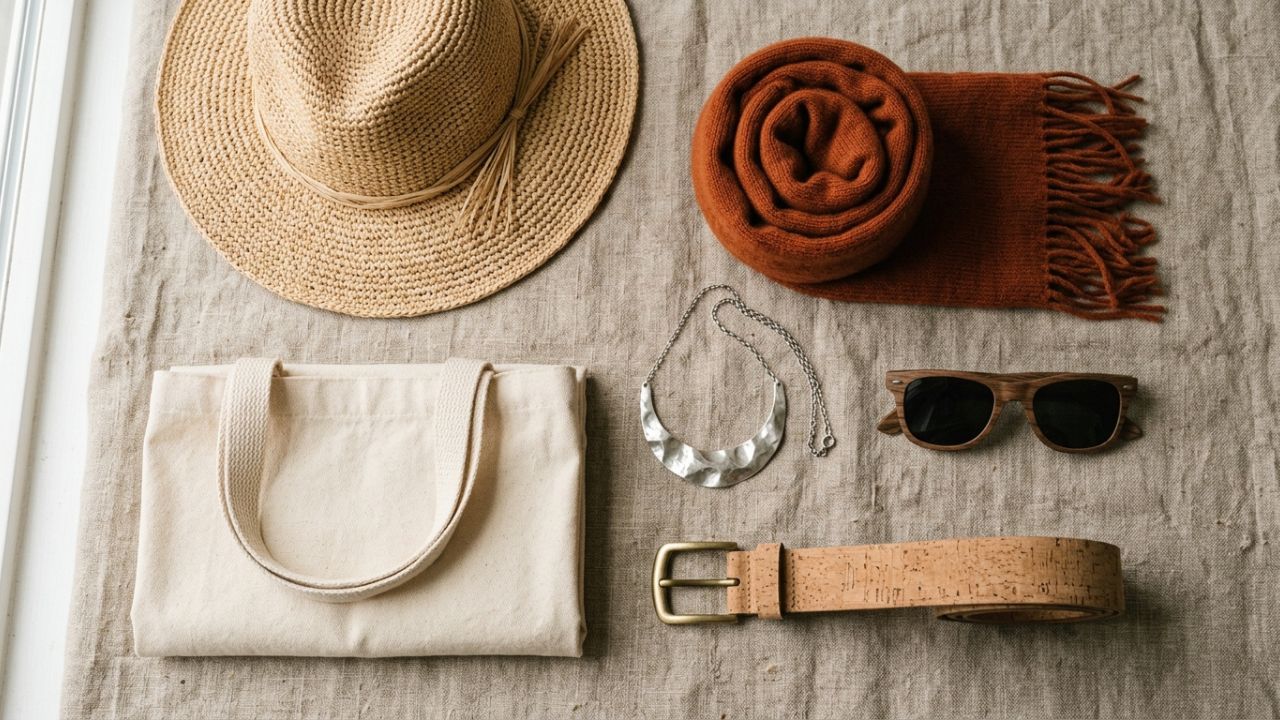
Building a more conscious wardrobe does not stop at clothing. Accessories play a bigger role in personal style and environmental impact than most people realize.
From the belts that hold outfits together to the bags carried every day, these smaller items often come from resource heavy production methods that rarely get the same attention as shirts or jeans.
Anyone who wants to live a more sustainable lifestyle can make a real difference by rethinking the accessories they choose, not just the garments in their closet.
This article looks at six sustainable clothing accessories worth considering, why they matter, and how to choose options that are kinder to the planet without sacrificing style or function.
Why Sustainable Accessories Matter
Accessories are often overlooked in conversations about sustainable fashion, yet they carry a surprising environmental footprint. Leather goods rely on animal agriculture and chemical tanning processes.
Costume jewelry frequently contains plastic and metals that never break down. Synthetic scarves and bags shed microplastics with every wash or use. When these items are produced cheaply and replaced often, the cumulative waste adds up quickly.
Choosing sustainable accessories helps in a few key ways:
- Reduces reliance on virgin resources like petroleum based plastics and freshly harvested leather
- Supports ethical labor practices when purchased from transparent brands
- Extends the life of a wardrobe since well made accessories tend to last longer
- Lowers the amount of textile and material waste sent to landfills
- Encourages a slower, more intentional approach to shopping
With that foundation in mind, here are six accessory categories that deserve a closer look.
1. Belts Made From Recycled or Plant Based Materials
Belts are a wardrobe staple, yet traditional leather belts come with a heavy environmental cost tied to livestock farming and chemical tanning. Fortunately, there are now several eco-friendly alternatives that look and function just as well.
What to Look For
- Belts made from recycled rubber, cork, or plant based leather alternatives like apple or cactus leather
- Vegetable tanned leather instead of chrome tanned, since it uses natural tannins rather than harsh chemicals
- Metal hardware that is recyclable rather than mixed alloy blends that are difficult to separate
Cork belts, for example, are gaining popularity because cork is harvested without cutting down the tree, making it a renewable resource. Cactus leather is another innovative option that requires far less water than traditional cattle farming.
2. Eco-Friendly Jewelry
Jewelry is one of the easiest accessory categories to make more sustainable, since there are now many brands focused on recycled metals and lab grown or ethically sourced stones.
Sustainable Jewelry Options
- Jewelry crafted from recycled gold, silver, or brass rather than newly mined metal
- Lab grown gemstones, which require far less land disruption than traditional mining
- Natural materials like wood, seeds, or reclaimed glass for statement pieces
- Vintage or secondhand jewelry, which gives existing pieces a second life
Mining for precious metals and stones can cause significant habitat destruction and water pollution. Choosing recycled or lab grown alternatives helps reduce the demand for new mining operations while still allowing for beautiful, long lasting pieces.
3. Tote Bags and Totes Made From Organic or Recycled Fabric
Bags are used daily, which makes their environmental impact especially significant over time. Fast fashion totes made from synthetic materials often fall apart quickly and end up in landfills within a year or two.
Better Bag Choices
- Organic cotton totes that are grown without synthetic pesticides or fertilizers
- Bags made from recycled polyester derived from plastic bottles
- Canvas totes made from hemp, which requires less water than cotton and grows quickly
- Secondhand or vintage bags that reduce the need for new production entirely
A well made tote bag can replace dozens of single use plastic bags over its lifetime, making it one of the simplest sustainable swaps a person can make.
4. Scarves and Wraps From Natural Fibers
Scarves are a versatile accessory that can transform an outfit, but many mass produced versions are made from polyester or acrylic, both of which shed microplastics and take centuries to decompose.
Natural Fiber Alternatives
- Organic cotton or linen scarves, which are breathable and biodegradable
- Wool scarves sourced from farms with responsible animal welfare practices
- Silk scarves made using peace silk methods that do not harm silkworms
- Bamboo fiber scarves, which are soft, renewable, and require minimal water to grow
Natural fiber scarves also tend to feel more luxurious and last longer than their synthetic counterparts, making them a worthwhile investment piece.
5. Sustainable Hats
Hats are often made from a mix of synthetic materials that are difficult to recycle. Choosing hats made from natural, biodegradable materials is a small but meaningful shift.
What Makes a Hat Sustainable
- Straw or raffia hats made from natural plant fibers
- Organic cotton or wool caps instead of polyester blends
- Recycled fabric hats that repurpose existing textile waste
- Locally handcrafted hats that reduce transportation emissions
A quality straw hat, for instance, can be worn season after season and eventually composted at the end of its life, unlike a synthetic cap that will sit in a landfill indefinitely.
6. Eco-Friendly Sunglasses
Sunglasses are a small accessory with a surprisingly large plastic footprint. Most frames are made from petroleum based acetate or plastic, and many end up discarded after just one season.
Sustainable Sunglasses Features
- Frames made from recycled plastic or reclaimed ocean waste
- Bio based acetate derived from plant materials like cotton or wood pulp
- Wooden or bamboo frames that are biodegradable
- Repairable designs with replaceable parts so the whole pair does not need to be thrown away over a small crack
Choosing a pair of sunglasses built to last, and one that can be repaired rather than replaced, keeps plastic waste out of oceans and landfills.
Comparing These Six Accessory Categories
| Accessory | Common Unsustainable Version | Sustainable Alternative | Key Benefit |
|---|---|---|---|
| Belts | Chrome tanned leather | Cork or vegetable tanned leather | Renewable, less chemical runoff |
| Jewelry | Newly mined metals and stones | Recycled metals, lab grown stones | Reduces mining impact |
| Bags | Synthetic polyester totes | Organic cotton or hemp | Biodegradable, durable |
| Scarves | Acrylic or polyester | Organic cotton, wool, or bamboo | No microplastic shedding |
| Hats | Synthetic blend caps | Straw, wool, or organic cotton | Compostable at end of life |
| Sunglasses | Petroleum based acetate | Recycled plastic or bio based acetate | Reduces plastic waste |
Tips for Shopping Sustainably
Making the switch to sustainable accessories does not have to happen all at once. A gradual, thoughtful approach tends to be more effective and budget friendly.
How to Start Small
- Replace one accessory at a time rather than overhauling an entire wardrobe overnight
- Research brands before buying by checking for certifications like Global Organic Textile Standard or Fair Trade
- Prioritize secondhand and vintage shopping, since reusing existing items is often the most sustainable option available
- Choose quality over quantity, since a well made accessory that lasts for years is better than several cheap ones replaced often
- Care for accessories properly, including proper storage and cleaning, to extend their lifespan
Questions to Ask Before Buying
- What material is this made from, and where did it come from
- Can this item be repaired if it breaks or wears down
- Will this piece still be useful and stylish several years from now
- Is the brand transparent about its labor and production practices
Asking these questions before making a purchase helps build a wardrobe filled with pieces that are both meaningful and long lasting.
The Bigger Picture
Sustainable accessories are a small but powerful part of a larger shift toward conscious living. Every belt, bag, scarf, hat, piece of jewelry, or pair of sunglasses made from responsible materials represents one less item pulling from limited natural resources. While no single purchase will solve environmental challenges on its own, collective choices made by many individuals add up to meaningful change over time.
Building a more conscious wardrobe is not about achieving perfection. It is about making better choices whenever possible, supporting brands that align with personal values, and appreciating the accessories already owned rather than constantly chasing what is new. Small, steady steps like these are what make sustainable living achievable and lasting for the long run.