Living a more sustainable life does not have to mean overhauling an entire home overnight. For most people, the shift toward eco-friendly living starts small. It begins with a few thoughtful swaps, a bit of patience, and a genuine desire to reduce waste while making daily routines easier to manage.
A simpler household is often a greener household, and the two goals tend to support each other more than people expect.
This article walks through seven eco-conscious essentials that can help any home become more sustainable without feeling overwhelming. Each item is practical, budget-friendly over time, and easy to introduce gradually. Whether someone is just beginning their sustainability journey or looking to refine habits they already have, these essentials offer a solid foundation.
Why Simplicity and Sustainability Go Hand in Hand
Before diving into the list, it helps to understand why simplicity is such a powerful tool for sustainable living. A cluttered, overstuffed home often means more consumption, more waste, and more energy spent maintaining things that are rarely used. When a household embraces fewer, better quality items, it naturally reduces its environmental footprint.
Simplicity also makes sustainable habits easier to stick with. It is far simpler to remember to refill a glass jar than to sort through a dozen mismatched plastic containers. It is easier to compost when the process is straightforward and does not require constant guesswork. In short, a simpler home creates less friction, and less friction means sustainable choices become second nature rather than a chore.
1. Reusable Cleaning Cloths
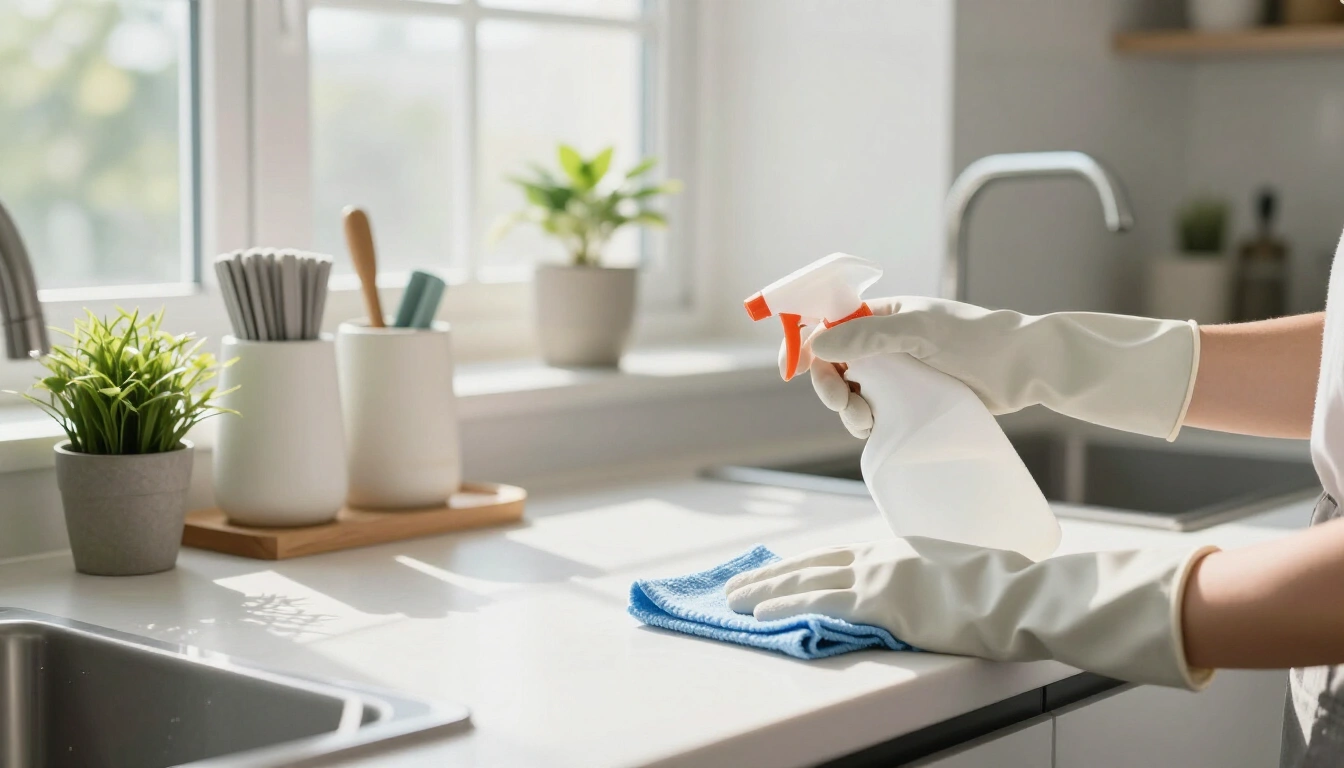
Paper towels are one of the most common sources of household waste. They are used once and thrown away, often ending up in landfills within minutes of being unrolled. Reusable cleaning cloths made from cotton, bamboo, or other natural fibers offer a simple alternative that can last for years with proper care.
These cloths can be washed and reused hundreds of times, which significantly cuts down on paper waste. They also tend to be more absorbent and durable than single use options, making them more effective for everyday spills and messes.
Tips for Getting Started
- Keep a small basket near the kitchen sink specifically for used cloths awaiting a wash
- Choose a mix of thicker cloths for spills and thinner ones for glass or mirrors
- Wash cloths in a mesh laundry bag to prevent fraying and keep them organized
2. Glass Storage Containers
Plastic storage containers often warp, stain, or crack over time, leading households to replace them again and again. Glass containers, on the other hand, are built to last. They do not absorb odors or stains, they are safe to use in the oven and microwave, and they can be recycled indefinitely if they ever do break or wear out.
Switching to glass containers also supports a simpler kitchen. Clear glass makes it easy to see what is inside, which reduces food waste because leftovers are less likely to be forgotten at the back of the fridge.
| Container Type | Best For | Lifespan |
|---|---|---|
| Small glass jars | Spices, snacks, leftovers | Long lasting, often reusable indefinitely |
| Medium glass containers with lids | Meal prep, pantry storage | Many years with proper care |
| Large glass containers | Bulk grains, flour, sugar | Many years with proper care |
Investing in a few well made glass containers can eliminate the need for dozens of mismatched plastic ones cluttering the cupboards.
3. A Compost Bin for the Kitchen
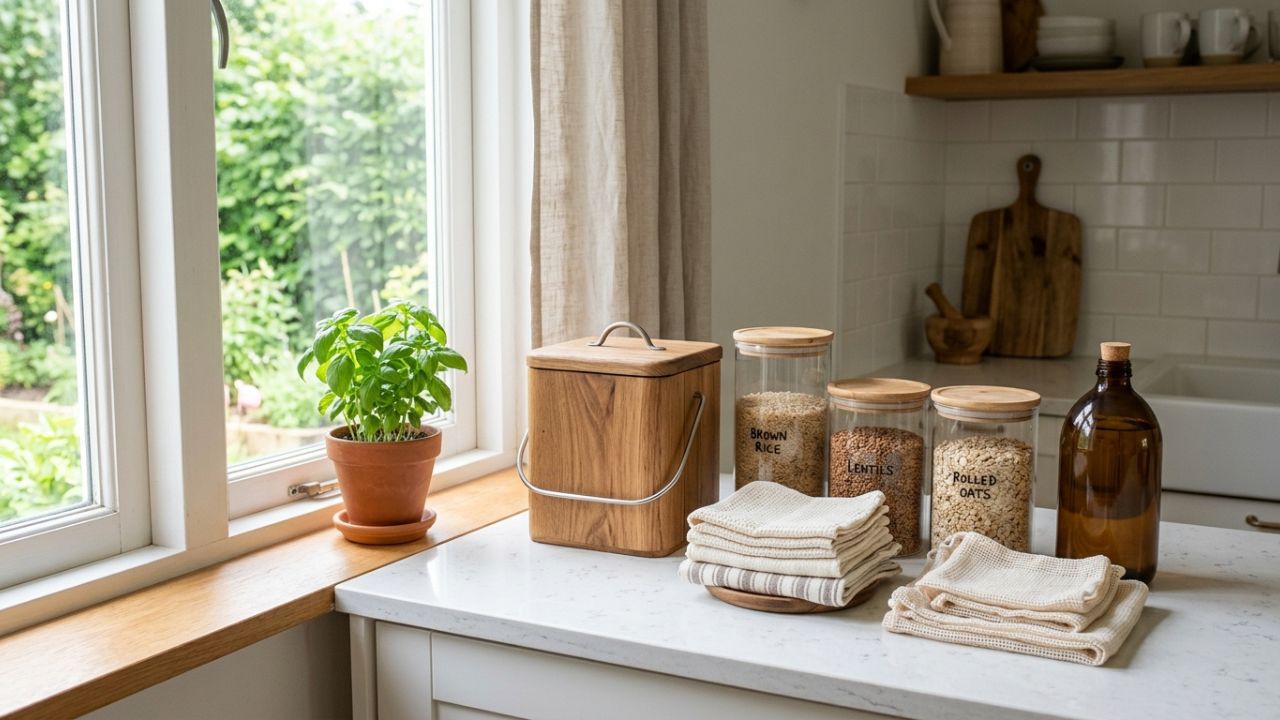
Food scraps make up a large portion of household waste, and much of it can be composted instead of sent to a landfill. A small kitchen compost bin makes it easy to collect vegetable peels, coffee grounds, eggshells, and other organic scraps throughout the week.
Composting not only reduces waste but also creates nutrient rich soil that can be used for gardening or potted plants. For households without outdoor space, many cities now offer community composting programs that accept collected scraps.
What Can Go in a Compost Bin
- Fruit and vegetable peels or cores
- Coffee grounds and tea leaves
- Eggshells
- Yard trimmings and dried leaves
What Should Be Avoided
- Meat, dairy, or oily food scraps
- Diseased plants
- Pet waste
A countertop compost bin with a charcoal filter helps control odor, making the process pleasant rather than unpleasant, even in smaller kitchens.
4. Refillable Cleaning and Personal Care Bottles
Plastic bottles from cleaning sprays, shampoos, and soaps add up quickly over a year. Refillable bottle systems allow households to buy cleaning products and personal care items in bulk or concentrate form, then refill the same bottle again and again.
Many local shops now offer refill stations for dish soap, laundry detergent, and shampoo, allowing people to bring their own containers instead of buying new plastic each time. Even without a local refill store, concentrated cleaning tablets that dissolve in water are becoming widely available and drastically cut down on packaging waste.
This approach supports simplicity because it reduces the number of half empty bottles cluttering under the sink or in the shower. A few durable, refillable bottles can replace an entire shelf of single use plastic.
5. A Capsule Wardrobe Approach
Fast fashion has a significant environmental impact, from water usage to textile waste. A capsule wardrobe, which focuses on a smaller number of versatile, high quality clothing items, offers a more sustainable alternative to constantly buying new clothes.
This does not mean owning only a handful of outfits. Rather, it means being intentional about clothing choices, favoring pieces that mix and match easily and are made from durable materials that hold up over time.
Benefits of a Capsule Wardrobe
- Less time spent deciding what to wear each day
- Reduced spending on clothing over the long term
- Fewer textiles ending up in landfills
- Easier to keep a closet organized and clutter free
Building a capsule wardrobe takes some initial thought, but many people find that once it is established, getting dressed becomes simpler and shopping becomes far less frequent.
6. Energy Efficient Lighting
Lighting is one of the easiest areas of a home to make more sustainable. Switching from traditional incandescent bulbs to energy efficient LED lighting reduces electricity usage significantly while also lasting far longer, which means fewer bulbs end up in the trash over time.
Beyond the environmental benefits, energy efficient lighting can noticeably lower monthly utility bills. Many LED bulbs now come in warm tones that mimic the cozy glow of traditional bulbs, so households do not have to sacrifice ambiance for efficiency.
Simple Ways to Improve Home Lighting
- Replace bulbs room by room as older ones burn out to avoid unnecessary waste
- Use natural light during the day whenever possible by opening curtains and blinds
- Install dimmer switches to reduce energy use during lower light needs
- Turn off lights in unoccupied rooms as a consistent habit
7. Cloth Produce and Storage Bags
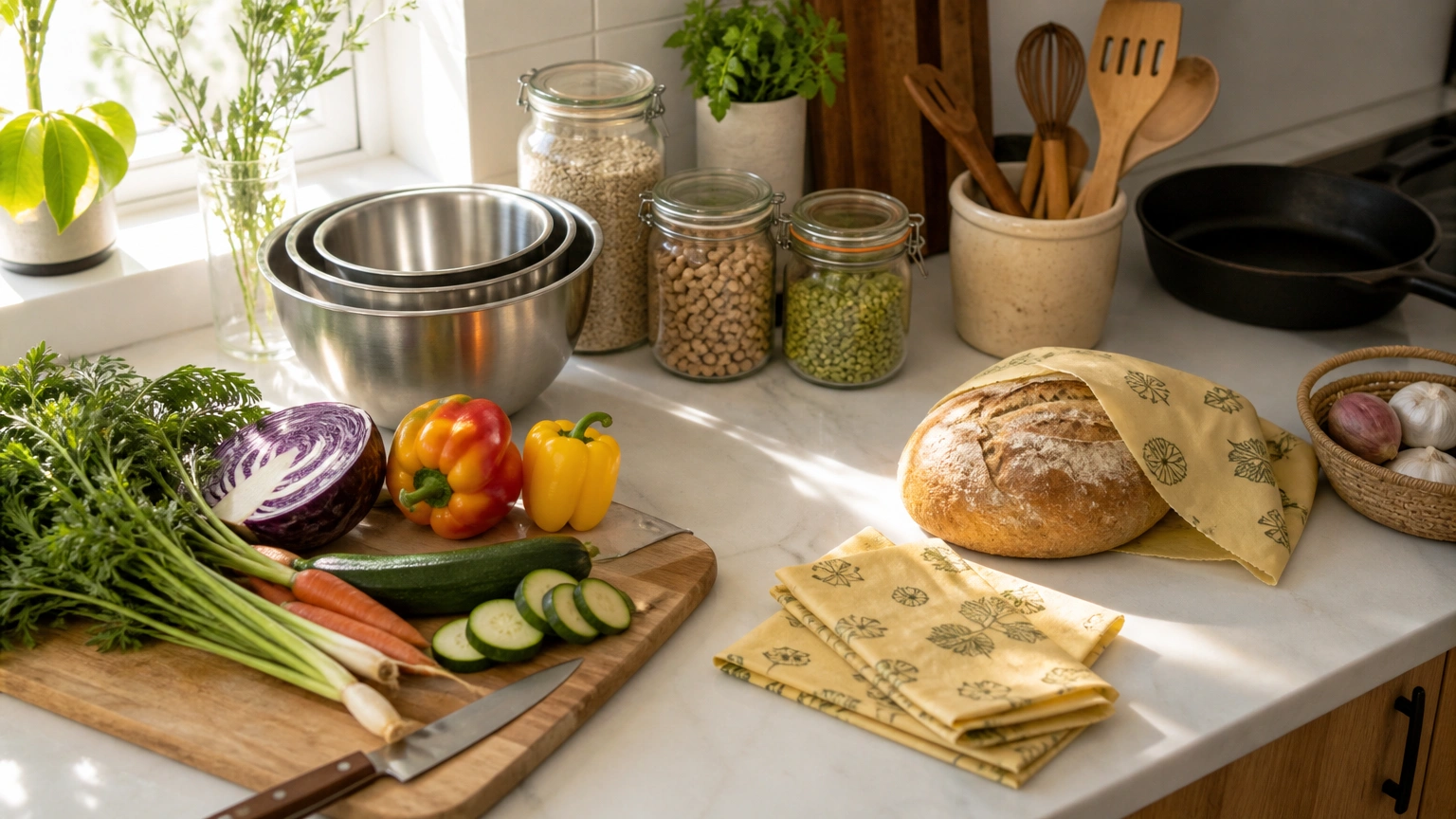
Thin plastic bags used for produce at the grocery store are typically used for a matter of minutes before being discarded. Cloth produce bags offer a simple, washable alternative that can be used for years.
These bags are lightweight, breathable, and often see through enough for cashiers to easily identify produce. Beyond the grocery store, cloth bags can also be used to store bread, snacks, or bulk pantry items, further reducing the need for single use plastic in the kitchen.
Everyday Uses for Cloth Bags
- Carrying fruits and vegetables at the grocery store or farmers market
- Storing bread or baked goods to keep them fresh
- Organizing bulk items like nuts, grains, or dried fruit
- Packing snacks for lunches or travel
Keeping a few cloth bags by the front door or in a reusable tote makes it easy to remember them before heading out to shop.
Building Sustainable Habits Over Time
Adopting all seven of these essentials at once is not necessary, and trying to do so can feel overwhelming. A more realistic approach is to introduce one or two changes at a time, allowing new habits to settle in before adding another. This gradual process also tends to be gentler on the household budget, since sustainable swaps often involve an upfront cost that pays off over months or years of reuse.
It can help to prioritize based on what feels most manageable or impactful for a particular household. A family that cooks frequently might benefit most from glass containers and a compost bin, while someone who shops often might notice the biggest difference from refillable bottles and cloth produce bags.
A Simple Way to Prioritize
- Start with the swap that addresses the most obvious source of waste in the home
- Choose one new habit per month rather than attempting everything at once
- Track small wins, such as a noticeably lighter trash bin or lower utility bill
- Involve the whole household so habits are shared rather than resting on one person
The Bigger Picture
None of these seven essentials require dramatic lifestyle changes. Instead, they represent small, thoughtful shifts that add up over time. A household that embraces reusable cloths, glass storage, composting, refillable bottles, a capsule wardrobe, efficient lighting, and cloth bags is likely to notice less clutter, less waste, and often lower monthly expenses.
Sustainability is not about perfection. It is about consistent, manageable choices that reduce environmental impact while making everyday life a little simpler. Each small swap is a step toward a home that feels calmer, more organized, and more aligned with values that matter to the people living in it.
Over time, these habits tend to influence other areas of life as well. A household that starts composting kitchen scraps may find itself paying closer attention to food waste in general.
A family that builds a capsule wardrobe may start applying the same intentional thinking to other purchases around the home. Sustainability, much like simplicity, tends to grow naturally once the first few habits take root.