The bathroom is one of the most overlooked rooms when people start their journey toward a greener lifestyle. Most sustainability conversations focus on the kitchen, transportation, or clothing choices, yet the bathroom is where a household uses a surprising amount of water, plastic, and energy every single day.
From the toothbrush sitting in a cup to the plastic bottles lined up in the shower, small daily habits in this small room can add up to a large environmental footprint over time.
The good news is that switching to an eco-friendly bathroom does not require a full renovation or a huge budget. Many of the changes are simple swaps that anyone interested in living a more sustainable life can make gradually. This article walks through seven must-have eco-friendly bathroom products that reduce waste, save water, and cut down on unnecessary plastic, while still keeping the bathroom functional, comfortable, and clean.
Why the Bathroom Deserves More Attention
Before diving into the product list, it helps to understand why the bathroom matters so much in a sustainability plan. Bathrooms are typically responsible for a large share of household water use, largely due to showers, faucets, and toilets. On top of that, bathrooms are packed with single use plastic items such as razors, cotton swabs, shampoo bottles, and floss containers that get thrown away after just a few uses.
Because these products are used daily and often replaced frequently, even small changes create a compounding effect. Switching one plastic bottle for a reusable option might not feel like much, but multiplied across a year, and across every member of a household, the impact becomes significant. This is exactly why the bathroom is such a rewarding place to start or continue an eco-friendly lifestyle.
1. Bamboo Toothbrushes
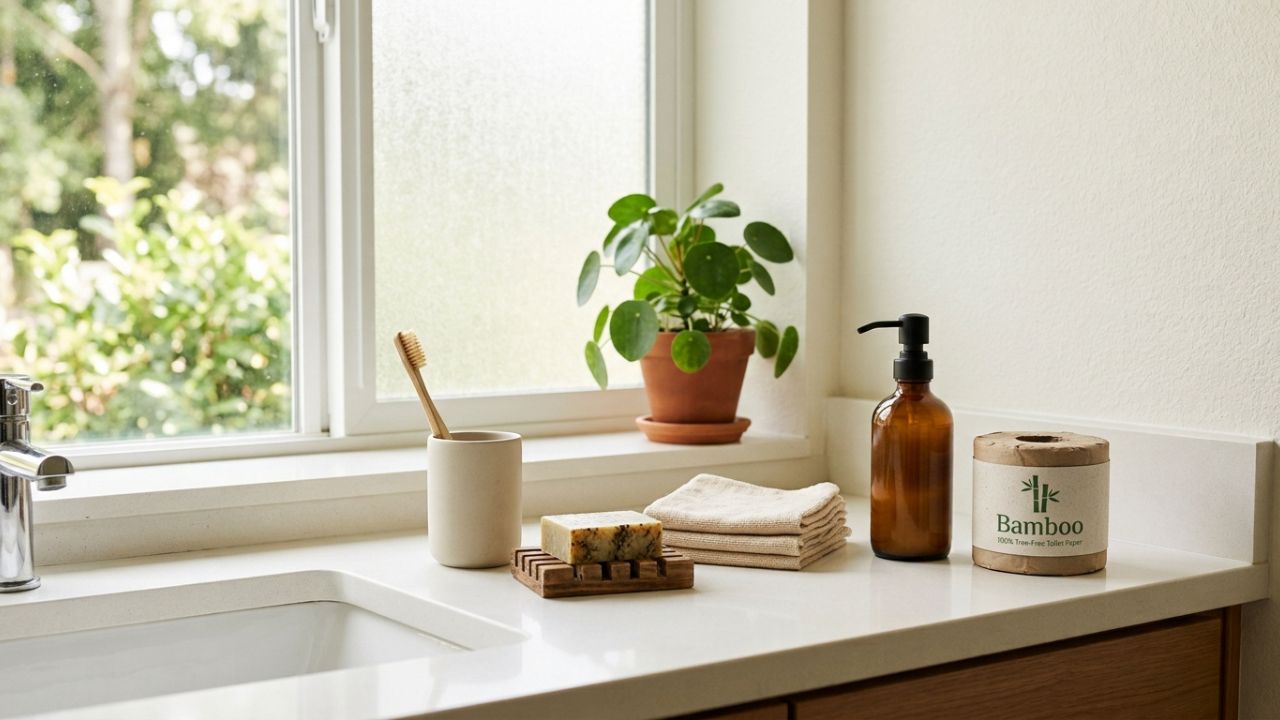
Plastic toothbrushes are one of the most common bathroom items, and most people go through several every year. Since plastic toothbrushes are not biodegradable, they can sit in landfills for hundreds of years after being thrown away.
Bamboo toothbrushes offer a simple and effective alternative. The handles are made from a fast-growing, renewable material that breaks down naturally over time, unlike traditional plastic handles.
- Bamboo grows quickly without the need for fertilizers or heavy irrigation
- Most bamboo toothbrush handles are compostable
- Many brands now offer bristles made from plant-based nylon alternatives, which are gentler on the environment than fully synthetic bristles
While the bristles themselves may still need special handling for full compostability, switching the handle alone significantly reduces the plastic waste generated from oral care over a lifetime.
What to Look For
When choosing a bamboo toothbrush, it helps to check whether the packaging is also plastic free, since many companies pair sustainable toothbrushes with recyclable or compostable boxes.
2. Refillable Shampoo and Conditioner Bottles
The shower is often where the most plastic accumulates, thanks to shampoo, conditioner, body wash, and other bottled products. Refillable bottle systems allow people to buy concentrated or bulk versions of their favorite products and simply top off the same container over and over.
Some stores now offer refill stations where customers bring their own containers and pay only for the product, not the packaging. This approach can dramatically cut down on the number of plastic bottles a household throws away each year.
- Refillable bottles reduce the demand for new plastic production
- Buying in bulk often costs less per ounce than single use bottles
- Reusing the same bottle reduces shipping weight and packaging waste
For those who cannot access a refill station nearby, another option is switching to solid shampoo and conditioner bars, which eliminate the bottle entirely and tend to last longer than liquid versions.
3. Shampoo and Soap Bars
Speaking of bars, solid shampoo, conditioner, and soap bars deserve their own spot on this list. These products have grown in popularity because they combine convenience with a much smaller environmental footprint than their liquid counterparts.
Solid bars are typically sold with minimal packaging, often just a small piece of paper or cardboard, and sometimes no packaging at all. Because they are concentrated, a single bar can last as long as two or three plastic bottles of liquid product.
| Product Type | Average Lifespan | Packaging Waste | Water Content |
|---|---|---|---|
| Liquid Shampoo Bottle | 1 to 2 months | Plastic bottle and cap | High, often 80 percent water |
| Shampoo Bar | 2 to 3 months | Paper wrap or none | Low, mostly active ingredients |
| Liquid Body Wash | 1 month | Plastic bottle and cap | High |
| Soap Bar | 1 to 2 months | Paper wrap or none | Low |
As the table shows, bars are generally more concentrated and generate far less packaging waste over the same period of use. They are also lighter to ship, which reduces transportation emissions.
4. Reusable Cotton Rounds and Cloths
Disposable cotton pads and cotton swabs are used once and thrown away, yet they are made from materials that take time to break down and are often wrapped in plastic packaging. Reusable cotton rounds, typically made from organic cotton or bamboo fleece, offer a washable alternative that can be used hundreds of times before wearing out.
- Reusable rounds can be tossed in a laundry bag and washed with regular laundry
- Many sets come with a small mesh bag specifically for washing
- They work well for removing makeup, applying toner, or general skincare routines
For cotton swabs, bamboo stemmed versions are a great swap for the plastic stemmed kind, since the stem breaks down naturally rather than lingering in landfills or waterways.
A Small Habit With Big Impact
Because these items are used daily, sometimes multiple times a day, switching to reusable versions prevents a steady stream of waste from ever being created in the first place. This is one of the easiest changes to make since it requires very little adjustment to an existing routine.
5. Low Flow Showerheads
Water conservation is a major part of any eco-friendly bathroom, and the showerhead is one of the biggest opportunities for savings. A low flow showerhead is designed to reduce the amount of water used per minute without sacrificing water pressure, thanks to aerating technology that mixes air into the water stream.
- Standard showerheads can use significantly more water per minute than low flow models
- Low flow showerheads can lower both water bills and energy bills, since less hot water needs to be heated
- Installation is usually simple and does not require a plumber
Households that switch to a low flow showerhead often notice the water savings reflected in their utility bills within the first month or two, making this one of the more financially rewarding swaps on this list.
6. Biodegradable Dental Floss
Traditional dental floss is often made from nylon, which does not break down naturally, and it frequently comes in a plastic container. Biodegradable floss is typically made from materials like silk or plant based fibers such as corn fiber, and it often comes housed in a refillable glass or metal container rather than a disposable plastic one.
- Silk based floss breaks down naturally after disposal
- Refillable floss containers reduce the need to buy a new plastic case every time the floss runs out
- Many biodegradable floss brands avoid harsh chemical coatings, which some people prefer for health reasons as well
This is a small item, but because floss containers are replaced so often, switching to a refillable and biodegradable version prevents a steady trickle of plastic waste over the years.
7. Toilet Paper Made From Recycled or Bamboo Materials
Toilet paper might not be the first product that comes to mind when thinking about sustainability, but it has a surprisingly large environmental footprint. Traditional toilet paper is often made from virgin tree pulp, which contributes to deforestation, and the manufacturing process can be water and energy intensive.
Toilet paper made from recycled paper or fast growing bamboo offers a more sustainable alternative without sacrificing softness or strength.
- Bamboo toilet paper uses a renewable resource that regrows quickly
- Recycled toilet paper reduces the demand for newly harvested trees
- Many eco-friendly toilet paper brands use plastic free packaging, often wrapping rolls in paper instead of plastic film
Since toilet paper is used in every household regardless of lifestyle choices, this swap is one of the most impactful changes a person can make, simply because of how frequently it is purchased and used.
Building a Full Eco-Friendly Bathroom Routine
Switching to all seven of these products at once is not necessary, and trying to do so can feel overwhelming. A more sustainable approach, ironically, is to make these changes gradually. As each disposable product runs out, it can be replaced with its eco-friendly counterpart rather than being repurchased in its original form.
- Start with the items used up most quickly, such as cotton rounds or floss
- Move on to bigger purchases, like a low flow showerhead, once the smaller swaps feel comfortable
- Keep track of how much money is saved from buying in bulk or using refillable products, since the savings often outweigh the initial cost of switching
This approach also makes the transition more affordable, since costs are spread out over time rather than requiring a large upfront investment.
Common Questions About Eco-Friendly Bathroom Products
Are eco-friendly bathroom products more expensive?
Some products, like bamboo toothbrushes or shampoo bars, can have a slightly higher upfront cost compared to their plastic or liquid counterparts. However, because many of these products last longer or come in concentrated forms, the cost per use often ends up being similar or even lower over time.
Do these products work as well as traditional options?
In most cases, yes. Shampoo bars, low flow showerheads, and biodegradable floss have all improved significantly in recent years, and many people find little to no difference in performance compared to conventional products.
How long does it take to notice a difference in waste reduction?
Many households notice a difference within the first few months, especially once items like cotton rounds and refillable bottles replace their disposable equivalents. The reduction in trash and recycling volume tends to be one of the most visible signs of progress.
Final Thoughts
Creating an eco-friendly bathroom does not happen overnight, and it does not require perfection. Every swap, whether it is a bamboo toothbrush, a shampoo bar, or a low flow showerhead, plays a part in reducing plastic waste, conserving water, and lowering a household’s overall environmental impact.
For anyone interested in living a more sustainable lifestyle, the bathroom is a practical and rewarding place to begin, offering small daily choices that add up to meaningful change over time.