
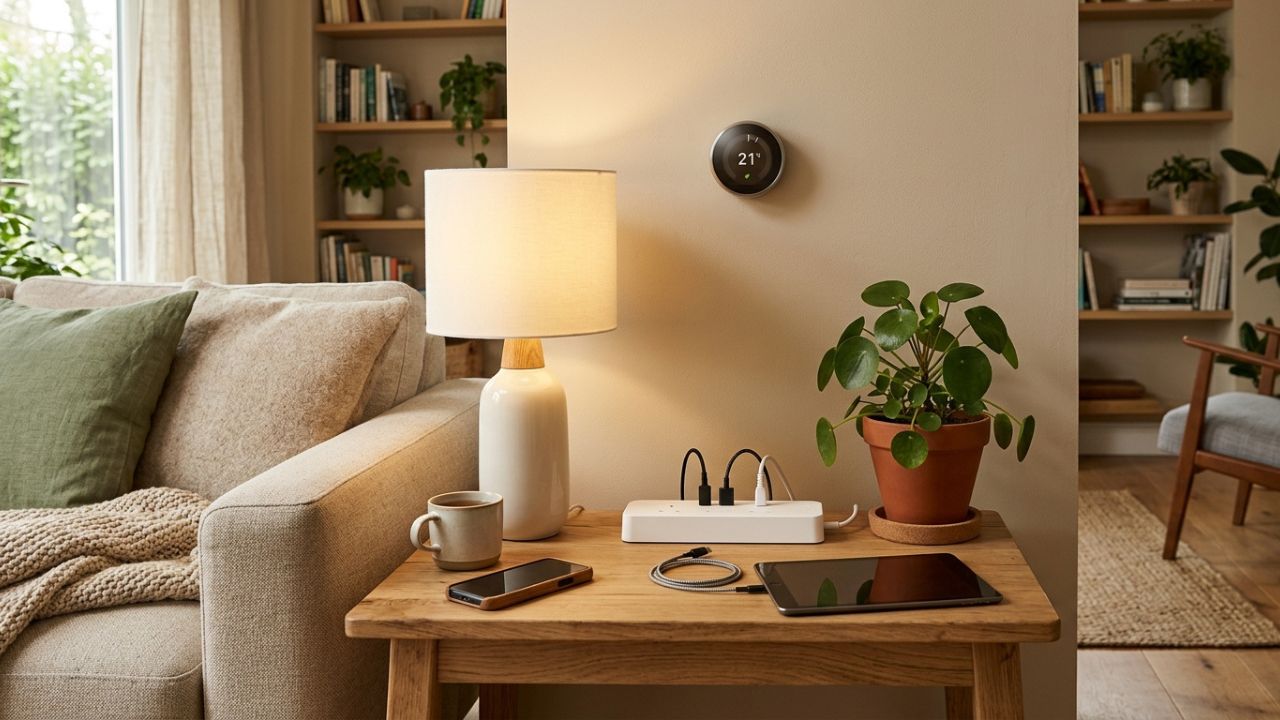
Every household uses energy in ways that often go unnoticed. Lights left on in empty rooms, appliances running longer than needed, and devices quietly drawing power even when switched off all add up over time.
For anyone who cares about living a more sustainable and eco-friendly life, cutting down on wasted energy is one of the simplest and most rewarding places to start.
The good news is that saving power does not require a complete lifestyle overhaul or a large budget. A handful of smart, well-designed products can make a noticeable difference in both energy consumption and monthly utility bills. These tools work quietly in the background, helping households reduce their carbon footprint without sacrificing comfort or convenience.
This article explores seven practical power-saving products that any eco-conscious household can start using today.
Why Power-Saving Products Matter
Before diving into the products themselves, it helps to understand why energy efficiency at home is such a meaningful step toward sustainability. Residential energy use contributes significantly to overall carbon emissions, largely because much of the electricity supplied to homes still comes from fossil fuels in many parts of the world.
When a household reduces its energy consumption, it is not just saving money. It is also lowering the demand placed on power grids, which in turn can reduce the need for burning coal, gas, or oil to generate electricity. Small changes made consistently across millions of homes can lead to a measurable environmental impact.
Power-saving products also tend to have a secondary benefit: they often extend the lifespan of appliances and electronics by preventing overuse, overheating, or unnecessary strain. This means less electronic waste over time, which is another win for the planet.
1. Smart Power Strips
Traditional power strips simply distribute electricity to whatever is plugged into them, but many devices continue to draw a small amount of power even when turned off. This is often called phantom load or standby power, and it can account for a surprising percentage of a household’s electricity bill.
Smart power strips solve this problem by automatically cutting power to devices that are not in active use. Some models detect when a primary device, such as a television, is turned off and then shut down power to everything connected to it, including game consoles, sound systems, and streaming boxes.
- Automatically stops phantom power draw from electronics
- Groups multiple devices together for coordinated shutdown
- Some models can be controlled remotely through a smartphone app
- Reduces fire risk by cutting power to overheating devices
Smart power strips are especially useful in home entertainment centers, home offices, and kitchens where several small appliances tend to stay plugged in around the clock.
2. Programmable and Smart Thermostats
Heating and cooling typically account for a large portion of a home’s total energy use. A programmable or smart thermostat allows a household to set specific temperatures for different times of the day, so energy is not wasted heating or cooling an empty house.
Smart thermostats take this a step further by learning a household’s habits over time. Many can detect when residents are away using motion sensors or location tracking on a smartphone, automatically adjusting the temperature to save energy without anyone having to remember to change the settings manually.
Benefits of a Smart Thermostat
- Learns daily routines and adjusts temperature automatically
- Can be controlled remotely from a phone or tablet
- Provides monthly energy usage reports
- Works well alongside solar panels and other renewable systems
Because heating and cooling systems are often the single largest energy consumer in a home, a smart thermostat is one of the most effective upgrades a household can make for both sustainability and cost savings.
3. LED Smart Bulbs
Lighting is another area where households often waste more energy than necessary. Traditional incandescent bulbs convert most of their energy into heat rather than light, making them highly inefficient. LED bulbs, on the other hand, use a fraction of the electricity and last significantly longer.
Smart LED bulbs combine this efficiency with added convenience. They can be dimmed, scheduled, or turned off remotely, which means lights are far less likely to be left on in empty rooms.
- Use up to eighty percent less energy than traditional bulbs
- Last many times longer, reducing waste from frequent replacements
- Can be scheduled to turn off automatically at set times
- Allow dimming, which further reduces energy use when full brightness is not needed
For households looking to make an easy and affordable first step into energy efficiency, swapping standard bulbs for smart LED options is often the simplest place to begin.
4. Energy Monitoring Plugs
It is difficult to reduce energy use without first understanding where it is going. Energy monitoring plugs sit between an appliance and the wall outlet, tracking exactly how much electricity that device consumes over time.
This kind of visibility can be eye opening. Many people are surprised to learn how much energy is used by appliances they assumed were efficient, such as older refrigerators, space heaters, or entertainment systems left in standby mode.
| Product Type | Main Function | Typical Placement |
|---|---|---|
| Smart Power Strip | Cuts phantom power draw | Entertainment centers, offices |
| Energy Monitoring Plug | Tracks individual device usage | Any single appliance |
| Smart Thermostat | Automates heating and cooling | Central hallway or living area |
| Smart LED Bulb | Reduces lighting energy use | Any light fixture |
By identifying which appliances consume the most electricity, households can make informed decisions about which habits or devices to change first for the greatest impact.
5. Low-Flow Water Heater Attachments
While much of the focus on power savings centers around electricity, water heating is another major energy consumer in most homes. Low-flow attachments, such as efficient showerheads and faucet aerators, reduce the amount of hot water used without noticeably affecting water pressure.
Since heating water requires significant energy, using less of it directly translates into lower energy consumption. These attachments are inexpensive, easy to install, and often pay for themselves within a few months through reduced utility bills.
- Reduces the volume of hot water needed for daily tasks
- Lowers the energy required to heat water
- Simple to install without professional help
- Compatible with most standard plumbing fixtures
Pairing these attachments with mindful habits, such as shorter showers, can amplify the energy and water savings even further.
6. Smart Plugs with Scheduling Features
Smart plugs are similar to smart power strips but are designed for individual appliances rather than groups of electronics. They allow a household to schedule when a specific device turns on or off, which is especially useful for appliances that do not need to run continuously.
Coffee makers, space heaters, phone chargers, and even outdoor lighting can all benefit from scheduled operation. Instead of relying on memory to unplug devices, a smart plug handles it automatically.
Common Uses for Smart Plugs
- Turning off chargers once a device reaches full battery
- Scheduling outdoor lights to turn off at sunrise
- Preventing space heaters from running unattended
- Automating small kitchen appliances that are easy to forget
This kind of automation removes the guesswork from energy conservation, making sustainable habits easier to maintain long term.
7. Solar-Powered Chargers and Outdoor Lights
For households looking to reduce reliance on the grid entirely for certain tasks, solar-powered products offer a practical solution. Solar chargers can power small electronics, while solar outdoor lighting eliminates the need for wired electricity in gardens, walkways, and patios.
These products harness renewable energy directly from the sun, meaning they produce zero ongoing electricity costs once installed. They are particularly useful for outdoor spaces where running electrical wiring would be inconvenient or costly.
- Requires no wiring or ongoing electricity costs
- Ideal for garden paths, patios, and outdoor gathering areas
- Charges small devices like phones or power banks using sunlight
- Reduces dependence on grid electricity for outdoor needs
As solar technology continues to improve, these products have become more affordable, efficient, and widely available for everyday household use.
Bringing It All Together
Adopting power-saving products does not have to happen all at once. Many households find success by starting with one or two changes, such as switching to smart LED bulbs or adding a smart power strip to the entertainment center, before gradually incorporating other products over time.
The cumulative effect of these small changes can be significant. Lower electricity bills, reduced reliance on fossil fuel powered grids, and less electronic waste all contribute to a more sustainable household. Just as importantly, these products make eco-friendly living more approachable, since they require little ongoing effort once they are set up.
A Simple Starting Checklist
- Replace the most frequently used bulbs with smart LED options
- Add a smart power strip to the room with the most electronics
- Install a programmable or smart thermostat
- Attach a monitoring plug to the appliance suspected of using the most power
- Swap standard showerheads for low-flow versions
- Use smart plugs for seasonal or occasional appliances
- Introduce solar-powered lighting in outdoor spaces
Sustainable living is often less about dramatic lifestyle changes and more about consistent, small improvements. These seven power-saving products offer an accessible way for any household to reduce energy waste, lower costs, and take a meaningful step toward a greener everyday life.



