
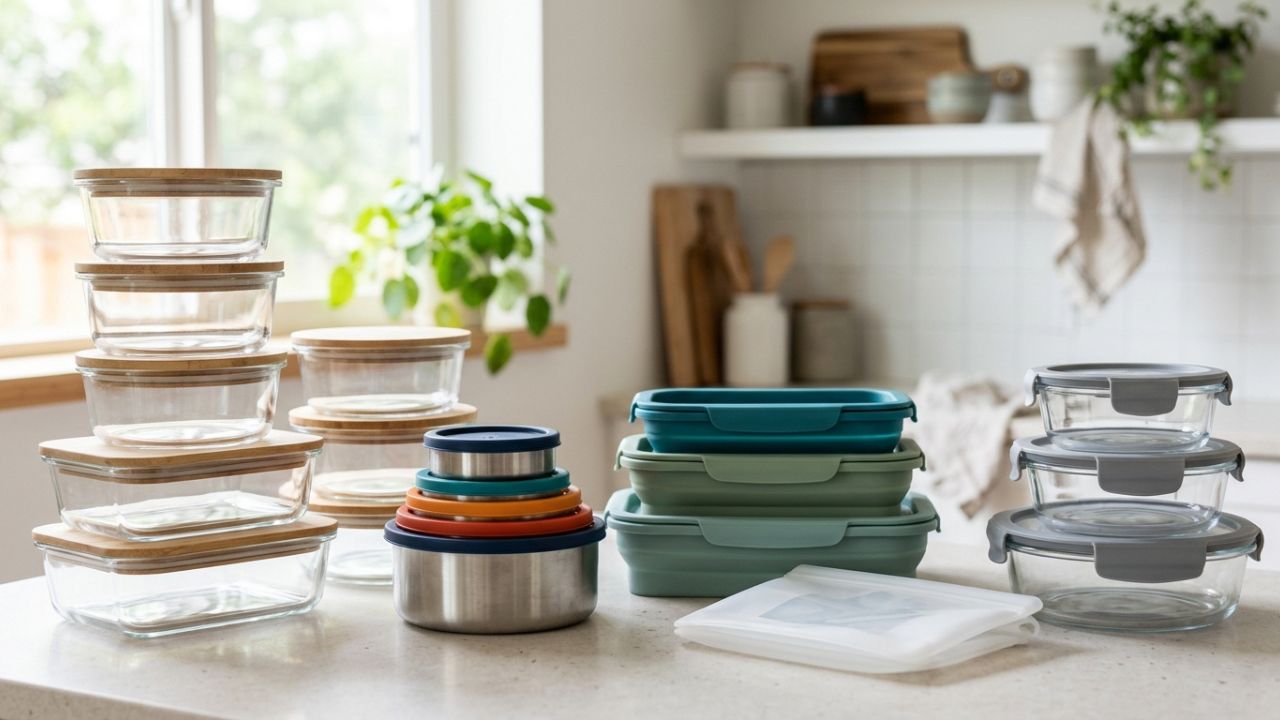
Anyone who has opened a kitchen cabinet only to be met with an avalanche of mismatched plastic lids knows the struggle of food storage.
For people trying to live a greener life, the goal is not just to organize the mess but to replace it entirely with containers that are reusable, durable, and kind to the planet.
Choosing the right reusable food containers can save space, reduce single-use plastic waste, and make everyday meal prep feel effortless.
This article looks at seven space-saving reusable food container options that are especially useful for anyone working toward a more sustainable and eco-friendly lifestyle. It also covers what to look for when shopping, how to care for these containers, and simple tips to make the switch away from disposable packaging easier.
Why Reusable Food Containers Matter for Sustainable Living
Single-use plastic bags, cling film, and disposable takeout boxes pile up quickly in landfills and oceans. Choosing reusable containers is one of the simplest ways a household can cut down on unnecessary waste. Beyond the environmental benefits, reusable containers tend to be sturdier, easier to clean, and better at keeping food fresh for longer.
Space-saving designs add another layer of value. A container that nests, stacks, or collapses means less clutter in the kitchen and a more organized way to store leftovers, pack lunches, or prep meals in advance. When containers take up less room, people are also more likely to keep using them instead of reaching for disposable alternatives out of convenience.
What Makes a Container Truly Space-Saving
Not every reusable container is designed with storage efficiency in mind. Some of the features that make a real difference include:
- Stackable shapes that nest inside one another when empty
- Collapsible silicone walls that fold flat for storage
- Square or rectangular shapes rather than round ones, since they use cabinet space more efficiently
- Uniform sizing across a set so lids and bases are interchangeable
- Lightweight materials that are still durable enough for daily use
Keeping these features in mind while shopping helps avoid bringing home yet another set of containers that simply adds to the clutter.
1. Collapsible Silicone Containers
Collapsible silicone containers are a favorite among people trying to save cabinet space. These containers fold down flat when not in use and pop back up into their full shape when needed. They are typically made from food-grade silicone, which is durable, flexible, and safe for the freezer, microwave, and sometimes even the oven.
Because they compress to a fraction of their usual height, a stack of five or six collapsible containers can take up the same space as a single rigid container. This makes them ideal for smaller kitchens, tiny apartments, or anyone who likes to travel with their own food storage.
Best for: soups, leftovers, and packed lunches
2. Stackable Glass Containers with Interlocking Lids
Glass containers have become a popular alternative to plastic because they do not absorb odors or stains and are considered safer for reheating food. Stackable sets with interlocking lids are designed so that containers of different sizes nest neatly on top of one another, and even the lids can be stacked separately to save additional space.
Glass is also fully recyclable at the end of its life, though a well cared for set can last for many years before that becomes necessary. Choosing a set with consistent, modular sizing makes a noticeable difference in how tidy a cabinet or fridge shelf can look.
Best for: meal prepping, reheating, and long-term food storage
3. Bento-Style Divided Containers
Bento-style containers are designed with built-in compartments, which eliminates the need for several small containers to keep different foods separate. A single divided container can hold a protein, a grain, and vegetables all in one compact case, cutting down on the total number of containers needed for a packed lunch or meal prep session.
Many of these containers are stackable and slim enough to slide easily into a bag or backpack, making them a practical choice for people who eat on the go.
Best for: packed lunches, meal prepping, and portion control
4. Silicone Food Storage Bags
Reusable silicone bags are a space-saving swap for single-use plastic bags. They lie flat when empty, stand upright when filled, and often come with a self-sealing strip so no extra clips or ties are needed. Since they take up almost no space when stored flat in a drawer, they are especially useful for people with limited kitchen storage.
These bags are typically dishwasher safe and can go in the freezer, making them versatile enough to replace several boxes of disposable bags.
Best for: freezing fruits and vegetables, storing snacks, and marinating
5. Nesting Stainless Steel Containers
Stainless steel containers are known for being nearly indestructible, resistant to staining, and free of the chemical concerns that sometimes come with plastic. Nesting sets are designed so that each container fits inside the next largest one, which means a full set of five or six containers can be stored in the space of just one.
Stainless steel is not microwave safe, so these containers work best for cold storage, packed lunches, or transporting food rather than reheating.
Best for: lunchboxes, snacks, and pantry storage
6. Vacuum-Sealed Reusable Containers
Vacuum-sealed containers use a simple pump or valve system to remove excess air, which helps food stay fresh for longer while also reducing the puffiness that air-filled containers can create. Many of these are designed with flat, stackable shapes that make efficient use of both fridge and cabinet space.
Because food lasts longer in a vacuum-sealed environment, these containers can also help reduce food waste, which pairs naturally with a sustainable lifestyle.
Best for: meal prepping, storing produce, and reducing food spoilage
7. Modular Square Containers with Snap Lids
Square and rectangular containers make far better use of shelf and drawer space than round ones, since they fit together without wasted gaps. Modular sets with snap-on lids are designed so that every container and lid in the collection is interchangeable, meaning there is no need to hunt for a matching lid buried at the back of a drawer.
These sets are often available in a range of sizes that stack neatly, making them a reliable everyday option for anything from bulk pantry staples to weekly meal prep.
Best for: pantry organization, bulk food storage, and meal prepping
Comparing the Seven Container Types
| Container Type | Space-Saving Feature | Best Use | Care Notes |
|---|---|---|---|
| Collapsible Silicone | Folds flat when empty | Leftovers, packed lunches | Hand wash recommended for longevity |
| Stackable Glass | Nesting sizes, stackable lids | Meal prep, reheating | Dishwasher safe, avoid sudden temperature changes |
| Bento-Style Divided | Built-in compartments | Lunches, portion control | Check compartment seals regularly |
| Silicone Bags | Lies flat, stands when filled | Freezing, snacks | Air dry fully before storing |
| Nesting Stainless Steel | Containers fit inside each other | Lunchboxes, pantry storage | Not microwave safe |
| Vacuum-Sealed | Reduces air, flat stacking shape | Produce, meal prep | Check valve or pump seal periodically |
| Modular Square | Interlocking, gap-free shapes | Pantry, bulk storage | Interchangeable lids simplify matching |
Tips for Making the Switch to Reusable Containers
Moving away from disposable packaging can feel like a big shift at first, but a few small habits make the transition smoother.
- Start with one category, such as lunch containers or freezer storage, rather than replacing everything at once
- Choose a single brand or shape family so lids and bases stay interchangeable
- Label containers with a piece of tape and a washable marker to track leftovers
- Store lids separately in a shallow drawer organizer to prevent tangled stacks
- Wash and fully dry containers before storing to avoid odors or mold
Caring for Reusable Containers So They Last
A reusable container is only as sustainable as its lifespan. Taking a little extra care can help these items last for years rather than months.
- Avoid extreme temperature changes with glass containers to prevent cracking
- Keep silicone away from sharp objects that could puncture it
- Dry stainless steel thoroughly to prevent water spots
- Replace worn seals or lids rather than the entire container when possible
- Avoid overfilling collapsible containers, which can strain the folding seams
Final Thoughts
Switching to space-saving reusable food containers is a small but meaningful step toward a more sustainable kitchen.
Whether it is a set of collapsible silicone containers for a tiny apartment, a stackable glass set for meal prepping, or nesting stainless steel for packed lunches, there is an option suited to nearly every lifestyle and storage need.
By choosing containers designed to save space as well as reduce waste, it becomes much easier to stick with sustainable habits for the long run, one meal at a time.



