For anyone trying to live a little lighter on the planet, the kitchen is often one of the easiest places to start. It is where meals are made every single day, and the tools used to make them matter more than most people realize.
Nonstick pans coated with questionable chemicals, cookware that wears out after a year, and single use plastic gadgets all add up to a surprising amount of waste over time.
The good news is that switching to sustainable cookware does not have to be complicated or expensive. It simply means choosing pieces that are built to last, made from safer materials, and designed with the environment in mind. This guide walks through seven cookware pieces that can help anyone build a greener, healthier, and more thoughtful kitchen, one pot and pan at a time.
Why Sustainable Cookware Matters
Before diving into the list, it helps to understand why cookware choices actually make a difference. Many conventional pots and pans are made with materials that are difficult to recycle, coated with synthetic nonstick layers that degrade over time, or manufactured in ways that use a lot of energy and resources.
Sustainable cookware tends to focus on a few key things:
- Durability, so pieces last for decades instead of ending up in a landfill after a few years
- Natural or non toxic materials that do not leach chemicals into food
- Repairability, meaning damaged pieces can be restored rather than thrown away
- Responsible sourcing and manufacturing practices
Choosing cookware with these qualities is a small but meaningful way to reduce household waste while also improving the quality and safety of everyday cooking.
1. Cast Iron Skillet
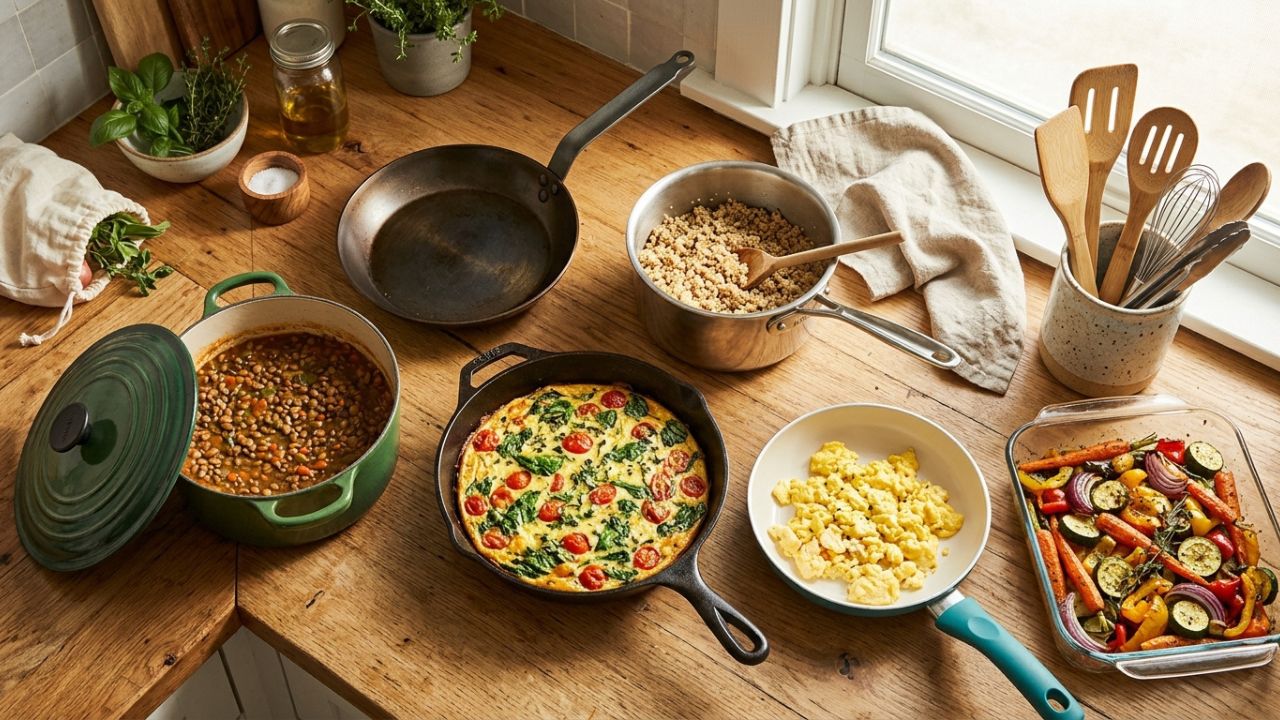
A cast iron skillet is often the first recommendation for anyone looking to build a more sustainable kitchen, and for good reason. These pans are practically indestructible when cared for properly. Many families still use skillets that have been passed down for generations, which says a lot about how long this cookware can last.
Cast iron is made from a simple combination of iron and carbon, with no synthetic coatings involved. Over time, a well seasoned skillet develops a natural nonstick surface from layers of baked on oil, which means there is no need for chemical coatings at all.
Why it fits a greener kitchen:
- Can last a lifetime or longer with basic care
- Naturally nonstick once properly seasoned
- Safe to use on the stovetop, in the oven, or even over a campfire
- Fully recyclable at the end of its life
The only downside is that cast iron requires a bit of maintenance, like drying it thoroughly and reseasoning occasionally. For most people, this small effort is a fair trade for cookware that will likely outlive them.
2. Stainless Steel Pots and Pans
Stainless steel is another staple for anyone building a sustainable kitchen. It is strong, resistant to rust and corrosion, and does not react with acidic foods the way some other metals can. Because it holds up so well over time, stainless steel cookware rarely needs to be replaced.
Look for cookware made from high quality stainless steel, ideally with a thicker base for even heat distribution. Many brands now also use recycled steel in their manufacturing process, which further reduces the environmental footprint.
Benefits of stainless steel cookware:
- Extremely durable and resistant to scratches or dents
- Free from synthetic nonstick coatings
- Dishwasher safe and easy to clean
- Fully recyclable
Stainless steel is especially useful for tasks like boiling, searing, and browning, making it a versatile addition to any collection of sustainable cookware.
3. Ceramic Coated Cookware
For those who want a nonstick surface without the concerns associated with traditional nonstick coatings, ceramic coated cookware is a solid choice. Unlike older nonstick pans, ceramic coatings are typically made from natural materials like sand derived compounds and do not contain the synthetic chemicals often found in older nonstick technology.
Ceramic cookware heats evenly and works well for everyday cooking like eggs, pancakes, and sauces that tend to stick to other surfaces. It is a helpful bridge for anyone transitioning away from conventional nonstick pans but who still wants that easy release surface.
A few things to keep in mind:
- Ceramic coatings can wear down faster than cast iron or stainless steel
- Using metal utensils can scratch the surface, so wooden or silicone tools are recommended
- Lower heat settings help extend the coating’s lifespan
While ceramic cookware may not last quite as long as cast iron, it is still a meaningful upgrade from traditional nonstick pans and fits well into a sustainability focused kitchen.
4. Glass Bakeware
Glass bakeware is often overlooked when people think about sustainable cookware, but it deserves a spot on this list. Glass is completely inert, meaning it will not react with food or leach any chemicals, even at high temperatures. It is also endlessly reusable and, unlike plastic containers, does not degrade or stain over time.
Glass baking dishes are ideal for casseroles, roasted vegetables, and baked desserts. They also double as excellent storage containers, reducing the need for plastic wrap or disposable containers in the fridge.
Why glass bakeware supports a greener lifestyle:
- Made from natural, abundant materials like sand
- Fully recyclable at the end of its life
- Does not absorb odors, stains, or flavors
- Safe for oven, microwave, and fridge use
Because glass is so easy to clean and long lasting, a single set of glass bakeware can serve a household for many years without needing to be replaced.
5. Carbon Steel Pans
Carbon steel pans are a favorite among professional chefs, and they are gaining popularity in home kitchens as well. Similar to cast iron, carbon steel develops a natural seasoning layer over time that acts as a nonstick surface. However, carbon steel is lighter and heats up faster, making it a bit more practical for everyday cooking.
Carbon steel is especially good for high heat cooking methods like stir frying or searing, and it responds quickly to temperature changes, giving cooks more control.
Advantages of carbon steel cookware:
- Lightweight compared to cast iron
- Naturally nonstick once seasoned
- Extremely durable and long lasting
- Recyclable and free from synthetic coatings
Like cast iron, carbon steel does require some care, including drying it well and occasionally reapplying a thin layer of oil to maintain its seasoning.
6. Bamboo and Wooden Utensils
While not cookware in the traditional sense, the utensils used alongside pots and pans play a big role in building a truly sustainable kitchen. Bamboo and wooden utensils are a renewable alternative to plastic tools, which often break down into microplastics over time.
Bamboo, in particular, is one of the fastest growing plants on earth, making it a highly renewable resource. Wooden spoons, spatulas, and cutting boards are gentle on cookware surfaces, especially ceramic or nonstick pans, and they tend to last for years with basic care.
Why bamboo and wood belong in a green kitchen:
- Biodegradable at the end of their useful life
- Gentle on cookware, reducing scratches and wear
- Naturally antimicrobial in the case of bamboo
- Renewable and fast growing resource
Swapping out plastic utensils for bamboo or wood is a small change that pairs well with any of the cookware pieces mentioned above.
7. Enameled Cast Iron Dutch Oven
An enameled cast iron Dutch oven combines the durability of cast iron with a smooth, easy to clean enamel coating. This makes it slightly more low maintenance than traditional cast iron, since it does not require seasoning and is safe to use with acidic ingredients like tomatoes or citrus.
Dutch ovens are incredibly versatile, capable of going from stovetop to oven with ease. They are perfect for slow cooking, braising, soups, stews, and even baking bread, which means one pot can often replace several other pieces of cookware.
What makes it a sustainable choice:
- Extremely long lasting, often lasting generations
- Enamel coating resists staining and odors
- Versatile enough to reduce the need for multiple pots
- Can be repaired or refinished rather than discarded
Because a good Dutch oven can handle so many different cooking tasks, it often becomes one of the most used pieces in a sustainable kitchen.
Comparing the Seven Cookware Pieces
| Cookware Piece | Best For | Maintenance Level | Estimated Lifespan |
|---|---|---|---|
| Cast Iron Skillet | Searing, frying, baking | Moderate | Decades to a lifetime |
| Stainless Steel Pots and Pans | Boiling, browning, sauces | Low | Decades |
| Ceramic Coated Cookware | Eggs, delicate foods | Moderate | 3 to 5 years |
| Glass Bakeware | Casseroles, roasting, storage | Low | Decades |
| Carbon Steel Pans | Stir frying, searing | Moderate | Decades |
| Bamboo and Wooden Utensils | General cooking tasks | Low | Several years |
| Enameled Cast Iron Dutch Oven | Braising, soups, baking | Low | Generations |
Tips for Transitioning to Sustainable Cookware
Switching an entire kitchen over to more sustainable cookware does not need to happen all at once. It can be helpful to replace items gradually as older cookware wears out or as budget allows.
- Start with the most used items, like a everyday skillet or pot
- Avoid throwing away old nonstick cookware if it is still functional, and instead phase it out over time
- Donate or recycle old cookware responsibly when it is time to part with it
- Invest in one high quality piece at a time rather than replacing everything at once
- Learn proper care techniques, since sustainable cookware often lasts far longer when maintained correctly
Taking a gradual approach not only makes the switch more affordable, it also reduces unnecessary waste from discarding usable items too quickly.
Caring for Sustainable Cookware
Getting the most out of sustainable cookware often comes down to proper care. A few simple habits can extend the life of these pieces significantly.
- Hand wash cast iron and carbon steel rather than using a dishwasher
- Dry metal cookware thoroughly to prevent rust
- Use wooden or silicone utensils to protect coatings and surfaces
- Store cookware properly to avoid scratches or dents
- Reapply seasoning oil to cast iron and carbon steel as needed
With the right care routine, most of the cookware pieces on this list can last for many years, making the upfront investment well worth it over time.
Final Thoughts
Building a greener kitchen does not require an overnight transformation. It is about making thoughtful choices over time, starting with the cookware used every single day. Cast iron skillets, stainless steel pots, ceramic coated pans, glass bakeware, carbon steel pans, bamboo utensils, and enameled Dutch ovens each offer a way to cook more sustainably without sacrificing performance or quality.
By choosing durable, non toxic, and responsibly made cookware, anyone can reduce their environmental footprint one meal at a time. It is a simple shift that pays off not just for the planet, but for the health and longevity of the kitchen itself.