
Anyone who has stood in the hair care aisle of a big box store knows how much plastic surrounds a single routine. Shampoo bottles, conditioner bottles, plastic combs, foam rollers, disposable elastics, and single use wipes all pile up over time.
For people who care about the planet, this can feel like a quiet source of guilt tucked away in the bathroom cabinet. The good news is that switching to a lower-waste hair care routine does not require throwing everything out and starting from zero. It simply means making thoughtful swaps, one tool at a time, and choosing products built to last.
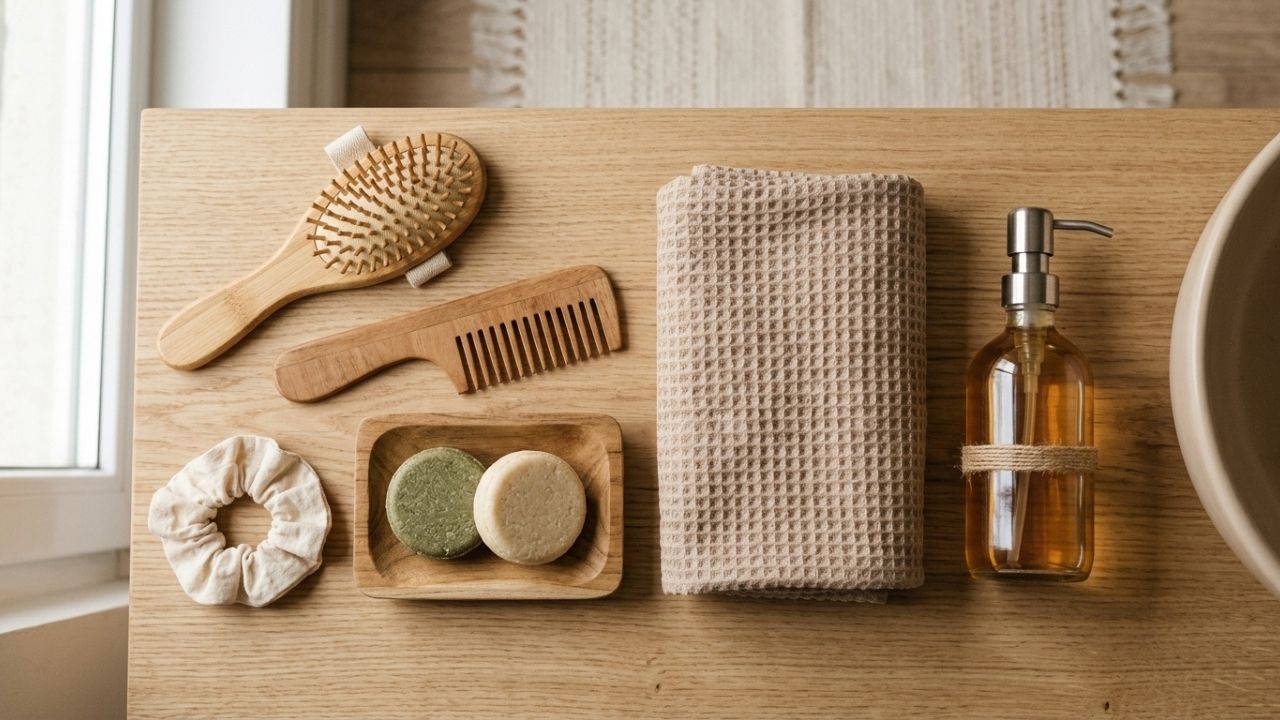
This article looks at seven sustainable hair care tools that can help reduce plastic waste, cut down on unnecessary purchases, and support a more eco-friendly bathroom shelf. Each tool is practical, widely available, and suited to real everyday use, not just an aspirational Pinterest board.
Why Sustainable Hair Care Tools Matter
Hair care is one of those routines people repeat daily without giving it much thought. That repetition is exactly why small changes can add up to a big impact over time. A single plastic comb might not seem like a big deal, but multiplied across millions of households and replaced every few months, the waste becomes significant.
Sustainable hair tools are typically made from materials that either last much longer than plastic versions or break down naturally at the end of their life. They also tend to be gentler on hair, since many eco-friendly materials reduce static, minimize breakage, and distribute natural oils more evenly than synthetic alternatives.
Choosing these tools is not only about reducing landfill waste. It is also about rethinking consumption habits, supporting brands that prioritize ethical sourcing, and building a routine that feels intentional rather than automatic.
1. Wooden or Bamboo Hairbrushes
Plastic hairbrushes are one of the most common bathroom items, and unfortunately one of the least recyclable due to their mixed materials, including plastic bristles, rubber cushioning, and metal pins all fused together.
Wooden and bamboo hairbrushes offer a sturdy, biodegradable alternative. Bamboo in particular grows quickly and requires very little water compared to other materials, making it a popular renewable resource.
Benefits of Wooden Brushes
- Naturally antistatic, which reduces frizz and flyaways
- Gentle on the scalp and less likely to cause micro tears in the hair shaft
- Long lasting when properly cared for, often lasting years instead of months
- Compostable or biodegradable at the end of their life, depending on the bristle material
Some wooden brushes still use nylon bristles, so anyone looking for a fully biodegradable option should check for boar bristle or other natural fiber alternatives.
2. Boar Bristle or Natural Fiber Brushes
Natural fiber brushes, particularly those made with boar bristle or plant-based fibers, help distribute the scalp’s natural oils down the length of the hair. This can reduce the need for frequent washing, which in turn saves water and extends the life of shampoo and conditioner.
For people who prefer a fully plant-based option, brushes made from tampico fiber, derived from the agave plant, offer similar benefits without using animal products.
Why Oil Distribution Matters
Hair that receives regular oil distribution from root to tip tends to look shinier and feel less dry over time. This means fewer trips to the store for leave-in treatments or heat protectants, which reduces both plastic packaging waste and unnecessary spending.
3. Reusable Hair Ties and Scrunchies
Elastic hair ties are notorious for snapping, stretching out, or disappearing entirely. Because they are often made from synthetic rubber and plastic, they do not decompose easily and frequently end up as small pieces of litter.
Reusable options made from organic cotton scrunchies, natural rubber hair ties, or metal-free spiral hair ties offer a longer lasting and lower impact alternative.
- Organic cotton scrunchies are gentle on hair and reduce breakage compared to standard elastics
- Natural rubber ties biodegrade much faster than synthetic versions
- Spiral hair ties made from durable materials can last for years without losing elasticity
Switching to just a few high-quality hair ties instead of buying bags of cheap ones repeatedly can meaningfully cut down on small plastic waste that often goes unnoticed.
4. Solid Shampoo and Conditioner Bars
While not a tool in the traditional sense, shampoo and conditioner bars deserve a place on this list because they directly replace one of the most wasteful items in any bathroom, the plastic bottle.
A single shampoo bar can often replace two to three plastic bottles of liquid shampoo. Many are packaged in compostable paper or sold completely package free.
Table: Liquid Shampoo vs Shampoo Bars
| Feature | Liquid Shampoo | Shampoo Bar |
|---|---|---|
| Packaging | Plastic bottle | Paper or no packaging |
| Water content | Mostly water | Concentrated formula |
| Travel friendliness | Subject to liquid restrictions | Easy to pack, no spills |
| Average lifespan | Several weeks | Often lasts longer per bar |
| Waste produced | Bottle disposal each use | Minimal to none |
Shampoo bars also tend to be more concentrated, meaning a person is not paying for excess water weight, which also reduces shipping emissions.
5. Combs Made from Sustainable Materials
Combs seem like a small item, but they are used constantly and replaced often, especially wide tooth combs used for detangling wet hair. Choosing a comb made from bamboo, horn, or recycled materials can make a noticeable difference over time.
What to Look for in a Sustainable Comb
- Materials like bamboo, sustainably sourced wood, or recycled plastic
- Smooth, rounded teeth that reduce scalp irritation and hair breakage
- A design built for durability rather than a disposable feel
Horn combs, made from naturally shed cattle horn as a byproduct of the food industry, are another option some people choose because they are biodegradable and long lasting, though this may not appeal to everyone depending on personal values.
6. Microfiber Hair Towels
Traditional cotton towels take a long time to dry hair and often lead to friction that causes frizz and breakage. Microfiber hair towels solve this problem while also reducing overall resource use.
Because microfiber towels absorb water more efficiently, hair dries faster, which can reduce reliance on heat styling tools like blow dryers. Less heat styling means less energy consumption and less damage to hair over time.
Why This Matters for Sustainability
- Faster drying time reduces electricity use from blow dryers
- Long lasting fabric means fewer towels purchased over a lifetime
- Reduced friction leads to less hair breakage, which means less product needed to repair damage
Some microfiber towels are made from recycled materials, giving shoppers an additional way to reduce their footprint.
7. Refillable Hair Product Containers
For those who already have favorite hair products but want to cut down on packaging waste, refillable containers are a practical solution. Many brands now offer bulk refill stations or concentrated refill pouches that use far less plastic than a brand new bottle every time.
How Refill Systems Help
- Reduce single use plastic bottle waste
- Often more affordable per ounce than buying new bottles repeatedly
- Encourage mindful use, since refilling requires a bit more intention than grabbing a new bottle off the shelf
Reusable glass or aluminum pump bottles paired with refill pouches or bulk buying options can significantly cut down on the number of plastic containers thrown away each year.
Building a Routine That Actually Sticks
Switching to sustainable hair tools does not need to happen all at once. In fact, gradual changes tend to be more successful because they allow a person to test what actually works for their hair type and lifestyle before fully committing.
Tips for Easing Into a Lower-Waste Routine
- Replace one item at a time, starting with whatever wears out first
- Research materials before buying to avoid greenwashed products that claim to be eco-friendly without real evidence
- Look for secondhand or vintage wooden brushes and combs, which are often high quality and already in circulation
- Store tools properly to extend their lifespan, such as keeping wooden brushes away from excess moisture
It also helps to remember that sustainability is not about perfection. Even switching two or three items on this list can meaningfully reduce plastic waste over the course of a year.
Common Questions About Sustainable Hair Tools
Are sustainable hair tools more expensive?
Some sustainable tools have a higher upfront cost, but because they are built to last longer, the cost per use is often lower over time compared to cheap plastic versions that need frequent replacing.
Do natural bristle brushes work for all hair types?
Natural bristle brushes tend to work best for finer or straighter hair types where oil distribution is beneficial. Curly or coily hair types may prefer a mixed bristle brush or a wide tooth wooden comb to avoid disrupting curl patterns.
How can someone tell if a product is truly sustainable?
Looking at the full lifecycle of a product helps. This includes the material it is made from, how it is packaged, how long it is designed to last, and what happens to it at the end of its life. Genuine sustainability usually involves transparency from the brand about sourcing and manufacturing.
Final Thoughts
A lower-waste hair care routine is about more than just swapping products. It is a shift in mindset toward valuing quality over convenience and long-term thinking over quick fixes.
Wooden brushes, natural fiber tools, reusable hair ties, shampoo bars, sustainable combs, microfiber towels, and refillable containers each offer a practical way to reduce plastic waste without sacrificing hair health or daily convenience.
Small changes in the bathroom might seem minor in the grand scheme of environmental issues, but habits formed here often carry over into other areas of life. Once someone starts paying closer attention to what they use and how long it lasts, that awareness tends to spread naturally into other choices, from the kitchen to the closet and beyond.



