
Water is one of the most precious resources on the planet, yet many gardeners still rely on habits and tools that waste far more of it than necessary.
A garden hose left running, a sprinkler that soaks the sidewalk instead of the soil, or a watering can used at the wrong time of day can all add up to gallons of water lost every week.
For anyone trying to live a more sustainable and eco-friendly lifestyle, rethinking how a garden gets watered is one of the easiest and most impactful changes to make.
The good news is that gardeners no longer have to choose between a thriving garden and responsible water use. A growing range of products has been designed specifically to deliver water more precisely, reduce evaporation, and cut down on runoff. These tools not only help the environment but also lower water bills and often lead to healthier plants, since they encourage deep, consistent watering instead of quick surface sprays.
This article looks at eight garden watering products that are helping eco-conscious gardeners save water without sacrificing the health of their lawns, flower beds, and vegetable patches.
Why Water-Efficient Gardening Matters
Before getting into the products themselves, it helps to understand why this topic matters so much. Traditional watering methods, especially overhead sprinklers, lose a significant amount of water to evaporation, wind drift, and runoff. In hot climates, as much as half of the water used on a lawn can evaporate before it ever reaches the roots.
Beyond the environmental cost, wasted water also means wasted money. Many municipalities charge more for water during peak summer months, and outdoor watering is often the single biggest contributor to a household’s water bill during the growing season. Choosing smarter tools helps address both of these concerns at once.
A few benefits of switching to water-efficient garden tools include:
- Lower monthly water bills, especially during summer
- Healthier root systems from deep, targeted watering
- Reduced risk of fungal disease caused by wet foliage
- Less runoff carrying fertilizer or pesticides into storm drains
- A garden that stays resilient during drought restrictions
With that context in mind, here are eight products worth considering.
1. Drip Irrigation Kits
Drip irrigation is often considered the gold standard for water efficiency in home gardens. Instead of spraying water into the air where much of it evaporates, drip systems deliver water directly to the base of each plant through a network of tubes and emitters.
Most kits are simple enough for a beginner to install in an afternoon. They typically include a main line, smaller feeder tubes, and adjustable drippers that can be customized to the spacing of a vegetable bed, flower border, or row of shrubs.
Why It Works
Because the water goes straight to the root zone, very little is lost to evaporation or wind. Drip systems also reduce weed growth, since the areas between plants stay dry and less inviting to unwanted seedlings.
2. Soaker Hoses
Soaker hoses are a simpler, budget-friendly cousin of drip irrigation. Made from porous material, these hoses “sweat” water slowly along their entire length when connected to a spigot or hooked up to a timer.
They work especially well for garden rows, hedges, and raised beds where plants are lined up close together. A soaker hose can simply be woven through the bed and left in place for the season, often hidden under mulch.
Best Uses
- Vegetable gardens with straight rows
- Foundation plantings along a house
- Perennial borders that need consistent moisture
3. Smart Irrigation Controllers
For gardeners with an existing sprinkler system, a smart irrigation controller can make a dramatic difference without requiring a full redesign of the yard. These devices connect to local weather data and soil conditions to automatically adjust watering schedules.
Instead of running on a fixed timer regardless of rainfall, a smart controller can skip a cycle after a storm or shorten watering time during cooler weather. Many models can be controlled through a smartphone app, which also makes it easy to spot leaks or scheduling mistakes.
Key Features to Look For
- Local weather integration
- Zone-by-zone customization
- Rain delay and freeze protection
- Water usage reports
4. Rain Barrels and Rainwater Harvesting Systems
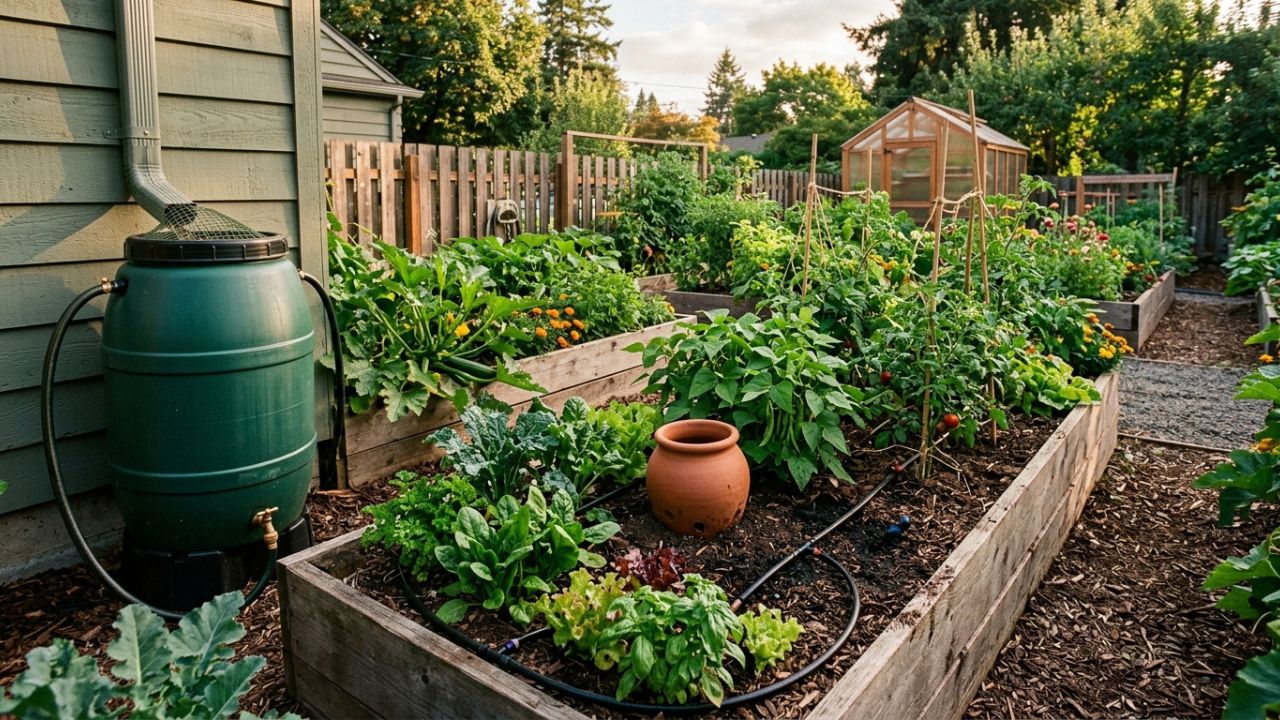
Collecting rainwater is one of the oldest water-saving practices, and modern rain barrels have made it easier than ever. A rain barrel connects to a downspout and captures runoff from the roof, storing it for later use in the garden.
This stored water is free, reduces strain on municipal supplies, and is often gentler on plants than treated tap water, since it lacks chlorine and other additives. Larger properties sometimes use interconnected barrels or underground cisterns to capture even more.
Getting Started with Rain Barrels
- Choose a barrel with a secure, mosquito-proof lid
- Install a mesh screen to filter debris
- Position it on a stable, slightly elevated base for better water flow
- Add a spigot or hose attachment for easy access
5. Soil Moisture Sensors
One of the biggest sources of wasted water is simply not knowing whether the soil actually needs it. Soil moisture sensors take the guesswork out of watering by measuring moisture levels at the root zone and signaling when it is time to water.
Some sensors are simple standalone probes that change color or display a reading, while others connect wirelessly to a smart irrigation controller so watering only happens when the soil is genuinely dry.
Why This Matters
Overwatering is just as harmful as underwatering. It wastes water, can drown plant roots, and often encourages disease. A moisture sensor helps strike the right balance automatically.
6. Self-Watering Planters and Containers
For gardeners with patios, balconies, or limited yard space, self-watering planters offer an efficient alternative to daily hand watering. These containers include a built-in reservoir at the base that slowly wicks moisture up to the plant’s roots as needed.
Because the water is stored below the soil surface, evaporation is minimized and plants can go longer between refills. This makes self-watering containers especially useful for people who travel often or simply want to reduce the time spent on daily maintenance.
Ideal For
- Herb gardens on a kitchen windowsill
- Balcony vegetable growing
- Container flowers in hot, sunny spots
7. Ollas
Ollas are an ancient irrigation method that has seen a resurgence among sustainable gardeners. An olla is an unglazed clay pot that is buried in the soil near plants and filled with water. Because the clay is porous, water slowly seeps out directly into the surrounding root zone based on how much moisture the soil actually needs.
This passive system requires no electricity, no hoses, and very little maintenance beyond refilling the pot every so often. It is particularly popular in vegetable gardens and raised beds where consistent, low-waste watering is a priority.
Advantages of Using Ollas
- No evaporation loss above the soil surface
- Reduced watering frequency
- Works well in hot, dry climates
- Simple, low-tech design with no moving parts
8. Water-Efficient Timers with Rain Sensors
Even without a full smart controller, a basic hose-end timer paired with a rain sensor can significantly cut down on wasted water. These affordable devices attach directly to an outdoor spigot and automatically shut off watering after a set period, preventing the common mistake of forgetting a hose is running.
Adding a rain sensor to the setup ensures that scheduled watering is skipped whenever there has been recent rainfall, avoiding the wasteful and sometimes damaging practice of watering an already saturated lawn.
Simple Setup Steps
- Attach the timer to the outdoor faucet
- Connect the hose or drip line to the timer
- Set a watering schedule based on plant needs
- Install the rain sensor in an open area away from structures
Comparing the 8 Products
| Product | Best For | Water Savings Potential | Maintenance Level |
|---|---|---|---|
| Drip Irrigation Kits | Vegetable gardens, flower beds | High | Low |
| Soaker Hoses | Rows, hedges, raised beds | Moderate to High | Low |
| Smart Irrigation Controllers | Existing sprinkler systems | High | Low |
| Rain Barrels | Any garden with a roof downspout | Moderate | Moderate |
| Soil Moisture Sensors | Lawns, gardens, containers | Moderate to High | Low |
| Self-Watering Planters | Patios, balconies, containers | Moderate | Low |
| Ollas | In-ground vegetable beds | High | Very Low |
| Timers with Rain Sensors | Basic hose-end watering | Moderate | Very Low |
Combining Products for Maximum Impact
None of these tools have to be used alone. In fact, many eco-conscious gardeners get the best results by combining a few of them. A rain barrel, for example, can supply the water for a drip irrigation system, creating a setup that is both self-sufficient and highly efficient. Adding a soil moisture sensor on top of a smart controller further ensures that water is only used when the plants truly need it.
Some practical combinations to consider include:
- Rain barrel plus drip irrigation for a closed-loop, low-waste system
- Soaker hose plus mulch to lock in moisture and reduce evaporation
- Smart controller plus rain sensor for fully automated, weather-aware watering
- Ollas plus raised garden beds for a passive, nearly maintenance-free vegetable patch
Final Thoughts
Reducing water waste in the garden does not require giving up a lush lawn or a productive vegetable patch. With the right tools, it is possible to water more efficiently, spend less time on daily upkeep, and feel good about the impact on local water supplies.
Whether starting small with a simple rain barrel or investing in a full smart irrigation setup, every step toward more mindful watering adds up over time. For anyone working toward a more sustainable lifestyle, the garden is often one of the easiest and most rewarding places to begin.



