Camping has always felt like a way to slow down and reconnect with nature. Yet many traditional camping trips leave behind more waste than people realize. Single-use plates, disposable water bottles, plastic-wrapped snacks, and cheaply made gear that breaks after one season all add up.
For anyone who loves the outdoors and wants to protect it at the same time, switching to lower-waste camping products is one of the simplest ways to make a real difference.
The good news is that sustainable camping does not require an entirely new set of skills or a massive budget. It mostly comes down to choosing gear that is reusable, durable, and made with the environment in mind. Below is a guide to eight lower-waste products that can help turn any camping trip into a more eco-conscious adventure.
Why Lower-Waste Camping Gear Matters
Every year, campgrounds, trails, and natural parks deal with tons of waste left behind by visitors. Some of it is accidental litter, but a large portion comes from products that were never designed to last. Plastic cutlery, foil packets, and flimsy tents often end up in landfills after just one or two uses.
Choosing lower-waste products helps in a few important ways:
- It reduces the amount of single-use plastic that ends up in nature or landfills
- It cuts down on the resources needed to manufacture replacement gear
- It often saves money over time since durable products do not need to be repurchased as often
- It sets a positive example for other campers who see reusable gear in action
- It helps preserve the natural areas that make camping enjoyable in the first place
With that in mind, here are eight products worth considering for the next camping trip.
1. Reusable Water Bottles and Filtration Systems
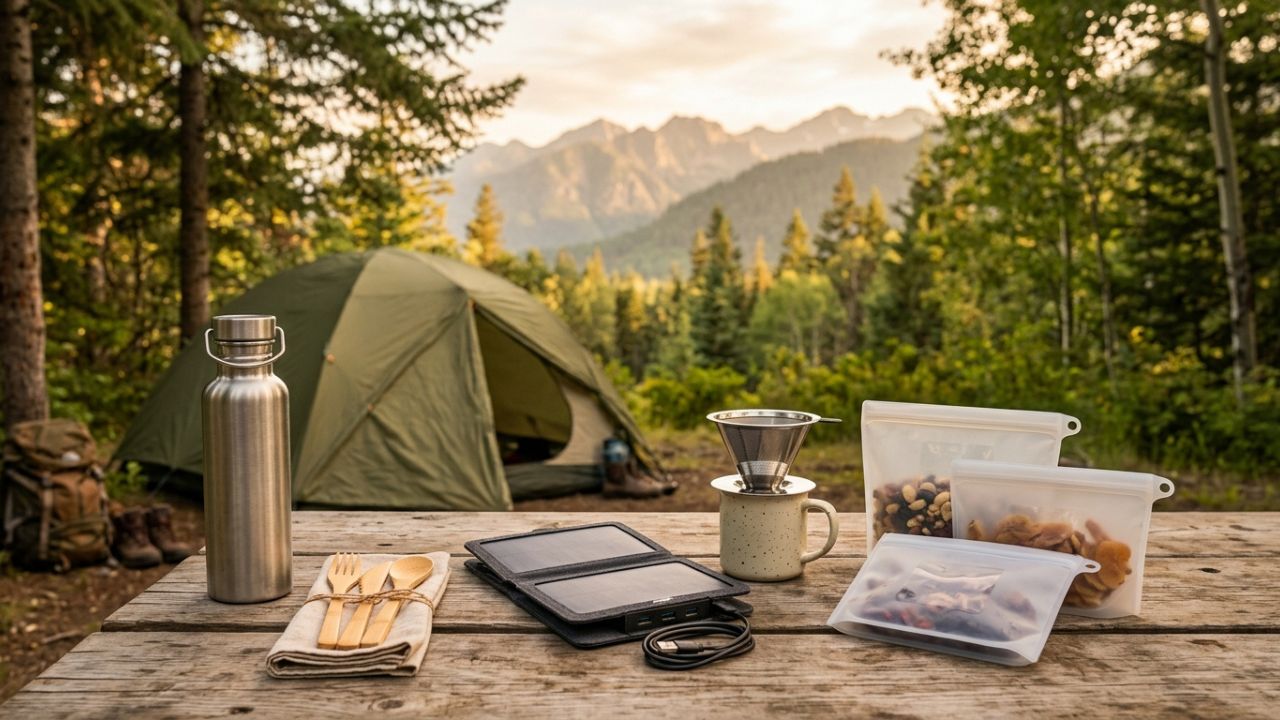
Bottled water is one of the biggest sources of waste at any campsite. A sturdy, reusable water bottle paired with a portable filtration system solves this problem completely. Instead of packing in cases of plastic bottles, campers can filter water directly from streams, lakes, or taps.
What to Look For
- A bottle made from stainless steel or BPA-free materials that can handle drops and rough handling
- A filter that removes bacteria, protozoa, and sediment
- Lightweight design since every ounce matters on the trail
This single swap can eliminate dozens of plastic bottles from a single trip, especially for multi-day excursions.
2. Bamboo or Metal Reusable Cutlery Sets
Plastic forks, knives, and spoons are lightweight and convenient, but they are also one of the most common items found littered near campsites. A compact reusable cutlery set made from bamboo or metal solves this issue without adding much weight to a pack.
Many sets fold down small enough to fit into a pocket or attach to a carabiner, making them just as convenient as their disposable counterparts. Bamboo options are biodegradable at the end of their life, while metal versions can last for decades with proper care.
3. Solar-Powered Chargers and Lanterns
Batteries are another overlooked source of waste on camping trips. Disposable batteries contain heavy metals that can leach into soil and water if not disposed of properly. Solar-powered lanterns and chargers eliminate this problem by relying on renewable energy instead.
Benefits of Solar Camping Gear
- No need to pack extra batteries
- Reduces the risk of battery leakage or corrosion
- Provides a reliable power source during multi-day trips
- Often more affordable in the long run since sunlight is free
A small solar panel can charge phones, headlamps, and portable speakers, making it a practical and eco-friendly addition to any camping kit.
4. Biodegradable Soap and Toiletries
Regular soap and shampoo often contain chemicals that are harmful to fish and plant life when they wash into natural water sources. Biodegradable soap is formulated to break down safely, minimizing the impact on the surrounding ecosystem.
When using biodegradable soap, it still helps to wash at least 200 feet away from any water source and to use a small amount. Many biodegradable options double as an all-purpose cleaner for dishes, hands, and even light laundry, which means fewer bottles to pack overall.
5. Reusable Food Storage Bags and Containers
Plastic sandwich bags and cling wrap are common camping staples, but they are also entirely single-use. Reusable silicone food storage bags or stainless steel containers offer the same convenience without the waste.
These containers are especially useful for:
- Storing pre-cut fruits and vegetables
- Packing sandwiches or trail mix
- Holding leftovers after a meal
- Keeping food secure from insects and moisture
Many reusable bags are dishwasher safe and can be used for years, which makes them a smart long-term investment for anyone who camps regularly.
6. Durable, Repairable Tents
A tent is one of the biggest purchases for any camper, and it is also one of the easiest ways to reduce waste when chosen carefully. Instead of opting for the cheapest available tent, which may only survive a few trips before ripping or losing waterproofing, investing in a well-made, repairable tent pays off both financially and environmentally.
Signs of a Durable Tent
- Reinforced seams and stitching
- A rainfly made from thicker, weather-resistant fabric
- Replaceable poles and parts
- A brand or manufacturer known for offering repair kits or replacement parts
A tent that lasts ten years instead of two prevents multiple tents from ending up in a landfill.
7. Reusable Coffee Filters and Brewing Gear
For many campers, morning coffee is non-negotiable. Unfortunately, paper filters and single-use coffee pods create a surprising amount of waste over time. A reusable metal or cloth coffee filter solves this problem while still delivering a strong cup of coffee at the campsite.
Pour-over style reusable filters are lightweight, easy to clean with just water, and can be used thousands of times before needing replacement. This small swap adds up significantly for anyone who camps often or enjoys multiple cups a day.
8. Eco-Friendly Fire Starters
Traditional fire starters often rely on chemical-based fluids or plastic-wrapped materials. Eco-friendly alternatives, such as those made from natural wax, wood shavings, or recycled cardboard, offer a safer and less wasteful way to start a campfire.
These fire starters typically burn cleanly, produce less soot, and avoid introducing harmful chemicals into the surrounding soil. Many can even be made at home using leftover materials, adding another layer of sustainability to the camping experience.
Comparing the Eight Products at a Glance
| Product | Main Waste Reduced | Reusable Lifespan |
|---|---|---|
| Reusable water bottle and filter | Plastic water bottles | Several years |
| Bamboo or metal cutlery | Disposable plastic utensils | Many years |
| Solar-powered chargers and lanterns | Disposable batteries | Several years |
| Biodegradable soap | Chemical runoff and plastic bottles | Single use per bottle, but eco-safe |
| Reusable food storage bags | Plastic bags and wrap | Multiple years |
| Durable, repairable tents | Discarded damaged tents | Up to a decade or more |
| Reusable coffee filters | Paper filters and pods | Thousands of uses |
| Eco-friendly fire starters | Chemical fluids and plastic wrap | Single use, but low impact |
Tips for Building a Lower-Waste Camping Kit Over Time
Switching every piece of gear at once can feel overwhelming, both for a budget and for a packing list. A more sustainable approach is to make gradual changes.
- Start with the items used most often, such as water bottles or cutlery
- Replace gear as it wears out rather than discarding still-usable items
- Look for secondhand or refurbished gear before buying new
- Store gear properly to extend its lifespan
- Pack a small trash bag to carry out any waste, including items left behind by others
Over time, these small adjustments create a camping kit that is both reliable and far gentler on the environment.
Final Thoughts
Sustainable camping does not mean giving up comfort or convenience. It simply means being more intentional about the products packed into a backpack or car trunk. From reusable water bottles to solar-powered lanterns, each of these eight products offers a practical way to reduce waste while still enjoying everything the outdoors has to offer.
Every small swap adds up, and campers who choose durable, reusable gear help protect the very landscapes they love to explore. The next time a camping trip is on the calendar, consider starting with just one or two of these products. Over time, a fully lower-waste camping kit can become second nature, making every trip a little kinder to the planet.