
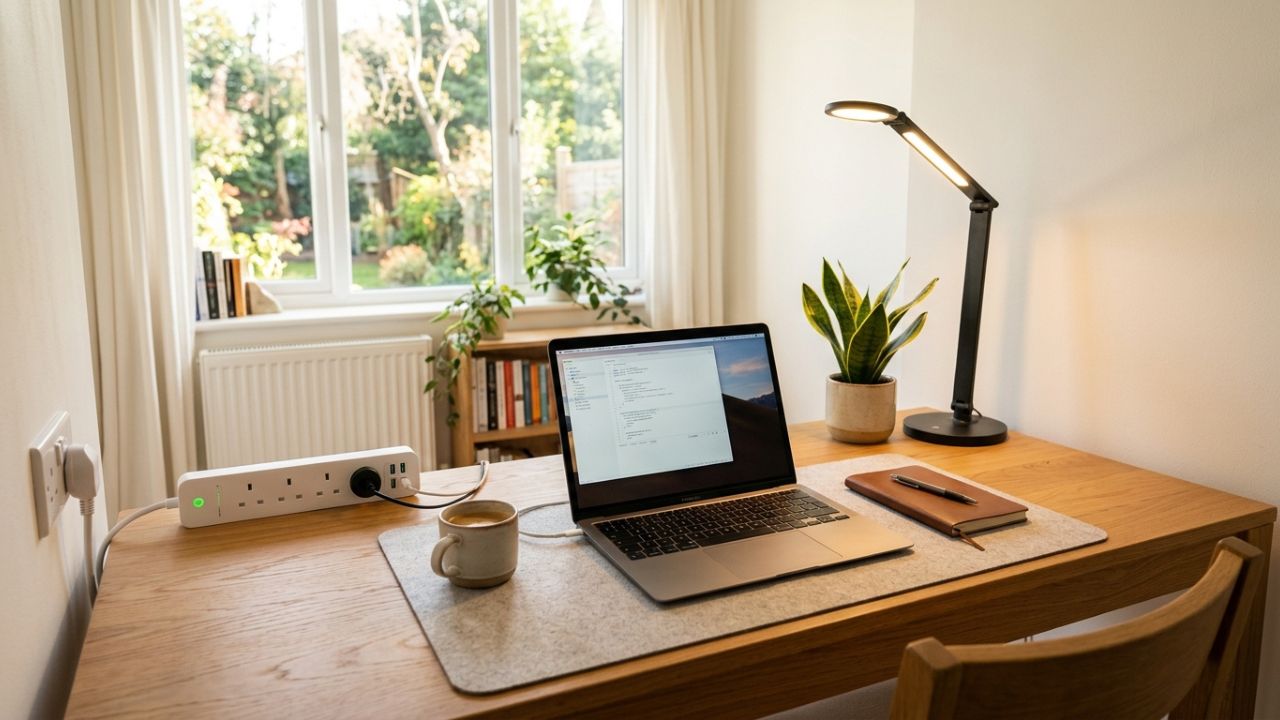
Working from home has become a permanent part of life for millions of people, and with that shift comes a new kind of responsibility: managing the energy footprint of a space that used to belong only to an office building’s utility bill.
A home office that runs on outdated equipment or inefficient habits can quietly add up in both electricity costs and environmental impact. The good news is that small, thoughtful upgrades can make a noticeable difference without requiring a full renovation or a large budget.
For anyone who cares about living a more sustainable lifestyle, the home office is often an overlooked place to start. It is a space used for hours every day, filled with electronics that draw power constantly, and easy to improve with a few smart swaps.
Below is a look at eight products that can help transform a home office into a more energy-efficient, eco-friendly workspace.
Why Energy Efficiency in the Home Office Matters
Before diving into the product list, it helps to understand why this space deserves attention in the first place. A home office typically runs a computer, monitor, printer, lighting, and sometimes a space heater or fan for hours at a time, five or more days a week. Multiply that by weeks and months, and the energy use starts to resemble that of a small business operation.
Beyond the environmental angle, energy-efficient upgrades also tend to save money over time. Devices that use less electricity mean lower utility bills, and many efficient products are built to last longer, reducing the need for frequent replacements. This combination of environmental and financial benefit is part of why sustainable living advocates often start their eco-friendly journey right at their desk.
1. LED Desk Lamps
Lighting is one of the easiest places to cut energy use, and LED desk lamps are a simple upgrade with a big payoff. Traditional incandescent bulbs waste a large portion of their energy as heat, while LED lamps convert most of their energy directly into light.
- LED lamps use significantly less electricity than incandescent or halogen lamps
- They last far longer, often tens of thousands of hours, which reduces waste from frequent bulb replacements
- Many models include adjustable brightness and color temperature, allowing better control over energy use throughout the day
Choosing a lamp with a built-in dimmer or motion sensor adds another layer of efficiency, since it prevents the light from staying on when it is not needed.
2. Smart Power Strips
Even when electronics are turned off, many still draw a small amount of power as long as they remain plugged in. This phenomenon, sometimes called phantom load or vampire power, can account for a surprising percentage of a household’s total electricity use.
Smart power strips solve this problem by automatically cutting power to devices that are not in active use. Some models detect when a computer goes into sleep mode and then shut off power to connected peripherals like monitors, printers, and speakers.
How Smart Power Strips Help
- They eliminate standby power draw from idle electronics
- They allow scheduling, so devices only receive power during working hours
- They reduce the risk of overheating or electrical strain from too many devices plugged into one outlet
3. Energy-Efficient Monitors
Monitors are on for most of the workday, making them one of the biggest ongoing energy users in a home office. Choosing an energy-efficient monitor, particularly one certified for low power consumption, can meaningfully reduce daily electricity use.
Look for monitors that use LED backlighting rather than older fluorescent technology, and consider screen size carefully. Larger screens generally consume more power, so choosing a size that fits actual work needs rather than the largest available option supports a more sustainable setup.
4. Laptop Instead of Desktop Computer
For those setting up a new home office or replacing old equipment, choosing a laptop over a traditional desktop computer can make a real difference in energy consumption. Laptops are designed to run efficiently on battery power, which means they generally use far less electricity than desktop towers paired with separate monitors.
- Laptops typically consume a fraction of the electricity used by desktop computers
- Built-in battery management encourages efficient power use throughout the day
- A laptop can be paired with an external monitor for a full-size display while still enjoying lower power draw when portability is not needed
This is not to say every desktop user needs to switch immediately, but it is a worthwhile consideration for anyone upgrading their setup.
5. Programmable Thermostat or Smart Plug for Space Heaters
Home offices are often the coldest or warmest room in the house, especially if they are located in a converted garage, basement, or spare bedroom without dedicated climate control. Many people rely on a space heater or small fan to stay comfortable, and these devices can use a surprising amount of energy if left running unnecessarily.
A programmable thermostat or a smart plug connected to a heater or fan allows the temperature to be managed automatically. It can be set to warm up the room right before the workday begins and power down once work is finished, avoiding wasted energy from heating an empty room overnight or during breaks.
6. Solar-Powered or Rechargeable Desk Accessories
Small desk accessories add up when it comes to convenience, and many now come in solar-powered or rechargeable versions that reduce reliance on disposable batteries. Items like solar-powered calculators, rechargeable desk fans, and USB-rechargeable task lights are widely available and easy to incorporate into any workspace.
- Rechargeable devices reduce the number of single-use batteries thrown away each year
- Solar-powered accessories draw no electricity from the grid at all
- These small swaps help build sustainable habits that extend beyond the desk
7. Energy Star Certified Printers
Printers are often used only occasionally, but when they are on, they can still draw meaningful power, especially older models that stay in a constant standby state. Choosing a printer with an official energy efficiency certification ensures it meets strict standards for low power use both during operation and while idle.
Additional habits pair well with an efficient printer:
- Setting the printer to automatically power down after a period of inactivity
- Printing in draft mode when high quality is not necessary
- Choosing double-sided printing to reduce paper use alongside energy use
8. Reusable and Energy-Efficient Charging Stations
Many home offices have become charging hubs for laptops, phones, tablets, and wireless accessories. A dedicated, energy-efficient charging station can consolidate this need into one place, often with built-in timers or auto-shutoff features that prevent devices from drawing power once they are fully charged.
Look for charging stations that support fast, efficient charging without excess heat generation, since wasted heat is generally a sign of wasted energy. Consolidating charging into one smart station also reduces clutter, which is a nice bonus for anyone trying to create a calmer, more intentional workspace.
Comparing the Products at a Glance
| Product | Main Benefit | Best For |
|---|---|---|
| LED Desk Lamp | Lower lighting energy use | Anyone working long hours at a desk |
| Smart Power Strip | Eliminates phantom power draw | Multi-device workstations |
| Energy-Efficient Monitor | Reduces screen power consumption | Long screen-time work |
| Laptop over Desktop | Lower overall power draw | New or upgraded setups |
| Smart Plug for Heater/Fan | Prevents unnecessary heating or cooling | Rooms without central climate control |
| Solar or Rechargeable Accessories | Reduces battery waste | Small everyday desk items |
| Energy Star Printer | Efficient standby and active use | Occasional or daily printing needs |
| Efficient Charging Station | Prevents overcharging waste | Multiple daily-use devices |
Building Sustainable Habits Around These Products
Buying energy-efficient products is a strong first step, but pairing them with mindful habits amplifies the benefit. Turning off equipment at the end of the day, relying on natural light when possible, and unplugging devices that are not regularly used all support the goals these products are designed to help with.
Simple Daily Habits to Pair with an Efficient Setup
- Opening blinds or curtains during the day to reduce reliance on artificial lighting
- Fully shutting down computers overnight rather than leaving them in sleep mode
- Setting devices to enter power-saving mode after short periods of inactivity
- Doing a monthly check of cords and chargers to unplug anything unused
Long-Term Benefits of an Efficient Home Office
An energy-efficient home office is not just a short-term project. Over months and years, it can lead to lower utility bills, less electronic waste from replacing worn-out devices, and a smaller overall environmental footprint. For those who care about sustainable living, these changes also reinforce a broader mindset of intentional consumption, where every purchase and habit is considered with its long-term impact in mind.
Final Thoughts
Creating a more energy-efficient home office does not require an expensive overhaul. Thoughtful choices, from LED lighting to smart power strips to Energy Star certified equipment, can add up to meaningful savings in both electricity use and environmental impact.
Combined with simple daily habits, these eight products offer a practical starting point for anyone looking to bring sustainability into the space where they spend so much of their working life. Small changes made consistently, over time, build the kind of lasting impact that a truly eco-friendly lifestyle is built on.



