Anyone trying to live a greener life eventually looks at their makeup bag and realizes it is full of throwaway habits. Cotton pads used once and tossed. Makeup wipes that pile up in landfills. Plastic applicators that snap after a few uses.
The good news is that switching to reusable beauty accessories is one of the easiest sustainability upgrades a person can make, and it does not require giving up a beauty routine at all. It simply means choosing tools that can be washed, reused, and kept around for months or years instead of days.
This article walks through eight reusable makeup and beauty accessories that are practical for everyday use, along with why they matter, how to care for them, and what to look for when shopping for them.
Why Switching to Reusable Beauty Accessories Matters
Before getting into the list, it helps to understand why this swap is worth the effort. Disposable beauty products seem small on their own, but they add up fast.
- A person who uses five cotton pads a day goes through more than 1,800 pads a year.
- Makeup wipes are often made with synthetic fibers that do not break down easily, so they can sit in landfills for decades.
- Many disposable applicators, sponges, and pads are individually wrapped in plastic, adding packaging waste on top of the product waste.
- Reusable tools reduce the number of times a person needs to restock, which saves money over time and cuts down on shopping trips and shipping packaging.
Beyond the environmental impact, reusable accessories tend to perform better. Washable brushes hold their shape longer, reusable pads are often softer on skin, and silicone tools do not absorb bacteria the way disposable sponges can if not replaced often enough.
1. Reusable Cotton Rounds
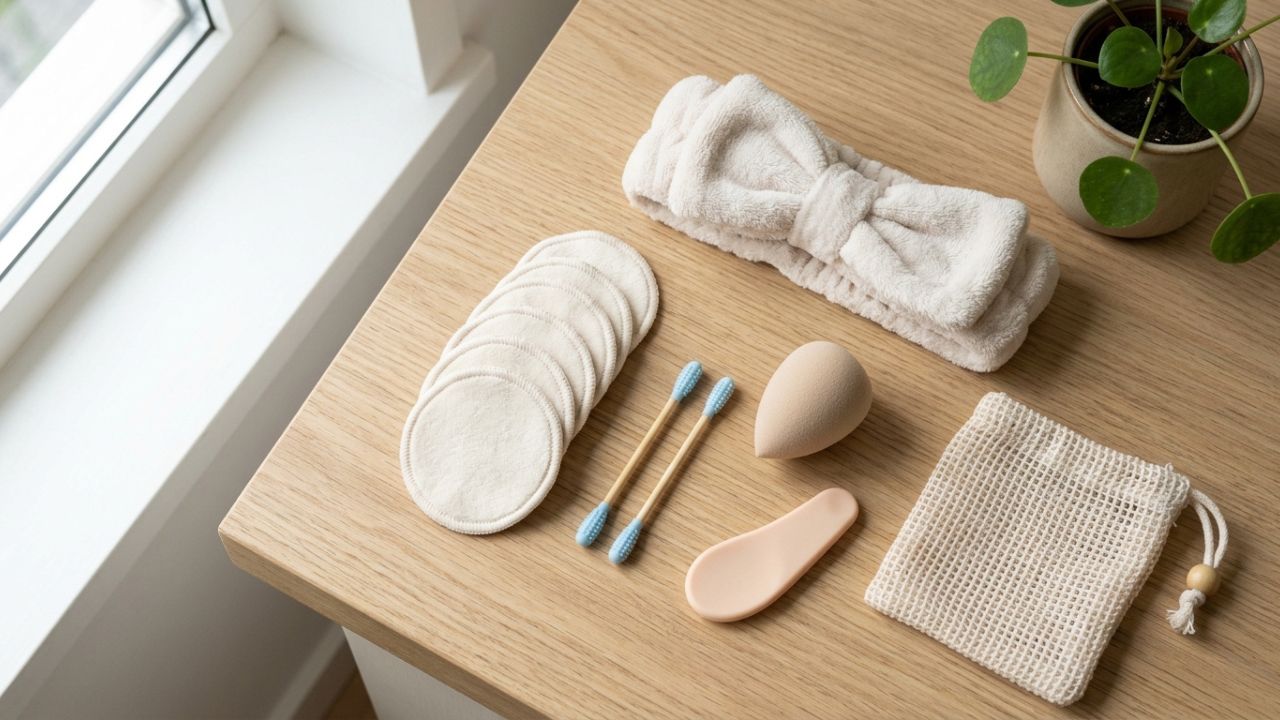
Reusable cotton rounds are one of the simplest swaps a person can make. They are typically made from layers of soft cotton, bamboo fleece, or a cotton and bamboo blend, and they work just like disposable cotton pads for removing makeup, applying toner, or cleaning up small mistakes.
How to use them:
- Dampen with water, micellar water, or toner just like a regular cotton pad.
- Use one side for cleansing and the other for a light polish if the pad has a textured side.
- Toss into a mesh laundry bag after use so they do not get lost in the wash.
Most reusable cotton rounds can be machine washed and reused hundreds of times, and many sets come with a small drawstring bag for washing and storage.
2. Silicone Makeup Applicators
Silicone applicators have become a favorite alternative to the disposable makeup sponge. Unlike sponges, silicone does not absorb product, which means less foundation or primer is wasted, and it does not harbor bacteria the way a porous sponge can.
Silicone applicators work well for:
- Applying liquid foundation smoothly
- Blending cream blush or contour
- Applying sunscreen without wasting product
Because silicone does not absorb liquid, a person often uses less product overall, which stretches the life of their makeup and reduces the number of bottles or tubes purchased each year.
Caring for Silicone Applicators
Cleaning is simple. A quick rinse with soap and warm water after each use is usually enough, and the applicator dries in minutes since it does not hold moisture the way a sponge does.
3. Washable Makeup Sponges
For people who still prefer the classic sponge texture for blending foundation and concealer, washable makeup sponges are a great middle ground. These are made from the same soft, latex-free material as popular disposable beauty sponges, but they are designed to be cleaned and reused for months.
- Wet the sponge before use to expand it and improve blending.
- Wash with a gentle soap or a dedicated sponge cleanser after each use.
- Let it air dry fully before storing to prevent mildew.
Replacing a disposable sponge every few days with a washable one that lasts several months significantly cuts down on both cost and waste.
4. Reusable Eye Makeup Remover Pads
Removing eye makeup often takes a gentler touch, which is why many brands now make smaller, softer reusable pads specifically for the eye area. These are usually made from bamboo velour or soft cotton and are gentle enough for sensitive skin around the eyes.
These pads work well paired with a gentle oil or micellar water and are especially helpful for people who wear eye makeup daily, since they hold up better than flimsy disposable pads that tend to shred when removing waterproof mascara.
5. Silicone or Bamboo Facial Cleansing Pads
Facial cleansing pads, sometimes called reusable face wipes, are a swap for single use makeup remover wipes. They typically come in a set of several rounds made from bamboo, cotton, or a soft microfiber blend, often paired with a small mesh bag for washing.
Benefits of switching from disposable wipes to reusable pads:
- Removes the need for wipes that contain plastic fibers
- Cuts down on packaging waste from wipe packs
- Tends to be gentler on skin since many wipes contain alcohol or fragrance
- Saves money since a set of reusable pads can replace dozens of wipe packs over a year
6. Reusable Silicone Brush Cleaning Mats
Keeping makeup brushes clean is important for skin health, and a reusable silicone cleaning mat makes the process easier while cutting down on the need for disposable cleaning tools. These textured mats attach to the palm or sit in the sink and have ridges, bristles, or grooves designed to work shampoo or cleanser deep into brush bristles.
A person simply wets their brush, swirls it across the textured surface with a bit of soap, and rinses. The mat itself can be reused indefinitely and just needs an occasional wipe down.
7. Washable Headbands and Hair Clips for Skincare Routines
Anyone who does a skincare or makeup routine knows how useful a headband is for keeping hair out of the face. Reusable spa headbands, made from terry cloth, fleece, or stretchy fabric, replace the disposable shower caps and paper headbands sometimes used in salons and spas.
- Machine washable and quick drying
- Adjustable for different head sizes
- Useful for skincare, makeup application, and face washing
They are a small accessory, but for people who do a nightly skincare routine, a washable headband gets used constantly and prevents the need for anything disposable in that step.
8. Reusable Cotton Buds (Swabs)
Cotton swabs are one of the most common single use plastic items found in bathrooms, and most are used for just a few seconds before being thrown away. Reusable cotton buds, often made with a silicone or rubber tip on a plastic or bamboo stick, solve this problem.
These reusable swabs can be washed with soap and water after each use and are sturdy enough to last a long time. They work well for:
- Cleaning up small makeup mistakes
- Precise concealer application
- General grooming tasks
Comparing Disposable vs Reusable Beauty Accessories
| Accessory | Disposable Version | Reusable Alternative | Estimated Lifespan of Reusable Version |
|---|---|---|---|
| Cotton pads | Single use cotton rounds | Washable cotton or bamboo rounds | 6 months to 2 years |
| Makeup remover wipes | Pre-moistened wipes | Reusable facial cleansing pads | 1 to 2 years |
| Makeup sponge | Disposable beauty sponge | Washable makeup sponge | 3 to 6 months |
| Foundation applicator | Disposable sponge or wand | Silicone applicator | 2 to 5 years |
| Cotton swabs | Single use plastic swabs | Reusable silicone tip swabs | 1 to 3 years |
| Eye makeup remover | Disposable eye pads | Reusable bamboo eye pads | 1 to 2 years |
| Spa headband | Paper or disposable shower cap | Washable terry headband | 2 to 5 years |
| Brush cleaner | Paper towel or disposable mat | Silicone cleaning mat | Several years |
Tips for Making the Switch Successfully
Switching an entire beauty routine over to reusable accessories does not need to happen overnight. A gradual approach tends to work best.
- Start with one category, such as cotton rounds, before replacing everything at once.
- Keep a small mesh laundry bag near the bathroom sink so used pads and swabs go straight into the wash pile instead of getting lost.
- Look for accessories made from natural or biodegradable materials like bamboo, organic cotton, or hemp when possible.
- Choose silicone tools that are labeled food grade or medical grade, since these tend to be more durable and free of unwanted additives.
- Replace worn out reusable items when they start to fray, lose shape, or develop odors that do not wash out, since even reusable products eventually need retiring.
Storing Reusable Accessories
A clean, dry storage spot extends the life of these tools. A small jar or drawer organizer near the sink works well for applicators and swabs, while a hanging mesh bag is ideal for pads that need frequent washing. Keeping wet and dry items separated helps prevent mildew and keeps the bathroom counter tidy.
The Bigger Picture
Small swaps like these are not going to single handedly solve the plastic waste problem, but they matter more than they might seem. A single reusable cotton round can replace hundreds of disposable ones over its lifetime, and when that same swap is made across an entire beauty routine, the reduction in waste becomes significant. It also tends to save money in the long run, since reusable tools are a one time purchase rather than a recurring one.
For anyone looking to build a more sustainable lifestyle, the bathroom counter is often one of the easiest places to start. These eight accessories offer a practical, low effort way to cut down on daily waste without sacrificing an effective beauty routine.
Frequently Asked Questions
How often should reusable makeup accessories be washed? Most reusable pads, sponges, and applicators should be washed after every single use to prevent bacteria buildup, especially for anything used near the eyes or on the face.
Are reusable beauty accessories more expensive upfront? Yes, they typically cost more per item than a pack of disposable versions, but since one reusable item replaces dozens or hundreds of disposables, the cost evens out and often becomes cheaper over time.
Can reusable cotton pads be used with any skincare product? Most reusable cotton pads work well with toners, micellar water, and gentle cleansers. Stronger exfoliating acids are sometimes better used with disposable pads that can be thrown away immediately.