Travel has a way of exposing just how much single use plastic sneaks into everyday life. Plastic water bottles at the airport, disposable cutlery on flights, tiny shampoo bottles in hotel bathrooms, and plastic bags at every turn all add up quickly.
For anyone trying to live a more sustainable and eco-friendly lifestyle, packing smart is one of the easiest ways to cut down on waste while still enjoying every trip.
The good news is that reducing travel waste does not require a complete lifestyle overhaul. It simply means swapping a handful of disposable items for reusable alternatives that can be packed again and again. These small changes add up over time, both for the traveler’s wallet and for the planet.
This article walks through eight practical reusable travel products that make it easier to reduce waste on the road, along with tips on how to use them effectively.
Why Reusable Travel Products Matter
Tourism and travel generate an enormous amount of waste every year. Airports, hotels, and tourist destinations often rely on convenience items that are used once and thrown away. Much of this waste ends up in landfills or oceans, especially in regions without strong recycling infrastructure.
Choosing reusable products while traveling helps in a few important ways.
- It reduces the amount of single use plastic that ends up in landfills or waterways
- It saves money over time since travelers are not constantly buying bottled water or disposable snacks
- It encourages more mindful consumption habits that carry over into daily life at home
- It supports destinations that are trying to manage tourism related waste responsibly
Packing a few reusable essentials does not take up much space in a suitcase or backpack, but the impact can be significant, especially when multiplied across millions of travelers each year.
1. Reusable Water Bottle
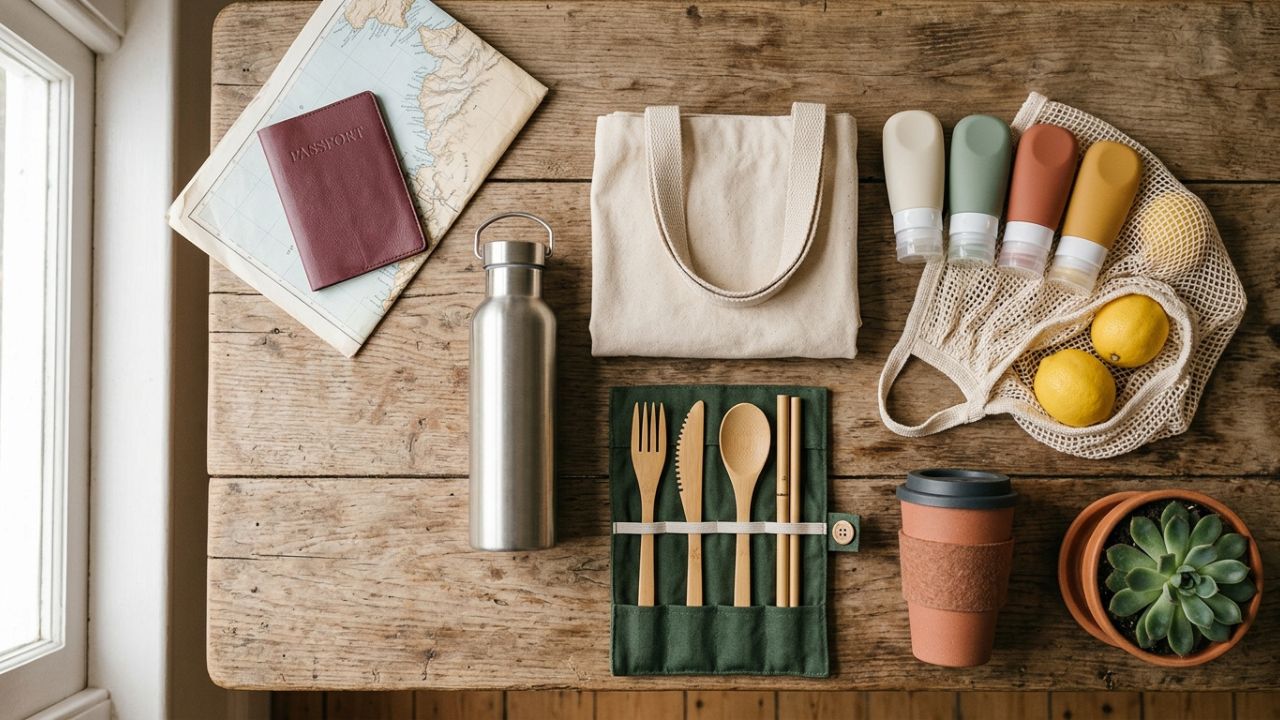
A reusable water bottle is often the first item people think of when it comes to sustainable travel, and for good reason. Bottled water is one of the most common sources of plastic waste at airports, train stations, and tourist attractions.
Many airports now offer refill stations, and a growing number of countries have safe tap water, making it easy to fill up a bottle instead of buying a new plastic one every few hours. For travelers heading to destinations with questionable water quality, a bottle with a built in filter can be a smart choice.
What to Look For
- Insulated stainless steel bottles for keeping drinks cold or hot for longer
- Collapsible silicone bottles for saving space in a packed bag
- Bottles with built in filters for destinations where tap water is not safe to drink
2. Reusable Coffee Cup or Travel Mug
Coffee shops around the world often use disposable cups lined with plastic, which are difficult to recycle. A reusable coffee cup or travel mug allows travelers to enjoy their morning coffee or tea without contributing to this waste stream.
Some cafes even offer small discounts to customers who bring their own cup, which is an added bonus for budget conscious travelers. A collapsible silicone cup is a great option for those trying to save luggage space.
3. Reusable Utensil Set
Airplane meals, street food stalls, and quick snacks on the go often come with plastic forks, spoons, and straws. A compact reusable utensil set solves this problem without adding much weight to a bag.
Most travel utensil sets come with a fork, knife, spoon, and sometimes chopsticks or a straw, all packed neatly into a small pouch or case. Bamboo and stainless steel are two popular materials because they are lightweight and durable.
Handy Features to Consider
- A carrying case that also works as a placemat
- A cleaning brush included for on the go washing
- A reusable straw with a small brush for easy cleaning
4. Reusable Shopping Bag or Tote
Whether it is grocery shopping at a local market, picking up souvenirs, or carrying snacks for a long journey, a reusable shopping bag is one of the most versatile items a traveler can pack. Many countries have banned or taxed single use plastic bags, so having a reusable option on hand avoids awkward situations at checkout counters.
Foldable totes made from ripstop nylon or canvas are ideal because they pack down small and can handle a surprising amount of weight.
5. Reusable Toiletry Bottles
Hotel toiletries usually come in tiny single use plastic bottles that get thrown away after one or two uses, even if they are not empty. Instead of relying on these, travelers can bring their own shampoo, conditioner, and body wash in refillable silicone or aluminum travel bottles.
This swap also gives travelers more control over the products they use, which is helpful for anyone with sensitive skin or a preference for natural ingredients.
Tips for Packing Toiletry Bottles
- Choose leak proof bottles with secure caps
- Label each bottle clearly to avoid mixing up products
- Look for bottles that meet airline carry on liquid size requirements
6. Reusable Snack Bags or Containers
Snacking during travel often means a pile of plastic wrappers and sandwich bags by the end of the trip. Reusable snack bags made from silicone or food safe fabric can replace disposable plastic bags for storing fruit, nuts, sandwiches, and other snacks.
These bags are easy to wipe clean or wash, and many are designed to lay flat for easy packing when empty. Stackable containers are another good option for travelers who prefer a more structured way to organize snacks and small meals.
7. Reusable Produce and Laundry Bags
For longer trips, especially those involving hostels, vacation rentals, or extended stays, a set of reusable mesh bags can be surprisingly useful. These bags work well for holding produce at local markets, storing dirty laundry, or organizing small items inside a suitcase.
Mesh bags are lightweight, breathable, and take up almost no space when empty, making them an easy addition to any packing list.
8. Reusable Face Masks and Cloths
Many travelers pack disposable wipes or single use cleansing cloths for skincare routines or quick cleanups. Reusable makeup remover pads, washcloths, and cleansing cloths make it possible to maintain the same routine without the waste.
These items can be tossed into a laundry bag and washed at a hotel or hostel, then reused for the rest of the trip.
Quick Comparison of Reusable Travel Products
| Product | Best For | Material Options |
|---|---|---|
| Reusable water bottle | Staying hydrated without buying bottled water | Stainless steel, silicone |
| Travel coffee cup | Coffee or tea from cafes | Silicone, glass, stainless steel |
| Utensil set | Airplane meals, street food | Bamboo, stainless steel |
| Shopping tote | Groceries, souvenirs, markets | Ripstop nylon, canvas |
| Toiletry bottles | Shampoo, conditioner, body wash | Silicone, aluminum |
| Snack bags or containers | Fruit, sandwiches, snacks | Silicone, food safe fabric |
| Produce and laundry bags | Markets, laundry storage | Mesh fabric |
| Reusable cleansing cloths | Skincare, makeup removal | Cotton, microfiber |
Tips for Making Reusable Products Part of a Travel Routine
Bringing reusable products on a trip is only half the equation. Actually using them consistently is what makes the biggest difference. A few small habits can help these items become second nature rather than an afterthought.
- Pack reusable items in an easy to reach part of the bag, such as a front pocket or a designated pouch
- Set a habit of refilling the water bottle first thing in the morning before heading out
- Keep a small drawstring bag specifically for dirty reusable items so they do not mix with clean belongings
- Research the destination ahead of time to know whether tap water is safe to drink or where refill stations are located
- Wash reusable items whenever possible, even with just soap and water in a hotel sink
The Bigger Picture
Switching to reusable travel products is a simple but meaningful step toward a more sustainable lifestyle. While one traveler using a reusable water bottle will not solve the global plastic waste problem on its own, these habits tend to spread. Friends notice, family members ask questions, and small choices become part of a larger shift toward more mindful consumption.
Travel already offers a chance to see the world with fresh eyes. Bringing along a set of reusable essentials is a small way to make sure that experience leaves a lighter footprint behind, without sacrificing comfort or convenience along the way.
Final Thoughts
Reducing waste while traveling does not require perfection. Even swapping out one or two disposable habits, like carrying a reusable water bottle or a set of utensils, can make a noticeable difference over the course of a trip. As more travelers adopt these habits, airports, hotels, and destinations are likely to keep expanding the infrastructure that makes sustainable travel easier for everyone.
Packing a few reusable items is a small effort with a lasting impact, making it one of the simplest ways to travel more responsibly while still enjoying every part of the journey.