Plastic bags have a way of piling up. They collect under kitchen sinks, get stuffed into drawers, and eventually end up in landfills or waterways where they take centuries to break down.
More people are rethinking the bags they carry every day, whether that means grabbing groceries, heading to the office, or running errands around town. Switching to eco-conscious bags is one of the simplest ways to reduce single-use waste without changing much else about daily routines.
More people are rethinking the bags they carry every day, whether that means grabbing groceries, heading to the office, or running errands around town.
Switching to eco-conscious bags is one of the simplest ways to reduce single-use waste without changing much else about daily routines.
This article walks through nine types of sustainable bags that suit different needs, from weekly shopping trips to daily commutes. It also covers what makes a bag genuinely eco-friendly, how to care for these bags so they last, and a few tips for building a small collection that actually gets used.
Why Switching to Eco-Conscious Bags Matters
Single-use plastic bags are convenient in the moment, but their impact lingers long after they are thrown away. Many end up in oceans, rivers, and soil, where they slowly break into microplastics that affect wildlife and ecosystems. Producing them also relies on fossil fuels, adding to carbon emissions before the bag is even used once.
Reusable bags reduce this cycle. A single well-made tote can replace hundreds of plastic bags over its lifetime. Beyond the environmental angle, sustainable bags tend to be sturdier, better looking, and more practical for carrying heavier loads without the handles snapping.
Choosing the right bag depends on how it will be used. A bag for a farmers market trip looks different from one meant for a laptop and files. Below are nine options worth considering, along with what makes each one a smart, eco-friendly pick.
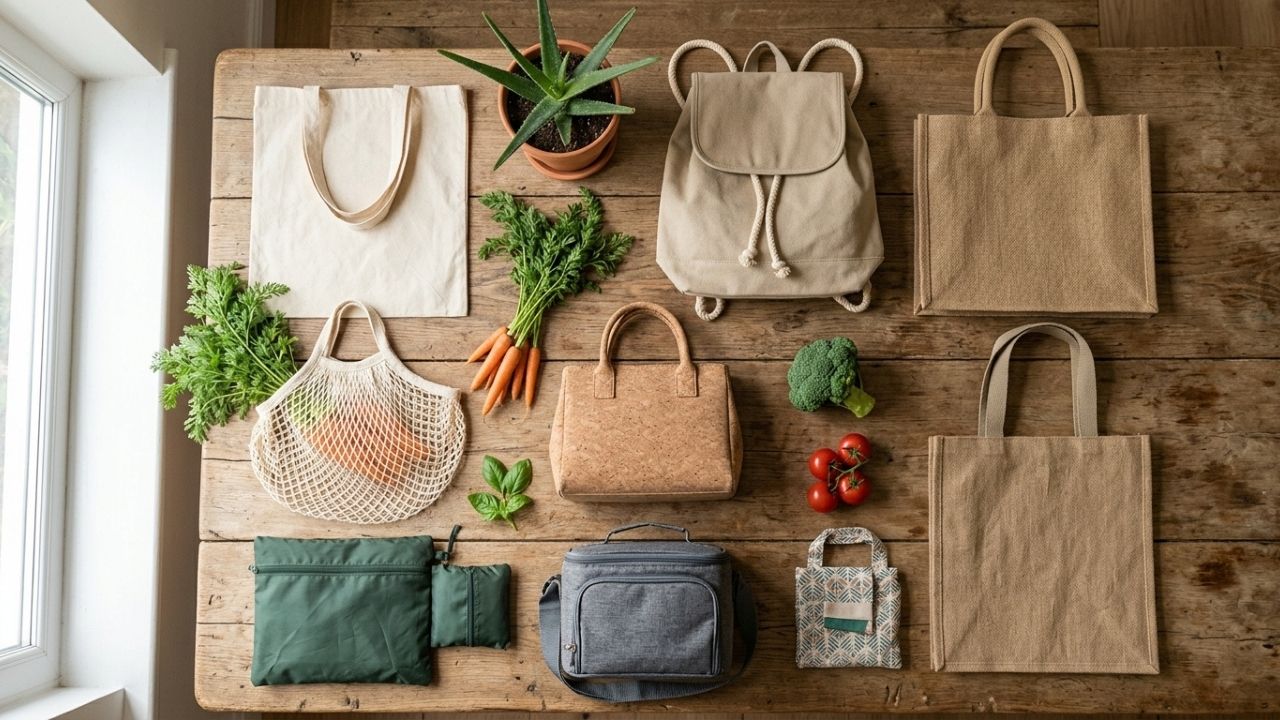
1. Organic Cotton Tote Bags
Organic cotton totes are a staple for anyone easing into a more sustainable lifestyle. Unlike conventional cotton, organic cotton is grown without synthetic pesticides or fertilizers, which means less strain on soil and water systems.
These totes are lightweight, foldable, and easy to toss into a purse or backpack for spontaneous errands. Many come with reinforced handles and flat bottoms, making them sturdy enough for books, produce, or a change of clothes.
Best for: everyday errands, light grocery runs, gifting
Care Tips
- Wash in cold water to preserve the fabric and any printed designs
- Air dry instead of using a machine dryer to avoid shrinkage
- Store flat or rolled to prevent creasing over time
2. Recycled Polyester Backpacks
For daily commutes, a backpack made from recycled polyester offers durability without contributing to new plastic production. These backpacks are often made from recycled water bottles or fabric scraps, giving existing plastic a second life instead of letting it sit in a landfill.
Recycled polyester backpacks are typically water-resistant, which makes them a practical choice for commuting in unpredictable weather. Many designs include padded laptop compartments, making them suitable for work or school.
Best for: commuting, work, school, travel
3. Jute Shopping Bags
Jute is a natural fiber that grows quickly and requires minimal water and pesticides compared to other crops. Bags made from jute have a rustic, textured look and are known for their strength, making them ideal for carrying heavier shopping items like canned goods or bottled drinks.
Jute biodegrades naturally at the end of its life, which sets it apart from synthetic materials. It is also a renewable resource, since jute plants regrow relatively fast after harvest.
Best for: heavy grocery loads, market shopping
4. Canvas Work Totes
Canvas totes strike a balance between durability and a polished look, making them a solid pick for the office or client meetings. Made from tightly woven cotton or a cotton blend, canvas holds its shape well and can handle daily wear without fraying.
Many canvas totes now come with interior pockets for phones, pens, and small notebooks, plus a zippered top to keep contents secure. Choosing one made from organic or recycled canvas adds an extra layer of sustainability.
Best for: work, meetings, carrying documents and laptops
5. Mesh Produce Bags
Mesh bags are a small but meaningful addition to a sustainable shopping routine. Instead of using thin plastic bags for fruits and vegetables at the grocery store, reusable mesh bags let shoppers see and weigh produce while skipping the plastic altogether.
These bags are usually made from cotton or recycled polyester mesh, and they are lightweight enough to fit inside a larger tote. Some grocery stores now allow shoppers to have produce weighed directly in these bags at checkout.
Best for: fruits, vegetables, bulk bin items
6. Cork Handbags
Cork is an unusual but genuinely sustainable material for bags. It comes from the bark of cork oak trees, which regenerate their bark after harvesting, meaning the tree is not cut down in the process. This makes cork a renewable material that supports the health of cork forests when responsibly sourced.
Cork handbags have a distinct, natural texture and are naturally water-resistant, scratch-resistant, and lightweight. They work well as an alternative to leather for those looking to avoid animal products.
Best for: everyday handbag use, casual outings
Why Cork Stands Out
- Naturally water-resistant without added chemical coatings
- Lightweight compared to leather or synthetic alternatives
- Harvesting cork does not harm the tree, supporting long-term forest health
7. Hemp Tote Bags
Hemp is one of the most resource-efficient crops available. It grows quickly, needs very little water, and naturally resists pests, which reduces the need for pesticides. Bags made from hemp fiber are known for being extremely durable, often outlasting cotton in terms of wear and tear.
Hemp totes have a slightly coarser texture than cotton but soften with use and washing. They are a good option for people who want a bag that will genuinely last for years.
Best for: heavy daily use, long-term durability
8. Insulated Cooler Totes Made from Recycled Materials
Grocery trips often involve cold or frozen items, and insulated totes help keep them fresh during the trip home. Many brands now make insulated cooler bags using recycled fabric on the outside and non-toxic, PVC-free insulation on the inside.
These bags are especially useful for anyone who shops for a full week at once or picks up perishable items on the way to other errands. Choosing a PVC-free version avoids the chemical off-gassing associated with older insulated bag designs.
Best for: grocery trips, meal prep shopping, picnics
9. Foldable Nylon Shopping Bags
For those who want something ultra-portable, foldable nylon bags fold down into a small pouch that fits in a coat pocket or car glovebox. While nylon itself is a synthetic material, many of these bags are now made from recycled nylon, giving old fishing nets or fabric scraps a new purpose.
These bags are especially handy for spontaneous shopping trips or as a backup bag to keep in a car or work bag at all times.
Best for: spontaneous errands, backup bag for travel or car
Comparing the Nine Bag Types
| Bag Type | Material | Best Use | Durability |
|---|---|---|---|
| Organic Cotton Tote | Organic cotton | Light errands, gifting | Moderate |
| Recycled Polyester Backpack | Recycled polyester | Commuting, work | High |
| Jute Shopping Bag | Jute fiber | Heavy groceries | High |
| Canvas Work Tote | Cotton canvas | Office, meetings | High |
| Mesh Produce Bag | Cotton or recycled mesh | Produce, bulk bins | Moderate |
| Cork Handbag | Cork bark | Everyday handbag use | High |
| Hemp Tote | Hemp fiber | Long-term daily use | Very High |
| Insulated Cooler Tote | Recycled fabric | Cold groceries | Moderate |
| Foldable Nylon Bag | Recycled nylon | Backup, travel | Moderate |
How to Choose the Right Bags for a Sustainable Lifestyle
Building a small rotation of reusable bags works better than buying one bag and hoping it covers every situation. Most people find it helpful to have a mix that matches different parts of their week.
Think About Frequency of Use
A bag used daily, like a work tote or backpack, deserves a slightly higher investment since it will see more wear. Bags used occasionally, like an insulated cooler tote, can be simpler and more budget-friendly.
Consider Where the Bag Will Be Stored
- Keep a foldable nylon bag in a car or work bag for unplanned trips
- Store jute or canvas totes near the front door for grocery runs
- Hang a mesh produce bag on a hook in the kitchen so it is easy to grab
Look Into How the Bag Is Made
Sustainability is not only about the final material. It also involves how the bag was manufactured, whether the factory follows fair labor practices, and how far the bag traveled before reaching a store shelf. Bags made closer to home, or by companies that share information about their supply chain, tend to have a lower overall footprint.
Caring for Reusable Bags So They Last Longer
A sustainable bag is only as good as its lifespan. Bags that fall apart after a few uses end up creating the same waste problem they were meant to solve. A few simple habits can extend the life of any bag:
- Empty bags after each use to avoid leftover produce or spills that cause odors and staining
- Wash fabric bags regularly, following care labels for water temperature and drying methods
- Wipe down cork or leather-alternative bags with a damp cloth rather than soaking them
- Store bags in a dry place to prevent mold or mildew, especially with natural fiber materials
- Repair small tears or loose stitching early instead of waiting until the bag fails completely
Making the Switch Without Overspending
Sustainable bags do not need to be purchased all at once. A gradual approach tends to work better and avoids clutter. Many people start with one or two totes for groceries, then add a work bag or backpack once the first ones prove useful in daily life.
Secondhand shops, swap events, and even repurposing old fabric at home are all ways to build a bag collection without buying everything new. The goal is not to own the most bags, but to have a few reliable ones that replace disposable options consistently.
Final Thoughts
Swapping out disposable bags for eco-conscious alternatives is a small change that adds up over time. Whether it is an organic cotton tote for the farmers market, a recycled polyester backpack for the daily commute, or a cork handbag for everyday outings, each option reduces reliance on single-use plastic while offering something practical in return.
The key is choosing bags that fit real routines, taking care of them so they last, and building the collection slowly rather than all at once. Over months and years, these small swaps become second nature, and the impact on plastic waste becomes noticeably real.