Anyone who has spent a season nursing tomatoes, herbs, or flowers knows the frustration of waking up to chewed leaves, wilting stems, or a cloud of tiny insects hovering over their favorite plants.
The instinct might be to reach for a harsh chemical spray, but for those who care about living a more sustainable and eco-friendly lifestyle, that option often feels at odds with their values.
Chemical pesticides can harm beneficial insects, contaminate soil and water, and leave residues on the very food a person is trying to grow with care.
The good news is that nature has already provided plenty of tools to manage garden pests without resorting to synthetic chemicals. Natural pest control products work with the environment rather than against it, protecting plants while keeping pollinators, pets, and people safe. This article explores nine natural garden pest control products worth considering, along with tips on how to use them effectively.
Why Choose Natural Pest Control
Before diving into the list, it helps to understand why so many home gardeners and eco-conscious growers are shifting away from synthetic pesticides.
- Natural products tend to break down quickly and do not linger in the soil or water supply.
- They are generally safer for children, pets, and wildlife that might wander through the garden.
- Many natural solutions target specific pests while sparing beneficial insects like bees, ladybugs, and butterflies.
- They support long-term soil health rather than disrupting the delicate balance of microorganisms living underground.
- Choosing natural methods aligns with a broader commitment to reducing one’s environmental footprint.
Natural pest control is not about achieving instant, dramatic results. It is about building a garden ecosystem that can largely manage itself over time, with a little help when things get out of balance.
Things to Consider Before Choosing a Product
Not every natural product works the same way for every pest or every plant. Before choosing one, it helps to think through a few factors.
Identify the Pest First
Spraying something at random rarely solves the problem and can waste both time and resources. Take a close look at the damage, check the undersides of leaves, and try to identify whether the culprit is aphids, caterpillars, slugs, mites, or something else entirely. Many gardening centers and extension offices offer free pest identification guides.
Consider the Plant’s Sensitivity
Some natural treatments, while gentle compared to synthetic chemicals, can still stress certain plants if applied too heavily or during the heat of the day. Always test a small area first and follow application guidelines.
Think About Timing
Natural pest control products often work best as part of a routine, applied early in the morning or evening when beneficial insects are less active and the sun won’t cause leaf burn from residual moisture.
9 Natural Garden Pest Control Products to Explore
1. Neem Oil
Neem oil comes from the seeds of the neem tree and has been used for centuries as a natural insect repellent. It disrupts the hormones of insects, preventing them from feeding, growing, or laying eggs. It is particularly effective against aphids, spider mites, whiteflies, and mealybugs.
Neem oil is typically diluted with water and a small amount of mild soap, then sprayed directly onto affected leaves. Because it can also affect beneficial insects if sprayed directly on them, it works best applied in the evening after bees and other pollinators have settled for the night.
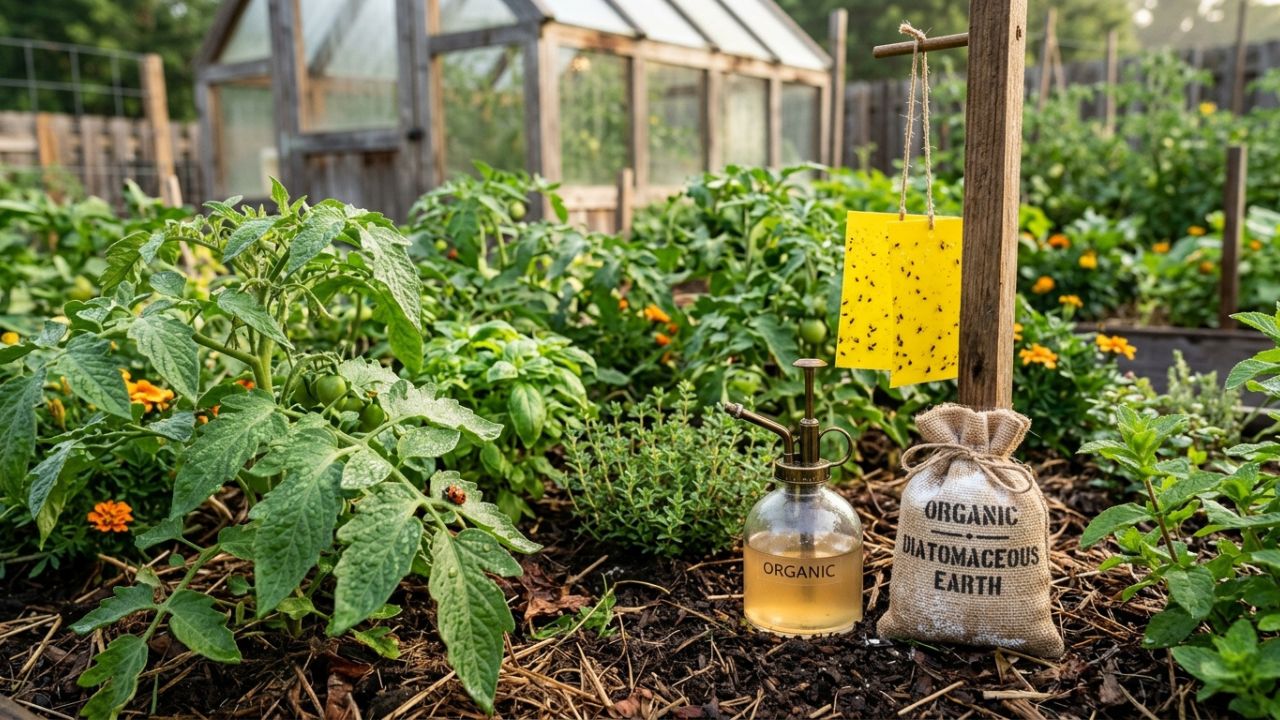
2. Diatomaceous Earth
This fine, powdery substance is made from the fossilized remains of tiny aquatic organisms called diatoms. Despite its soft appearance, diatomaceous earth has microscopic sharp edges that damage the exoskeletons of crawling insects like slugs, ants, and beetles, causing them to dehydrate.
It is applied as a dry powder around the base of plants or directly on affected foliage. One thing to keep in mind is that diatomaceous earth loses effectiveness when wet, so it needs to be reapplied after rain or watering.
3. Insecticidal Soap
Insecticidal soap is made from potassium salts of fatty acids, which break down the outer protective layer of soft-bodied insects such as aphids, mealybugs, and spider mites. Unlike many other treatments, it has minimal impact on beneficial insects once it dries, making it a favorite among organic gardeners.
Insecticidal soap needs direct contact with the pest to work, so thorough coverage of both the tops and undersides of leaves is essential.
4. Beneficial Nematodes
Beneficial nematodes are microscopic worms that live in soil and actively hunt down pests like grubs, cutworms, and fungus gnat larvae. They are applied by mixing them with water and watering them into the soil, where they seek out their host insects and eliminate them from within.
This method is especially useful for dealing with pests that live underground, where sprays cannot easily reach.
5. Companion Planting Seed Blends
While not a spray or powder, companion planting seed blends deserve a spot on this list because they offer a proactive, chemical-free approach to pest management. Certain plants naturally repel pests or attract the predators that eat them.
- Marigolds help deter nematodes and some beetles.
- Basil can repel mosquitoes and certain flies when planted near tomatoes.
- Nasturtiums act as a trap crop, luring aphids away from more valuable plants.
- Dill and fennel attract beneficial predatory insects like ladybugs and lacewings.
Many garden retailers now sell pre-mixed companion planting seed blends designed specifically to support pest management alongside healthy growth.
6. Sticky Traps
Sticky traps are simple, non-toxic tools that use a sticky adhesive on brightly colored cards, usually yellow or blue, to attract and capture flying pests like whiteflies, fungus gnats, and aphids. They do not harm the plant or surrounding soil and can also be useful for monitoring pest populations before they get out of hand.
These traps work best as an early warning system, giving gardeners a chance to act before an infestation spreads.
7. Garlic and Chili Spray
A homemade or store-bought garlic and chili spray can be surprisingly effective at repelling a wide range of pests, including aphids, caterpillars, and even some larger animals like deer and rabbits. The strong smell and taste discourage pests from settling on treated plants.
This spray typically needs to be reapplied every few days, especially after rainfall, since its potency fades over time.
8. Beneficial Insects
Ladybugs, lacewings, and predatory mites are living pest control agents that can be purchased and released directly into the garden. These insects feed on common pests like aphids, mites, and thrips, offering a self-sustaining solution once they establish themselves.
Attracting beneficial insects naturally through flowering plants is often more sustainable long-term than repeatedly purchasing and releasing them, but a one-time boost can help control a sudden outbreak.
9. Horticultural Oil
Horticultural oil, sometimes made from mineral or plant-based oils, works by coating insects and their eggs, effectively smothering them. It is particularly useful for controlling scale insects, mites, and overwintering pest eggs on fruit trees and shrubs.
Because horticultural oil can be sensitive to temperature, it should be applied when temperatures are moderate, avoiding both very hot and freezing conditions.
Comparing the Nine Natural Pest Control Products
| Product | Best For | Application Method | Reapplication Needed |
|---|---|---|---|
| Neem Oil | Aphids, whiteflies, mites | Diluted spray | Every 7 to 14 days |
| Diatomaceous Earth | Slugs, ants, beetles | Dry powder | After rain or watering |
| Insecticidal Soap | Soft-bodied insects | Direct contact spray | Every 5 to 7 days |
| Beneficial Nematodes | Soil-dwelling larvae | Watered into soil | Seasonally |
| Companion Planting | General pest prevention | Planted alongside crops | Ongoing, seasonal |
| Sticky Traps | Flying pests | Hung near plants | When full or faded |
| Garlic and Chili Spray | Aphids, caterpillars, animals | Spray on foliage | Every few days |
| Beneficial Insects | Aphids, mites, thrips | Released into garden | As needed |
| Horticultural Oil | Scale, mites, eggs | Sprayed on dormant plants | Seasonally |
Tips for Using Natural Pest Control Effectively
Natural products can be highly effective, but they often require more attentiveness than synthetic chemicals. A few habits can make a noticeable difference.
- Inspect plants regularly so problems can be caught early, before an infestation spreads.
- Rotate between a few different methods rather than relying on just one, since pests can sometimes adapt.
- Encourage a healthy garden ecosystem by planting a variety of flowering plants that attract pollinators and beneficial predators.
- Water plants at the base rather than overhead to reduce the damp conditions that many pests and fungal issues thrive in.
- Keep the garden clean by removing dead leaves and debris where pests like to hide and lay eggs.
Building a Long-Term Natural Pest Control Routine
The most successful gardens rarely rely on a single product. Instead, they combine several of the approaches above into a rhythm that fits the specific challenges of the space. A gardener might use companion planting and beneficial insects as a foundation, then turn to neem oil or insecticidal soap when a particular pest starts to get out of hand.
Over time, this layered approach tends to reduce the overall pest pressure in the garden, since natural predators and repellent plants keep populations in check before they become a serious problem. It also means fewer emergency interventions are needed, which saves both time and money.
Final Thoughts
Choosing natural garden pest control products is one small but meaningful way to align a hobby with a broader commitment to sustainability.
These nine options, from neem oil and diatomaceous earth to companion planting and beneficial insects, offer gardeners a toolkit that protects plants without compromising the health of the surrounding ecosystem.
With a bit of patience and consistency, a garden can thrive while staying true to eco-friendly values.