Coffee and tea are two of the most loved drinks in the world. Millions of people start their day with a warm cup, and for many, that ritual feels almost sacred. But behind every cup lies a supply chain that can either support the planet or put a strain on it.
Growing, processing, packaging, and shipping coffee and tea all leave an environmental footprint, and for people who care about living a greener lifestyle, that footprint matters.
The good news is that the coffee and tea industries have made real progress. More brands are switching to compostable packaging, reusable filters, ethically sourced beans and leaves, and products designed to last for years instead of ending up in a landfill after a few uses. Anyone interested in reducing waste and supporting responsible farming has more options today than ever before.
This article looks at nine sustainable coffee and tea products worth discovering, along with the reasons they matter and how to choose the right ones for a more eco-conscious kitchen.
Why Sustainability Matters in Coffee and Tea
Coffee and tea are grown in some of the most biodiverse regions on earth, including parts of Central America, East Africa, Southeast Asia, and South America. Poor farming practices can lead to deforestation, soil erosion, and heavy pesticide use. On the other end of the supply chain, single use pods, plastic tea bags, and non-recyclable packaging add to the growing waste problem.
Choosing sustainable products supports:
- Farmers who use responsible growing methods
- Ecosystems that rely on healthy soil and biodiversity
- A reduction in single use plastic and packaging waste
- Fair wages and better working conditions for growers
- A lower overall carbon footprint from farm to cup
With that context in mind, here are nine products that make it easier to enjoy coffee and tea while sticking to sustainable values.
1. Reusable Coffee Filters
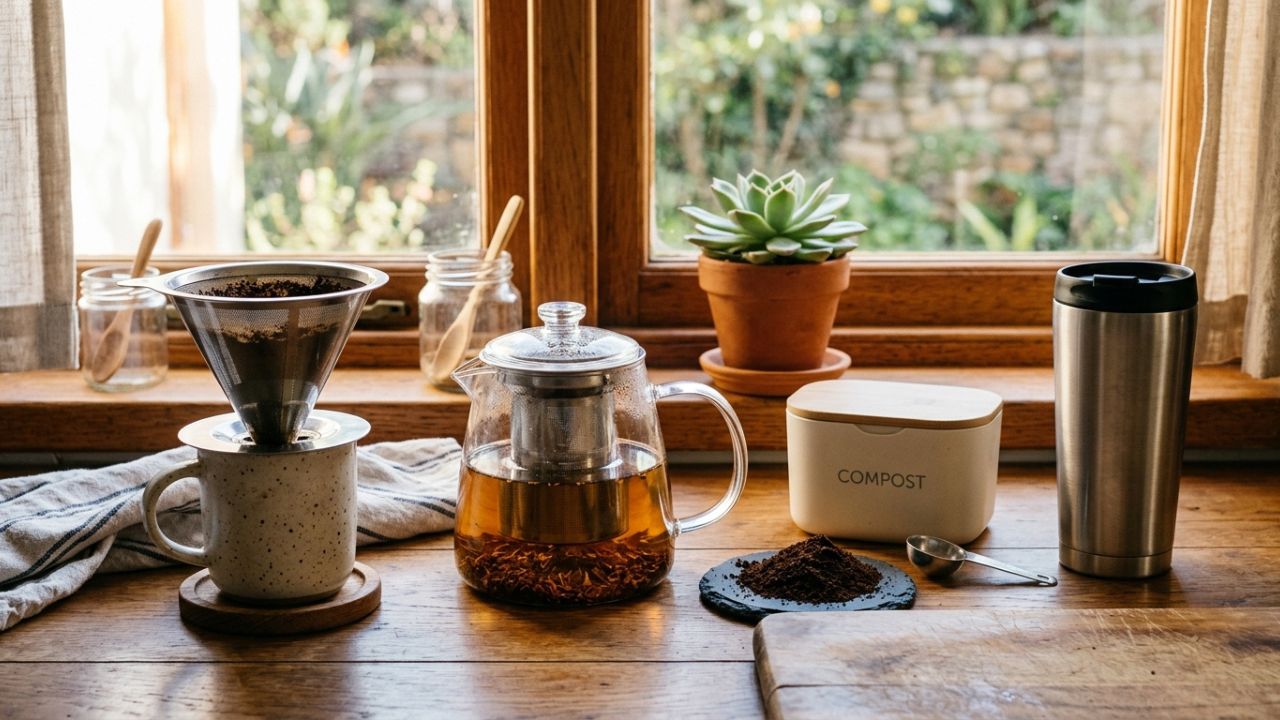
Paper filters might seem harmless, but they add up quickly. A household that brews coffee daily can go through hundreds of paper filters a year. Reusable filters made from stainless steel or organic cotton solve this problem by lasting for years instead of being tossed after a single use.
Stainless steel filters are easy to rinse and reuse indefinitely, while cotton filters can be washed and air dried. Both options reduce landfill waste and often improve the flavor of the coffee since natural oils are not absorbed by paper.
What to Look For
- Filters made from food grade stainless steel or unbleached organic cotton
- A shape that fits standard drip machines or pour over brewers
- Easy to clean designs with minimal maintenance
2. Compostable Coffee Pods
Single use coffee pods are convenient, but most are made from plastic and aluminum that cannot be recycled through regular municipal programs. Compostable pods offer a fix. Made from plant based materials, these pods break down in industrial composting facilities and sometimes even in home compost bins.
They work with many popular pod machines and taste just as good as traditional pods, without leaving behind long lasting plastic waste.
3. Organic Loose Leaf Tea
Loose leaf tea is often overlooked, but it offers major sustainability benefits compared to bagged tea. Many conventional tea bags contain a small amount of plastic used to seal the bag, which means they do not fully biodegrade and can release microplastics when steeped in hot water.
Organic loose leaf tea skips the bag altogether. It is grown without synthetic pesticides, which protects soil health and nearby water sources. Loose leaf tea also tends to have a fresher, more robust flavor since the leaves are less processed.
Benefits of Loose Leaf Tea
- No plastic packaging inside the bag
- Less processing, which usually means better flavor
- Often sold in bulk, reducing overall packaging waste
- Supports organic farming practices that protect the land
4. Compostable or Plastic Free Tea Bags
For people who prefer the convenience of tea bags, several brands now offer compostable versions made from materials such as cornstarch or hemp fiber. These bags break down naturally and avoid the microplastic issue found in many conventional tea bags.
Look for tea bags labeled plastic free or fully compostable, since the term biodegradable alone does not always guarantee a product will break down without industrial composting.
5. Fair Trade and Direct Trade Coffee Beans
Fair trade certification helps ensure that coffee farmers receive fair wages and work in safe conditions. Direct trade goes a step further, with roasters building direct relationships with farmers, often paying above market prices and working closely on quality and sustainability practices.
Both approaches support small scale farmers and encourage responsible land use. Choosing beans with fair trade or direct trade labeling is one of the simplest ways to make a coffee habit more ethical.
| Certification | What It Means | Why It Matters |
|---|---|---|
| Fair Trade | Farmers receive a minimum guaranteed price | Protects income during market price drops |
| Direct Trade | Roasters buy directly from farmers | Builds transparency and often pays more |
| Rainforest Alliance | Farms meet environmental standards | Protects biodiversity and water sources |
| USDA Organic | No synthetic pesticides or fertilizers | Supports healthier soil and ecosystems |
6. Reusable Tea Infusers
A reusable tea infuser is a small but mighty tool for anyone who drinks loose leaf tea. Made from stainless steel, silicone, or glass, these infusers eliminate the need for disposable bags entirely.
They come in many shapes, from simple mesh balls to infuser mugs with built in strainers. A good infuser can last for years with proper care, making it one of the most cost effective sustainable swaps available.
Popular Infuser Styles
- Mesh ball infusers for loose tea in any mug
- Infuser mugs with a built in strainer and lid
- Silicone infusers shaped like small pouches
- Glass teapots with removable stainless steel baskets
7. Coffee Grounds and Tea Leaf Composting Kits
Used coffee grounds and tea leaves are packed with nutrients that can enrich garden soil instead of sitting in a landfill. Composting kits designed specifically for coffee and tea waste make it simple to turn kitchen scraps into something useful.
These kits often include a small countertop bin, compostable liners, and instructions for adding grounds and leaves to an outdoor compost pile or garden bed. For people without outdoor space, some companies offer coffee ground pickup or drop off programs in select cities.
8. Sustainable Packaging Coffee Bags
Traditional coffee packaging often combines multiple layers of plastic and foil that cannot be recycled. A growing number of roasters now use compostable bags made from plant based materials, or recyclable packaging made from a single material that is easier to process.
Some companies also offer refill programs, where customers bring back empty bags or containers to be refilled, cutting down on packaging waste altogether.
Questions to Ask Before Buying
- Is the bag compostable, recyclable, or reusable?
- Does the brand offer a refill or return program?
- Is the packaging made from a single material or a mix that is harder to recycle?
9. Reusable Travel Cups and Tumblers
Disposable cups, lids, and sleeves create an enormous amount of daily waste. A well made reusable travel cup can replace hundreds of disposable cups over its lifetime. Stainless steel and glass options are especially durable, and many are designed to keep drinks hot or cold for hours.
Choosing a reusable cup is one of the easiest sustainable habits to build, since it fits naturally into an existing morning routine.
How to Start Building a More Sustainable Coffee and Tea Routine
Switching to a fully sustainable coffee and tea routine does not have to happen overnight. Small, steady changes tend to stick better than trying to overhaul everything at once.
- Start with one swap, such as replacing paper filters with a reusable one
- Choose fair trade or organic beans and leaves when restocking
- Bring a reusable cup when heading out for coffee or tea
- Compost used grounds and leaves instead of throwing them away
- Look for brands that are transparent about sourcing and packaging
Over time, these small choices add up to a noticeably lighter environmental footprint, without sacrificing the enjoyment of a good cup of coffee or tea.
Final Thoughts
Coffee and tea will likely always be part of daily life for millions of people around the world. The way these drinks are grown, packaged, and consumed makes a real difference, both for the planet and for the farmers who grow them. From reusable filters and infusers to compostable packaging and fair trade beans, there are more sustainable options available today than ever before.
Anyone looking to live a greener lifestyle does not need to give up their favorite drink. Instead, a few thoughtful swaps can turn a daily habit into a small but meaningful act of care for the environment.