Anyone who loves spending time outdoors knows that a good meal makes the experience even better. Whether it’s a quick lunch break at the park or a full afternoon picnic with friends, the way people pack and eat their food outside says a lot about their values.
For those trying to live a greener, more eco-friendly life, single use plastics, paper napkins, and plastic cutlery just don’t fit the picture anymore. Instead, sustainable lunch and picnic products are becoming the go to choice for people who want to enjoy the outdoors without leaving a trail of waste behind.
This shift isn’t just a trend. It reflects a growing awareness that small daily choices, like what container holds a sandwich or what fabric wraps a snack, add up over time. Choosing reusable, biodegradable, or naturally sourced products for lunch and picnic outings is one of the easiest ways to reduce a household’s environmental footprint while still enjoying the simple pleasure of eating outside.
Below is a look at nine sustainable lunch and picnic products worth considering, along with tips on how to use them and why they matter.
Why Sustainable Picnic Products Matter
Every year, millions of tons of single use plastic end up in landfills and oceans. A large portion of that waste comes from everyday items like disposable cutlery, plastic wrap, paper plates, and plastic bags that are used once and thrown away.
Picnics and packed lunches are small moments in daily life, but they are also recurring habits. Someone who packs lunch five days a week using disposable containers and plastic bags could be responsible for hundreds of pieces of waste each year, just from that one habit.
Switching to sustainable alternatives doesn’t require a complete lifestyle overhaul. It simply means being intentional about what gets packed and how it gets packed. Reusable products often save money over time too, since they don’t need to be replaced after every use.
The Environmental Impact of Everyday Choices
- Reusable containers can replace hundreds of single use plastic bags over their lifetime
- Biodegradable materials break down naturally instead of sitting in landfills for centuries
- Products made from natural fibers reduce reliance on petroleum based plastics
- Reusable items reduce the demand for manufacturing new disposable goods
1. Beeswax Food Wraps
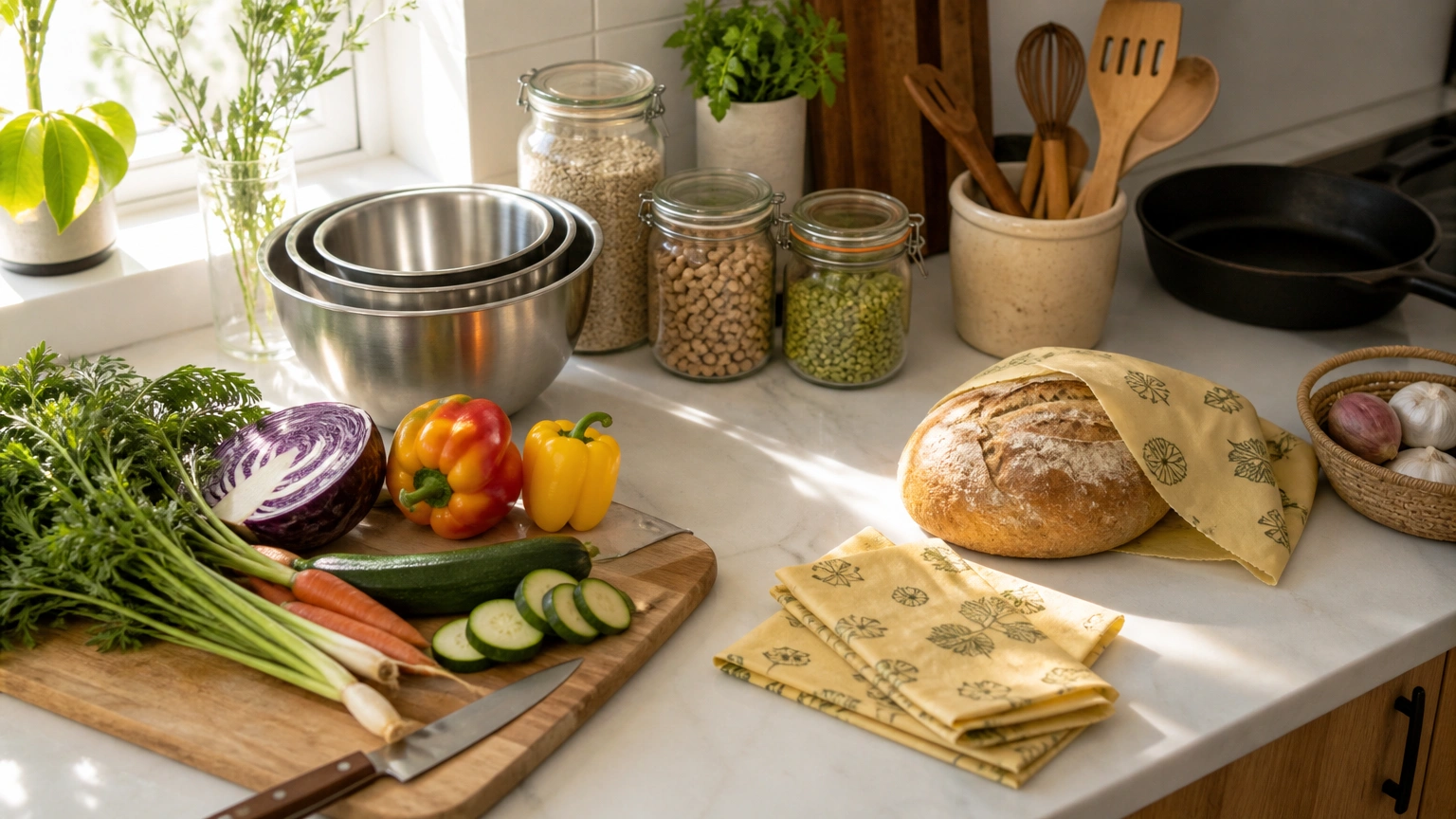
Beeswax wraps have become a popular substitute for plastic wrap and plastic sandwich bags. Made from cotton fabric coated in beeswax, tree resin, and jojoba oil, these wraps mold to the shape of food or containers when warmed slightly by hand. They can be used to wrap sandwiches, cover bowls, or bundle fruit and vegetables.
After use, they simply need a rinse with cool water and mild soap, and they can be reused for up to a year or longer. When they finally wear out, they are compostable, unlike plastic wrap which lingers in the environment indefinitely.
2. Bamboo Cutlery Sets
Disposable plastic forks, knives, and spoons are one of the most common items found littering parks and beaches. Bamboo cutlery sets offer a lightweight, durable, and compostable alternative. Bamboo grows quickly and requires far fewer resources than the manufacturing process for plastic utensils.
Many bamboo cutlery sets come with a small carrying pouch made from cotton or hemp, making them easy to toss into a bag or backpack. Some sets even include a reusable straw and a small cleaning brush, making them a complete on the go solution.
Tips for Using Bamboo Cutlery
- Keep a set in the car, backpack, or office bag for spontaneous outdoor meals
- Hand wash rather than using a dishwasher to extend the life of the bamboo
- Store in a dry place to prevent warping or cracking over time
3. Stainless Steel Bento Boxes
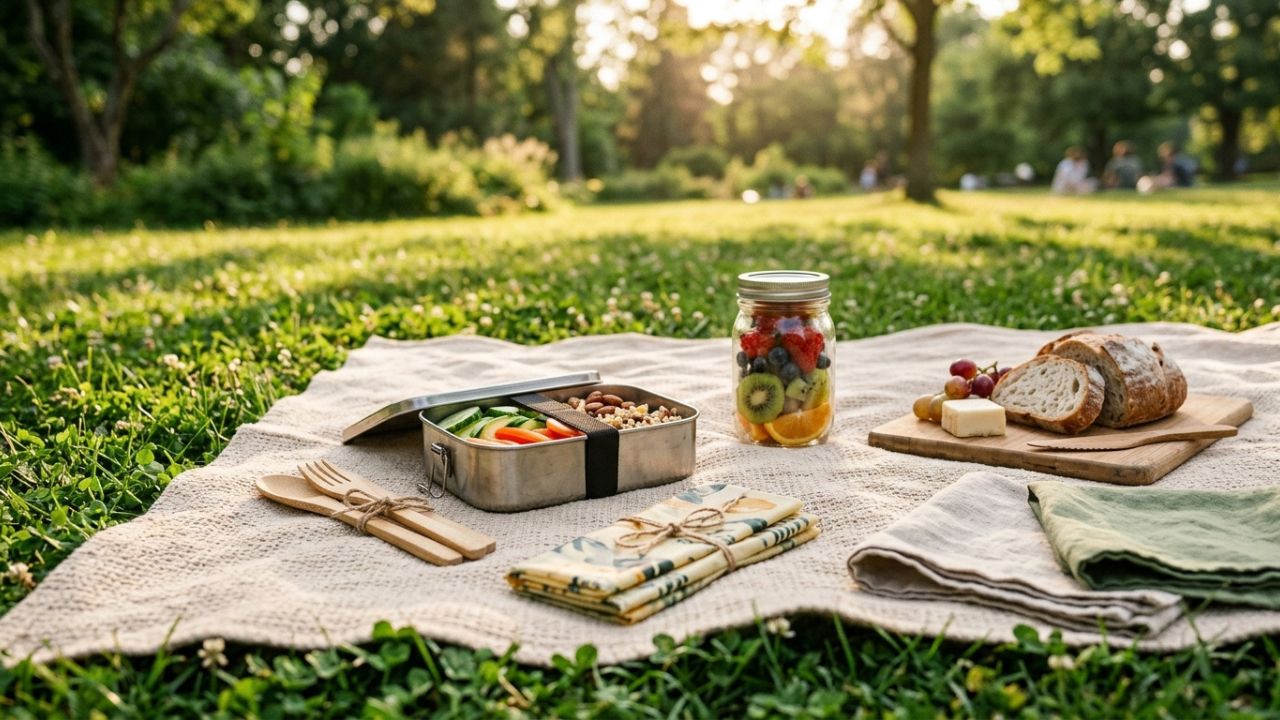
Stainless steel bento boxes are a favorite among people who pack lunch regularly. Unlike plastic containers, stainless steel doesn’t absorb odors or stains, and it holds up well to years of daily use. Many bento boxes come with multiple compartments, making it easy to pack a balanced meal with separate sections for main dishes, sides, and snacks.
These containers are also a safer choice compared to plastic, since they don’t leach chemicals when exposed to heat or acidic foods. For picnics, a stainless steel bento box can be packed the night before and kept cool in an insulated bag until it’s time to eat.
4. Organic Cotton Picnic Blankets
A picnic wouldn’t be complete without something to sit on. Organic cotton picnic blankets are grown without synthetic pesticides or fertilizers, making them a gentler choice for both the environment and the people using them. Many are woven with a water resistant backing made from natural materials rather than synthetic laminates.
These blankets are often machine washable, durable enough for years of outdoor use, and can double as a lightweight throw at home when not being used outside.
5. Reusable Glass Jars for Snacks and Drinks
Glass jars are a simple but effective swap for single use plastic cups and snack bags. They can hold anything from trail mix and cut fruit to iced tea or homemade lemonade. Glass doesn’t retain flavors or odors the way plastic sometimes does, and it can be reused indefinitely as long as it’s handled carefully.
For picnics where breakage might be a concern, many people opt for jars with silicone protective sleeves, which add a layer of cushioning while still keeping the container fully reusable.
6. Compostable or Reusable Napkins
Paper napkins are convenient, but they’re used once and thrown away almost immediately. Cloth napkins made from linen, cotton, or hemp offer a reusable alternative that can be washed and used again and again. For those who prefer a disposable option for larger gatherings, compostable napkins made from bamboo or sugarcane fiber break down much faster than traditional paper products.
Comparing Napkin Options
| Type | Reusable | Compostable | Best Use |
|---|---|---|---|
| Cloth (linen or cotton) | Yes | Eventually, at end of life | Everyday lunches and picnics |
| Bamboo fiber disposable | No | Yes | Larger group gatherings |
| Sugarcane fiber disposable | No | Yes | Events with heavy napkin use |
| Standard paper | No | Slowly, if untreated | Not recommended for regular use |
7. Insulated Reusable Lunch Bags
An insulated lunch bag made from recycled materials keeps food at a safe temperature while cutting down on the need for disposable cooler bags or foam containers. Many are constructed from recycled plastic bottles, giving old waste a new purpose, and they’re built to last for years rather than a single outing.
Look for bags with removable liners that can be wiped clean or machine washed, since this extends the life of the product and keeps it hygienic for repeated use.
What to Look for in a Sustainable Lunch Bag
- Made from recycled or natural materials rather than virgin plastic
- Free of PVC and lead based linings
- Sturdy stitching and zippers that can handle daily wear
- A size that fits containers, drinks, and snacks without overpacking
8. Wooden or Bamboo Cutting Boards for On the Go Prep
For picnics that involve slicing fruit, cheese, or bread on site, a small portable cutting board made from bamboo or reclaimed wood is a practical and sustainable tool. These boards are sturdy, naturally antibacterial to a degree, and biodegradable at the end of their life, unlike plastic cutting boards that eventually crack and shed microplastics.
Many are sized specifically for travel, small enough to slide into a picnic basket but large enough to be genuinely useful for food prep outdoors.
9. Reusable Silicone Food Pouches
For families packing lunches for kids or anyone who wants a mess free way to carry sauces, dips, or soft foods, reusable silicone pouches are a smart alternative to disposable plastic pouches and sandwich bags. They can be filled at home, sealed tightly, and washed out for repeated use.
Since they’re made from food grade silicone rather than plastic, they hold up to both hot and cold contents without breaking down.
Building a Sustainable Picnic Kit
Rather than buying everything at once, many people find it easier to build a sustainable picnic kit gradually, replacing disposable items as they run out. A good starting point might include a reusable bag, a set of bamboo cutlery, and a couple of beeswax wraps, then expanding from there as budget and need allow.
A Simple Approach to Getting Started
- Start with the items used most often, such as cutlery or a lunch bag
- Choose durable, well made products over cheap versions that wear out quickly
- Store the kit somewhere easy to grab, like a designated bag by the door
- Involve the whole family so sustainable habits become routine rather than a chore
Final Thoughts
Living a more sustainable lifestyle doesn’t happen through one big change. It happens through small, consistent choices, and the way food is packed and enjoyed outdoors is one of the easiest places to start.
Swapping out disposable products for reusable, biodegradable, or naturally sourced alternatives allows people to enjoy their favorite outdoor meals while reducing their impact on the planet.
Whether it’s a quick lunch on a park bench or a full afternoon picnic with family, these nine sustainable products make it simple to eat well outdoors without compromising on convenience or care for the environment.