Living in a smaller space does not mean giving up on organization or style. In fact, many people who embrace compact living find that it pushes them toward smarter, greener choices. When square footage is limited, every piece of furniture has to work harder, and that is exactly why sustainable storage furniture has become such a popular solution.
Instead of filling a home with cheap, mass produced pieces that end up in landfills within a few years, more people are turning to furniture made from reclaimed wood, recycled materials, and responsibly sourced resources that last for decades.
This shift is not just about looking good on a shelf. Sustainable storage furniture supports a lifestyle that values quality over quantity, reduces waste, and lowers the environmental footprint of everyday living. For anyone trying to make their home more eco-friendly while also making the most of a tight floor plan, these nine ideas offer practical inspiration.
Why Sustainable Storage Furniture Matters for Small Spaces
Before diving into specific ideas, it helps to understand why this pairing of sustainability and small space living makes so much sense together.
Small spaces naturally encourage people to buy less and choose more carefully. There simply is not room for excess. This mindset lines up perfectly with sustainable living principles, which emphasize intentional consumption over impulse buying. When someone chooses a storage piece made from reclaimed materials or built to be multifunctional, they are reducing the number of items they need to own overall, which in turn reduces the resources consumed and the waste generated over a lifetime.
Sustainable furniture also tends to be built with better craftsmanship. Solid wood joints, natural finishes, and repairable designs mean these pieces do not need to be replaced as often as flat pack furniture made from particleboard and glue. For a small space, this durability matters even more since furniture often gets moved, repurposed, or adjusted as living arrangements change.
1. Multifunctional Storage Ottomans
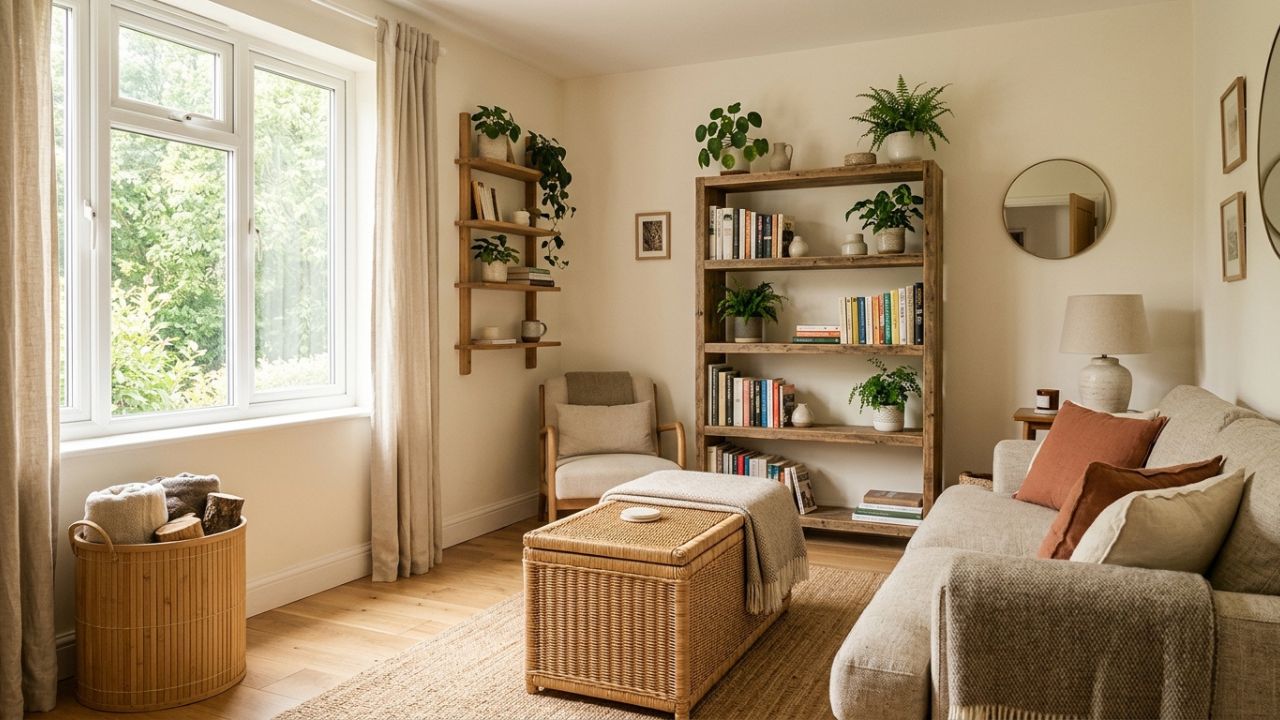
A storage ottoman is one of the easiest ways to add hidden storage without taking up extra floor space. Many eco-conscious brands now build these using FSC certified wood frames, natural latex or organic cotton fill, and upholstery made from recycled fabrics or plant based leather alternatives.
- Doubles as a coffee table, footrest, or extra seating
- Hides blankets, books, or seasonal items inside
- Often lightweight enough to move around easily
For a small living room, an ottoman like this eliminates the need for a separate coffee table and a separate storage bin, cutting down on both clutter and material use.
2. Reclaimed Wood Bookshelves
Bookshelves are a staple in most homes, but traditional versions are often made from new timber or composite wood that releases formaldehyde over time. Reclaimed wood bookshelves offer a better alternative. These are typically built from salvaged barn wood, old flooring, or dismantled furniture, giving each piece a unique grain and story.
Because reclaimed wood has already been harvested and processed once, choosing it prevents new trees from being cut down. It also tends to be more weathered and sturdy, having already proven its durability over years of use.
What to Look for When Buying Reclaimed Wood Furniture
- Confirm the wood is genuinely reclaimed, not just distressed to look old
- Ask about the finish used, since natural oils and waxes are better than synthetic sealants
- Check for stability if the shelf will hold heavy books
3. Wall Mounted Vertical Shelving
When floor space is limited, going vertical is one of the smartest strategies. Wall mounted shelving units use minimal materials compared to freestanding cabinets, which naturally reduces their environmental impact. Look for shelves made from bamboo, a fast growing renewable resource, or from certified sustainable hardwood.
These shelves work well in kitchens, bathrooms, and entryways where floor space is often at a premium. Because they do not require a large base or frame, they use significantly less raw material than a comparable freestanding unit.
4. Modular Storage Cubes
Modular storage cube systems allow a household to start small and expand only when needed. Rather than buying one large dresser or cabinet that might not fit future needs, modular cubes can be added, removed, or rearranged as life changes.
- Made from a single material, often solid wood or recycled plastic, making them easier to recycle later
- Can be stacked vertically to maximize a small footprint
- Useful in closets, kids rooms, or home offices
This adaptability means fewer pieces end up discarded simply because they no longer suit a space. A modular system grows and shrinks with the household instead.
5. Under Bed Storage Made from Natural Materials
The space under a bed is often wasted in small apartments. Sustainable under bed storage bins made from woven seagrass, jute, or organic cotton canvas offer a breathable, biodegradable alternative to plastic bins.
These natural fiber storage solutions are particularly good for storing linens, out of season clothing, or shoes. Unlike plastic containers, they do not off gas chemicals and they decompose naturally at the end of their life rather than sitting in a landfill indefinitely.
6. Upcycled Vintage Cabinets
One of the most sustainable choices a person can make is simply buying furniture that already exists. Upcycled vintage cabinets, whether refinished by a local artisan or restored as a DIY project, keep usable furniture in circulation instead of adding new production to the world.
A small vintage cabinet can serve many purposes in a compact home, from a bathroom storage piece to a kitchen pantry substitute to a media console. Because vintage furniture was often built before the rise of cheap manufacturing, these pieces tend to be sturdier and better suited for decades of continued use.
Benefits of Choosing Upcycled Furniture
- Reduces demand for newly manufactured items
- Often more affordable than buying new sustainable furniture
- Adds character and history that mass produced pieces cannot replicate
7. Bamboo Storage Baskets and Bins
Bamboo has become one of the most popular materials in sustainable furniture and home goods, and for good reason. It grows quickly, requires little water, and regenerates without needing to be replanted. Bamboo storage baskets are lightweight, durable, and easy to tuck into corners, closets, or under shelving.
These baskets work well for organizing smaller items like toys, craft supplies, or pantry goods. Because bamboo is naturally antimicrobial, it also tends to hold up well in humid spaces like bathrooms or kitchens.
8. Convertible Murphy Bed Cabinets
For very small apartments or studio living, a Murphy bed built into a cabinet is one of the most space efficient storage solutions available. When not in use, the bed folds away into a cabinet that can include shelving, drawers, or a small desk, freeing up the entire floor for daytime activities.
Sustainable versions of these units use FSC certified plywood or solid wood frames and low VOC finishes, which means better indoor air quality along with the space saving benefits.
9. Woven Rattan Room Dividers with Storage
A room divider that also offers storage is a clever way to define separate zones in an open floor plan while adding function. Woven rattan or wicker dividers with built in shelving allow a small studio to feel like it has distinct living and sleeping areas without the need for permanent walls.
Rattan is a fast growing, renewable plant material, making it one of the more eco-friendly choices for furniture construction. These dividers are usually lightweight enough to reposition as needed, giving flexibility that a fixed wall never could.
Comparing Sustainable Materials Used in Storage Furniture
Choosing the right material is often the first decision when shopping for sustainable storage furniture. The table below breaks down some common options and what makes each one a good fit for small, eco-conscious spaces.
| Material | Renewability | Durability | Best Used For |
|---|---|---|---|
| Reclaimed Wood | Reuses existing timber | Very high | Shelving, cabinets, tables |
| Bamboo | Fast growing, highly renewable | High | Baskets, shelving, small furniture |
| Rattan and Wicker | Fast growing, renewable | Moderate | Baskets, dividers, light furniture |
| Recycled Plastic | Diverts waste from landfills | Moderate to high | Modular cubes, bins |
| Organic Cotton and Jute | Biodegradable, low impact | Moderate | Storage bins, bags, canvas covers |
Tips for Choosing Sustainable Storage Furniture
Shopping for eco-friendly furniture can feel overwhelming with so many claims and certifications on the market. A few simple habits can help make the process easier and more trustworthy.
- Look for certifications like FSC for wood or GOTS for organic textiles
- Prioritize pieces that serve more than one function to reduce overall furniture needs
- Choose secondhand or vintage first before buying new
- Ask about the finish, since low VOC or natural oil finishes are better for indoor air quality
- Consider the end of life of a piece, favoring materials that can be recycled or naturally decompose
Small Space Living as a Sustainable Choice
There is something naturally sustainable about small space living itself. Less square footage often means less heating and cooling energy, fewer furnishings, and a more mindful approach to consumption in general. Pairing that lifestyle with furniture made from responsible materials creates a home that reflects care for both personal space and the planet.
Choosing sustainable storage furniture does not require an entire home overhaul. Even swapping one plastic bin for a woven basket, or replacing a flat pack shelf with a reclaimed wood version, contributes to a lower environmental footprint over time. For anyone working with a smaller space, these nine ideas offer practical, stylish ways to stay organized while staying true to eco-friendly values.