Anyone trying to live a greener life eventually stands in front of a store shelf holding a plastic toothbrush in one hand and a bamboo one in the other, wondering which choice actually matters. Bamboo toothbrushes have become one of the most visible symbols of the zero-waste movement, showing up in bathroom cabinets, gift shops, and social media feeds everywhere.
But behind the trendy packaging and earthy aesthetic lies a real question worth asking. Are bamboo toothbrushes genuinely better for the planet, or are they just another example of clever marketing dressed up as sustainability?
This article takes a closer look at what makes bamboo toothbrushes different from their plastic counterparts, where the eco-friendly claims hold up, where they fall short, and what a person can do to make the most environmentally responsible choice for their daily dental care routine.
Why Plastic Toothbrushes Became a Problem in the First Place
Before understanding why bamboo entered the picture, it helps to understand the scale of the plastic toothbrush issue. Most conventional toothbrushes are made from a combination of plastic handles and nylon bristles, materials that are prized for their durability but that take hundreds of years to break down in a landfill.
Dental professionals generally recommend replacing a toothbrush every three months. Multiply that by the world’s population and the numbers become staggering. Billions of plastic toothbrushes are discarded every single year, and since plastic recycling facilities often cannot process such small, mixed-material items, nearly all of them end up in landfills or, worse, in oceans and waterways.
This is the backdrop against which bamboo toothbrushes rose in popularity. They were marketed as a simple swap that could make a real dent in personal plastic waste, one bathroom at a time.
What Makes Bamboo Toothbrushes Different
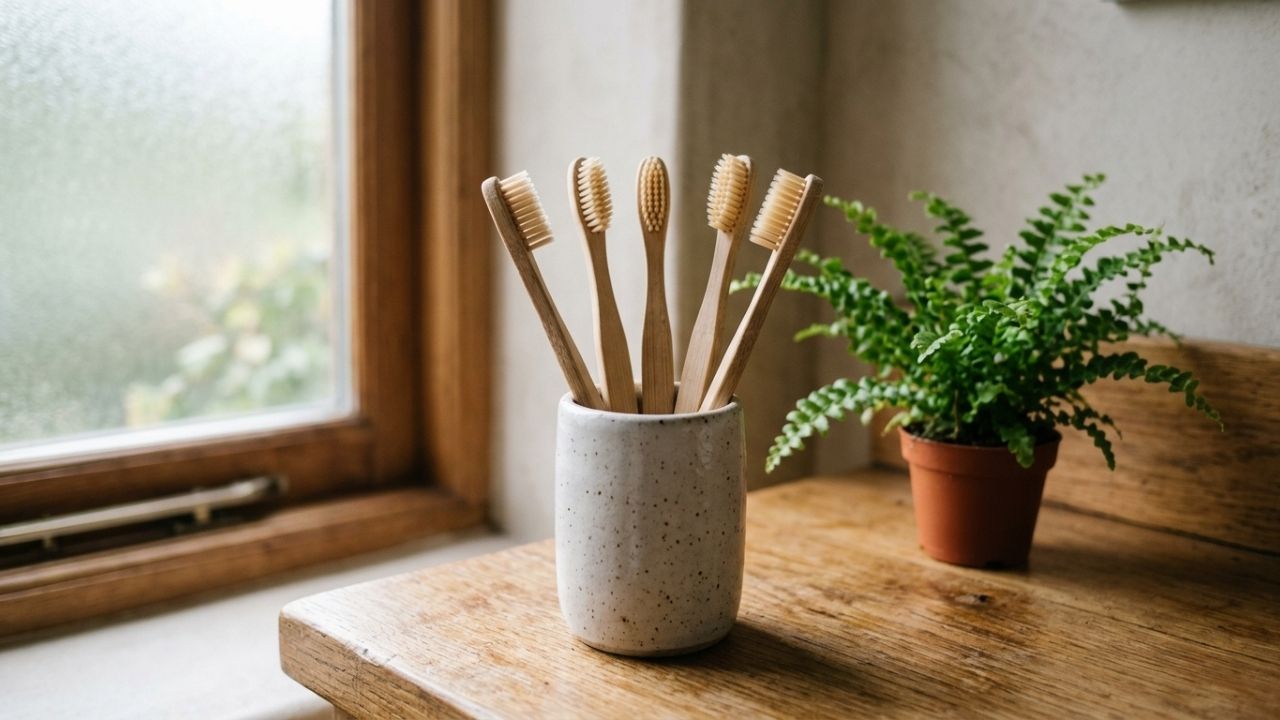
A bamboo toothbrush typically replaces the plastic handle with one carved or molded from bamboo, a fast-growing woody grass. The core appeal comes down to a few key characteristics that separate bamboo from petroleum-based plastic.
Bamboo Grows Remarkably Fast
Unlike hardwood trees that can take decades to mature, many bamboo species can grow several feet in a single day under the right conditions. Some varieties reach full height in a matter of months rather than years. This rapid growth means bamboo can be harvested repeatedly without needing to replant, and it regenerates from its own root system.
Bamboo Requires Fewer Resources to Cultivate
Bamboo generally needs less water than cotton or many hardwood crops, and it rarely requires pesticides or fertilizers to thrive. It can grow in a variety of soil conditions and often flourishes on land that would be unsuitable for other crops, which reduces the pressure to clear additional land for cultivation.
Bamboo Handles Are Biodegradable
This is the biggest selling point. A bamboo handle, when free of any plastic coating or synthetic glue, can decompose naturally in a home compost or in soil over the course of several months to a couple of years, compared to the 400-plus years a plastic handle can take.
The Honest Look: Where the Eco-Friendly Claims Get Complicated
While bamboo has real advantages, it is not a perfect solution, and being a thoughtful eco-conscious consumer means looking past the marketing language to understand the full picture.
The Bristles Are Still Usually Plastic
This is the detail most people miss when they first buy a bamboo toothbrush. The handle may be biodegradable bamboo, but the bristles are frequently made from nylon, a plastic derived from petroleum. Nylon bristles are used because they are firm enough to clean teeth effectively and resist bacterial buildup better than many natural alternatives.
Some brands have started experimenting with plant-based bristles made from castor bean oil, but these are still relatively rare and tend to be less durable. This means that unless a person removes and separates the bristles before composting or disposing of the handle, the toothbrush as a whole is not fully biodegradable.
Manufacturing and Shipping Add Up
Bamboo does not grow everywhere. Most of the bamboo used in toothbrush production comes from regions like China and parts of Southeast Asia. That means the raw material often has to be processed, shaped, packaged, and then shipped internationally to reach consumers in other parts of the world. The carbon footprint of that transportation can offset some of the environmental benefits gained from using a natural material.
Not All Bamboo Farming Is Equal
While bamboo is generally a low-impact crop, large-scale monoculture farming, where a single type of bamboo is grown intensively across large areas, can still lead to soil degradation and reduced biodiversity if not managed responsibly. It is not automatically sustainable just because it is bamboo. The farming practices behind it matter just as much as the material itself.
End-of-Life Disposal Is Often Done Incorrectly
A bamboo toothbrush is only as eco-friendly as its disposal. If it ends up in a landfill without oxygen and moisture to break it down naturally, or if it is thrown away with the plastic bristles still attached, much of the environmental benefit is lost. Composting bamboo properly requires either a home compost setup or access to an industrial composting facility, which not everyone has.
Bamboo vs Plastic Toothbrushes: A Side-by-Side Comparison
| Factor | Plastic Toothbrush | Bamboo Toothbrush |
|---|---|---|
| Handle material | Petroleum-based plastic | Natural bamboo |
| Decomposition time | 400+ years | A few months to 2 years (handle only) |
| Renewable resource | No | Yes |
| Water needed to grow | Not applicable | Low |
| Pesticide use | Not applicable | Minimal to none |
| Bristle material | Usually nylon | Usually nylon (some plant-based options) |
| Recyclable | Rarely, due to mixed materials | Handle is compostable if bristles removed |
| Shipping distance | Varies by manufacturer | Often shipped internationally |
| Typical cost | Lower | Slightly higher |
How to Choose the Most Eco-Friendly Bamboo Toothbrush
Not all bamboo toothbrushes are created equal. A person who wants to make the most responsible choice should look beyond the word bamboo on the packaging and consider a few important details.
- Look for brands that use organically grown, sustainably harvested bamboo rather than bamboo grown with heavy pesticide use.
- Choose toothbrushes with removable bristles, which make it far easier to compost the handle separately from the plastic bristles.
- Seek out brands offering plant-based or biodegradable bristle alternatives, even though they may be slightly less common.
- Check for minimal, plastic-free packaging, since a great toothbrush wrapped in a plastic blister pack undermines the purpose.
- Consider the shipping origin and, when possible, support companies that manufacture closer to home or use carbon-offset shipping programs.
- Look for certifications or third-party verification of sustainable sourcing rather than relying on vague marketing claims.
What to Do With a Bamboo Toothbrush After Use
Simply buying a bamboo toothbrush is not where the sustainability effort ends. What happens after its three-month lifespan matters just as much.
Removing the Bristles
Using pliers, a person can pull out the nylon bristles from the bamboo head. This separates the plastic component from the biodegradable one, allowing each to be dealt with appropriately. The small clump of nylon bristles can be placed in general waste, since there is currently no widespread recycling stream for them, while the bamboo handle can move on to composting.
Composting the Handle
Once the bristles are removed, the plain bamboo handle can be added to a home compost bin, buried in a garden, or in some areas, dropped off at a community composting site. Untreated bamboo will naturally break down over time, enriching the soil in the process.
Repurposing Before Disposal
Before composting, many people find creative second uses for old bamboo toothbrush handles. They make surprisingly effective tools for cleaning small spaces like grout lines, jewelry, keyboards, or garden tools, extending their usefulness a little longer before they are finally returned to the earth.
Beyond the Toothbrush: A Bigger Picture of Sustainable Oral Care
A truly eco-conscious approach to dental hygiene looks at the whole routine, not just the toothbrush itself.
- Toothpaste tablets or powders in glass jars can reduce reliance on plastic toothpaste tubes, which are notoriously difficult to recycle.
- Floss made from silk or bamboo fiber, packaged in refillable glass containers, offers an alternative to conventional plastic floss picks.
- Mouthwash tablets that dissolve in water at home cut down on the plastic bottles typically used for liquid mouthwash.
- Buying oral care products in bulk or through refill programs reduces overall packaging waste.
Taking this broader view helps put the bamboo toothbrush question into perspective. It is one meaningful piece of a much larger effort toward reducing personal plastic consumption, rather than a magic fix on its own.
So, Are Bamboo Toothbrushes Really Eco-Friendly?
The honest answer is that bamboo toothbrushes are a better choice than plastic ones, but they are not a perfect or complete solution on their own. The rapid renewability of bamboo, its biodegradable handle, and the reduced reliance on petroleum-based plastic make it a meaningful step in the right direction.
At the same time, the plastic bristles, international shipping footprint, and the need for proper end-of-life disposal mean the benefits depend heavily on how the toothbrush is sourced, used, and discarded.
For someone genuinely trying to live a more sustainable lifestyle, the bamboo toothbrush represents progress rather than perfection. It is a small, tangible action that reflects a bigger mindset shift, one that involves thinking critically about where products come from, what they are made of, and where they end up after use.
Choosing a bamboo toothbrush thoughtfully, disposing of it correctly, and pairing it with other low-waste habits can make a genuine difference over time, even if no single product can solve the plastic problem by itself.