More people are swapping out their spray bottles and scrub brushes for greener alternatives, and it’s easy to see why. As awareness grows around plastic waste, water pollution, and indoor air quality, many households are asking a simple but important question: are natural cleaning products actually better for the environment, or is this just clever marketing?
The answer is layered, and understanding it can help anyone who wants to live a more sustainable life make smarter choices at the store and in the cleaning cupboard.
This article breaks down what natural cleaning products really are, how they compare to conventional options, and what to look for when trying to reduce environmental impact without sacrificing a clean home.
What Counts as a Natural Cleaning Product?
The term “natural” gets used loosely, and that’s part of the confusion. Unlike some food labeling terms, “natural” is not always strictly regulated when it comes to cleaning products. This means a bottle can say “natural” on the front while still containing synthetic fragrances or preservatives.
Generally speaking, a natural cleaning product is one that:
- Uses plant-derived or mineral-based ingredients instead of petroleum-based chemicals
- Avoids synthetic fragrances, dyes, and harsh preservatives
- Breaks down more easily in the environment after use
- Is often packaged with recyclability or reduced plastic in mind
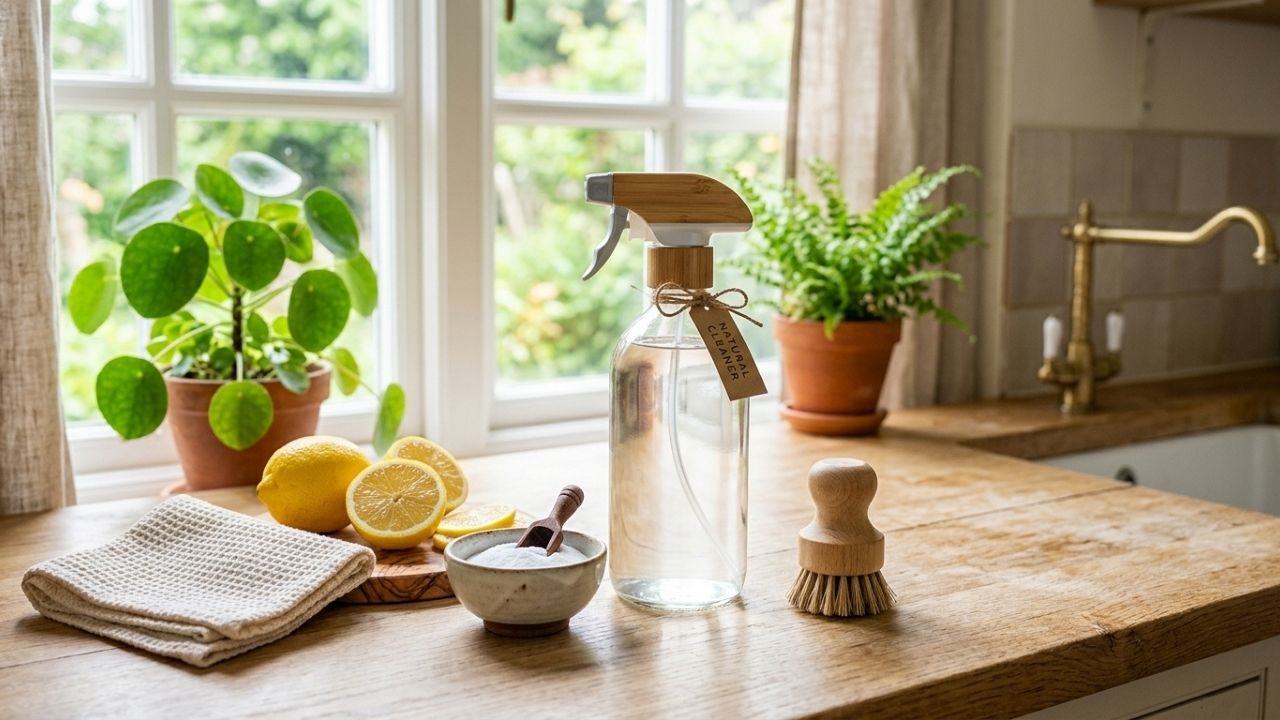
Common natural cleaning ingredients include vinegar, baking soda, castile soap, citrus extracts, essential oils, and hydrogen peroxide. These have been used for generations, long before commercial cleaning products became the norm.
Natural vs Organic vs Non-Toxic
It helps to understand that these three terms are not interchangeable, even though they often appear together in product descriptions.
- Natural refers to ingredients sourced from nature rather than synthesized in a lab
- Organic refers to how plant ingredients were grown, typically without synthetic pesticides or fertilizers
- Non-toxic refers to the safety of a product for human health, which is not always the same as environmental safety
A product can technically be natural but still not be great for the environment if it is harvested unsustainably or packaged in excessive plastic.
How Conventional Cleaning Products Affect the Environment
To understand why natural alternatives matter, it helps to look at what happens when conventional cleaning products go down the drain or into the trash.
Many mainstream cleaners contain:
- Phosphates, which can cause algae blooms in rivers and lakes when they enter waterways
- Chlorine bleach, which can react with organic matter to form harmful byproducts
- Ammonia, which contributes to indoor and outdoor air pollution
- Synthetic fragrances, which often contain phthalates that don’t break down easily
- Petroleum-based surfactants, which are derived from a non-renewable resource
These ingredients are usually effective at cleaning, but their environmental cost shows up later, in waterways, soil, and air quality. Wastewater treatment plants are not always equipped to fully filter out every synthetic chemical, meaning trace amounts can end up in rivers, oceans, and even drinking water systems.
The Environmental Case for Natural Cleaning Products
Switching to natural cleaning products can reduce environmental harm in several meaningful ways.
Biodegradability
One of the biggest advantages of natural cleaners is how quickly they break down. Ingredients like vinegar, citrus-based solvents, and plant-derived surfactants tend to decompose into harmless compounds much faster than synthetic chemicals. This matters because water treatment systems are better equipped to handle biodegradable substances, reducing the chance that harmful residues reach natural ecosystems.
Reduced Water Pollution
Because natural products often skip phosphates and heavy synthetic dyes, they place less strain on aquatic environments. Waterways that receive runoff from households using natural cleaners tend to show fewer disruptions to fish and plant life over time.
Lower Air Pollution Indoors and Outdoors
Volatile organic compounds, or VOCs, are released by many conventional cleaning sprays and air fresheners. These compounds can react with sunlight to form ground-level ozone, a key component of smog. Natural cleaners typically use fewer volatile compounds, which can improve both indoor air quality and reduce outdoor air pollution at a larger scale.
Sustainable Sourcing
Many natural cleaning brands lean into sustainability beyond just the formula. This can include using recycled or refillable packaging, sourcing ingredients from renewable plant sources, and reducing carbon emissions during manufacturing. This broader approach to sustainability often makes natural products a better overall environmental choice, not just because of what’s inside the bottle.
Where Natural Products Fall Short
Natural doesn’t automatically mean perfect, and it’s worth being realistic about the limitations.
- Some natural ingredients, like palm-derived surfactants, come with their own environmental concerns related to deforestation
- Essential oils used for fragrance can be resource-intensive to produce, requiring large amounts of plant material
- Natural products can sometimes require more product per use, since they may be less concentrated, which can offset some of the environmental benefit
- Not all “natural” products are third-party certified, so greenwashing is still a real risk
This is why reading ingredient labels matters just as much as reading the front of the package.
Comparing Natural and Conventional Cleaning Products
| Factor | Natural Cleaning Products | Conventional Cleaning Products |
|---|---|---|
| Biodegradability | Generally breaks down quickly | Often slower to break down |
| Water pollution risk | Lower, especially without phosphates | Higher due to synthetic additives |
| Air quality impact | Fewer volatile organic compounds | Can release more VOCs |
| Packaging trends | More likely to use refillable or recycled options | Varies widely, often single-use plastic |
| Effectiveness on tough stains | Can require more scrubbing or repeat use | Often formulated for fast, strong action |
| Cost | Sometimes higher per bottle | Often cheaper upfront |
| Regulation of labeling | Loosely regulated, “natural” isn’t always verified | Ingredient lists often more standardized |
This comparison shows that natural products tend to have an environmental edge, but the difference in effectiveness and cost is worth considering depending on household needs.
How to Choose Truly Eco-Friendly Cleaning Products
For someone trying to live more sustainably, it helps to look past marketing language and focus on a few practical signals.
Look for Certifications
Independent certifications can offer more reassurance than a product label alone. Look for:
- Certifications that verify biodegradability
- Cruelty-free certifications, which often align with more thoughtful sourcing overall
- Certifications that confirm a product meets defined safety and environmental standards
Check the Ingredient List
A short, recognizable ingredient list is usually a good sign. If a label lists vague terms like “fragrance” without specifying the source, that can be a red flag for hidden synthetic additives.
Consider the Packaging
Environmental impact isn’t only about what’s inside the bottle. Look for:
- Refillable containers
- Concentrated formulas that reduce plastic use over time
- Cardboard or glass packaging instead of single-use plastic
Think About Concentration
Concentrated cleaning products, whether natural or conventional, often reduce the overall environmental footprint because they require less packaging and less transportation weight per use.
Making Natural Cleaners at Home
For those who want full control over what goes into their cleaning routine, homemade cleaners are a simple and low-cost option. A few household staples can replace many store-bought products entirely.
- White vinegar and water make an effective glass and surface cleaner
- Baking soda works well as a gentle abrasive for scrubbing
- Castile soap can be diluted for an all-purpose cleaner
- Lemon juice helps cut through grease and adds a fresh scent
- Hydrogen peroxide can be used as a natural disinfectant on certain surfaces
Homemade cleaners cut down on packaging waste almost entirely, since they can be stored and reused in the same glass spray bottles over and over again.
A Few Things to Keep in Mind
- Never mix vinegar with hydrogen peroxide or bleach, as this can create harmful fumes
- Homemade cleaners may not disinfect as strongly as products designed to kill specific pathogens, so they aren’t always ideal for high-risk areas like raw meat surfaces
- Essential oils should be used in moderation, since some can be irritating in concentrated amounts
The Bigger Picture: Sustainability Beyond the Bottle
Choosing natural cleaning products is one part of a larger sustainability mindset. Someone who wants to reduce their environmental footprint might also consider:
- Reducing the number of specialized cleaning products used, since one multi-purpose cleaner can often replace several single-use ones
- Choosing reusable cloths over disposable wipes
- Buying in bulk or choosing refill stations where available
- Supporting brands that are transparent about sourcing and manufacturing practices
None of these choices need to be perfect to make a difference. Small, consistent swaps often add up to a meaningful reduction in household environmental impact over time.
Final Thoughts
Natural cleaning products generally do offer environmental advantages over conventional options, particularly when it comes to biodegradability, water pollution, and air quality. However, “natural” is not a guarantee of sustainability on its own. The best approach combines mindful ingredient reading, attention to packaging, and a willingness to explore simple homemade alternatives when possible.
For anyone working toward a more eco-conscious lifestyle, switching to natural cleaning products is a practical and approachable step. It won’t solve every environmental issue, but paired with other sustainable habits, it can meaningfully reduce the footprint left behind in everyday household routines.