
Every year, families around the world go through thousands of disposable diapers per child, and most of those diapers end up sitting in landfills for centuries. For anyone trying to live a greener, more eco-conscious life, this can feel like a frustrating contradiction.
Parenting already comes with enough decisions to make, and adding an environmental checklist to the mix might seem overwhelming. The good news is that sustainable alternatives to disposable diapers do exist, and many of them are more accessible, affordable, and practical than people expect.
This article explores what makes disposable diapers such a environmental concern, what alternatives are available, and how families can make a switch that works for their lifestyle without sacrificing convenience or comfort.
Why Disposable Diapers Are a Sustainability Problem
Disposable diapers are convenient, but that convenience comes at a steep environmental cost. Most disposable diapers are made from a mix of plastic, wood pulp, and super-absorbent polymers, materials that are not designed to break down quickly.
A few reasons disposable diapers raise sustainability concerns include:
- They can take between 250 and 500 years to decompose in a landfill, depending on the brand and materials used.
- A single baby may go through around 6,000 to 8,000 diapers before being potty trained, most of which end up in the trash.
- The production process for disposable diapers requires significant amounts of crude oil, wood pulp, and water.
- Diapers are rarely recycled because of the mixed materials and biological waste involved, meaning nearly all of them go straight to landfill or incineration.
- Manufacturing plastics for diapers contributes to greenhouse gas emissions throughout the supply chain.
None of this means that parents using disposable diapers are doing anything wrong. Life with a newborn is demanding, and disposables exist because they solve a real problem. But for people who want to reduce their household’s environmental footprint, understanding these numbers is often the first step toward exploring other options.
Cloth Diapers: The Most Well-Known Alternative
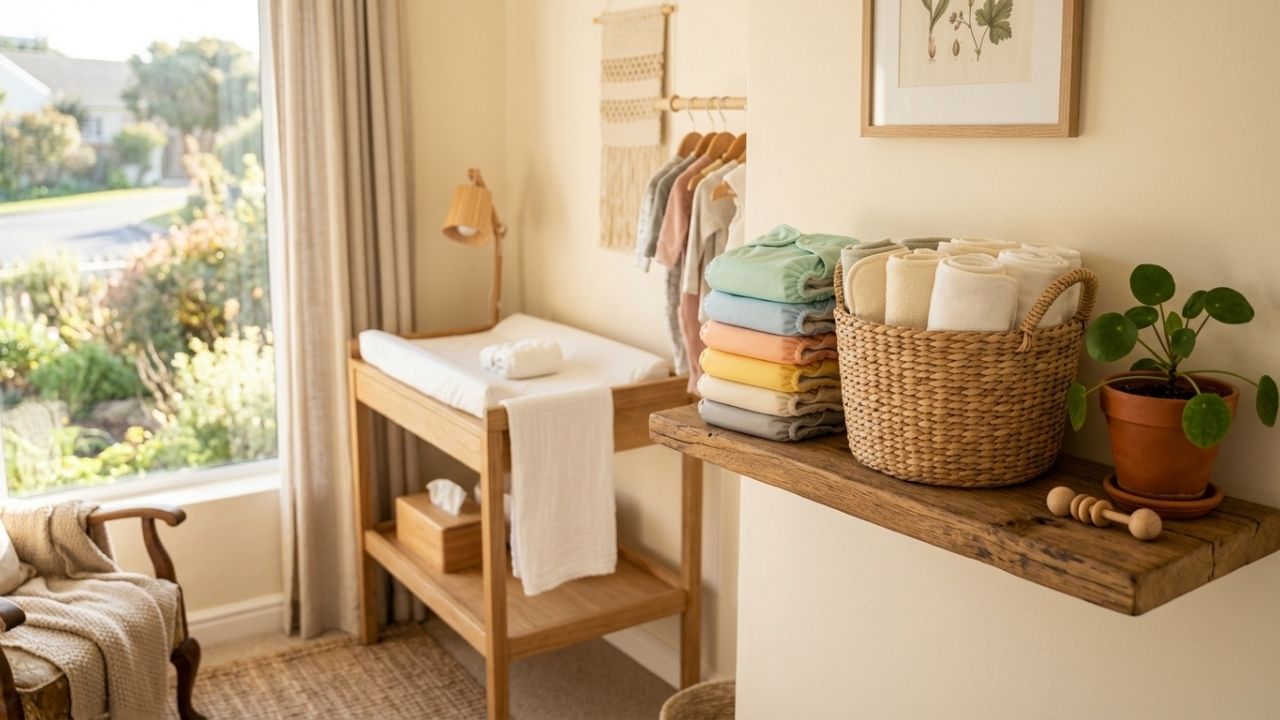
Cloth diapers are usually the first alternative that comes to mind, and for good reason. They have been used for generations and have evolved significantly from the folded cotton squares and safety pins of the past.
Types of Cloth Diapers
Modern cloth diapers come in several styles, each with different levels of convenience and cost.
- Prefolds and flats – Simple rectangular cloth pieces that are folded and secured with a cover, offering the lowest cost option.
- Fitted diapers – Shaped like a disposable diaper with elastic around the legs and waist, usually requiring a separate waterproof cover.
- All-in-one diapers – Function most like disposables, with the absorbent layer and waterproof cover sewn together for easy use.
- Pocket diapers – A waterproof shell with a pocket that holds an absorbent insert, allowing for adjustable absorbency.
- Hybrid diapers – Use a reusable cover with a disposable or flushable insert, offering a middle ground between cloth and disposable.
The Benefits of Cloth Diapers
Cloth diapers offer several advantages beyond reducing landfill waste.
- They can be reused for years and even passed down to younger siblings, which lowers the overall cost per use.
- Many parents find that cloth diapers cause fewer skin irritations because they avoid certain chemicals found in some disposables.
- Cloth diapering can encourage earlier potty training in some children, since they feel wetness more directly compared to the super-absorbent materials in disposables.
- Buying secondhand cloth diapers or diaper covers is common and helps reduce costs even further.
The Trade-Offs to Consider
Cloth diapering is not without its challenges, and being honest about them helps families set realistic expectations.
- There is an upfront cost to build a diaper stash, though this is often offset over time.
- Washing diapers requires extra laundry loads, which uses water and energy.
- Cloth diapering takes more hands-on effort, especially when it comes to rinsing, washing, and drying.
- Traveling or being away from home can be more complicated without access to a washing machine.
Biodegradable and Eco-Friendly Disposable Diapers
For families who want to reduce their environmental impact without giving up the convenience of disposables, biodegradable diaper brands have become a popular middle-ground option.
These diapers are typically made with plant-based materials such as bamboo, cornstarch, or sustainably sourced wood pulp instead of relying entirely on petroleum-based plastics. Some are also free from chlorine bleaching, fragrances, and certain dyes.
It is worth noting that “biodegradable” does not always mean the diaper will break down quickly in a typical landfill, since landfills are often designed to limit the oxygen and moisture needed for decomposition. Even so, these diapers generally use fewer synthetic materials, involve a lower carbon footprint during production, and are gentler on sensitive skin.
What to Look For in Eco-Friendly Disposables
- Diapers labeled as chlorine-free or using oxygen-based bleaching processes.
- Products made with a higher percentage of plant-based or renewable materials.
- Packaging that uses recycled or recyclable materials.
- Certifications from independent environmental or sustainability organizations.
Elimination Communication: Skipping Diapers Altogether
One lesser-known but growing method among eco-conscious families is elimination communication, sometimes referred to as EC. This practice involves learning to recognize a baby’s cues for needing to use the bathroom and holding them over a toilet, potty, or sink instead of relying on a diaper for every bathroom need.
Elimination communication is common in many cultures around the world and has been practiced for generations, particularly in communities where disposable diapers are less accessible or affordable.
How Elimination Communication Works
- Caregivers watch for signs such as fussiness, pausing during activity, or specific sounds that indicate a baby needs to go.
- Babies are held in a supported position over a potty, toilet, or basin at regular intervals, such as after waking up or after feeding.
- Diapers or diaper covers are still used as a backup, especially during naps, outings, or overnight sleep.
- Over time, many families find that their baby develops fewer accidents and stronger bathroom awareness.
This method significantly reduces diaper usage, though it does require patience, consistency, and a willingness to learn a baby’s individual patterns. It is not an all-or-nothing approach, and many families use a partial version alongside cloth or disposable diapers.
Comparing the Main Alternatives
Choosing the right option often depends on lifestyle, budget, and how much time a family can dedicate to diapering. The table below offers a general comparison to help with decision making.
| Option | Environmental Impact | Upfront Cost | Ongoing Effort | Best For |
|---|---|---|---|---|
| Traditional disposables | High | Low | Low | Busy families needing maximum convenience |
| Biodegradable disposables | Moderate | Moderate to high | Low | Families wanting convenience with a lighter footprint |
| Cloth diapers | Low | Moderate upfront, low long-term | High | Families able to manage extra laundry |
| Hybrid diapers | Low to moderate | Moderate | Moderate | Families wanting flexibility between cloth and disposable |
| Elimination communication | Very low | Very low | High, requires attentiveness | Caregivers with flexible schedules and patience |
Practical Tips for Making the Switch
Transitioning to a more sustainable diapering routine does not have to happen overnight. Small, manageable changes often work better than a complete overhaul.
- Start with a small trial batch of cloth diapers before investing in a full stash to see what fits and works best.
- Use cloth diapers at home and biodegradable disposables while traveling or during busy weeks, rather than choosing one method exclusively.
- Look into local diaper services that handle the washing and delivery of clean cloth diapers, which can significantly reduce the extra workload.
- Join local parenting groups or online communities focused on sustainable parenting for secondhand diaper sales and practical advice.
- Consider a wet bag or diaper pail liner to make cloth diaper storage more manageable between wash days.
- Be patient with the learning curve, since most families find that cloth diapering becomes easier and faster with practice.
The Bigger Picture: Sustainability Beyond Diapers
Choosing a more sustainable diapering method is just one part of a broader lifestyle shift that many eco-conscious families are embracing. It often overlaps with other choices, such as buying secondhand baby clothes, using reusable wipes, choosing non-toxic baby products, and reducing single-use plastics throughout the home.
It is also worth acknowledging that sustainability looks different for every household. A family juggling multiple children, demanding work schedules, or limited access to laundry facilities may find that a hybrid approach, using cloth part-time and eco-friendly disposables the rest of the time, is the most realistic and sustainable choice for their situation.
Progress matters more than perfection, and even partial changes can meaningfully reduce a family’s environmental footprint over time.
Final Thoughts
Disposable diapers are undeniably convenient, but their environmental impact has led many families to explore more sustainable alternatives.
Cloth diapers, biodegradable disposables, hybrid options, and even elimination communication all offer ways to reduce landfill waste and lower a household’s overall footprint. There is no single right answer, and the best choice often depends on a family’s daily routine, budget, and comfort level with a bit of extra effort.
For those interested in living a greener lifestyle, even a partial switch away from traditional disposables can make a meaningful difference over the course of a child’s early years. Every small change adds up, and diapering is just one of many areas where sustainable choices can quietly shape a healthier planet for the next generation.



