Choosing diapers might seem like a small decision, but for parents who care about sustainability, it can feel surprisingly weighty. Every baby goes through thousands of diapers before they’re potty trained, and each one leaves a footprint on the planet.
In recent years, bamboo diapers have grown in popularity as an eco-conscious alternative to traditional disposable diapers. But how different are they really?
This article breaks down the materials, environmental impact, performance, and cost of both options so parents can make an informed choice for their family and the planet.
What Are Bamboo Diapers?
Bamboo diapers are disposable diapers made primarily from bamboo-derived materials instead of the wood pulp and plastic layers found in conventional diapers. Bamboo is a fast-growing grass that requires very little water and no pesticides to thrive, which makes it an appealing raw material for eco-friendly products.
Most bamboo diapers use a blend of bamboo viscose or bamboo fiber for the top layer that touches a baby’s skin, combined with an absorbent core and an outer layer that may still contain some plastic components for leak protection.
It’s worth noting that “bamboo diaper” doesn’t always mean 100 percent bamboo. Many brands combine bamboo with other materials to balance sustainability with performance.
Key Features of Bamboo Diapers
- Soft, breathable top layer made from bamboo viscose
- Often free from chlorine bleaching, fragrances, and lotions
- Biodegrade faster than fully plastic diapers in the right composting conditions
- Frequently marketed as hypoallergenic and gentle for sensitive skin
What Are Traditional Disposable Diapers?
Traditional disposable diapers have been the go-to choice for parents since the 1960s. They are typically constructed with a plastic outer shell, a super-absorbent polymer core, and a synthetic inner lining. These materials are engineered for maximum absorbency, leak protection, and convenience, which is a big reason they remain the most widely used diaper type worldwide.
The absorbent core in traditional diapers usually contains sodium polyacrylate, a super-absorbent polymer that can hold many times its weight in liquid. This is what allows conventional diapers to keep babies dry for longer stretches, including overnight.
Key Features of Traditional Disposable Diapers
- Highly absorbent thanks to synthetic polymer cores
- Widely available and generally more affordable
- Designed for long wear time between changes
- Take hundreds of years to decompose in landfills
Environmental Impact Comparison
This is where the two diaper types diverge the most. Traditional disposable diapers are made largely from petroleum-based plastics, which do not break down easily. Estimates suggest a single disposable diaper can take between 200 and 500 years to decompose in a landfill. Multiply that by the thousands of diapers one baby uses, and the scale of the problem becomes clear.
Bamboo diapers attempt to address this by using a renewable resource that grows quickly and doesn’t require replanting after harvesting, since bamboo regenerates from its own root system. Bamboo also absorbs more carbon dioxide and produces more oxygen than many trees of a similar size, which supports its reputation as a climate-friendly crop.
However, it’s important to be realistic. Bamboo diapers are still disposable products, and most of them are not fully biodegradable because they usually contain some plastic in the outer layer or leak-guard elastic. They typically decompose faster than fully synthetic diapers, but they still require the right composting environment, such as high heat and oxygen exposure, to break down efficiently. In a typical landfill, even bamboo diapers may take years rather than centuries, but they won’t vanish overnight.
Table: Environmental Comparison at a Glance
| Factor | Bamboo Diapers | Traditional Disposable Diapers |
|---|---|---|
| Raw material | Bamboo fiber or viscose blend | Wood pulp and petroleum-based plastic |
| Decomposition time | Months to a few years in ideal conditions | 200 to 500 years |
| Water use in production | Lower, bamboo needs minimal irrigation | Higher, especially for plastic processing |
| Pesticide use | Typically low or none for bamboo crops | Varies depending on wood pulp sourcing |
| Carbon footprint | Generally lower due to bamboo’s fast growth | Higher due to plastic manufacturing |
| Fully biodegradable | Often partially, not fully | No |
Performance and Comfort
Sustainability matters, but most parents also need diapers that actually work. Nobody wants to sacrifice a good night’s sleep for the sake of the environment, so it helps to understand how bamboo and traditional diapers stack up in daily use.
Absorbency
Traditional diapers generally have an edge when it comes to raw absorbency, especially overnight. Their super-absorbent polymer cores are specifically engineered to lock away moisture and keep it from leaking back onto the skin.
Many bamboo diaper brands have worked to close this gap by combining bamboo fibers with similar absorbent cores, so the difference is smaller than it used to be, but some parents still notice they need to change bamboo diapers slightly more often during long stretches like naps or overnight sleep.
Softness and Skin Sensitivity
Bamboo fabric is naturally soft and has a silky texture that many parents describe as gentler against a baby’s skin compared to the synthetic top sheet found in some conventional diapers. Bamboo also has natural moisture-wicking properties and is often free of added fragrances, dyes, and lotions, which can be helpful for babies prone to rashes or eczema.
Breathability
Because bamboo fiber is naturally breathable, bamboo diapers tend to allow more airflow, which can help reduce the risk of diaper rash caused by trapped heat and moisture. Traditional diapers have improved their breathability over the years too, but bamboo still tends to have a slight advantage in this area.
Fit and Design
Both diaper types come in a range of sizes and styles, from newborn to toddler. Traditional diaper brands often have more design variety, stretchier waistbands, and more refined leak guards simply because they have been on the market longer and have more research and development behind them. Bamboo diaper brands are catching up quickly, but parents may find slightly fewer style options.
Cost Comparison
Price is a real consideration for most families, and this is an area where bamboo diapers can be a harder sell.
- Traditional disposable diapers are usually the more budget-friendly option due to economies of scale and decades of manufacturing efficiency
- Bamboo diapers tend to cost more per diaper because bamboo processing and smaller-batch production are more expensive
- Some bamboo diaper brands offer subscription discounts that can help offset the higher price over time
- Buying in bulk can reduce the cost difference for both diaper types
For families on a tight budget, the price gap between bamboo and traditional diapers can be a genuine barrier, even if the environmental benefits are appealing.
Chemical and Skin Safety Considerations
Another reason parents lean toward bamboo diapers is the perception that they contain fewer harsh chemicals. Many bamboo diaper brands market themselves as free from chlorine bleaching, latex, fragrances, and lotions. This can be reassuring for parents of babies with sensitive skin or allergies.
Traditional diapers have also made improvements in this area, with many major brands now offering hypoallergenic or fragrance-free lines. Still, some traditional diapers use chlorine bleaching in the manufacturing process, which can leave behind trace dioxins, a chemical byproduct linked to health concerns in large quantities.
It’s worth noting that “natural” and “bamboo” labeling isn’t always regulated the same way across regions, so parents who care deeply about ingredient transparency should look for third-party certifications or read ingredient lists carefully rather than relying on packaging claims alone.
Are Bamboo Diapers Truly Eco-Friendly?
This is a fair question, and the honest answer is that bamboo diapers are more eco-friendly than traditional diapers in several ways, but they are not a perfect solution.
Where Bamboo Diapers Win
- Bamboo is a renewable, fast-growing resource that doesn’t need replanting
- Bamboo farming generally uses less water and fewer pesticides
- Bamboo fiber production tends to have a smaller carbon footprint than plastic manufacturing
- Bamboo diapers often decompose faster than fully plastic diapers
Where Bamboo Diapers Fall Short
- Most bamboo diapers still contain some plastic components, such as leak guards or elastic
- They are not compostable in a standard home compost bin
- The bamboo processing method matters. Some manufacturing processes for bamboo viscose involve chemical treatments that can offset some environmental benefits
- Shipping and packaging can add to the overall footprint depending on the brand
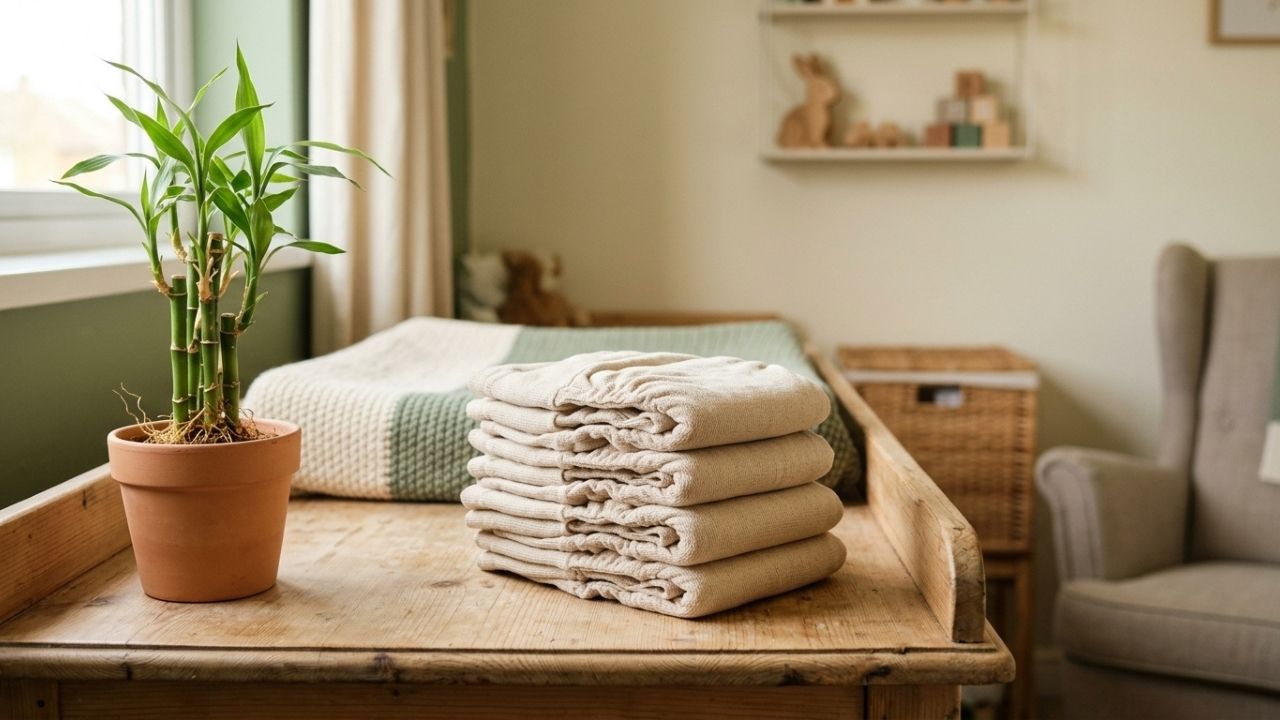
For parents seeking a truly zero-waste option, cloth diapers remain the more sustainable choice overall, since they can be washed and reused for years and, in many cases, passed down to siblings or other families. However, cloth diapering requires more time, water for washing, and effort, which isn’t realistic for every household.
Practical Tips for Eco-Conscious Parents
Choosing between bamboo and traditional diapers doesn’t have to be an all-or-nothing decision. Many families find a middle ground that fits their lifestyle, budget, and values.
- Consider using bamboo diapers at home and traditional diapers for travel or overnight stretches if absorbency is a concern
- Look for bamboo diaper brands that clearly disclose their materials and manufacturing process
- Explore hybrid options that combine reusable outer covers with disposable, biodegradable inserts
- Check whether local waste facilities offer composting options that can handle bamboo-based products
- Buy diapers in appropriate sizes and quantities to avoid waste from diapers a baby outgrows too quickly
A Word on Disposal
Regardless of which diaper type a family chooses, proper disposal matters. Wrapping diapers tightly before throwing them away can help reduce odor and pest issues. Some communities have diaper recycling or composting programs, so it’s worth checking local resources to see what options exist beyond the regular trash bin.
Making the Right Choice for Your Family
There’s no single “correct” answer when it comes to bamboo versus traditional disposable diapers. Every family has different priorities, whether that’s budget, convenience, absorbency, or environmental impact.
Bamboo diapers offer a meaningful step toward sustainability without requiring the full commitment of cloth diapering, making them a good middle-ground option for busy parents who still want to reduce their environmental footprint.
Traditional diapers, on the other hand, remain a reliable and affordable choice, especially for families who need maximum absorbency or who are working within a tighter budget. Understanding the tradeoffs between the two can help parents choose the option that best fits their values and daily routine, without feeling pressured to make a perfect choice every time.
Ultimately, small, consistent choices, like reducing overall diaper waste, using appropriate sizing, and staying informed about materials, add up over time. Whether a family chooses bamboo, traditional, cloth, or a mix of all three, being thoughtful about the decision is itself a meaningful step toward a more sustainable lifestyle.