The kitchen is often the busiest room in the house, and it is also where a surprising amount of everyday waste is created. Paper towels, plastic wrap, disposable sponges, and single use bags tend to pile up in the trash week after week without anyone really noticing.
For someone who wants to live a more sustainable and eco-friendly lifestyle, the kitchen is one of the easiest places to start making meaningful changes.
Switching to reusable kitchen products is not about being perfect or giving up convenience overnight. It is about making small, steady swaps that reduce waste, save money over time, and lower the amount of plastic that ends up in landfills and oceans. This article walks through the most common disposable kitchen items and shows what reusable alternatives can take their place.
Why Reusable Kitchen Products Matter
Kitchens generate a huge share of household waste, much of it from items that are used once and thrown away. Plastic wrap cannot be recycled in most curbside programs, paper towels are used and discarded within seconds, and single use bags often end up in waterways or landfills where they take hundreds of years to break down.
Choosing reusable alternatives helps in a few important ways.
- It reduces the amount of plastic and paper waste sent to landfills each year
- It cuts down on the money spent repurchasing disposable products every month
- It lowers the demand for raw materials like petroleum used to make plastic products
- It encourages more mindful habits around food storage and cleaning
Even switching just a few items can make a noticeable difference over a year of daily use.
Common Kitchen Products and Their Reusable Swaps
Below is a simple breakdown of popular disposable kitchen items and the reusable options that can replace them.
| Disposable Product | Reusable Alternative | Approximate Lifespan |
|---|---|---|
| Plastic wrap | Beeswax wraps or silicone lids | 1 to 2 years |
| Paper towels | Cotton or bamboo cloths | 2 to 5 years |
| Plastic sandwich bags | Silicone or fabric reusable bags | 3 to 5 years |
| Disposable sponges | Silicone scrubbers or compostable sponges | 6 months to 1 year |
| Single use coffee filters | Reusable metal or cloth filters | 5 to 10 years |
| Plastic water bottles | Stainless steel or glass bottles | Many years |
| Paper napkins | Cloth napkins | Many years |
| Plastic straws | Metal, glass, or silicone straws | Many years |
Beeswax Wraps and Silicone Lids Instead of Plastic Wrap
Plastic wrap is one of the biggest offenders in the average kitchen. It is inexpensive, convenient, and used constantly to cover bowls or wrap leftovers. Unfortunately, it cannot be recycled and is made from petroleum based plastic.
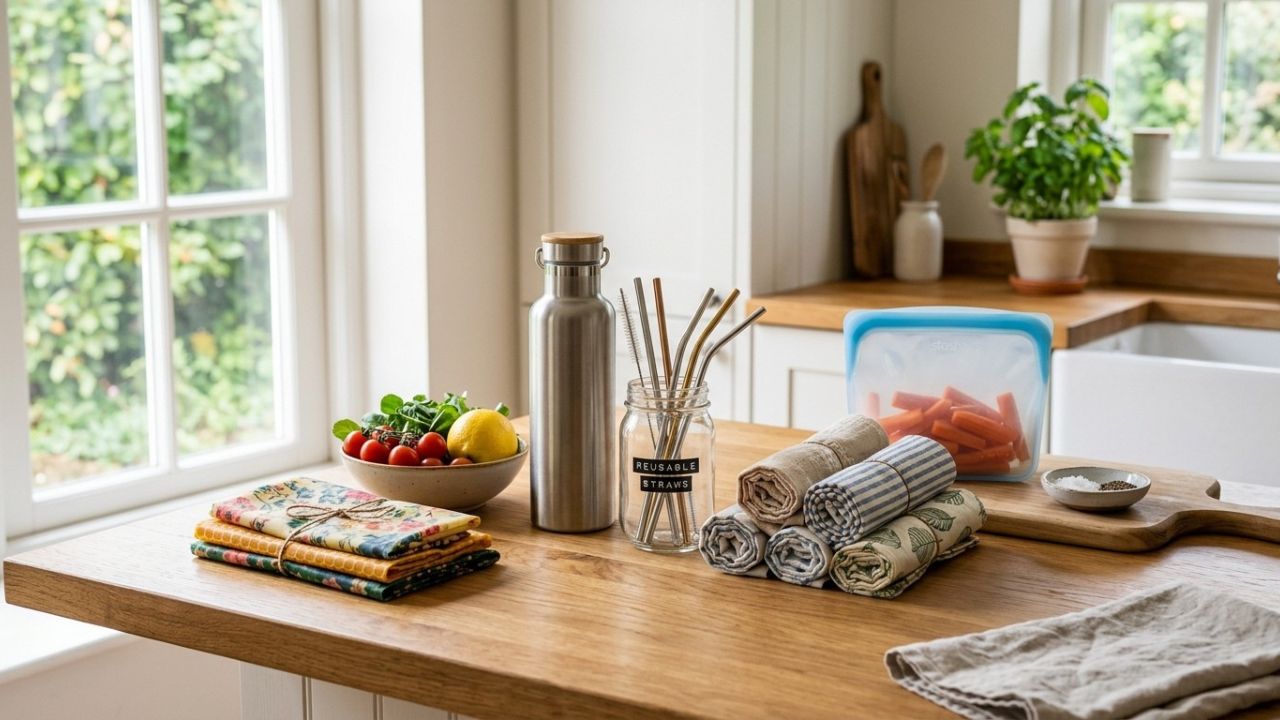
Beeswax wraps are a popular reusable option. They are made from cotton fabric coated in beeswax, tree resin, and jojoba oil, which makes them naturally sticky enough to seal around bowls or wrap sandwiches. They can be washed with cool water and mild soap, then reused for up to a year or longer.
Silicone stretch lids are another option that fits directly over bowls, jars, and even cut fruit. They come in multiple sizes and can go in the dishwasher, making them a low effort swap for anyone who wants something simple and durable.
Cloth Towels Instead of Paper Towels
Paper towels are used for everything from wiping counters to drying dishes, but they are thrown away almost immediately after use. Switching to reusable cloth towels, sometimes called unpaper towels, can dramatically cut down on this waste.
Bamboo or cotton cloths can be washed and reused hundreds of times before needing to be replaced. Many people keep a small stack near the sink and toss used ones into the laundry at the end of the day, just like a dish towel.
Reusable Bags Instead of Plastic Sandwich Bags
Plastic sandwich and snack bags are convenient for packing lunches, but they are almost always used once and discarded. Silicone reusable bags can be washed, air dried, and used again for years. They come in a range of sizes for snacks, sandwiches, and even freezer storage.
Fabric bags with a wax lining are another option for people who want something more breathable, especially for storing bread or produce.
Silicone Scrubbers Instead of Disposable Sponges
Traditional sponges wear out quickly and often harbor bacteria, which means they need to be replaced often. Silicone scrubbers last much longer, dry faster, and can be sanitized easily in the dishwasher or with boiling water.
For people who prefer a more natural option, compostable sponges made from plant based materials like loofah or cellulose are a good middle ground. They still need to be replaced more often than silicone, but they break down naturally instead of sitting in a landfill.
Reusable Filters Instead of Paper Coffee Filters
Coffee lovers who brew a pot every morning go through a surprising number of paper filters over a year. A reusable metal or cloth coffee filter fits into most standard coffee makers and can be rinsed out and reused indefinitely.
Some people notice a slight difference in taste since metal filters allow more oils through, but many coffee drinkers find they actually prefer the richer flavor.
Stainless Steel or Glass Bottles Instead of Plastic Water Bottles
Single use plastic water bottles are one of the most common sources of plastic waste worldwide. A reusable stainless steel or glass bottle can replace hundreds of plastic bottles over its lifetime.
Beyond reducing waste, many people find that a reusable bottle keeps drinks colder or hotter for longer, which is a nice bonus on top of the environmental benefit.
Cloth Napkins Instead of Paper Napkins
Cloth napkins are an easy swap for anyone who eats at home regularly. They can be washed along with regular laundry and reused for years. Many households keep a rotation of napkins so there is always a clean one ready at mealtime.
Metal, Glass, or Silicone Straws Instead of Plastic Straws
Plastic straws are small, but they add up quickly and are notoriously difficult to recycle. Reusable straws made from stainless steel, glass, or silicone can be kept at home or carried along for smoothies, iced coffee, and other drinks.
How to Start Making the Switch
Replacing every disposable product in the kitchen all at once can feel overwhelming, and it is not necessary to do it that way. A more sustainable approach is to make gradual changes as items run out or wear down.
- Start with the product used most often, such as paper towels or plastic wrap
- Replace one item at a time instead of buying everything at once
- Keep using disposable products already purchased instead of throwing them away
- Choose durable materials like silicone, stainless steel, or glass for long term use
- Look for secondhand or locally made reusable products to support small businesses
This approach makes the transition feel manageable and helps build habits that actually stick, rather than creating a drawer full of unused reusable items.
Caring for Reusable Kitchen Products
Reusable products only reduce waste if they are properly cared for and used consistently. A few simple habits can extend the life of these items significantly.
- Wash beeswax wraps with cool water since hot water can melt the wax coating
- Air dry silicone bags and scrubbers fully before storing to prevent mildew
- Rotate cloth towels and napkins so no single one wears out too quickly
- Avoid abrasive scrubbers on stainless steel bottles to prevent scratching
- Store reusable bags flat or hung up to help them keep their shape
Taking a few extra minutes to care for these products means they will last for years, which keeps the environmental and financial benefits adding up over time.
The Bigger Picture
Making these swaps in the kitchen is a small part of a much larger movement toward sustainable living, but small changes matter. Every plastic wrap sheet avoided, every paper towel roll skipped, and every disposable bag replaced adds up over months and years. Households that make these changes often find that sustainability becomes less about sacrifice and more about building simple, lasting habits.
The kitchen is a natural starting point because these changes happen without much extra effort once the reusable items are in place. From there, many people find themselves looking at other areas of the home, from bathroom products to cleaning supplies, with the same mindset of choosing reusable over disposable whenever possible.
Frequently Asked Questions
Are reusable kitchen products more expensive upfront?
Yes, in most cases reusable products cost more at the time of purchase compared to a roll of paper towels or a box of plastic bags. However, because they can be used hundreds or even thousands of times, the cost per use ends up being much lower than constantly repurchasing disposable items.
How long do reusable kitchen products actually last?
This depends on the material and how well it is cared for. Silicone products often last several years, stainless steel items can last a lifetime with basic care, and cloth based products like towels and napkins typically last a few years before needing replacement.
Is it better to use up disposable products first before switching?
Generally yes. Throwing away unused disposable products creates unnecessary waste. It is more sustainable to use what is already on hand and then replace those items with reusable alternatives once they run out.
Switching to reusable kitchen products is one of the simplest and most rewarding ways to reduce household waste. It does not require a complete lifestyle overhaul, just a willingness to make small changes over time. For anyone looking to live a little more sustainably, the kitchen is a great place to begin.