
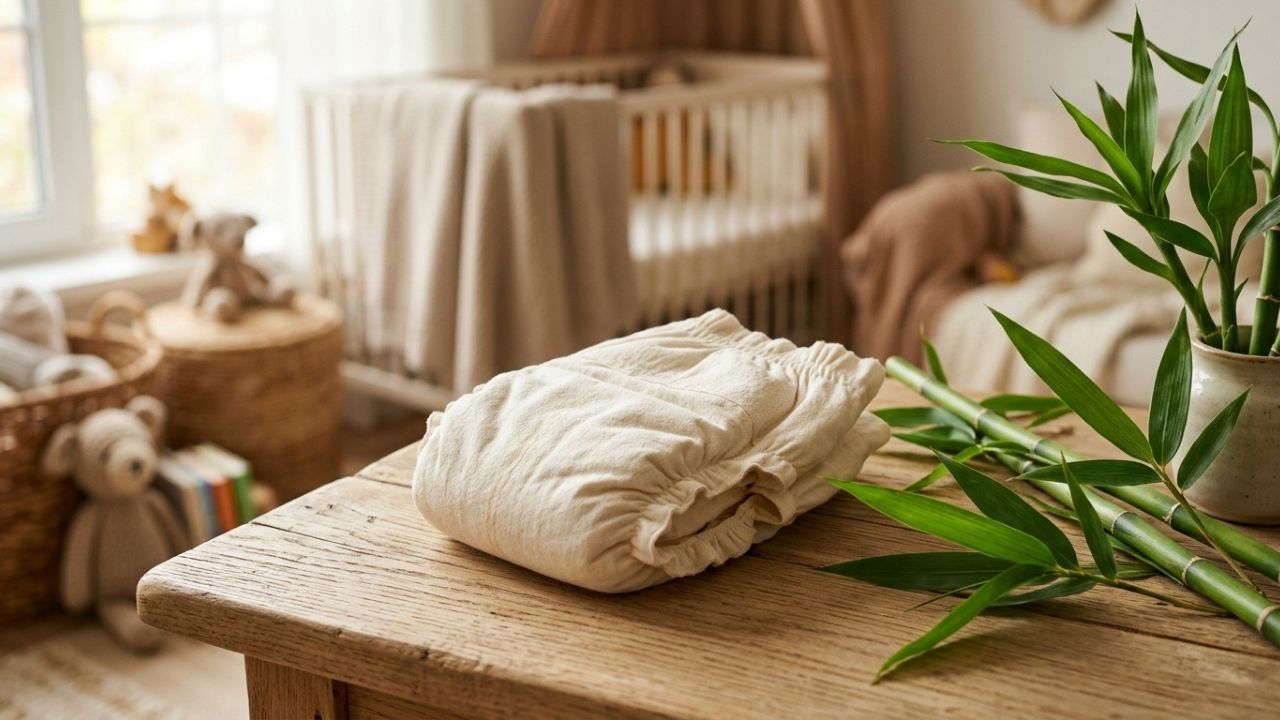
Parents who care about the planet are always looking for small ways to reduce their household’s environmental footprint, and one of the biggest opportunities lies in something used dozens of times a week: diapers.
A baby typically goes through thousands of diapers before they are potty trained, and the type of diaper chosen can have a real impact on landfill waste, resource use, and even a baby’s comfort. This is where bamboo diapers come into the picture.
They have grown in popularity among eco-conscious families, but many people still wonder exactly how they differ from the regular disposable diapers found on most store shelves. This article breaks down those differences in a simple, practical way.
What Are Bamboo Diapers?
Bamboo diapers are disposable diapers that use bamboo-derived fibers as one of their main materials, usually in the top layer that touches the baby’s skin. Instead of relying entirely on wood pulp or synthetic materials, manufacturers blend bamboo viscose or bamboo fiber into the diaper’s construction.
The result is a diaper that looks and functions similarly to a standard disposable but is marketed as a gentler and more sustainable alternative.
It is worth noting that bamboo diapers are not the same as cloth diapers. They are still single-use products, but they are designed with the intention of using more renewable materials and reducing some of the environmental concerns associated with traditional plastic-heavy diapers.
How Are Bamboo Diapers Different From Regular Disposable Diapers
The differences between bamboo diapers and regular disposable diapers come down to a few key areas: the materials used, how the diapers are made, how they affect the environment, and how they feel against a baby’s skin. Below is a closer look at each of these areas.
Material Composition
Regular disposable diapers are typically made from a combination of:
- Wood pulp fluff for absorbency
- Superabsorbent polymers (SAP) to lock in moisture
- Polypropylene and polyethylene plastic layers for the outer shell and leg cuffs
- Synthetic adhesives and elastics
Bamboo diapers, on the other hand, replace or supplement some of these materials with bamboo fiber, which is often used for the inner liner that sits against the baby’s skin.
Many bamboo diapers still use some plastic components and superabsorbent polymers for the core, since bamboo alone does not absorb liquid as effectively as SAP. However, the amount of plastic used is often reduced compared to conventional diapers, and the packaging is frequently made from more sustainable materials as well.
Environmental Impact
Bamboo is considered a more renewable resource than the trees typically used for wood pulp in standard diapers. It grows extremely fast, sometimes several feet in a single day, and does not require replanting after harvesting because it regrows from its own root system. This makes it a more sustainable crop compared to slow-growing trees that take decades to mature.
Regular disposable diapers rely heavily on wood pulp sourced from forests, which contributes to deforestation concerns if not sustainably managed. They also contain a higher percentage of plastic, which takes hundreds of years to break down in a landfill.
Biodegradability and Decomposition Time
One of the most talked-about differences is how long each type of diaper takes to break down after disposal.
- Regular disposable diapers can take an estimated 300 to 500 years to fully decompose in a landfill due to their plastic content.
- Bamboo diapers are often marketed as biodegradable or compostable in certain conditions, with some brands claiming decomposition times of a few months to a couple of years for the bamboo portions.
It is important to mention that no diaper is fully biodegradable if it still contains plastic backing, elastic bands, or superabsorbent polymers, which is the case for most bamboo diapers on the market. The bamboo fiber portion breaks down faster than wood pulp or plastic, but the entire diaper as a whole product still takes time to decompose, especially in a standard landfill environment where oxygen and moisture are limited.
Manufacturing Process
Bamboo used in diaper production is generally processed into a soft, breathable fiber that can be woven or blended into fabric-like layers. This process can involve chemical treatment to turn raw bamboo into a usable textile, similar to how bamboo clothing is produced. While this does require some processing, many brands aim to use closed-loop systems that limit chemical waste and water usage.
Regular diaper manufacturing focuses on wood pulp processing, plastic extrusion for the outer layers, and the production of superabsorbent polymer granules. This process is well established and highly efficient at scale, but it relies more heavily on petroleum-based materials.
Comfort and Skin Health
Many parents who switch to bamboo diapers report that their baby’s skin feels less irritated, especially babies who are prone to rashes or sensitive skin. Bamboo fiber is naturally soft, breathable, and has some moisture-wicking properties, which can help keep the skin drier and reduce friction.
Bamboo also has natural antibacterial and antifungal properties in its raw form, although it is worth noting that once bamboo is processed into viscose fiber for use in diapers, some of these natural properties may be reduced. Still, the softness of the material tends to remain a noticeable benefit.
Regular disposable diapers have improved significantly over the years in terms of comfort, but the outer layers are often made from thicker plastic material, which can trap heat and moisture against the skin more than bamboo alternatives.
Absorbency and Performance
Absorbency is a major concern for any parent choosing a diaper, and this is an area where bamboo diapers have worked hard to catch up to conventional options.
- Regular disposable diapers are known for strong, long-lasting absorbency thanks to superabsorbent polymers that can hold many times their weight in liquid.
- Bamboo diapers usually still include a layer of superabsorbent polymer at the core, meaning their absorbency can be very similar to regular diapers, especially in higher-quality brands.
The main difference tends to be in how the moisture feels against the skin rather than how much liquid is absorbed overall. Bamboo’s breathability can make wetness feel less noticeable to the baby, even if the actual absorbency numbers are comparable to standard diapers.
Comparing Bamboo Diapers and Regular Disposable Diapers
The table below offers a simple side-by-side comparison to summarize the key differences discussed above.
| Feature | Bamboo Diapers | Regular Disposable Diapers |
|---|---|---|
| Main material | Bamboo fiber blended with some plastic and SAP | Wood pulp, plastic layers, and SAP |
| Renewability of raw material | Fast-growing, regrows without replanting | Slower-growing trees, more resource intensive |
| Decomposition time | Faster for bamboo portion, still slow overall due to plastic | Very slow, often 300 to 500 years |
| Skin feel | Soft, breathable, naturally gentle | Soft but often less breathable |
| Absorbency | Comparable, depends on brand | Strong and consistent |
| Cost | Usually higher | Usually lower |
| Availability | Growing but less common | Widely available everywhere |
| Packaging | Often more eco-conscious | Varies by brand |
Cost Considerations
Cost is a practical factor that many families weigh heavily. Bamboo diapers are generally priced higher than mainstream disposable diapers, sometimes by a noticeable margin. This is largely due to the cost of sourcing and processing bamboo fiber, smaller production scales, and the premium branding often attached to eco-friendly products.
For families on a tight budget, this price difference can be a real barrier. Some parents choose a middle ground by using bamboo diapers part-time, such as overnight or during the newborn stage when skin sensitivity is highest, while using regular diapers the rest of the time to manage costs.
Are Bamboo Diapers Truly Eco-Friendly?
This is a fair question, and the honest answer is that bamboo diapers are a step in a more sustainable direction, but they are not a perfect solution. They still contribute to landfill waste, and most brands have not eliminated plastic components entirely. However, when compared directly to regular disposable diapers, bamboo diapers generally:
- Use a more renewable raw material for a significant portion of the product
- Require less water and land compared to traditional wood pulp farming
- Often come in packaging with less plastic
- Break down somewhat faster in the right composting conditions
For families who cannot commit to cloth diapering due to time, water usage for washing, or lifestyle constraints, bamboo diapers offer a reasonable middle ground between convenience and sustainability.
Tips for Choosing Sustainable Diapers
Families interested in reducing their environmental impact through diaper choices can consider the following tips:
- Look for diapers that clearly state the percentage of bamboo or plant-based material used, rather than relying on vague eco-friendly labeling
- Check whether the brand uses chlorine-free processing methods, since this reduces harmful byproducts
- Consider diaper size and fit carefully to avoid leaks, which can lead to more frequent diaper changes and higher overall waste
- Explore hybrid options that combine cloth outer covers with biodegradable inserts for a lower-waste alternative
- Compare pricing per diaper rather than per pack, since pack sizes vary between brands
- Look into local composting facilities that may accept biodegradable diaper products, since most cannot go into a home compost bin
- Buy in bulk when possible to reduce packaging waste and save on cost per diaper
Final Thoughts
Bamboo diapers are not a perfect, guilt-free solution, but they represent a meaningful improvement over many regular disposable diapers when it comes to material sourcing, renewability, and biodegradability.
They tend to be gentler on a baby’s skin due to their soft, breathable fibers, while still offering absorbency that can compete with traditional options. The tradeoff usually comes down to cost and availability, since bamboo diapers remain more expensive and slightly harder to find than mainstream brands.
For families trying to live a more sustainable lifestyle without giving up the convenience of disposable diapers, bamboo diapers offer a practical compromise. Understanding how they differ from regular diapers, in terms of materials, environmental impact, and everyday performance, can help parents make an informed choice that fits both their values and their budget.



