Anyone who cares about sustainable living eventually asks the same question while standing in their backyard: why isn’t there more buzzing happening out here? A garden full of pollinators is not just pretty to look at. It is a sign of a healthy ecosystem, and it plays a direct role in food production, biodiversity, and the overall wellbeing of the planet.
Bees, butterflies, moths, hoverflies, and even beetles all contribute to pollination, and their numbers have been declining for years due to habitat loss, pesticide use, and climate change. The good news is that a home garden, no matter how small, can become a meaningful refuge for these creatures.
This article walks through practical, eco-conscious ways to turn any outdoor space into a pollinator haven. It covers plant choices, garden design, water sources, shelter, and the everyday habits that either help or hurt the bees and butterflies trying to visit.
Why Pollinators Matter More Than Most People Realize
Pollinators are responsible for helping roughly one out of every three bites of food humans eat. Fruits, vegetables, nuts, and seeds all depend on the transfer of pollen from flower to flower, and bees are the most efficient workers in that process. Without them, crop yields drop, food prices rise, and entire ecosystems begin to unravel because so many other species rely on the plants that pollinators help reproduce.
Beyond the practical food angle, pollinators support wild plant diversity. Native flowers, shrubs, and trees depend on insects and birds to reproduce, which in turn provides food and habitat for other wildlife. A garden that welcomes pollinators becomes part of a larger web of life rather than an isolated patch of greenery.
For someone trying to live more sustainably, inviting pollinators into a garden is one of the most direct and rewarding ways to make a difference. It does not require a farm or acres of land. Even a balcony with a few containers can help.
Choosing the Right Plants
The single most effective thing anyone can do to attract bees and pollinators is to plant the right flowers. Pollinators are drawn to specific colors, shapes, and scents, and they need a consistent food source throughout the growing season.
Go Native Whenever Possible
Native plants have evolved alongside local pollinators for thousands of years, which means they produce the right nectar and pollen at the right time. They also tend to be hardier, requiring less water and fewer chemical inputs, which fits neatly into a sustainable gardening approach. A quick search for native plant lists specific to a region is a great starting point, since what thrives in one climate may struggle in another.
Prioritize Diversity in Bloom Times
Bees and butterflies need food from early spring through late fall. A garden that blooms only in June leaves pollinators hungry the rest of the year. Mixing early bloomers, mid-summer flowers, and late-season plants ensures there is always something available.
- Early spring options include crocus, redbud, and pussy willow
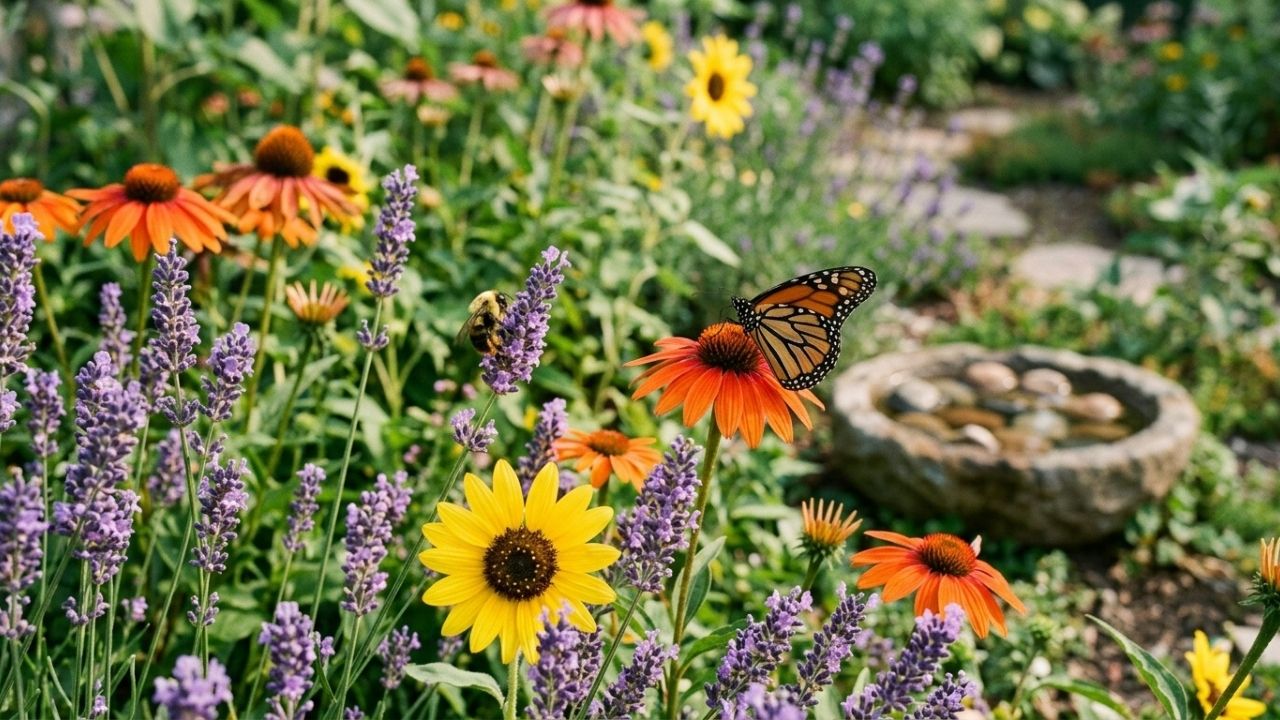
- Summer favorites include coneflower, bee balm, lavender, and milkweed
- Fall bloomers such as asters, goldenrod, and sedum keep pollinators fed before winter
Favor Single-Petal Flowers Over Doubles
Ornamental “double” flowers, the ones bred to look extra full and ruffled, often have little to no accessible pollen or nectar because breeders have replaced reproductive parts with extra petals. Simple, open-faced flowers like daisies, sunflowers, and zinnias give pollinators direct access to the food they need.
Include a Range of Colors and Shapes
Different pollinators are attracted to different flower traits.
- Bees tend to favor blue, purple, and yellow flowers
- Butterflies are drawn to bright colors like red, orange, and pink, especially flat-topped clusters they can land on
- Moths, which pollinate at night, prefer pale or white flowers with strong fragrance
- Hummingbirds, though not insects, are important pollinators drawn to tubular red and orange blooms
Designing the Garden with Pollinators in Mind
Plant choice matters, but so does how the garden is arranged. A thoughtful layout makes it easier for pollinators to find food, shelter, and safety.
Plant in Clusters, Not Single Stems
A single flower here and there is harder for pollinators to spot than a cluster of the same species planted together. Grouping five or more of the same plant in a patch creates a visible target and lets bees forage more efficiently, which conserves their energy.
Let Part of the Lawn Grow Wild
Perfectly manicured lawns offer almost nothing to pollinators. Letting a section of grass grow longer, or replacing part of it with clover, creeping thyme, or wildflower seed mix, gives insects both food and habitat. Even a small strip along a fence line can make a difference.
Add Layers of Vegetation
A garden with only flowers misses out on the shrubs and trees that also provide nectar, pollen, and shelter. Layering the garden with groundcover, mid-height perennials, shrubs, and even a small flowering tree creates more niches for different pollinator species to use.
Avoid Excessive Mulch and Bare Soil Extremes
Many native bees are ground-nesters, meaning they dig small burrows in bare or lightly vegetated soil. Covering every inch of the garden with thick mulch removes potential nesting sites. Leaving a few patches of bare, undisturbed soil in a sunny spot can support these solitary bees, which are excellent pollinators and rarely sting.
Providing Water and Shelter
Food is only part of the equation. Pollinators also need water and safe places to rest, nest, and overwinter.
Create a Simple Water Source
Bees and butterflies need water, especially during hot months, but they can drown in deep open water like a birdbath. A shallow dish filled with pebbles or marbles, kept topped with water, gives them a safe place to land and drink without the risk of drowning.
Leave Some Natural Debris
It can be tempting to tidy up every fallen leaf and hollow stem, but many pollinators rely on this material for shelter. Leaving a pile of leaves in a corner, some dead wood, or hollow plant stems standing through winter gives overwintering insects a place to survive the cold months. In spring, waiting a few extra weeks before a full garden cleanup allows emerging pollinators time to leave their winter shelters safely.
Install a Bee Hotel
For solitary, cavity-nesting bees, a simple bee hotel made from hollow tubes or drilled wood blocks can provide much-needed nesting habitat. These structures should be placed in a sheltered, sunny spot and cleaned or refreshed periodically to prevent disease buildup.
Avoiding Harmful Practices
Attracting pollinators is not only about what to add to a garden. It is equally about what to remove or avoid.
Cut Out Pesticides and Herbicides
Chemical pesticides, even those labeled for home use, can be lethal to bees and other pollinators. Herbicides also eliminate the so-called weeds, like dandelions and clover, that are often an early and important food source. Switching to organic pest management methods, such as companion planting, handpicking pests, or introducing beneficial insects, protects the very creatures a gardener is trying to attract.
Be Cautious with Store-Bought Plants
Some nursery plants, particularly large-scale commercial ones, have been treated with systemic pesticides called neonicotinoids before they ever reach the store. These chemicals remain in the plant tissue and can harm pollinators that feed on them. Asking nursery staff directly about pesticide treatments, or buying from organic growers, helps avoid unintentionally poisoning the pollinators a garden is meant to support.
Reduce Nighttime Lighting
Excessive outdoor lighting disrupts moths and other nocturnal pollinators, interfering with their navigation and feeding patterns. Using motion-activated lights or warm-toned bulbs, and turning off unnecessary lighting at night, can reduce this impact.
Quick Reference Table: Pollinator-Friendly Plants by Season
| Season | Plant Options | Pollinators Attracted |
|---|---|---|
| Spring | Crocus, redbud, lungwort, pussy willow | Early bees, butterflies |
| Summer | Coneflower, bee balm, lavender, milkweed, zinnia | Bees, butterflies, hummingbirds |
| Fall | Aster, goldenrod, sedum, joe-pye weed | Late-season bees, migrating butterflies |
| Year-round shelter | Native grasses, hollow-stem perennials, small shrubs | Overwintering insects, ground-nesting bees |
Container Gardens and Small Spaces
Not everyone has a yard, but that does not mean pollinators cannot be part of the picture. Balconies, patios, and windowsills can all support pollinator-friendly plants.
- Choose deep containers that allow root systems to establish fully
- Group several pots together to mimic the clustering effect of an in-ground garden
- Select compact varieties of favorites like lavender, marigold, or dwarf sunflowers
- Keep a small shallow water dish nearby, refreshed regularly
Even a few containers on a fire escape can offer a meaningful stopover for a passing bee or butterfly, especially in urban areas where green space is limited.
Being Patient and Observant
Building a pollinator-friendly garden does not happen overnight. It can take a full growing season or longer for bees, butterflies, and other insects to discover a new habitat and begin visiting regularly. Patience matters here. Keeping a simple journal of which flowers attract the most visitors, and at what times of day, can help refine the garden over time.
Watching the garden closely also reveals a lot about the local ecosystem. Different bee species, from bumblebees to tiny sweat bees, may show up at different times of year. Butterflies often have very specific host plants their caterpillars need, so learning what species are common in a region can guide future planting decisions, particularly around milkweed for monarchs or parsley and dill for swallowtails.
Final Thoughts
Creating a garden that welcomes bees and other pollinators is one of the most tangible ways to support a healthier planet without needing special equipment, a large budget, or advanced gardening skills.
It starts with a few thoughtful choices: planting native, diverse, single-petal flowers, letting parts of the yard grow a little wilder, providing water and shelter, and cutting out harmful chemicals.
Over time, these small changes add up to a garden that hums with life, supports local food systems, and plays a real part in reversing pollinator decline.
Anyone who takes these steps is not just growing a garden. They are building a small, living piece of a much larger effort to protect the natural systems that all life depends on.